
Atul Gawande
Author of Being Mortal: Medicine and What Matters in the End
About the Author
Atul Gawande is a surgical resident in Boston and staff writer on medicine and science for The New Yorker. A former Rhodes scholar, he received his M.D. from Harvard Medical School. He lives with his wife and three children in Newton, Massachusetts. (Publisher Fact Sheets) Atul Gawande is a surgeon show more at Brigham and Women's Hospital in Boston, a staff writer for The New Yorker, and a professor at Harvard Medical School and the Harvard School of Public Health. He is also the Executive Director of Ariadne Labs and chairman of Lifebox, a nonprofit organization making surgery safer globally. He has written several books including Complications, Better, The Checklist Manifesto, and Being Mortal: Medicine and What Matters in the End. He has won the Lewis Thomas Prize for Writing about Science and two National Magazine Awards. He will be appearing at the 2015 Auckland Writers Festival in New Zealand. He won the prize for Adult Non-fiction in the Indies Choice Book Awards 2015 with Being Mortal: Medicine and What Matters in the End. (Bowker Author Biography) show less
Image credit: Center for American Progress
Works by Atul Gawande
Associated Works
The Man Who Mistook His Wife for a Hat and Other Clinical Tales (1985) — Introduction, some editions — 13,052 copies, 237 reviews
Into the Wood Chipper: A Whistleblower's Account of How the Trump Administration Shredded USAID (2026) — Foreword — 29 copies
Tagged
Common Knowledge
- Canonical name
- Gawande, Atul
- Legal name
- Gawande, Atul Atmaram
- Birthdate
- 1965-11-05
- Gender
- male
- Education
- Harvard School of Public Health (M.P.H.|1999)
Harvard Medical School (M.D.|1995)
Balliol College, Oxford University (MA|1989)
Stanford University (BA|1987) - Occupations
- surgeon
professor
Federal bureaucrat
political advisor
writer
columnist - Organizations
- Harvard University
Brigham and Women's Hospital
The New Yorker - Awards and honors
- MacArthur Fellowship (2006)
American Philosophical Society (2012)
Lewis Thomas Prize for Writing about Science (2014)
BBC Reith Lectures (2014)
Rhodes Scholar (1987)
Massachusetts Governor's Award in the Humanities (2016) (show all 7)
Newsweek Magazine's 20 Most Influential South Asians (2004) - Agent
- Tina Bennett
- Relationships
- Hobson, Kathleen (spouse)
- Short biography
- Atul Gawande was born in Brooklyn. He obtained his undergraduate degree at Stanford University. As a Rhodes Scholar, he spent a year at Oxford University. After two years at Harvard Medical School he left to become Bill Clinton's health care lieutenant during the 1992 campaign, and became a senior adviser in the Department of Health and Human Services after President Clinton's inauguration. He returned to medical school and earned his M.D in 1994, as well as an M.P.H. from the Harvard School of Public Health. He practices general and endocrine surgery at Brigham and Women’s Hospital in Boston and is director of Ariadne Labs, a joint center for health systems innovation. He is Professor in the Department of Health Policy and Management at the Harvard School of Public Health and Professor of Surgery at Harvard Medical School. He is also a staff writer on medicine and science for the New Yorker.
- Nationality
- USA
- Birthplace
- Brooklyn, New York, USA
- Places of residence
- Brooklyn, New York, New York, USA
Athens, Ohio, USA
Newton, Massachusetts, USA - Associated Place (for map)
- USA
Members
Reviews
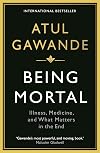
Very powerful and touching read. It made me reassess everything. As a nurse for over 30 years, and an ICU nurse for more than 15 years, everything Gawande writes rings true. With elderly, frail parents and being on the other side of 50, there's not a lot of time to get it right. Of course, 'right' is different for everyone. But you sure as hell don't want to get it wrong, if you get a chance. And there are better ways to spend those final months than painful, protracted dying in an ICU. show more Gawande makes this very clear. It's about asking the hard questions while you still have time. show less
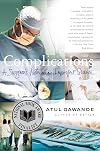
This was my third book by Atul Gawande, and just like with the first two, I couldn't put it down. What an exceptional read! “Complications” dives into the world of surgery and medicine in a way that’s both intriguing and approachable.
Gawande shares a range of captivating stories from his own experiences and those of his colleagues. He strikes a perfect balance between the technical aspects of surgery and the very human side of medicine. It’s an eye-opening account of how doctors show more don’t always get it right and the challenges they face in diagnosing and treating patients.
What’s particularly wonderful about this book is how it transitions seamlessly between personal reflections, thrilling ER anecdotes, and thoughtful observations on medicine and life. Some chapters are deeply personal, delving into the stress of surgical training and the inevitability of tragic mistakes. Others engage with common medical problems that frustrate doctors, like chronic pain and nausea.
However, be warned: this book is not for the faint of heart! It’s quite gory in places and very visceral. If you tend to look away during medical shows when the scalpel comes out, this book might be a bit too intense. But for those who can handle it, it’s a fascinating and rewarding read. show less
Gawande shares a range of captivating stories from his own experiences and those of his colleagues. He strikes a perfect balance between the technical aspects of surgery and the very human side of medicine. It’s an eye-opening account of how doctors show more don’t always get it right and the challenges they face in diagnosing and treating patients.
What’s particularly wonderful about this book is how it transitions seamlessly between personal reflections, thrilling ER anecdotes, and thoughtful observations on medicine and life. Some chapters are deeply personal, delving into the stress of surgical training and the inevitability of tragic mistakes. Others engage with common medical problems that frustrate doctors, like chronic pain and nausea.
However, be warned: this book is not for the faint of heart! It’s quite gory in places and very visceral. If you tend to look away during medical shows when the scalpel comes out, this book might be a bit too intense. But for those who can handle it, it’s a fascinating and rewarding read. show less

What if we had a relatively easy way to improve outcomes in a wide variety domains, but the technique made us feel a little less smart? In this book, Gawande argues that checklists are such a tool. Checklists are ubiquitous in commercial flight; they are starting to make inroads in medicine. They can decrease the incidence of the problems they are targeted to to degrees that would be considered huge successes for other interventions.
Yet when checklists are introduced into a new setting, show more there is often resistance. Gawande offers two reasons. First, we often feel that we don't need the checklists -- we're smart, and it's not like the information they're conveying is new. Second, good checklists are hard to design, and bad checklists waste time and increase frustration.
So why do checklists help? We're talking about smart people -- doctors, pilots, engineers. Don't they know this stuff already? Aren't their jobs too complicated to be reduced to a checklist? Gawande differentiates between three types of problems: simple problems, complicated problems, and complex problems. Simple problems are those where knowing the right techniques and following the recipe will give the right result. Complicated problems require coordination and planning. The parts may be individually simple or complex, but even if they're all simple, the sheer overhead of getting everything done and at the right time makes the problem challenging. Complex problems are those where every instance brings new challenges. The tools you use for simple and complicated problems may help, but fundamentally, complex problems require novel problem solving.
Checklists shine in the domain of the complicated, in the areas where each step is one where a trained practitioner would say "I know how to do that", but where, in the hectic conditions of the real world, it can be hard to actually remember to do each of the steps. Seeing improved outcomes when checklists are used does not mean that the practitioners are unskilled. Instead, checklists free up capacity for thinking about the complex aspects of a problem.
Freeing up capacity is not the only value checklists provide when dealing with complex problems. They can also be used to improve problem solving in a team setting. Checklists can provide communication checkpoints which can help with problem solving. E.g., by adding a step that gives everyone on the team a chance to express concerns they have about a procedure, you can reduce the incidence of conformity biases where people tend to feel less confident in their doubts if everyone else is confident.
The other common issue with checklists is that they can be bad. As Gawande puts it, "It is common to misconceive how checklists function in complex lines of work. They are not comprehensive how-to guides, whether for building a skyscraper or getting a plane out of trouble. They are quick and simple tools to buttress the skills of expert professionals."
What this means in practice is that checklists should be short, five to nine items is a good rule of thumb. They should be triggered by unambiguous pause points, e.g., just before making the first incision in an operation. The wording should be simple and exact; as implied above, a checklist should not be telling you how to do something, just that you should do it. Most importantly, a checklist should be tested under realistic conditions.
When is it worth doing all of this work to create a good checklist? Checklists should be targeted to situations where intervention can significantly change the odds of a good outcome. If the consequences of something being done wrong are not bad, cut it out of the list. If something is so ingrained that practitioners truly never forget it, cut it out of the list. But if there's something that's sometimes forgotten and makes a noticeable difference in aggregate, then that is a good candidate for a checklist.
In case you can't tell, I really liked this book and the message it conveys. This is not just because the specific ideas about checklists are useful. This book also expresses one of my core beliefs about process: a good process is one which allows people to feel like they are spending more time on what is most meaningful. A good process reduces the time spent on bureaucracy. A good process is the equivalent of automation for things that cannot yet be automated. Checklists are a good process. show less
Yet when checklists are introduced into a new setting, show more there is often resistance. Gawande offers two reasons. First, we often feel that we don't need the checklists -- we're smart, and it's not like the information they're conveying is new. Second, good checklists are hard to design, and bad checklists waste time and increase frustration.
So why do checklists help? We're talking about smart people -- doctors, pilots, engineers. Don't they know this stuff already? Aren't their jobs too complicated to be reduced to a checklist? Gawande differentiates between three types of problems: simple problems, complicated problems, and complex problems. Simple problems are those where knowing the right techniques and following the recipe will give the right result. Complicated problems require coordination and planning. The parts may be individually simple or complex, but even if they're all simple, the sheer overhead of getting everything done and at the right time makes the problem challenging. Complex problems are those where every instance brings new challenges. The tools you use for simple and complicated problems may help, but fundamentally, complex problems require novel problem solving.
Checklists shine in the domain of the complicated, in the areas where each step is one where a trained practitioner would say "I know how to do that", but where, in the hectic conditions of the real world, it can be hard to actually remember to do each of the steps. Seeing improved outcomes when checklists are used does not mean that the practitioners are unskilled. Instead, checklists free up capacity for thinking about the complex aspects of a problem.
Freeing up capacity is not the only value checklists provide when dealing with complex problems. They can also be used to improve problem solving in a team setting. Checklists can provide communication checkpoints which can help with problem solving. E.g., by adding a step that gives everyone on the team a chance to express concerns they have about a procedure, you can reduce the incidence of conformity biases where people tend to feel less confident in their doubts if everyone else is confident.
The other common issue with checklists is that they can be bad. As Gawande puts it, "It is common to misconceive how checklists function in complex lines of work. They are not comprehensive how-to guides, whether for building a skyscraper or getting a plane out of trouble. They are quick and simple tools to buttress the skills of expert professionals."
What this means in practice is that checklists should be short, five to nine items is a good rule of thumb. They should be triggered by unambiguous pause points, e.g., just before making the first incision in an operation. The wording should be simple and exact; as implied above, a checklist should not be telling you how to do something, just that you should do it. Most importantly, a checklist should be tested under realistic conditions.
When is it worth doing all of this work to create a good checklist? Checklists should be targeted to situations where intervention can significantly change the odds of a good outcome. If the consequences of something being done wrong are not bad, cut it out of the list. If something is so ingrained that practitioners truly never forget it, cut it out of the list. But if there's something that's sometimes forgotten and makes a noticeable difference in aggregate, then that is a good candidate for a checklist.
In case you can't tell, I really liked this book and the message it conveys. This is not just because the specific ideas about checklists are useful. This book also expresses one of my core beliefs about process: a good process is one which allows people to feel like they are spending more time on what is most meaningful. A good process reduces the time spent on bureaucracy. A good process is the equivalent of automation for things that cannot yet be automated. Checklists are a good process. show less
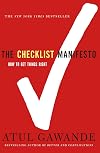
Gawande makes an important point: checklists are valuable to experts, not just novices. And they are useful across industries and occupations. Airline pilots, structural engineers and safety inspectors regularly use them to good effect. They can either be "do-check" or "run-do" and are utilised at specific pause points within a task. Value investors sometimes use checklists. Gawande presents some evidence that those that do fare better than "gut instinct".
Surgeons, he believes, should take show more the leap and use checklists. The point could have been made even more strongly by detailing the cognitive bias which affects most professionals, the one that makes the majority think they are above average. Specific to medicine, Gawande suggests some of the possible reasons checklists are eschewed: the need for doctors to "own" patient care through their own expertise; the media's idolisation of individual heroism; and the condescension with which some doctors hold professionals such as nurses who might well promote checklists.
What I love, therefore, about Gawande's approach is his insistence that checklists are a means of teams improving outcomes, not one of trying to bolster individual performance. Teams should introduce each other by name. Checklists in surgery should be verbal and can be run by any member of the team. This encourages knowledge sharing and holistic thinking. Gawande posits that successful results to complex problems are mostly due to effective teamwork and communication, not the heroism or brilliance of any individual. This story I can believe. show less
Surgeons, he believes, should take show more the leap and use checklists. The point could have been made even more strongly by detailing the cognitive bias which affects most professionals, the one that makes the majority think they are above average. Specific to medicine, Gawande suggests some of the possible reasons checklists are eschewed: the need for doctors to "own" patient care through their own expertise; the media's idolisation of individual heroism; and the condescension with which some doctors hold professionals such as nurses who might well promote checklists.
What I love, therefore, about Gawande's approach is his insistence that checklists are a means of teams improving outcomes, not one of trying to bolster individual performance. Teams should introduce each other by name. Checklists in surgery should be verbal and can be run by any member of the team. This encourages knowledge sharing and holistic thinking. Gawande posits that successful results to complex problems are mostly due to effective teamwork and communication, not the heroism or brilliance of any individual. This story I can believe. show less
Lists
Awards


You May Also Like


Associated Authors
Statistics
- Works
- 12
- Also by
- 17
- Members
- 17,060
- Popularity
- #1,301
- Rating
- 4.1
- Reviews
- 624
- ISBNs
- 137
- Languages
- 18
- Favorited
- 41
