
Henry Marsh (2) (1950–)
Author of Do No Harm: Stories of Life, Death, and Brain Surgery
For other authors named Henry Marsh, see the disambiguation page.
About the Author
Henry Marsh is a neurosurgeon who authored the memoir Do No Harm: Stories of Life, Death and Brain Surgery which won the PEN/Ackerley Prize 2015. The prize in the amout of £3000 (A$6115) is awarded to the author of a notable work of memoir or autobiography. (Bowker Author Biography)
Image credit: Cropped scan of back cover recto of the Phoenix paperback edition. Photographer: Tom Pilston.
Works by Henry Marsh
Tagged
Common Knowledge
- Legal name
- Marsh, Henry Thomas
- Birthdate
- 1950-03-05
- Gender
- male
- Occupations
- neurosurgeon
- Relationships
- Fox, Kate (wife)
- Nationality
- UK
- Associated Place (for map)
- UK
Members
Reviews
And Finally: Matters of Life and Death, the Sunday Times bestseller from the author of DO NO HARM by Henry Marsh
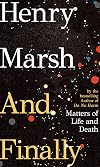
Review of And Finally
The British neurosurgeon and author Henry Marsh was fascinated by the meanings of life in all its forms and initially read philosophy at Oxford, until he decided that medicine would provide him with a more stable and productive means to earn a living. However, he continued to ponder those thoughts, both privately and in the two books he wrote prior to this one, [Do No Harm: Stories of Life, Death and Brain Surgery], and [Admissions: Life as a Brain Surgeon], in which show more patients' lives and outcomes were literally in his hands and their recoveries, partial or complete, were far from certain, particularly for the most delicate of cases. In keeping with his profession, and the risks that come with it, Marsh often comes across as brash, towards both his staff, junior doctors, and far too often the patients and families that come under his care, one thing which he regrets as his 40 year career comes to a close.
For several years Marsh developed signs of significant urinary tract obstruction, a common phenomenon older men experience but one that should be promptly brought to the attention of a general practitioner, if it is a simple case of benign prostatic hypertrophy that can be managed medically, or a urologist if the patient’s prostate specific antigen (PSA) is particularly high, in order to look for local or invasive prostate cancer by MRI of the prostate and/or prostate biopsy, which can be often be cured if it is caught in time and hasn’t spread outside of the capsule of the prostate. Marsh, however, chose to ignore those signs, and it wasn’t until he looked at his own images from a CT scan of his brain, which he had obtained months previously as part of a study of healthy volunteers, revealed signs of metastases to the brain, which was confirmed after he had an MRI of the brain shortly afterwards. Unfortunately physicians are notorious for thinking that serious and potentially fatal illnesses happen to other people, not themselves, even though they invariably care for other stricken physicians.
Marsh discusses his illness and diagnosis in the context of being a patient, rather than a care provider in hospitals, in the often impersonal British National Health Service (NHS), which his anthropologist wife Kate and he describe as “prisons:”
I was particularly struck by this page of the book. I’ve been hospitalized three times, from 1997 to 2015, and each time I was in a private room, I had no interactions with any other patients, and my hospital stays were short ones, once for removal of an inflamed and infected appendix, and twice for medical management of atrial fibrillation. I was treated far better than Marsh or, apparently, his wife were, and the children’s hospitals I worked in were geared towards making the children and their families as comfortable as possible.
Marsh also discusses his wild swings between hope for a cure and despair over the possibility that his cancer will likely be the cause of his death, according to his oncologists and other specialists, and how this compares with the conversations he had with his own patients, which he realizes he could have done a better job of during his years of practice. He closes with meetings in the neurosurgical department where he once worked, and his urging to junior doctors that they sit down to talk with patients and their families, and discuss their cases open and honestly, rather than hiding bad news from them.
I had two reasons for wanting to read [And Finally]. First, I had read his book [Do No Harm: Stories of Life, Death, and Brain Surgery], but also because I have benign prostatic hypertrophy and my urologist has ordered an MRI of my prostate, which I’ll probably schedule after my cataract surgery in less than two weeks; fortunately my PSA, although elevated, is nowhere near as high as Marsh’s. I liked [Do No Harm] better, but this was a worthwhile read, particularly for its philosophical bent on health and illness and how it is managed in the Western world. show less
The British neurosurgeon and author Henry Marsh was fascinated by the meanings of life in all its forms and initially read philosophy at Oxford, until he decided that medicine would provide him with a more stable and productive means to earn a living. However, he continued to ponder those thoughts, both privately and in the two books he wrote prior to this one, [Do No Harm: Stories of Life, Death and Brain Surgery], and [Admissions: Life as a Brain Surgeon], in which show more patients' lives and outcomes were literally in his hands and their recoveries, partial or complete, were far from certain, particularly for the most delicate of cases. In keeping with his profession, and the risks that come with it, Marsh often comes across as brash, towards both his staff, junior doctors, and far too often the patients and families that come under his care, one thing which he regrets as his 40 year career comes to a close.
For several years Marsh developed signs of significant urinary tract obstruction, a common phenomenon older men experience but one that should be promptly brought to the attention of a general practitioner, if it is a simple case of benign prostatic hypertrophy that can be managed medically, or a urologist if the patient’s prostate specific antigen (PSA) is particularly high, in order to look for local or invasive prostate cancer by MRI of the prostate and/or prostate biopsy, which can be often be cured if it is caught in time and hasn’t spread outside of the capsule of the prostate. Marsh, however, chose to ignore those signs, and it wasn’t until he looked at his own images from a CT scan of his brain, which he had obtained months previously as part of a study of healthy volunteers, revealed signs of metastases to the brain, which was confirmed after he had an MRI of the brain shortly afterwards. Unfortunately physicians are notorious for thinking that serious and potentially fatal illnesses happen to other people, not themselves, even though they invariably care for other stricken physicians.
Marsh discusses his illness and diagnosis in the context of being a patient, rather than a care provider in hospitals, in the often impersonal British National Health Service (NHS), which his anthropologist wife Kate and he describe as “prisons:”
Much of what goes on in hospitals—the regimentation, the uniforms, the notices everywhere—is about emphasising the gap between staff and patients, and helping the staff overcome their natural empathy. It is not about helping patients. Hospitals always remind me of prisons.
As my anthropologist wife Kate—who has been in hospital more frequently than she would like—tells me, patients often ask each other exactly the same question as prisoners: ‘What are you in for?’
{Kate} pointed out to me that the last thing you get in hospital is peace, rest or quiet, and that being a patient is an essentially disempowering and humiliating experience.
I was particularly struck by this page of the book. I’ve been hospitalized three times, from 1997 to 2015, and each time I was in a private room, I had no interactions with any other patients, and my hospital stays were short ones, once for removal of an inflamed and infected appendix, and twice for medical management of atrial fibrillation. I was treated far better than Marsh or, apparently, his wife were, and the children’s hospitals I worked in were geared towards making the children and their families as comfortable as possible.
Marsh also discusses his wild swings between hope for a cure and despair over the possibility that his cancer will likely be the cause of his death, according to his oncologists and other specialists, and how this compares with the conversations he had with his own patients, which he realizes he could have done a better job of during his years of practice. He closes with meetings in the neurosurgical department where he once worked, and his urging to junior doctors that they sit down to talk with patients and their families, and discuss their cases open and honestly, rather than hiding bad news from them.
I had two reasons for wanting to read [And Finally]. First, I had read his book [Do No Harm: Stories of Life, Death, and Brain Surgery], but also because I have benign prostatic hypertrophy and my urologist has ordered an MRI of my prostate, which I’ll probably schedule after my cataract surgery in less than two weeks; fortunately my PSA, although elevated, is nowhere near as high as Marsh’s. I liked [Do No Harm] better, but this was a worthwhile read, particularly for its philosophical bent on health and illness and how it is managed in the Western world. show less
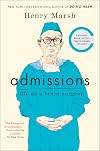
I found Marsh's book captivating, though sometimes hard to read. Not just because the stories he tells deal with the harsh reality of life-threatening conditions but because witnessing his flawed actions is, frankly, off-putting. We all want to think of doctors, and surgeons in particular, as being infallible paragons of virtue and perfect decision-making. Yet, recognizing they're as human and flawed as the rest of us is terrifying.
My favourite chapter was the last one, where Marsh described show more his views on death, end-of-life care, and what it really means to die "a good death." I also appreciated his take on practicing medicine in Nepal. The parts set in Ukraine were more challenging to read - perhaps because I was born in Romania, and some of the descriptions hit a little too close to home.
Overall, I found this a complex, interesting, thought-provoking book, one I'm glad to have read. show less
My favourite chapter was the last one, where Marsh described show more his views on death, end-of-life care, and what it really means to die "a good death." I also appreciated his take on practicing medicine in Nepal. The parts set in Ukraine were more challenging to read - perhaps because I was born in Romania, and some of the descriptions hit a little too close to home.
Overall, I found this a complex, interesting, thought-provoking book, one I'm glad to have read. show less
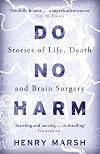
A really engaging book that manages to makes its complex subject matter (brain surgery) accessible and fascinating. Marsh throws in a fair amount of commentary on the state of the modern NHS but his writing is never preachy and the book overall is satisfying and thought provoking. His meditations on death and the question of whether we should avoid it at all costs are especially interesting.
I'm a huge fan of medical memoirs, probably because in another life, I would have been a doctor. As it is, I can read about it and live vicariously through people like Henry Marsh without actually having to hold a scalpel.
Dr. Marsh has this remarkable ability to take incredibly dense subjects like neuroscience and neurosurgery and make them not just comprehensible but genuinely fascinating. He structures each chapter around a specific neurological condition, then weaves in his personal show more experiences dealing with that condition. It's a great mix of exciting storytelling and educational information that never reads like a textbook.
The title "Do No Harm" carries this beautiful irony throughout the book. Brain surgery inherently causes harm (you're literally cutting into someone's skull) so Marsh is constantly navigating this impossible balance between the harm of intervention and the harm of doing nothing. Every decision has life-altering consequences, and he doesn't shy away from showing you both his triumphs and his devastating failures. This isn't one of those medical memoirs where the doctor presents himself as some infallible hero. Dr. Marsh admits to mistakes, arrogance, and profound doubt. He's the flawed protagonist of his own story, which makes the whole thing feel refreshingly honest.
The institutional critique woven throughout adds another layer. Dr. Marsh doesn't just tell you about individual patients; he shows you the bureaucratic obstacles and healthcare system failures that complicate everything. His observations about the NHS feel particularly relevant, and you get the sense of someone who has spent decades grappling with systemic problems while trying to do right by individual patients. It's sobering but no less interesting for it.
What struck me most was how Dr. Marsh tackles the cost of excellence... the personal sacrifices required for professional achievement, along with the toll that carrying this much responsibility takes on a person. He's examining his own life and legacy while still in the middle of living it, which gives the whole memoir a quality of someone philosophizing about death while very much alive. It's not morbid... it's just honest about what it means to spend your career in such intimate proximity to mortality.
I really enjoyed this book. The format worked beautifully, the writing was elegant and thought-provoking, and Dr. Marsh's willingness to show you his mistakes alongside his successes made it feel genuine rather than self-congratulatory. It's the kind of medical memoir that transcends the genre to become something more universal: a meditation on responsibility, failure, mortality, and meaning. show less
Dr. Marsh has this remarkable ability to take incredibly dense subjects like neuroscience and neurosurgery and make them not just comprehensible but genuinely fascinating. He structures each chapter around a specific neurological condition, then weaves in his personal show more experiences dealing with that condition. It's a great mix of exciting storytelling and educational information that never reads like a textbook.
The title "Do No Harm" carries this beautiful irony throughout the book. Brain surgery inherently causes harm (you're literally cutting into someone's skull) so Marsh is constantly navigating this impossible balance between the harm of intervention and the harm of doing nothing. Every decision has life-altering consequences, and he doesn't shy away from showing you both his triumphs and his devastating failures. This isn't one of those medical memoirs where the doctor presents himself as some infallible hero. Dr. Marsh admits to mistakes, arrogance, and profound doubt. He's the flawed protagonist of his own story, which makes the whole thing feel refreshingly honest.
The institutional critique woven throughout adds another layer. Dr. Marsh doesn't just tell you about individual patients; he shows you the bureaucratic obstacles and healthcare system failures that complicate everything. His observations about the NHS feel particularly relevant, and you get the sense of someone who has spent decades grappling with systemic problems while trying to do right by individual patients. It's sobering but no less interesting for it.
What struck me most was how Dr. Marsh tackles the cost of excellence... the personal sacrifices required for professional achievement, along with the toll that carrying this much responsibility takes on a person. He's examining his own life and legacy while still in the middle of living it, which gives the whole memoir a quality of someone philosophizing about death while very much alive. It's not morbid... it's just honest about what it means to spend your career in such intimate proximity to mortality.
I really enjoyed this book. The format worked beautifully, the writing was elegant and thought-provoking, and Dr. Marsh's willingness to show you his mistakes alongside his successes made it feel genuine rather than self-congratulatory. It's the kind of medical memoir that transcends the genre to become something more universal: a meditation on responsibility, failure, mortality, and meaning. show less
Lists
Awards


You May Also Like


Associated Authors
Statistics
- Works
- 3
- Members
- 1,867
- Popularity
- #13,786
- Rating
- 4.0
- Reviews
- 77
- ISBNs
- 88
- Languages
- 15