
Oliver Sacks (1933–2015)
Author of The Man Who Mistook His Wife for a Hat and Other Clinical Tales
About the Author
Oliver Sacks was born in London, England on July 9, 1933. He received a medical degree from Queen's College, Oxford University and performed his internship at Middlesex Hospital in London and Mount Zion Hospital in San Francisco. He completed his residency at UCLA. In 1965, he became a clinical show more neurologist to the Little Sisters of the Poor and Beth Abraham Hospital. His work in a Bronx charity hospital led him to write the book Awakenings in 1973. The book inspired a play by Harold Pinter and became a film starring Robert De Niro and Robin Williams. His other works included An Anthropologist on Mars, The Mind's Eye, The Man Who Mistook His Wife for a Hat, Uncle Tungsten, Musicophilia, A Leg to Stand On, On the Move: A Life, and Gratitude. In 2007, he ended his 42-year relationship with the Albert Einstein College of Medicine to accept an interdisciplinary teaching position at Columbia. In 2012, he returned to the New York University School of Medicine as a professor of neurology. He died of cancer on August 30, 2015 at the age of 82. (Bowker Author Biography) show less
Image credit: Oliver Sacks at Columbia University on June 3, 2009 in New York City
Works by Oliver Sacks
Oliver Sacks: The Last Interview and Other Conversations (The Last Interview Series) (2016) 97 copies, 2 reviews
Der Mann, der seine Frau mit einem Hut verwechselte. Der Tag, an dem mein Bein fortging (2008) 8 copies
Oliver Sacks 3 Books Collection Set (The Man Who Mistook His Wife for a Hat, Hallucinations, Awakenings) (2020) 6 copies
De wereld der onnozelen 3 copies
Oliver Sacks Reader 2 copies
Mind’s Eye The 2 copies
Leg To Stand On A 2 copies
The Last Interview 2 copies
Anthropologist On Mars An 2 copies
My Own Life 2 copies
Ένας ανθρωπολόγος στον Άρη 1 copy
despertando 1 copy
Emicrania - Tomo I 1 copy
Emicrania - Tomo II 1 copy
Comprende la psicología — Author — 1 copy
The Island of Rota 1 copy
Associated Works
Phantoms in the Brain: Probing the Mysteries of the Human Mind (1998) — Foreword, some editions — 2,135 copies, 19 reviews
NeuroTribes: The Legacy of Autism and the Future of Neurodiversity (2015) — Foreword — 1,552 copies, 66 reviews
Thinking in Pictures: My Life with Autism (1995) — Foreword, some editions — 1,254 copies, 26 reviews
The Man with a Shattered World: The History of a Brain Wound (1971) — Foreword, some editions — 241 copies, 3 reviews
Asylum: Inside the Closed World of State Mental Hospitals (2009) — Contributor — 241 copies, 6 reviews
A Glorious Accident: Understanding Our Place in the Cosmic Puzzle (1993) — Contributor — 236 copies, 7 reviews
The Vintage Book of Amnesia: An Anthology of Writing on the Subject of Memory Loss (2000) — Contributor — 228 copies, 2 reviews
Fixing My Gaze: A Scientist's Journey Into Seeing in Three Dimensions (2009) — Foreword — 218 copies, 5 reviews
Know the Past, Find the Future: The New York Public Library at 100 (2011) — Contributor — 133 copies, 4 reviews
About Us: Essays from the Disability Series of the New York Times (2019) — Contributor — 93 copies, 1 review
Memory Book: A Benny Cooperman Detective Novel (Benny Cooperman Mysteries) (2005) — Afterword — 89 copies, 13 reviews
Measure of the Heart: A Father's Alzheimer's, A Daughter's Return (2008) — Foreword, some editions — 58 copies, 9 reviews
Antaeus No. 61, Autumn 1988 - Journals, Notebooks & Diaries (1988) — Contributor — 39 copies, 2 reviews
Tagged
Common Knowledge
- Legal name
- Sacks, Oliver Wolf
- Other names
- Sacks, Oliver W.
- Birthdate
- 1933-07-09
- Date of death
- 2015-08-30
- Gender
- male
- Education
- St Paul's School, London, UK
University of Oxford (Queen's College|BA|Physiology and Biology|1954)
University of Oxford (MA|BM|BCh|1958)
UCLA (residency in neurology and neuropathology|1965) - Occupations
- neurologist
professor - Organizations
- UCLA Medical Center (resident. Neurology)
Beth Abraham Hospital (consulting neurologist ∙ Beth Abraham Health Services)
Yeshiva University (Albert Einstein College of Medicine ∙ clinical professor of neurology)
New York University (School of Medicine ∙ Adjunct professor of Neurology)
Columbia University (professor of clinical neurology and clinical psychology)
Little Sisters of the Poor (consultant neurologist) (show all 7)
University of Warwick (visiting professor) - Awards and honors
- Columbia artist (1st ∙ Columbia University)
Music Has Power Award (2000)
Beth Abraham (40 years of service)
Lewis Thomas Prize for Writing about Science (2001)
Asteroid Namesake (asteroid 84928 | 2008)
Order of the British Empire (Commander, 2008) (show all 17)
American Academy of Arts and Letters (1996)
Institute for Music and Neurologic Function (honorary medical advisor)
Oskar Pfister Award (1988)
Harold D. Vursell Memorial Award (1989)
Mental Health Award (2004)
Royal College of Physicians (Fellow)
American Academy of Arts and Sciences
American Neurological Association
American Psychoanalytic Association
Association of British Neurologists
New York Academy of Sciences - Relationships
- Eban, Abba (cousin)
Lynn, Jonathan (cousin)
Sacks, Jonathan (nephew)
Hayes, Bill (partner)
Miller, Jonathan (friend, #1)
Aumann, Robert (cousin) - Short biography
- Oliver Sacks (Londen, 1933) is hoogleraar in de neurologie aan het Albert Einstein College of Medicine in New York. Als auteur verwierf hij internationale faam met onder andere De man die zijn vrouw voor een hoed hield, neurologische case-histories uit zijn eigen praktijk, en Ontwaken in verbijstering, waarin hij op betrokken wijze het ‘ontwaken’ uit de slaapziekte (Encephalitis lethargica) beschrijft.
- Cause of death
- cancer
- Nationality
- UK
- Birthplace
- London, England, UK
- Places of residence
- London, England, UK
New York, New York, USA - Place of death
- New York, New York, USA
- Map Location
- England, UK
Members
Discussions
Folio Archives 468: The Man Who Mistook His Wife for a Hat by Oliver W. Sacks 2011 in Folio Society Devotees (February 20)
Oliver Sacks in Legacy Libraries (November 2023)
DECEMBER READS - SPOILERS - An Anthropologist on Mars in The Green Dragon (January 2015)
Reviews
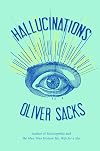
fascinating stuff. this book is a kind of memoir slash clinical study slash history slash overview of the neurological process behind hallucinations.
there is no complicated scientific jargon, formulae, or indecipherable charts to wade through. in plain language, Sacks gives dozens of brief anecdotes from his decades of practice that give examples of the hallucinations people experience. the sheer number and variety of them experienced by people from all walks of life moved me into a show more slightly different paradigm of human perception and daily life. not only do we constantly gloss over sensory and semantic illusions (ie they aren’t limited to the optical realm) because our neurosystems are built to eek out patterns that are meaningful to the human mind from the ambient noise of our everyday surroundings, our brains, it seems, can create them whole-cloth, in detail, as if our eyes or ears or skin were truly experiencing them.
it’s hard to refrain from commenting on the ramifications of this information because it could mean so much to changing the world if we could all realize just how mutable our realities are. many of the hallucinations reported by people were not recognized as such at first. this then begs the question of how many times do we have hallucinations and never realize it? profound, i think.
but let me be clear: Sacks does not have an agenda in this book other than to educate people on the fact that hallucinations are a normal part of being a human being with a nervous system. the ethical and existential machinations above are mine alone.
back to the book: Sacks is a clear writer and not afraid to speak informally and even self-disclose. the memoir aspect of the book doesn’t stop and start with him recalling clinical cases, it also involves his own experiences with drug use, trauma, and the hallucinations that stemmed from them.
this is a really good read if you are at all interested in human perception and neuroscience. show less
there is no complicated scientific jargon, formulae, or indecipherable charts to wade through. in plain language, Sacks gives dozens of brief anecdotes from his decades of practice that give examples of the hallucinations people experience. the sheer number and variety of them experienced by people from all walks of life moved me into a show more slightly different paradigm of human perception and daily life. not only do we constantly gloss over sensory and semantic illusions (ie they aren’t limited to the optical realm) because our neurosystems are built to eek out patterns that are meaningful to the human mind from the ambient noise of our everyday surroundings, our brains, it seems, can create them whole-cloth, in detail, as if our eyes or ears or skin were truly experiencing them.
it’s hard to refrain from commenting on the ramifications of this information because it could mean so much to changing the world if we could all realize just how mutable our realities are. many of the hallucinations reported by people were not recognized as such at first. this then begs the question of how many times do we have hallucinations and never realize it? profound, i think.
but let me be clear: Sacks does not have an agenda in this book other than to educate people on the fact that hallucinations are a normal part of being a human being with a nervous system. the ethical and existential machinations above are mine alone.
back to the book: Sacks is a clear writer and not afraid to speak informally and even self-disclose. the memoir aspect of the book doesn’t stop and start with him recalling clinical cases, it also involves his own experiences with drug use, trauma, and the hallucinations that stemmed from them.
this is a really good read if you are at all interested in human perception and neuroscience. show less
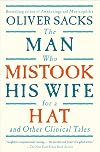
Series of twenty-four essays about people with neurological conditions, focusing on the patient’s experiences. Sacks did not agree with the categorization of mental dysfunctions as “types,” which are treated in the same manner regardless of individual nuances. His goal was to use these case studies to improve physicians’ treatment methods, to go beyond the “one size fits all” approach to treating neurological issues. He specifically desired to find unique ways to help each show more individual discover a sense of personal identity, leading to a more meaningful life.
“To restore the human subject at the center—the suffering, afflicted, fighting human subject—we must deepen a case history to a narrative or tale; only then do we have a “who” as well as a “what,” a real person, a patient, in relation to disease—in relation to the physical. The patient’s essential being is very relevant in the higher reaches of neurology, and in psychology; for here the patient’s personhood is essentially involved, and the study of disease and of identity cannot be disjoined.”
These true stories contain a variety of subjects, such as loss of memory, people whose limbs feel foreign, those who cannot recognize faces, some whose deficits are more than offset by amazing artistic or mathematical skills. They are told in an empathetic way, and they are truly absorbing. First published in 1985, there is a small amount of “dated” language, as the author acknowledges in his introduction to the new edition. There is also a bit of terminology that may not be familiar to the layperson.
I have had this book on my “to read” list for a very long while and am glad to have finally read it. I appreciated the follow-ups to each story, which tells the reader what happened to each individual (where the information was available). I found it fascinating. If you are even slightly interested in neuroscience it will be well worth the time invested.
“I wish to acknowledge the selfless help and generosity of the patients (and, in some cases, the relatives of the patients) whose tales I tell here—who, knowing (as they often did) that they themselves might not be able to be helped directly, yet permitted, even encouraged, me to write of their lives, in the hope that others might learn and understand, and, one day, perhaps be able to cure.” – Oliver Sacks show less
“To restore the human subject at the center—the suffering, afflicted, fighting human subject—we must deepen a case history to a narrative or tale; only then do we have a “who” as well as a “what,” a real person, a patient, in relation to disease—in relation to the physical. The patient’s essential being is very relevant in the higher reaches of neurology, and in psychology; for here the patient’s personhood is essentially involved, and the study of disease and of identity cannot be disjoined.”
These true stories contain a variety of subjects, such as loss of memory, people whose limbs feel foreign, those who cannot recognize faces, some whose deficits are more than offset by amazing artistic or mathematical skills. They are told in an empathetic way, and they are truly absorbing. First published in 1985, there is a small amount of “dated” language, as the author acknowledges in his introduction to the new edition. There is also a bit of terminology that may not be familiar to the layperson.
I have had this book on my “to read” list for a very long while and am glad to have finally read it. I appreciated the follow-ups to each story, which tells the reader what happened to each individual (where the information was available). I found it fascinating. If you are even slightly interested in neuroscience it will be well worth the time invested.
“I wish to acknowledge the selfless help and generosity of the patients (and, in some cases, the relatives of the patients) whose tales I tell here—who, knowing (as they often did) that they themselves might not be able to be helped directly, yet permitted, even encouraged, me to write of their lives, in the hope that others might learn and understand, and, one day, perhaps be able to cure.” – Oliver Sacks show less
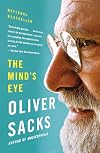
A typical selection of essays by Dr. Oliver Sacks, managing to be profoundly sad and profoundly inspiring simultaneously. If you happen to be unfamiliar with Sack’s work, he writes evocative descriptions of various neurological problems, often touched with wry humor and insight. In The Mind’s Eye he discusses various cases where neurological (rather than optical) problems affect vision. In one case, a patient has alexia, which progresses to agnosia; the subject first loses the ability to show more read (although, paradoxically, she can still write), then gradually loses the ability to recognize once-familiar objects. Her intelligence and memory are unaffected; she still knows what (for example) an apple is, she just can’t recognize one when she sees it. There’s no cure, but she develops some compensating abilities; always a talented musician she can no longer sight-read but can compose and transcribe music mentally (something she couldn’t do before).
Another patient, after a lifetime of lacking stereo vision (due to strabismus correction surgery that was delayed a little too long), more or less suddenly develops it after additional treatment. Her wonder at first seeing a snowstorm in depth makes me appreciate my own stereoscopic ability even more. (This chapter mentions my thesis advisor, John Cisne, who demonstrated that some of the elaborate illuminations in medieval manuscripts could be accomplished by “free-fused” stereoscopy. I used to be able to do free-fused stereoscopy but lost the ability after cataract surgery; can’t focus close enough anymore).
Several cases discuss visual imagery; do people “see” things in their minds, and if so do they use the same parts of the brain that process data coming from their eyes. Evidence is equivocal and mostly anecdotal but tantalizing; some total blind people still claim they can “see” mentally (including a blind Australian who had such a good mental image of his house roof that he was able to replace all his gutters unassisted. At night.) while others have no mental visual capability at all.
Another chapter gives a name to a defect I have myself (and I share with Dr. Sacks)– prosopagnosia, the inability to recognize faces. In both my case and Dr. Sacks, it’s fairly mild – Sacks notes it appears to be normally distributed, with some people with hyper abilities (able to recognize faces they saw for a few seconds years earlier) while other are totally deficient (unable to recognize their wives and children, or themselves in a mirror). In both our cases our facial recognition ability is dependent on context; we can recognize people in familiar situations but not in unfamiliar ones – i.e., classmates or coworkers in class or at work but not when encountered on the street or in a restaurant. Dr. Sacks seems to be somewhat more deficient than me; he was unable to recognize his personal assistant when he saw her in a doctor’s waiting room rather than at home. I’m not that bad, but I still have trouble. Interestingly, the problem seems to correlate with Asperger’s syndrome.
The final chapters recount Dr. Sack’s own visual changes after he had a retinal melanoma removed. After radiation and laser surgery he ended up with a “blind spot” in his right visual field that, eventually, his brain would “fill in”. At first it was only uniform fields – if he was looking at the sky the spot would turn a uniform blue. However, after a while the infilling would become more sophisticated. If he brought his hand into the area, it would first disappear as if it had been cut off at the wrist; but if he held it there for a while the brain would generate a “phantom hand” (especially if he did something like wiggling the fingers). The effect isn’t fast enough to be useful in everyday life; he still has to twist around to see somebody on his right.
Recommended – a very quick (afternoon) read. Well referenced to original literature; the only illustrations are Sacks’ own line drawings of what he saw during treatment for his melanoma. show less
Another patient, after a lifetime of lacking stereo vision (due to strabismus correction surgery that was delayed a little too long), more or less suddenly develops it after additional treatment. Her wonder at first seeing a snowstorm in depth makes me appreciate my own stereoscopic ability even more. (This chapter mentions my thesis advisor, John Cisne, who demonstrated that some of the elaborate illuminations in medieval manuscripts could be accomplished by “free-fused” stereoscopy. I used to be able to do free-fused stereoscopy but lost the ability after cataract surgery; can’t focus close enough anymore).
Several cases discuss visual imagery; do people “see” things in their minds, and if so do they use the same parts of the brain that process data coming from their eyes. Evidence is equivocal and mostly anecdotal but tantalizing; some total blind people still claim they can “see” mentally (including a blind Australian who had such a good mental image of his house roof that he was able to replace all his gutters unassisted. At night.) while others have no mental visual capability at all.
Another chapter gives a name to a defect I have myself (and I share with Dr. Sacks)– prosopagnosia, the inability to recognize faces. In both my case and Dr. Sacks, it’s fairly mild – Sacks notes it appears to be normally distributed, with some people with hyper abilities (able to recognize faces they saw for a few seconds years earlier) while other are totally deficient (unable to recognize their wives and children, or themselves in a mirror). In both our cases our facial recognition ability is dependent on context; we can recognize people in familiar situations but not in unfamiliar ones – i.e., classmates or coworkers in class or at work but not when encountered on the street or in a restaurant. Dr. Sacks seems to be somewhat more deficient than me; he was unable to recognize his personal assistant when he saw her in a doctor’s waiting room rather than at home. I’m not that bad, but I still have trouble. Interestingly, the problem seems to correlate with Asperger’s syndrome.
The final chapters recount Dr. Sack’s own visual changes after he had a retinal melanoma removed. After radiation and laser surgery he ended up with a “blind spot” in his right visual field that, eventually, his brain would “fill in”. At first it was only uniform fields – if he was looking at the sky the spot would turn a uniform blue. However, after a while the infilling would become more sophisticated. If he brought his hand into the area, it would first disappear as if it had been cut off at the wrist; but if he held it there for a while the brain would generate a “phantom hand” (especially if he did something like wiggling the fingers). The effect isn’t fast enough to be useful in everyday life; he still has to twist around to see somebody on his right.
Recommended – a very quick (afternoon) read. Well referenced to original literature; the only illustrations are Sacks’ own line drawings of what he saw during treatment for his melanoma. show less
More than just a collection of interesting neurological case studies (which are bewilderingly amazing in and of themselves, the extent to which our brains are capable of reconciling the stimuli we receive to certain imagery or experience or feeling, the ways it can be so easily manipulated and deceived, the delicacy of the brain with all its interacting components and also its elastic attempts to counteract any imbalances), I also liked how each case, from aphasia to stereoscopy to show more blindness, can be so easily interpreted as a metaphor (seeing but not recognising, loss of one aspect leading to new appreciation for the usual experienced from a different aspect, the importance of peripheral vision giving context to the central vision).
Recommended for fans of The Man Who Mistook His Wife for a Hat and Sacks' personable writing style. show less
Recommended for fans of The Man Who Mistook His Wife for a Hat and Sacks' personable writing style. show less
Lists
important (1)
Allie's Wishlist (1)
culture (1)
Folio Society (1)
current (1)
psychology (3)
neurology (2)
Emily's Reviews (2)
Tom's Bookstore (2)
Favourite Books (2)
My List (3)
el (1)
Items of Apparel (1)
Art of Reading (1)
Chemistry (1)
substances (1)
Awards


You May Also Like


Associated Authors
Statistics
- Works
- 66
- Also by
- 41
- Members
- 43,670
- Popularity
- #386
- Rating
- 3.9
- Reviews
- 905
- ISBNs
- 841
- Languages
- 25
- Favorited
- 155


