
Temple Grandin
Author of Animals in Translation: Using the Mysteries of Autism to Decode Animal Behavior
About the Author
Temple Grandin was born August 29, 1947 in Boston, Massachusetts. She is a bestselling author, doctor and professor of Animal Science at Colorado State University, and leader of both the animal welfare and autism advocacy movements. Grandin was diagnosed with autism in 1950. She was immediately show more placed in a structured nursery, had speech therapy, and had a nanny spend hours playing turn-based games with her. At the age of four, she began talking and her progress continued. In 1970, Grandin received her bachelor's degree in psychology from Franklin Pierce College in Rindge, New Hampshire. She received her master's degree in animal science from Arizona State University in 1975, and in 1989, she received a Ph.D. in animal science from the University of Illinois at Urbana-Champaign. Grandin, being a high-functioning autistic, is widely-known for her work in autism advocacy. She has been featured on major televisions programs such as the Today Show and ABC's Primetime Live. She has also been featured in Time magazine, People magazine, Forbes, and the New York Times. Grandin was the subject of the Horizon documentary "The Woman Who Thinks Like a Cow" and was described by Oliver Sacks in the title of his narrative book: An Anthropologist on Mars. Grandin's bestselling book: Thinking in Pictures is scheduled to be released as an HBO film in 2009. Grandin's Animals in Translation and Animals Make Us Human have also been bestsellers. Grandin lives in Colorado, but has speaking engagements on autism and cattle handling around the world. show less
Image credit: Wikimedia Commons
Works by Temple Grandin
Animals in Translation: Using the Mysteries of Autism to Decode Animal Behavior (2005) 2,523 copies, 70 reviews
Visual Thinking: The Hidden Gifts of People Who Think in Pictures, Patterns, and Abstractions (2022) 407 copies, 5 reviews
The Unwritten Rules of Social Relationships: Decoding Social Mysteries Through the Unique Perspectives of Autism (2005) 316 copies, 8 reviews
Developing Talents: Careers for Individuals with Asperger Syndrome and High-Functioning Autism (2004) 111 copies, 1 review
The Loving Push: How Parents and Professionals Can Help Spectrum Kids Become Successful Adults (2016) 85 copies, 1 review
Different . . . Not Less: Inspiring Stories of Achievement and Successful Employment from Adults with Autism, Asperger's, and ADHD (2012) 81 copies, 4 reviews
Temple Grandin's Guide to Working with Farm Animals: Safe, Humane Livestock Handling Practices for the Small Farm (2017) 58 copies
Humane Livestock Handling: Understanding livestock behavior and building facilities for healthier animals (2008) — Author — 56 copies, 1 review
Thinking Differently: Two Brilliant Minds Discuss What It Means to Analyze Information and Produce Solutions Outside the Mainstream (2009) 13 copies
When the animals feel happy - Animal Mind can be seen in the new animal behavior (2011) ISBN: 4140815159 [Japanese Import] (2011) 10 copies
Temple Talks about Autism and Sensory Issues: The World's Leading Expert on Autism Shares Her Advice and Experiences (2015) 7 copies
Autism and Girls: World-Renowned Experts Join Those with Autism Syndrome to Resolve Issues That Girls and Women Face Every Day! New Updated and Revised Edition (2019) 5 copies, 1 review
My Sensory Based World 2 copies
Drawing Autism 2 copies
The Grandin Papers: Over 50 Years of Research on Animal Behavior and Welfare that Improved the Livestock Industry (2023) 2 copies
The Autism Continuum 2 copies
Associated Works
This I Believe: The Personal Philosophies of Remarkable Men and Women (2006) — Contributor — 1,153 copies, 36 reviews
Adolescents on the Autism Spectrum: A Parent's Guide to the Cognitive, Social, Physical, and Transition Needs ofTeenagers with Autism Spectrum Disorders (2006) — Foreword, some editions — 54 copies, 1 review
Ask and Tell: Self-Advocacy and Disclosure for People on the Autism Spectrum (2004) — Foreword — 48 copies
One Can Make a Difference: Original stories by the Dali Lama, Paul McCartney, Willie Nelson, Dennis Kucinch, Russel Simmons, Bridgitte Bardot, Martina ... Dozens of Other… (2008) — Contributor — 29 copies, 1 review
The animal mind : what they're thinking and feeling, and how to understand them (2014) — Contributor, some editions — 13 copies
Tagged
Common Knowledge
- Canonical name
- Grandin, Temple
- Legal name
- Grandin, Mary Temple
- Birthdate
- 1947-08-29
- Gender
- female
- Education
- Franklin Pierce College (BA|1970)
Arizona State University (MA|1975)
University of Illinois, Urbana-Champaign (Ph.D|1989) - Occupations
- professor
author
activist (autism issues) - Organizations
- American Society of Animal Science
American Society of Agricultural Engineers
American Society of Agricultural Consultants
American Registry of Professional Animal Scientists
National Institute of Animal Agriculture (formerly Livestock Conservation Institute)
Colorado State University (show all 7)
4-H - Awards and honors
- Honorary Doctorate (McGill University ∙ 1999)
Joseph Wood Krutch Medal (2001)
Honorary Doctorate (Science ∙ University of Illinois ∙ 2004)
Double Helix Medal (2011)
Colorado Women's Hall of Fame (2012)
Colorado Women's Hall of Fame (2012) (show all 10)
Hall of Great Westerners (2012)
World Organisation for Animal Health Meritorious Achievement Award (2015)
American Academy of Arts and Sciences (2016)
National Women's Hall of Fame (2017) - Relationships
- Cutler, Eustacia (mother)
- Nationality
- USA
- Birthplace
- Boston, Massachusetts, USA
- Places of residence
- Fort Collins, Colorado, USA
- Associated Place (for map)
- USA
Members
Reviews
Different... Not Less: Inspiring Stories of Achievement and Successful Employment from Adults with Autism, Asperger's, and ADHD (Revised & Updated) by Temple Grandin
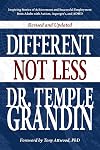
I bought this to give to my 16-year-old autistic son, as it sounded like a good read to give him perspectives on the travails and triumphs of autistic adults. I think it succeeds in that for the most part, though it will need some prefacing.
The book chose to feature people in their 50s and 60s, which makes sense, as they had a lot of life experience to discuss. However, their journeys are radically different than what a young person would experience now. These people in my parents' show more generation and somewhat younger (I should note this book came out about 10 years ago) were in an era where an early autism diagnosis meant institutionalization, if that was even the diagnosis at all--as the book Neurotribes explains in grim detail, schizophrenia and other major disorders were often the label instead. Many of the people in this book only were often regarded as 'different' as children but were only diagnosed as adults--which makes their experience no less valid, but it's important to note how things have changed with time. (And they need to change a lot more yet.)
I really appreciated the candor about which people wrote about their lives. There's a broad variety of experiences here, with people from America, Scotland, Australia, gay and straight and bi, some with kids, some content on farms with animals for company, and some with college degrees that may have taken 13 years or a return to school in middle age. The biggest common element is their resiliency. These people gradually realized they weren't like everyone else, and they've worked to find their place in the world, whether as an artist, a vet, or historical site tour guide.
In my first edition paperback, I was surprised by some blatant typos that distracted me at times. Actually, one about "Dessert Storm" made me laugh aloud. As I said above, this book is about ten years old, and some of the terminology has changed since then; a lot of the people talk about being diagnosed with Asperger's, and that name (and its Nazi roots) are definitely being phased out. (DSM 5 folded it into autism in 2013.) Maybe these issues have been updated in later editions. show less
The book chose to feature people in their 50s and 60s, which makes sense, as they had a lot of life experience to discuss. However, their journeys are radically different than what a young person would experience now. These people in my parents' show more generation and somewhat younger (I should note this book came out about 10 years ago) were in an era where an early autism diagnosis meant institutionalization, if that was even the diagnosis at all--as the book Neurotribes explains in grim detail, schizophrenia and other major disorders were often the label instead. Many of the people in this book only were often regarded as 'different' as children but were only diagnosed as adults--which makes their experience no less valid, but it's important to note how things have changed with time. (And they need to change a lot more yet.)
I really appreciated the candor about which people wrote about their lives. There's a broad variety of experiences here, with people from America, Scotland, Australia, gay and straight and bi, some with kids, some content on farms with animals for company, and some with college degrees that may have taken 13 years or a return to school in middle age. The biggest common element is their resiliency. These people gradually realized they weren't like everyone else, and they've worked to find their place in the world, whether as an artist, a vet, or historical site tour guide.
In my first edition paperback, I was surprised by some blatant typos that distracted me at times. Actually, one about "Dessert Storm" made me laugh aloud. As I said above, this book is about ten years old, and some of the terminology has changed since then; a lot of the people talk about being diagnosed with Asperger's, and that name (and its Nazi roots) are definitely being phased out. (DSM 5 folded it into autism in 2013.) Maybe these issues have been updated in later editions. show less
Animals in Translation: Using the Mysteries of Autism to Decode Animal Behavior (A Harvest Book) by Temple Grandin
Just fascinating. The subtitle of this book is "Using the Mysteries of Autism to Decode Animal Behavior". Temple Grandin, who is autistic, made a career in designing humane systems for handling animals in slaughter houses, poultry farms, breeding stables and kennels, and other situations where the needs of production have often resulted in appalling, frightening conditions for the animals involved. She has also advised the operators of such facilities on behavioral issues because she show more understands the animal mind in a way "neuro-typical" humans do not. In this books she explains the ways in which animals and autistic humans see things similarly, and how this has helped her see the world through animal eyes. There is a lot of brain science, human and animal psychology, common sense and uncommon wisdom, humor and heart in this book. Grandin says people always wonder how she could work for the meat-packing industry when she loves animals. Her answer is that she doesn't see the human race converting to vegetarianism any time soon (and that she herself was highly motivated to do so but found herself physically incapable of sticking to it), that most of the animals we eat "wouldn't exist if human beings hadn't bred them into being"...and that therefore we "owe them a decent life and a decent death, and their lives should be as low-stress as possible. That's my job." "If we're interested in animals, then we need to study animals for their own sake, and on their own terms, to the extent that it's possible. What are they doing? What are they feeling? What are they thinking? What are they saying? Who are they? And: what do we need to do to treat animals fairly, responsibly, and with kindness?" She applies these questions to ALL animals---pets, dairy cows, egg-producing chickens, animals raised for food, animals studied in labs and in the wild, birds, squirrels, elephants, snakes---without limits. A formal review said this is "one of those rare books that elicit a 'wow' on almost every page." Ask my husband how many times I made him "just listen to this!" while reading it. show less
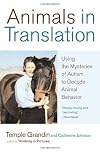
I found this book utterly fascinating. It looks at animal behavior, emotions and intelligence from the viewpoint and understanding of an autistic experience. Temple Grandin explains in depth how autism has lead her to identify with many ways in which animals feel, see and experience the world. She shares insights on many different species: dogs, cats, horses, pigs, chickens, cattle and others like prairie dogs, dolphins and elephants. Grandin repeatedly demonstrates how physical aspects of show more an animal's being affect their perception of and responses to the environment, and how their natural senses and intelligence give them specialized abilities we cannot readily understand (like dogs who predict seizures). Animals In Translation is one of the best non-fiction books on my shelf.
From Dog Ear Diary show less
From Dog Ear Diary show less
The Way I See It, Revised and Expanded 2nd Edition: A Personal Look at Autism and Asperger's by Temple Grandin
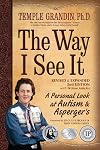
I loved The Way I See It by Temple Grandin. Autistic herself, Dr. Grandin explains in simple terms the experience of those on the spectrum. For many such individuals, because of their sensitivity, sensory and auditory events can disrupt their lives and evoke extreme reactions. For example, fluorescent light flickers that "neurotypicals" don't notice, bells or music for changing classes, the harsh rub of fabric on skin, can be so profoundly and painfully experienced that avoidance seems the show more only recourse. Even if tolerated, learning can be hindered and for some impossible unless sensory conditions are changed or the individual appropriately accommodated.
Dr. Grandin is an engagingly straightforward writer, and extremely knowledgeable in this area. At the same time, much of what she has to say comes across powerfully because it is grounded in her personal experience. She is adamant that those on the spectrum can learn to have satisfying lives, even the severely autistic. Early intervention is critical: "Doing nothing is the worst thing you can do. It will take less practice to change an inappropriate behavior at age two {than the} same behavior at age seven." Furthermore, "Most individuals on the spectrum have areas of strength that can be nurtured and developed into marketable employment skills."
In her case, her youthful interest in cattle chutes eventually developed into expertise in designing livestock environments. That's touched on in this book, but her experiences with animals are discussed more fully elsewhere in her writings. This book instead is a practical resource for those on the spectrum or those responsible for someone who is, and a clear-eyed view into the ASD world for everyone else.
Routine and repetition are important. "Consistency is calming, surprises produce anxiety." She insists that those with ASD need to learn "the rules and {how to} act in socially appropriate ways," even though that often does not come easily. She points out that people like her learn from the bottom up, from specifics to generalities, not the top down, generalities to specifics, as neurotypicals do. An example: if a neurotypical is taught to look both ways before carefully and safely crossing a street, he or she will apply that general idea to all the specific streets out there. It's different, according to Grandin, for someone on the spectrum. If taught near their home to look both ways before carefully and safely crossing the street, those with ASD may well apply it only to that street by their home, and cross dangerously elsewhere. Grandin explains that it will often be necessary to patiently teach them the same lesson at several streets, e.g. the street by their school and the street by grandma's, so that they have multiple specific examples to build on, and then to work patiently with them to generalize the idea.
She also emphasizes the benefits of high functioning autism, and believes many of our great talents and geniuses, like Einstein, are (or were) on the spectrum. As to those with Aspberger's Syndrome, "Aspies have great memories, pay attention to details, are persistent, focused, and love structure." “Preventing severe autism would be a worthy goal, but preventing mild autism and Asperger’s would be a grave mistake… {our} world would lose many creative people who have made the world a much more interesting place.” She is humorously skeptical of neurotypicals who are adept at socializing but little more:
“What would happen if the autism gene was eliminated from the gene pool?
You would have a bunch of people standing around in a cave, chatting and socializing and not getting anything done.”
Despite her academic achievements and honors, Dr. Grandin has a practical, common sense point of view, and that, combined with her flashes of humor, makes for exceptionally satisfying reading. The only place where it dragged a bit for me was in the discussion of effective complementary use of drugs, but others no doubt will find that section informative, too, Anyone interested in the workings of the mind and this particular disorder should enjoy this book. In one of her TED talks on Youtube, she's very funny about how Silicon Valley is filled with techies on the spectrum, but at the same time she pushes that we should be grooming many more with ASD for such jobs. This is a remarkable book by an impressive woman. Five stars. show less
Dr. Grandin is an engagingly straightforward writer, and extremely knowledgeable in this area. At the same time, much of what she has to say comes across powerfully because it is grounded in her personal experience. She is adamant that those on the spectrum can learn to have satisfying lives, even the severely autistic. Early intervention is critical: "Doing nothing is the worst thing you can do. It will take less practice to change an inappropriate behavior at age two {than the} same behavior at age seven." Furthermore, "Most individuals on the spectrum have areas of strength that can be nurtured and developed into marketable employment skills."
In her case, her youthful interest in cattle chutes eventually developed into expertise in designing livestock environments. That's touched on in this book, but her experiences with animals are discussed more fully elsewhere in her writings. This book instead is a practical resource for those on the spectrum or those responsible for someone who is, and a clear-eyed view into the ASD world for everyone else.
Routine and repetition are important. "Consistency is calming, surprises produce anxiety." She insists that those with ASD need to learn "the rules and {how to} act in socially appropriate ways," even though that often does not come easily. She points out that people like her learn from the bottom up, from specifics to generalities, not the top down, generalities to specifics, as neurotypicals do. An example: if a neurotypical is taught to look both ways before carefully and safely crossing a street, he or she will apply that general idea to all the specific streets out there. It's different, according to Grandin, for someone on the spectrum. If taught near their home to look both ways before carefully and safely crossing the street, those with ASD may well apply it only to that street by their home, and cross dangerously elsewhere. Grandin explains that it will often be necessary to patiently teach them the same lesson at several streets, e.g. the street by their school and the street by grandma's, so that they have multiple specific examples to build on, and then to work patiently with them to generalize the idea.
She also emphasizes the benefits of high functioning autism, and believes many of our great talents and geniuses, like Einstein, are (or were) on the spectrum. As to those with Aspberger's Syndrome, "Aspies have great memories, pay attention to details, are persistent, focused, and love structure." “Preventing severe autism would be a worthy goal, but preventing mild autism and Asperger’s would be a grave mistake… {our} world would lose many creative people who have made the world a much more interesting place.” She is humorously skeptical of neurotypicals who are adept at socializing but little more:
“What would happen if the autism gene was eliminated from the gene pool?
You would have a bunch of people standing around in a cave, chatting and socializing and not getting anything done.”
Despite her academic achievements and honors, Dr. Grandin has a practical, common sense point of view, and that, combined with her flashes of humor, makes for exceptionally satisfying reading. The only place where it dragged a bit for me was in the discussion of effective complementary use of drugs, but others no doubt will find that section informative, too, Anyone interested in the workings of the mind and this particular disorder should enjoy this book. In one of her TED talks on Youtube, she's very funny about how Silicon Valley is filled with techies on the spectrum, but at the same time she pushes that we should be grooming many more with ASD for such jobs. This is a remarkable book by an impressive woman. Five stars. show less
Lists
Awards


You May Also Like


Associated Authors
Statistics
- Works
- 46
- Also by
- 11
- Members
- 9,565
- Popularity
- #2,515
- Rating
- 3.9
- Reviews
- 223
- ISBNs
- 237
- Languages
- 13
- Favorited
- 18