
Jonathan Lynn
Author of The Complete Yes Minister: The Diaries of a Cabinet Minister
About the Author
Disambiguation Notice:
Jonathan Lynn and Antony Jay are credited for the Yes Minister series. Disambiguation needed for Jonathan Lynn's own works.
Series
Works by Jonathan Lynn
Michael J. Fox Comedy Favorites Collection (The Secret of My Success / The Hard Way / For Love or Money / Greedy) (2007) — Director — 23 copies
The Whole Nine Yards [and] The Whole Ten Yards (Double Feature Video) (2007) — Director — 15 copies, 1 review
4 Movie Marathon: Family Comedy Collection (Dudley Do-Right / Sgt. Bilko / Cop and a Half / Ed) (2011) — Director — 9 copies
Ji Mantriji, Vol. 1: The Diaries of Shri Suryaprakash Singh, based on the original Yes Minister (2001) 6 copies
Falsas apariencias 2 copies
Yes Prime Minister : the diaries of the Right Hon. James Hacker. Vol.1 / edited by Jonathan Lynn and Antony Jay (1986) 2 copies
Yes, Minister: Christmas Special [1984 TV] — Writer — 1 copy
Jistě, pane premiére. 2 1 copy
Yes Prime Minister. Vol. I 1 copy
Jav¤el, hr. premierminister 1 copy
Associated Works
The Secret Policeman's Balls — Actor — 1 copy
Tagged
Common Knowledge
- Canonical name
- Lynn, Jonathan
- Birthdate
- 1943-04-03
- Gender
- male
- Education
- University of Cambridge (Pembroke College)
Kingswood School - Occupations
- actor
screenwriter
director - Relationships
- Eban, Abba (uncle)
Sacks, Oliver (cousin) - Nationality
- UK
- Birthplace
- Bath, Somerset, England, UK
- Places of residence
- Cambridge, Cambridgeshire, England, UK
- Map Location
- England, UK
- Disambiguation notice
- Jonathan Lynn and Antony Jay are credited for the Yes Minister series. Disambiguation needed for Jonathan Lynn's own works.
Members
Reviews
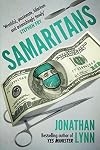
''Why shouldn't Samaritans be one of the profit making non-profits?''
When I was a child, there were three TV series that my parents would watch religiously. ''Shaka Zulu'', ''I, Claudius'' and ''Yes, Minister''. As a result, I have very fond memories of those and, although, I am not a big comedy fan, I love the genre when it is well-executed. What better example than ''Yes, Minister'' and its spin-off ''Yes, Prime Minister''? Who can forget the outstanding Nigel Hawthorne as the show more ever-manipulating Sir Humphrey Appleby who was able to utter 300 words per second, Paul Eddington as the honest, kind-hearted and a litlle bit naive Jim Hacker and Derek Fowlds as Bernard Woolley, the secretary who knew everything and everyone. It was, therefore, with great pleasure that I started reading Jonathan Lynn's new novel, Samaritans.Not to mention that it comes with Stephen Fry's recommendation.
First of all, I must say that I will not commend directly on any political or financial situation, I avoid this type of discussion like the plague. I am simply going to write about the book, its characters and the reasons why it is such a well-made satire.
There are two main characters in Samaritans. First we meet Max Green who initially works in Vegas, in a casino, and then becomes the CEO in Samaritans Medical Centre, a non-profit organization. For Green, though, profit is everything in life, the only thing that matters. He is uneducated, coarse, completely devoid of any sensitivity, a cold, empty creature, one of the most despicable protagonists we'll ever meet. If you ever thought that Humphrey was bad, wait until you read about Green. Then, Appleby will seem an angel from Heaven in comparison. And yet, the power of Lynn's writing is such that makes you care for Green's actions, makes you curious as to how far he can go to serve his twisted vision, to see whether there any limits to his immorality and ruthlesness.
Andrew Sharp is a young celebrity cardiothoracic surgeon from England. He is a complex, very interesting character.He is persuaded to join Samaritans after Green promises the moon and the stars to him. After a while, his real self comes to surface and he starts listening to the voice of reason, trying to wake some scraps of decency and conscience to Max. The story evolves into a fascinating battle between the two men.
The other characters are equally well-written and anyone who's been working for a few years will be able to recognise these types of people that ''grace'' every working environment. There is David Soper, the chairman of Samaritans. Poor David has major trouble understanding all those falshy words Max uses to talk about money and business and he quickly drops the ball. Dr. Weiner is the Chief of Surgery. I was so rooting for him to deliver a few punches on Green's smiley face...
The female characters are not a celebration of their sex, really. The only one who fully escapes is Cathy, Sharp's secretary. She is level-headed, honest, an all-around fun, sympathetic character. She provides a more humane touch in the story and makes Andrew see things under a new light. Blanche, another manager, act as Green's helper- in many ways- and retains strong Christian beliefs that don't really match her lifestyle. She seems as disgusting as Green. Emily Craven, a wannabe doctor, acts all slimy to advance herself further. She tries to be the teacher's pet (or the doctor's pet in this case) but her attempts are not that successful.
''We cannot harvest a heart from a living person. That's what we call murder.''
The central theme around which the story is developed is the moral and social decay as the most eminent result of austerity and the worldwide financial crisis. This becomes apparent rather quickly in the book, when Green and a nurse demonstrate complete indifference when scenes of a war are shown on the telly. Max orders David to make immediate cuts in order for him to hire celebrity doctors. He decrees austerity in order to bring more money in his way...Well, let's be honest, where have we heard this before? Yes, practically everywhere...When tragedies start taking place, one after another, Green's way of dealing with warnings is a bitter exclamation of ''I thought you were my friend!''
One thing I had major difficulty with was all those sexual jokes. I admit I don't find this kind of humour particularly funny and it became irritating after a point. In my opinion, it made some parts of the narration sound cheap and crude. Other than that, the dry, British humour is there, enriching the story, making even such a disgusting character as Green somehow bearable.
The Epilogue is a magnificent example of the way our modern society treats people like Max Green. This book is the perfect combination of satire and mystery and an excellent research of the human nature and its darkness. Samaritans must be read by everyone involved in the medical profession and every politician, but the latter group doesn't even know how to read so...Perhaps then, there might be a slight glimpse of hope for our lunatic world...
''When did they change the start of the Hippocratic Oath from 'First, do no harm' to 'First, get the check?'''
Thanks to Endeavour Press and Caoimhe for providing me with a review copy of Jonathan Lynn's book in exchange for an honest review. show less
When I was a child, there were three TV series that my parents would watch religiously. ''Shaka Zulu'', ''I, Claudius'' and ''Yes, Minister''. As a result, I have very fond memories of those and, although, I am not a big comedy fan, I love the genre when it is well-executed. What better example than ''Yes, Minister'' and its spin-off ''Yes, Prime Minister''? Who can forget the outstanding Nigel Hawthorne as the show more ever-manipulating Sir Humphrey Appleby who was able to utter 300 words per second, Paul Eddington as the honest, kind-hearted and a litlle bit naive Jim Hacker and Derek Fowlds as Bernard Woolley, the secretary who knew everything and everyone. It was, therefore, with great pleasure that I started reading Jonathan Lynn's new novel, Samaritans.Not to mention that it comes with Stephen Fry's recommendation.
First of all, I must say that I will not commend directly on any political or financial situation, I avoid this type of discussion like the plague. I am simply going to write about the book, its characters and the reasons why it is such a well-made satire.
There are two main characters in Samaritans. First we meet Max Green who initially works in Vegas, in a casino, and then becomes the CEO in Samaritans Medical Centre, a non-profit organization. For Green, though, profit is everything in life, the only thing that matters. He is uneducated, coarse, completely devoid of any sensitivity, a cold, empty creature, one of the most despicable protagonists we'll ever meet. If you ever thought that Humphrey was bad, wait until you read about Green. Then, Appleby will seem an angel from Heaven in comparison. And yet, the power of Lynn's writing is such that makes you care for Green's actions, makes you curious as to how far he can go to serve his twisted vision, to see whether there any limits to his immorality and ruthlesness.
Andrew Sharp is a young celebrity cardiothoracic surgeon from England. He is a complex, very interesting character.He is persuaded to join Samaritans after Green promises the moon and the stars to him. After a while, his real self comes to surface and he starts listening to the voice of reason, trying to wake some scraps of decency and conscience to Max. The story evolves into a fascinating battle between the two men.
The other characters are equally well-written and anyone who's been working for a few years will be able to recognise these types of people that ''grace'' every working environment. There is David Soper, the chairman of Samaritans. Poor David has major trouble understanding all those falshy words Max uses to talk about money and business and he quickly drops the ball. Dr. Weiner is the Chief of Surgery. I was so rooting for him to deliver a few punches on Green's smiley face...
The female characters are not a celebration of their sex, really. The only one who fully escapes is Cathy, Sharp's secretary. She is level-headed, honest, an all-around fun, sympathetic character. She provides a more humane touch in the story and makes Andrew see things under a new light. Blanche, another manager, act as Green's helper- in many ways- and retains strong Christian beliefs that don't really match her lifestyle. She seems as disgusting as Green. Emily Craven, a wannabe doctor, acts all slimy to advance herself further. She tries to be the teacher's pet (or the doctor's pet in this case) but her attempts are not that successful.
''We cannot harvest a heart from a living person. That's what we call murder.''
The central theme around which the story is developed is the moral and social decay as the most eminent result of austerity and the worldwide financial crisis. This becomes apparent rather quickly in the book, when Green and a nurse demonstrate complete indifference when scenes of a war are shown on the telly. Max orders David to make immediate cuts in order for him to hire celebrity doctors. He decrees austerity in order to bring more money in his way...Well, let's be honest, where have we heard this before? Yes, practically everywhere...When tragedies start taking place, one after another, Green's way of dealing with warnings is a bitter exclamation of ''I thought you were my friend!''
One thing I had major difficulty with was all those sexual jokes. I admit I don't find this kind of humour particularly funny and it became irritating after a point. In my opinion, it made some parts of the narration sound cheap and crude. Other than that, the dry, British humour is there, enriching the story, making even such a disgusting character as Green somehow bearable.
The Epilogue is a magnificent example of the way our modern society treats people like Max Green. This book is the perfect combination of satire and mystery and an excellent research of the human nature and its darkness. Samaritans must be read by everyone involved in the medical profession and every politician, but the latter group doesn't even know how to read so...Perhaps then, there might be a slight glimpse of hope for our lunatic world...
''When did they change the start of the Hippocratic Oath from 'First, do no harm' to 'First, get the check?'''
Thanks to Endeavour Press and Caoimhe for providing me with a review copy of Jonathan Lynn's book in exchange for an honest review. show less
Political satire has changed over the last 10 to 20 years thanks to programs like The Daily Show, The Colbert Report, Last Week Tonight with John Oliver and Full Frontal with Samantha Bee. Shows such as these go beyond amusing entertainment. They've become sources of news and information, vehicles that actually increase political knowledge. Jonathan Lynn's book Samaritans does the same with America's healthcare debate
The book is a biting takeoff on healthcare in America. More important, it show more conveys many of the ideas at the heart of the ongoing spectacle of the current farcical debate over the Affordable Care Act. In so doing, Lynn also weaves in plenty of real life facts and statistics that say much about the state of America's healthcare system.
Lynn is perhaps best known as a television writer and film director (including one of my all-time favorites, My Cousin Vinny. Satire becomes a scalpel in his story of Max Green, head of hotel operations at a Las Vegas casino, who sees being CEO of a large hospital as the path to wealth. And few elements of the healthcare system are spared.
Green becomes head of Samaritans Medical Center in the Columbia Heights area of the nation's capital. Obsessed with the bottom line, Green insists his contract include him getting "a fair slice of the profits" when he turns the hospital's the red ink into black. The hospital board, chaired by the billionaire owner of a company that makes electronic components for weapons systems sold worldwide, decides to give Green a chance.
Green's efforts include fairly common strategies -- trying to build high profile practices by hiring renowned doctors, eliminating costly elements (even nurses, here many are replaced by janitors) to create profit centers, and buying outside service providers, such as temporary nursing and billing and collection agencies. These aren't enough for Green. He implements numerous "innovations," including cutting a deal with a celebrity lawyer who frequently sues Samaritans, that bring profit but also have dire ramifications for both he and the hospital.
It's what motivates Green and his data-driven deputy, Blanche Nunn, that sharpens the book's focus. They expound the free market and evangelical ideologies underlying much of today's healthcare debate. Green tends to make Paul Ryan-like pronouncements, such as, "People can't have what they can't afford. That's what got America into this economic mess -- everybody wanting something for nothing." If someone can't afford health care, Green says it's "TP," their problem.
Green's philosophy also lays out the Catch-22 in leaving people uninsured. "Prevention's not profitable," he observes. It's better to shutter a diabetes center because treating the consequences of the disease is far more profitable. And when Andrew Sharp, the star cardiothoracic surgeon Green hired, suggests not everything can be decided by the marketplace, the CEO says that "sounds like communism."
Blanche's devotion to the free market is rooted in what she's learned from her evangelical ministers, Pastors Spittle and Wallow. (The hospital's Roman Catholic chaplain doesn't express opinions he "can safely leave my theological thinking to my superiors.") "Capitalism is God's ordained economic system," Blanche maintains, and because the free market is "divinely inspired," government should not interfere. When it comes to medical needs, Spittle taught her that "God had prescribed the answer: unregulated, free-market corporate health care." Thus, Medicare's problem, she says, is that it was “set up to help patients, not profits."
In lampooning these ideas, Samaritans shows how they are at work in the politics of healthcare. Dr. Sharp and other Samaritans physicians and employees provide the counterpoint, observing and experiencing the impact of Green's and Nunn's machinations. Ultimately, Green goes a step (or three) too far, resulting in inventive denouement. Lynn's one page epilogue contains some of the book's best humor but it would require an inexcusable spoiler to show why.
Samaritans is more insightful farce than laugh-out-loud funny and generally succinct and well written. It does, though, have its flaws. A couple characters seem unnecessary to advancing the story and feel more like walk-on extras. More disquieting is a tendency for some of the female characters to use sex as a tactic to achieve success. While Lynn uses this to further distinguish between the good guy and the bad guy, the frequency with which it appears collapses toward hackneyed trope.
Still, these blemishes are comparatively negligible compared to the book's truth telling. In looking at America's healthcare system, Samaritans both entertains and educates.
(Originally posted at A Progressive on the Prairie.) show less
The book is a biting takeoff on healthcare in America. More important, it show more conveys many of the ideas at the heart of the ongoing spectacle of the current farcical debate over the Affordable Care Act. In so doing, Lynn also weaves in plenty of real life facts and statistics that say much about the state of America's healthcare system.
Lynn is perhaps best known as a television writer and film director (including one of my all-time favorites, My Cousin Vinny. Satire becomes a scalpel in his story of Max Green, head of hotel operations at a Las Vegas casino, who sees being CEO of a large hospital as the path to wealth. And few elements of the healthcare system are spared.
Green becomes head of Samaritans Medical Center in the Columbia Heights area of the nation's capital. Obsessed with the bottom line, Green insists his contract include him getting "a fair slice of the profits" when he turns the hospital's the red ink into black. The hospital board, chaired by the billionaire owner of a company that makes electronic components for weapons systems sold worldwide, decides to give Green a chance.
Green's efforts include fairly common strategies -- trying to build high profile practices by hiring renowned doctors, eliminating costly elements (even nurses, here many are replaced by janitors) to create profit centers, and buying outside service providers, such as temporary nursing and billing and collection agencies. These aren't enough for Green. He implements numerous "innovations," including cutting a deal with a celebrity lawyer who frequently sues Samaritans, that bring profit but also have dire ramifications for both he and the hospital.
It's what motivates Green and his data-driven deputy, Blanche Nunn, that sharpens the book's focus. They expound the free market and evangelical ideologies underlying much of today's healthcare debate. Green tends to make Paul Ryan-like pronouncements, such as, "People can't have what they can't afford. That's what got America into this economic mess -- everybody wanting something for nothing." If someone can't afford health care, Green says it's "TP," their problem.
Green's philosophy also lays out the Catch-22 in leaving people uninsured. "Prevention's not profitable," he observes. It's better to shutter a diabetes center because treating the consequences of the disease is far more profitable. And when Andrew Sharp, the star cardiothoracic surgeon Green hired, suggests not everything can be decided by the marketplace, the CEO says that "sounds like communism."
Blanche's devotion to the free market is rooted in what she's learned from her evangelical ministers, Pastors Spittle and Wallow. (The hospital's Roman Catholic chaplain doesn't express opinions he "can safely leave my theological thinking to my superiors.") "Capitalism is God's ordained economic system," Blanche maintains, and because the free market is "divinely inspired," government should not interfere. When it comes to medical needs, Spittle taught her that "God had prescribed the answer: unregulated, free-market corporate health care." Thus, Medicare's problem, she says, is that it was “set up to help patients, not profits."
In lampooning these ideas, Samaritans shows how they are at work in the politics of healthcare. Dr. Sharp and other Samaritans physicians and employees provide the counterpoint, observing and experiencing the impact of Green's and Nunn's machinations. Ultimately, Green goes a step (or three) too far, resulting in inventive denouement. Lynn's one page epilogue contains some of the book's best humor but it would require an inexcusable spoiler to show why.
Samaritans is more insightful farce than laugh-out-loud funny and generally succinct and well written. It does, though, have its flaws. A couple characters seem unnecessary to advancing the story and feel more like walk-on extras. More disquieting is a tendency for some of the female characters to use sex as a tactic to achieve success. While Lynn uses this to further distinguish between the good guy and the bad guy, the frequency with which it appears collapses toward hackneyed trope.
Still, these blemishes are comparatively negligible compared to the book's truth telling. In looking at America's healthcare system, Samaritans both entertains and educates.
(Originally posted at A Progressive on the Prairie.) show less

Six people are invited to a house party by someone who is blackmailing them all. Each person is assigned a name in order to protect their real identity: there's Mrs. Peacock, Mrs. White, Professor Plum, Colonel Mustard, Miss Scarlet, and Mr. Green. As each of them arrives, they're greeted by Wadsworth, the butler. The house has two other staff members, a cook and a maid. The last person to arrive is Mr. Boddy, the man blackmailing all the guests.
Shortly after his arrival, Mr. Boddy is show more killed. The evening snowballs as more people are found dead, and the clock's ticking because the police will soon be arriving. Can the guests figure out who the murderer is?
I could have sworn I'd reviewed this ages ago, but I guess not. Anyway, this was a rewatch, and it was delightful, possibly my all-time favorite "movie based on a game." It starts off pretty slow, because it takes so long for all of the guests to arrive and the goal to be laid out, and everyone's awkward.
There are a few jokes to help set the mood, but things don't truly pick up until after the first murder, as the whole cast becomes suspicious of one another while at the same time being unable to leave. Other seemingly random characters arrive who invite further chaos, because in reality they're all connected to at least one of the guests.
It's bananas, and great fun. Everything become so ridiculous so quickly, and it's all helped along by well-delivered and witty dialogue filled with wordplay.
The DVD version I watched included a couple viewing options, one in which one of the three endings would be used at random and one with all three endings. In my opinion, the most satisfying way to do it is to just watch all three endings - only one of them makes an effort to tie everything together, after all.
(Original review posted on A Library Girl's Familiar Diversions.) show less
Shortly after his arrival, Mr. Boddy is show more killed. The evening snowballs as more people are found dead, and the clock's ticking because the police will soon be arriving. Can the guests figure out who the murderer is?
I could have sworn I'd reviewed this ages ago, but I guess not. Anyway, this was a rewatch, and it was delightful, possibly my all-time favorite "movie based on a game." It starts off pretty slow, because it takes so long for all of the guests to arrive and the goal to be laid out, and everyone's awkward.
There are a few jokes to help set the mood, but things don't truly pick up until after the first murder, as the whole cast becomes suspicious of one another while at the same time being unable to leave. Other seemingly random characters arrive who invite further chaos, because in reality they're all connected to at least one of the guests.
It's bananas, and great fun. Everything become so ridiculous so quickly, and it's all helped along by well-delivered and witty dialogue filled with wordplay.
The DVD version I watched included a couple viewing options, one in which one of the three endings would be used at random and one with all three endings. In my opinion, the most satisfying way to do it is to just watch all three endings - only one of them makes an effort to tie everything together, after all.
(Original review posted on A Library Girl's Familiar Diversions.) show less
The complete Yes Minister; the diaries of a Cabinet Minister by the Right Hon. James Hacker MP by Jonathan Lynn
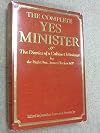
"Yes, Minister" was a BBC TV comedy series which ran for a number of years in the 1980s. It was co-written by former Prime Minister Harold Wilson's son-in-law, who at one time had been British Ambassador to the USA, so it was a view from the inside of the British Civil Service and the process of government in those days. It was frighteningly true-to-life, especially in its depiction of the senior civil servant Sir Humphrey Appleby, expertly played in the tv show by Nigel Hawthorne. It show more remains not only an outstanding example of comedy writing, but also still a useful guide to how Government actually works in the UK, despite the sweeping changes instituted by successive Prime Ministers. In trying to move away from the Government shown in this series, paradoxically the pattern has persisted despite the attempts to reform and overthrow the old order and the introduction of corporatism by particularly the Blair administration from 1997 onwards.
The show followed the career of a rather hapless Minster, Jim Hacker, who is put in charge of the Department of Administrative Affairs - a sort of amalgam of the current-day Department of Communities and Local Government (DCLG) and some of the functions of the Cabinet Office. He is constantly browbeaten - but ever so politely - by the Permanent Secretary (effectively the Department's Chief Executive), Sir Humphrey Appleby, and gets advice from the inside from his Personal Secretary, Bernard Woolley. The civil service is shown as having its own agenda for how the country ought to be run, which involves minimising the impact of "here today, gone tomorrow" Ministers, whose careers are dependent on the rise and fall of political fortunes, and Sir Humphrey's manoevreing in arranging outcomes that suit the Civil Service agenda and the Minister's own political needs and ambitions, which sometimes run counter to the Civil Service agenda, and sometimes don't.
The novelisations of the show go beyond mere narrative retelling. They are cast as political memoirs from 2019 (making them, in some strange sense, a form of science fiction!), and whilst they recapitulate the plots and dialogue of the shows, they also have a succession of made up "found documents", such as memos, appraisal reports and newspaper pages amongst other things.
The tv shows and books are actually considered to be valid guides in how to deal with Government! Certainly I know that these have been used as training manuals by large corporations trying to get a handle on how to deal with Government departments at high level. Despite the fact that they might be thought to have been superceded by shows like "The thick of it", many of the Civil Service ways and attitudes shown in the series persisted well into the 1990s and even 2000s. I, for one, worked for someone very much like Sir Humphrey Appleby. Although this is promoted as comedy and satire, there are some values in the "old" Civil Service, shown here, which in ten or twenty years' time, someone will try to bring back. Senior Civil Servants in the UK were generally incorruptible in those days, because their idea of status was totally different to anyone else's. The failure of the Financial Services Authority (FSA) in the banking crisis of the late 2000s is a case in point. The FSA failed to bring the banks to heel because they recruited from the second echelon of banking management; and those people could be browbeaten by the senior management they were trying to regulate because the bankers saw these people as subordinates, whilst the regulators were still in awe of the bankers. An old-time civil servant, like Sir Humphrey Appleby (or my former boss!) could not have been browbeaten like that, or had the cultural cringe at facing high and mighty CEOs because their values and ideas of status did not rely on mere money, but on position, closeness to the political elite, and the liklihood of getting their "K" (knighthood) on retirement.
It also remains strange that many of the issues identified in "Yes, Minister" - waste in public expenditure, EU regulations, security concerns, pay and rations - are still public issues thirty years later. This book and its sequels remain relevant - and funny! - today. show less
The show followed the career of a rather hapless Minster, Jim Hacker, who is put in charge of the Department of Administrative Affairs - a sort of amalgam of the current-day Department of Communities and Local Government (DCLG) and some of the functions of the Cabinet Office. He is constantly browbeaten - but ever so politely - by the Permanent Secretary (effectively the Department's Chief Executive), Sir Humphrey Appleby, and gets advice from the inside from his Personal Secretary, Bernard Woolley. The civil service is shown as having its own agenda for how the country ought to be run, which involves minimising the impact of "here today, gone tomorrow" Ministers, whose careers are dependent on the rise and fall of political fortunes, and Sir Humphrey's manoevreing in arranging outcomes that suit the Civil Service agenda and the Minister's own political needs and ambitions, which sometimes run counter to the Civil Service agenda, and sometimes don't.
The novelisations of the show go beyond mere narrative retelling. They are cast as political memoirs from 2019 (making them, in some strange sense, a form of science fiction!), and whilst they recapitulate the plots and dialogue of the shows, they also have a succession of made up "found documents", such as memos, appraisal reports and newspaper pages amongst other things.
The tv shows and books are actually considered to be valid guides in how to deal with Government! Certainly I know that these have been used as training manuals by large corporations trying to get a handle on how to deal with Government departments at high level. Despite the fact that they might be thought to have been superceded by shows like "The thick of it", many of the Civil Service ways and attitudes shown in the series persisted well into the 1990s and even 2000s. I, for one, worked for someone very much like Sir Humphrey Appleby. Although this is promoted as comedy and satire, there are some values in the "old" Civil Service, shown here, which in ten or twenty years' time, someone will try to bring back. Senior Civil Servants in the UK were generally incorruptible in those days, because their idea of status was totally different to anyone else's. The failure of the Financial Services Authority (FSA) in the banking crisis of the late 2000s is a case in point. The FSA failed to bring the banks to heel because they recruited from the second echelon of banking management; and those people could be browbeaten by the senior management they were trying to regulate because the bankers saw these people as subordinates, whilst the regulators were still in awe of the bankers. An old-time civil servant, like Sir Humphrey Appleby (or my former boss!) could not have been browbeaten like that, or had the cultural cringe at facing high and mighty CEOs because their values and ideas of status did not rely on mere money, but on position, closeness to the political elite, and the liklihood of getting their "K" (knighthood) on retirement.
It also remains strange that many of the issues identified in "Yes, Minister" - waste in public expenditure, EU regulations, security concerns, pay and rations - are still public issues thirty years later. This book and its sequels remain relevant - and funny! - today. show less
Lists
Awards

You May Also Like


Associated Authors
Statistics
- Works
- 73
- Also by
- 2
- Members
- 4,507
- Popularity
- #5,562
- Rating
- 4.2
- Reviews
- 52
- ISBNs
- 136
- Languages
- 10
- Favorited
- 2