
Antony Jay (1930–2016)
Author of The Complete Yes Minister: The Diaries of a Cabinet Minister
About the Author
Antony Rupert Jay was born in London, England on April 20, 1930. He received a degree in classics and comparative philology from Magdalene College, Cambridge in 1952. After serving two years with the Royal Signal Corps, he joined the current affairs department of BBC Television, where he developed show more the current affairs program Tonight. He became editor of the program and head of the television talk features department. He left the BBC in 1964 to become a freelance writer and producer. He wrote for the programs That Was the Week That Was and The Frost Report and the documentaries The Royal Family and Elizabeth R.: A Year in the Life of the Queen. He was a writer and producer of management training films for Video Arts. He created the television shows Yes Minister and Yes, Prime Minister. He wrote several books during his lifetime including Management and Machiavelli: An Inquiry Into the Politics of Corporate Life, Effective Presentation: The Communication of Ideas by Words and Visual Aids, The Householder's Guide to Community Defense Against Bureaucratic Aggression, and Corporation Man. He was the co-author with David Frost for To England with Love and with Jonathan Lynn for The Complete Yes Minister and Yes, Prime Minister. They later collaborated on a stage version of Yes Prime Minister. Jay died on August 21, 2016 at the age of 86. (Bowker Author Biography) show less
Series
Works by Antony Jay
Effective Presentation: Communication of Ideas by Words and Visual Aids (The Institute of Management Reports) (1985) 56 copies
Corporation man; who he is, what he does, why his ancient tribal impulses dominate the life of the modern corporation (1971) 30 copies, 1 review
Machiavelli e i dirigenti d'azienda 2 copies
Die Kunst der Präsentation. Wie man Ideen, Produkte und sich selbst am besten verkauft (1982) 1 copy
O homem s.a. 1 copy
Associated Works
Tagged
Common Knowledge
- Legal name
- Jay, Sir Antony Rupert
- Birthdate
- 1930-04-20
- Date of death
- 2016-08-21
- Gender
- male
- Education
- St. Paul's School, London, UK
University of Cambridge (Magdalene College) - Occupations
- writer
director
broadcaster - Organizations
- BBC
- Awards and honors
- Commander of the Royal Victorian Order (1993)
Knight Bachelor (1988)
Commander of the Order of the British Empire - Nationality
- UK
- Birthplace
- London, England, UK
- Places of residence
- London, England, UK
- Associated Place (for map)
- London, England, UK
Members
Reviews
The complete Yes Minister; the diaries of a Cabinet Minister by the Right Hon. James Hacker MP by Jonathan Lynn
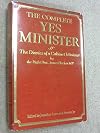
"Yes, Minister" was a BBC TV comedy series which ran for a number of years in the 1980s. It was co-written by former Prime Minister Harold Wilson's son-in-law, who at one time had been British Ambassador to the USA, so it was a view from the inside of the British Civil Service and the process of government in those days. It was frighteningly true-to-life, especially in its depiction of the senior civil servant Sir Humphrey Appleby, expertly played in the tv show by Nigel Hawthorne. It show more remains not only an outstanding example of comedy writing, but also still a useful guide to how Government actually works in the UK, despite the sweeping changes instituted by successive Prime Ministers. In trying to move away from the Government shown in this series, paradoxically the pattern has persisted despite the attempts to reform and overthrow the old order and the introduction of corporatism by particularly the Blair administration from 1997 onwards.
The show followed the career of a rather hapless Minster, Jim Hacker, who is put in charge of the Department of Administrative Affairs - a sort of amalgam of the current-day Department of Communities and Local Government (DCLG) and some of the functions of the Cabinet Office. He is constantly browbeaten - but ever so politely - by the Permanent Secretary (effectively the Department's Chief Executive), Sir Humphrey Appleby, and gets advice from the inside from his Personal Secretary, Bernard Woolley. The civil service is shown as having its own agenda for how the country ought to be run, which involves minimising the impact of "here today, gone tomorrow" Ministers, whose careers are dependent on the rise and fall of political fortunes, and Sir Humphrey's manoevreing in arranging outcomes that suit the Civil Service agenda and the Minister's own political needs and ambitions, which sometimes run counter to the Civil Service agenda, and sometimes don't.
The novelisations of the show go beyond mere narrative retelling. They are cast as political memoirs from 2019 (making them, in some strange sense, a form of science fiction!), and whilst they recapitulate the plots and dialogue of the shows, they also have a succession of made up "found documents", such as memos, appraisal reports and newspaper pages amongst other things.
The tv shows and books are actually considered to be valid guides in how to deal with Government! Certainly I know that these have been used as training manuals by large corporations trying to get a handle on how to deal with Government departments at high level. Despite the fact that they might be thought to have been superceded by shows like "The thick of it", many of the Civil Service ways and attitudes shown in the series persisted well into the 1990s and even 2000s. I, for one, worked for someone very much like Sir Humphrey Appleby. Although this is promoted as comedy and satire, there are some values in the "old" Civil Service, shown here, which in ten or twenty years' time, someone will try to bring back. Senior Civil Servants in the UK were generally incorruptible in those days, because their idea of status was totally different to anyone else's. The failure of the Financial Services Authority (FSA) in the banking crisis of the late 2000s is a case in point. The FSA failed to bring the banks to heel because they recruited from the second echelon of banking management; and those people could be browbeaten by the senior management they were trying to regulate because the bankers saw these people as subordinates, whilst the regulators were still in awe of the bankers. An old-time civil servant, like Sir Humphrey Appleby (or my former boss!) could not have been browbeaten like that, or had the cultural cringe at facing high and mighty CEOs because their values and ideas of status did not rely on mere money, but on position, closeness to the political elite, and the liklihood of getting their "K" (knighthood) on retirement.
It also remains strange that many of the issues identified in "Yes, Minister" - waste in public expenditure, EU regulations, security concerns, pay and rations - are still public issues thirty years later. This book and its sequels remain relevant - and funny! - today. show less
The show followed the career of a rather hapless Minster, Jim Hacker, who is put in charge of the Department of Administrative Affairs - a sort of amalgam of the current-day Department of Communities and Local Government (DCLG) and some of the functions of the Cabinet Office. He is constantly browbeaten - but ever so politely - by the Permanent Secretary (effectively the Department's Chief Executive), Sir Humphrey Appleby, and gets advice from the inside from his Personal Secretary, Bernard Woolley. The civil service is shown as having its own agenda for how the country ought to be run, which involves minimising the impact of "here today, gone tomorrow" Ministers, whose careers are dependent on the rise and fall of political fortunes, and Sir Humphrey's manoevreing in arranging outcomes that suit the Civil Service agenda and the Minister's own political needs and ambitions, which sometimes run counter to the Civil Service agenda, and sometimes don't.
The novelisations of the show go beyond mere narrative retelling. They are cast as political memoirs from 2019 (making them, in some strange sense, a form of science fiction!), and whilst they recapitulate the plots and dialogue of the shows, they also have a succession of made up "found documents", such as memos, appraisal reports and newspaper pages amongst other things.
The tv shows and books are actually considered to be valid guides in how to deal with Government! Certainly I know that these have been used as training manuals by large corporations trying to get a handle on how to deal with Government departments at high level. Despite the fact that they might be thought to have been superceded by shows like "The thick of it", many of the Civil Service ways and attitudes shown in the series persisted well into the 1990s and even 2000s. I, for one, worked for someone very much like Sir Humphrey Appleby. Although this is promoted as comedy and satire, there are some values in the "old" Civil Service, shown here, which in ten or twenty years' time, someone will try to bring back. Senior Civil Servants in the UK were generally incorruptible in those days, because their idea of status was totally different to anyone else's. The failure of the Financial Services Authority (FSA) in the banking crisis of the late 2000s is a case in point. The FSA failed to bring the banks to heel because they recruited from the second echelon of banking management; and those people could be browbeaten by the senior management they were trying to regulate because the bankers saw these people as subordinates, whilst the regulators were still in awe of the bankers. An old-time civil servant, like Sir Humphrey Appleby (or my former boss!) could not have been browbeaten like that, or had the cultural cringe at facing high and mighty CEOs because their values and ideas of status did not rely on mere money, but on position, closeness to the political elite, and the liklihood of getting their "K" (knighthood) on retirement.
It also remains strange that many of the issues identified in "Yes, Minister" - waste in public expenditure, EU regulations, security concerns, pay and rations - are still public issues thirty years later. This book and its sequels remain relevant - and funny! - today. show less

I love this book! Absolutely. It is a classic, and a must read for anyone who wishes to build a career in politics, or in the corporate world!
Jonathan Lynn has created a masterpiece, and he should know it
Many years ago, I watched the series, and was laughing all the time. Then, I read the book, and I keep laughing. A few years later, and wiser I hope, I read it with a new appreciation of the nuances. This is the third reading, and I read it again, with a greater appreciation of the games show more that are played across organisational structures.
The writing is masterly, and I love that he brings out different view points, from Hackett, to Humphrey and Bernard. Awesome. show less
Jonathan Lynn has created a masterpiece, and he should know it
Many years ago, I watched the series, and was laughing all the time. Then, I read the book, and I keep laughing. A few years later, and wiser I hope, I read it with a new appreciation of the nuances. This is the third reading, and I read it again, with a greater appreciation of the games show more that are played across organisational structures.
The writing is masterly, and I love that he brings out different view points, from Hackett, to Humphrey and Bernard. Awesome. show less
As a TV show (and I feel me a bit stupid, not only that I didn't read this WHILE working at the Ministry, but that I haven't sought out and sat down with the DVDs of the show, ever) this is pure 5, but as all TV or film adaptions (you see the same thing in JK Rowling, for some reason) do when they try to stick to line-by-line adaption of the dialogue, it suffers a bit, because you can see the strings. They make a valiant effort to take us into Hacker's brain, and it no doubt is show more super-interesting for longtime fans of the show who are used to seeing it as a little sketch, but the fact remains that it IS a little sketch and when you try to have him explain to the reader why he said this or what he thought when Bernard said that, it doesn't ring true because in fact there was no reason - it was because it was funny, and they were scripted to say absurd stuff because the funny is absurd.
That said. If the psychological realism is lacking, the grip on institutional practice is almost frighteningly sound. It ACTUALLY IS like that, with the ministers totally in thrall, except when they make a leviathan roll to achieve or abort something to poltical reasons, to their civil service, and all the way down the line everyone is trying to achieve whatever will cement their position, accrue more power to ministry and office, and provide a plausibe means to feather in cap, whether what they say they did has any relation to what they did or not. Statistics really are ALL MEANINGLESS, and they REALLY DO want it that way, because it you change the metrics year by year you can get them to support anything you might want. They REALLY DO measure success by size and responsibilities, number of "hats" - wastage. It's changed a lot for better and worse, no doubt - the stuff about women is pure unreconstructed the '70s, and there have been twenty years of New Labour/Third Way-typre reforms bringing in people from private sector and making everyone a lot more concerned with self-promotion and less secure. Dear lord, am I saying the modern public service combines the worst of "old government" with the worst of modern politics? Nah. Just that the human capacity for obfuscation in defense of one's own power is infinite, and this is a primer.
And it's FUNNY, of course. show less
That said. If the psychological realism is lacking, the grip on institutional practice is almost frighteningly sound. It ACTUALLY IS like that, with the ministers totally in thrall, except when they make a leviathan roll to achieve or abort something to poltical reasons, to their civil service, and all the way down the line everyone is trying to achieve whatever will cement their position, accrue more power to ministry and office, and provide a plausibe means to feather in cap, whether what they say they did has any relation to what they did or not. Statistics really are ALL MEANINGLESS, and they REALLY DO want it that way, because it you change the metrics year by year you can get them to support anything you might want. They REALLY DO measure success by size and responsibilities, number of "hats" - wastage. It's changed a lot for better and worse, no doubt - the stuff about women is pure unreconstructed the '70s, and there have been twenty years of New Labour/Third Way-typre reforms bringing in people from private sector and making everyone a lot more concerned with self-promotion and less secure. Dear lord, am I saying the modern public service combines the worst of "old government" with the worst of modern politics? Nah. Just that the human capacity for obfuscation in defense of one's own power is infinite, and this is a primer.
And it's FUNNY, of course. show less

This book is the ultimate clever-funny political satire. Written as the diary of Cabinet Minister James Hacker and edited by the authors Jonathan Lynn and Antony Jay. Nothing wrong with that.. .. Except, they are also the original scriptwriters for the TV series YES MINISTER (which I never saw) with licence, therefore, to write the book from both ends. From this unique point it becomes so inventive and entertaining.
It would be interesting to know how the authors gained their insight into show more the Civil Service “Jobs for the Boys” culture. After very well paid employment for a lifetime, from which they cannot be sacked for incompetence, they spend retirement in one of the many money wasting QUANGOs . This enables “graduates” from certain schools, mostly of very limited ability, to live in luxury at the expense of the hard working, often gifted, majority. Nothing ever changes............... show less
It would be interesting to know how the authors gained their insight into show more the Civil Service “Jobs for the Boys” culture. After very well paid employment for a lifetime, from which they cannot be sacked for incompetence, they spend retirement in one of the many money wasting QUANGOs . This enables “graduates” from certain schools, mostly of very limited ability, to live in luxury at the expense of the hard working, often gifted, majority. Nothing ever changes............... show less
Lists
Awards

You May Also Like


Associated Authors
Statistics
- Works
- 60
- Also by
- 2
- Members
- 3,306
- Popularity
- #7,739
- Rating
- 4.3
- Reviews
- 36
- ISBNs
- 135
- Languages
- 11