
Peter F. Drucker (1909–2005)
Author of The Effective Executive: The Definitive Guide to Getting the Right Things Done
About the Author
Peter F. Drucker has been Clarke Professor of Social Science and Management at Claremont Graduate School in California since 1971.
Image credit: Courtesy of the Drucker Institute, Claremont Graduate University.
Works by Peter F. Drucker
The Effective Executive: The Definitive Guide to Getting the Right Things Done (1967) 2,267 copies, 21 reviews
The Essential Drucker: The Best of Sixty Years of Peter Drucker's Essential Writings on Management (2001) 1,049 copies, 8 reviews
The Daily Drucker: 366 Days of Insight and Motivation for Getting the Right Things Done (2004) 471 copies, 4 reviews
The Five Most Important Questions You Will Ever Ask About Your Organization (2008) 233 copies, 3 reviews
Classic Drucker: Wisdom from Peter Drucker from the Pages of Harvard Business Review (2006) 135 copies, 1 review
The Effective Executive in Action: A Journal for Getting the Right Things Done (2005) 121 copies, 1 review
The Executive in Action : Managing for Results, Innovation and Entrepreneurship, the Effective Executive (1996) 104 copies, 1 review
Peter Drucker on the Profession of Management (Harvard Business Review Book) (1998) 96 copies, 1 review
The Five Most Important Questions You Will Ever Ask About Your Nonprofit Organization: Participant's Workbook (1993) 77 copies
Peter Drucker's Five Most Important Questions: Enduring Wisdom for Today's Leaders (2015) 30 copies, 2 reviews
The Peter F. Drucker Reader: Selected Articles from the Father of Modern Management Thinking (2016) 9 copies
The Last of All Possible Worlds and The Temptation to Do Good: Two Novels by Peter F. Drucker (2016) 7 copies, 1 review
A Conversation With Peter Drucker & Peter M. Senge ; Leading in a time of change, what it will take to lead tomorrow, viewer's workbook (2001) 7 copies
Le manager efficace: Le guide indispensable pour maximiser votre efficacite manageriale (2021) 4 copies
O Gerente Eficaz 4 copies
De lider a lider/ From Leader to Leader: Seleccion De Articulos De La Revista de la Fundacion Drucker (Spanish Edition) (2007) 4 copies
Drucker : su visión sobre : la administración, la organización basada en la información, la economía, la sociedad (1996) 4 copies
Essenciais da Gestão - eBook 3 copies
A Sociedade Pós-Capitalista 2 copies
The Coming of the New Organization 2 copies
Fungující společnost : vybrané eseje o společenství, společnosti a politickém systému (2004) 2 copies
Ameaças Económicas - eBook 2 copies
"Trading Places" 1 copy
Globalização - eBook 1 copy
O Gestor Eficaz - eBook 1 copy
O gerente eficaz 1 copy
Tecnologia - eBook 1 copy
Drucker minden napra - 366 inspiráló és motiváló gondolat az év minden napjára, mindenki számára (2009) 1 copy
Economia em Rede - eBook 1 copy
Negócios e Sociedade - eBook 1 copy
GLOBALIZAÇÃO 1 copy
[(The Executive in Action: Three Classic Works on Management )] [Author: Peter Drucker] [Jun-1998] 1 copy
Lessons in leadership [VHS] 1 copy
Drucker in the Harvard Business Review, 1963-1989 ("Harvard Business Review" Paperback) (1991) 1 copy
La toma de decisiones 1 copy
Liderança Prática - eBook 1 copy
Escritos fundamentales/ Fundamental Writtings: La Sociedad/ The Society (Spanish Edition) (2002) 1 copy
O Diário de Drucker 1 copy
Drucker 1 copy
A PROFISSÃO DE ADMINISTRADOR 1 copy
Management en Resultaat 1 copy
Despre profesia de manager 1 copy
O Diário de Drucker - eBook 1 copy
Fronteiras do Amanhã 1 copy
le management en question 1 copy
Formação de dirigentes 1 copy
a revolucao invisivel 1 copy
Практика менеджмента. 1 copy
Managing For The Future pt2 1 copy
Administração De Organizações Sem Fins Lucrativos (1997 4th Portuguese Paperback Edition) (1997) 1 copy
ESENCIAL 1 copy
Tiempo de Desafíos, Tiempo de Reinvenciones: Un Diálogo Entre Peter Drucker e Isao Nakauchi [338.9 / DRU] (1901) 1 copy
Administração Lucrativa 1 copy
Johtamisen haasteet 1 copy
Les entrepreneurs 1 copy
Myśli przewodnie 1 copy
A tentação de fazer o bem 1 copy
Effective decisions 1 copy
The practice of managment 1 copy
L'era del discontinuo 1 copy
Managing for the Future: the 1990s and Beyond, Abridged Audio Cassette Read By Joseph Campanella; 1 copy
Peter F. Drucker - O Essencial de Drucker Uma selecção das melhores teorias do pai da Gestão (2013) 1 copy
Fator humano e desempenho 1 copy
Etkin yöneticilik 1 copy
Concept of the Corporation. 1972 edition with a new Preface and new Epilogue by the author (1972) 1 copy
Associated Works
HBR's 10 Must Reads on Leadership (with featured article "What Makes an Effective Executive," by Peter F. Drucker) (2011) 443 copies, 2 reviews
Tagged
Common Knowledge
- Legal name
- Drucker, Peter Ferdinand
- Birthdate
- 1909-11-19
- Date of death
- 2005-11-11
- Gender
- male
- Education
- Goethe University Frankfurt (Ph.D|1931)
- Occupations
- professor
- Organizations
- Bennington College
New York University
Claremont Graduate University - Awards and honors
- Presidential Medal of Freedom (2002)
Grand Silver Medal for Services to the Republic of Austria (1974)
Grand Gold Decoration for Services to the Republic of Austria (1991)
Austrian Cross of Honour for Science and Art, 1st class (1999)
Order of the Sacred Treasure, 3rd class (1966) - Short biography
- Veja Wikipédia (Português): http://pt.wikipedia.org/wiki/Peter_Drucker
See WikiPédia (Inglês): http://en.wikipedia.org/wiki/Peter_Drucker - Nationality
- Austria-Hungary (birth)
USA (naturalized 1943) - Birthplace
- Kaasgraben, Vienna, Austria-Hungary
- Place of death
- Claremont, California, USA
- Associated Place (for map)
- Kaasgraben, Vienna, Austria-Hungary
Members
Reviews
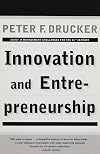
Innovation and Entrepreneurship is one of the foundation stones of the world as we see it today. By no means novel, the book is slightly older than I am, it still has some sage wisdom even if the specific case studies have slipped from relevance. Drucker's object were threefold: he provides a more rigorous definition of entrepreneurship that reclaims the field from its obsession with the high-tech genius inventor. He uses entrepreneurship to explain the success of the American and Japanese show more economy after World War 2, particularly how millions of jobs were created for men and women even as traditional smoke stack industries cratered. Finally, he offers some advice for entrepreneurial organizations.
In order, for Drucker entrepreneurship is the profitable harnessing of change to move capital from an area of low productivity to one of higher productivity. New scientific knowledge is just one of seven possible sources of innovation, and is in actually the most expensive and uncertain. The most important skill of the entrepreneur is a keen eye for incongruities and unmet market needs. One of the more moving case studies is a New York department store which "knew" that appliance sales should only be 20% of its business. It spent the consumer boom of the 60s trying to knock down its appliance numbers, and eventually lost position to a competitor who found a market in the gadget hungry Betty Drapers of the era. Novelty is also tied to entrepreneurship. While opening any business is a venture, opening yet another franchise restaurant is not really entrepreneurial.
The best section is on what kills entrepreneurial ventures. Drucker sees an entrepreneurial venture as being like a child. In existing businesses, expecting the new to carry the weight of a mature unit is like asking a six year old to march with a 60 pound pack; neither will get very far. A focus on the profitability of the present business can hinder entrepreneurship. He sees Johnson & Johnson and 3M as companies with the best practices, where a specialized division handles new businesses, which are given a few years to succeed or fail on their own merits before being upgraded to stable parts of the business. Established companies should conduct a regular audit with the aim of killing products which are not succeeding (RIP Google reader) because the time and attention of your employees is the most valuable resource you have.
The other side of innovation is the start-up, though I don't recall Drucker using that specific term. A small and new business can capitalize on doing one thing supremely well to capture a major market, but rapid growth is fraught with pain. Startups invariable run into cashflow and founder problems, and often at the most critical point when they need to rapidly ramp up capacity to succeed. Getting a solid managerial team in place before the crisis is the way to survive it, but good teams are expensive.
Drucker is full of solid 'horse sense' about running a business, and the fundamental are the fundamentals, but his focus on economics renders him somewhat blind to other aspects of entrepreneurship. Entrepreneurship can also be read as cognitive, as a series of decisions which bring about a new state of the world. And change is hard because it runs up against allocations not only of money, but also power and prestige. Drucker's unstated bias, that concerns about power and prestige should melt away in the face of the capital enhancing power of new ways of doing things, ignores the realities of human psychology.
Innovation and Entrepreneurship is an older book, but well worth checking out. And on a personal note of bitterness, I spent six years earning a PhD in a school which branded itself as "studying innovation" and Drucker never came up once. I'm fully for raiding and pillaging those over-endowed jerks at the B-school, and we should take their ideas along with their nice colloquium room furniture! show less
In order, for Drucker entrepreneurship is the profitable harnessing of change to move capital from an area of low productivity to one of higher productivity. New scientific knowledge is just one of seven possible sources of innovation, and is in actually the most expensive and uncertain. The most important skill of the entrepreneur is a keen eye for incongruities and unmet market needs. One of the more moving case studies is a New York department store which "knew" that appliance sales should only be 20% of its business. It spent the consumer boom of the 60s trying to knock down its appliance numbers, and eventually lost position to a competitor who found a market in the gadget hungry Betty Drapers of the era. Novelty is also tied to entrepreneurship. While opening any business is a venture, opening yet another franchise restaurant is not really entrepreneurial.
The best section is on what kills entrepreneurial ventures. Drucker sees an entrepreneurial venture as being like a child. In existing businesses, expecting the new to carry the weight of a mature unit is like asking a six year old to march with a 60 pound pack; neither will get very far. A focus on the profitability of the present business can hinder entrepreneurship. He sees Johnson & Johnson and 3M as companies with the best practices, where a specialized division handles new businesses, which are given a few years to succeed or fail on their own merits before being upgraded to stable parts of the business. Established companies should conduct a regular audit with the aim of killing products which are not succeeding (RIP Google reader) because the time and attention of your employees is the most valuable resource you have.
The other side of innovation is the start-up, though I don't recall Drucker using that specific term. A small and new business can capitalize on doing one thing supremely well to capture a major market, but rapid growth is fraught with pain. Startups invariable run into cashflow and founder problems, and often at the most critical point when they need to rapidly ramp up capacity to succeed. Getting a solid managerial team in place before the crisis is the way to survive it, but good teams are expensive.
Drucker is full of solid 'horse sense' about running a business, and the fundamental are the fundamentals, but his focus on economics renders him somewhat blind to other aspects of entrepreneurship. Entrepreneurship can also be read as cognitive, as a series of decisions which bring about a new state of the world. And change is hard because it runs up against allocations not only of money, but also power and prestige. Drucker's unstated bias, that concerns about power and prestige should melt away in the face of the capital enhancing power of new ways of doing things, ignores the realities of human psychology.
Innovation and Entrepreneurship is an older book, but well worth checking out. And on a personal note of bitterness, I spent six years earning a PhD in a school which branded itself as "studying innovation" and Drucker never came up once. I'm fully for raiding and pillaging those over-endowed jerks at the B-school, and we should take their ideas along with their nice colloquium room furniture! show less
The Last of All Possible Worlds and The Temptation to Do Good: Two Novels by Peter F. Drucker by Peter F. Drucker

Summary: A festschrift for Anthony Thiselton exploring from different perspectives the tension between plurality of interpretations of the Bible, and responsible hermeneutics.
Plurality of interpretations is perhaps one of the more troubling aspects of Protestant biblical interpretation. Not only does it account for numerous denominational divisions but there is the troubling phenomenon of Christians thinking everyone is his or her own interpreter without controls or answerability to show more others.
This volume explores the question of how to practice responsible hermeneutics in this context, as well as with a text that we believe both the Word of God and the product of multiple human voices. It is a festschrift to Anthony Thiselton, author, in the 1980s, of the ground-breaking The Two Horizons, where he brings to bear the work of figures like Heidegger, Gadamer, and Wittgenstein in the broader field of hermeneutics to explore one of the basic sources of much interpretive plurality, the unawareness of the historical horizon of the biblical text as well as the contemporary horizon of the interpreter (including traditions of interpretation that might shape the contemporary interpreter).
Perhaps in this case, the best way to give a sense of this book is to provide a table of contents of topics and contributors:
Introduction
Stanley E. Porter and Matthew R. Malcolm
1. The Future of Biblical Interpretation and Responsible Plurality in Hermeneutics
Anthony C. Thiselton
2. Biblical Hermeneutics and Theological Responsibility
Stanley E. Porter
3. Biblical Hermeneutics and Scriptural Responsibility
Richard S. Briggs
4. Biblical Hermeneutics and Kerygmatic Responsibility
Matthew R. Malcolm
5. Biblical Hermeneutics and Historical Responsibility
James D. G. Dunn
6. Biblical Hermeneutics and Critical Responsibility
Robert C. Morgan
7. Biblical Hermeneutics and Relational Responsibility
Tom Greggs
8. Biblical Hermeneutics and Ecclesial Responsibility
R. Walter L. Moberly
Conclusion
Stanley E. Porter and Matthew R. Malcolm
Thiselton’s opening essay is perhaps one of the most interesting. Drawing on Bakhtin, he argues for the importance in dealing with plurality of being aware of the polyphony of voices in the corpus of scripture. Responsible hermeneutics neither holds these voices in conflict, nor mutes some to privilege others, but seeks the larger perspective to which all of these contribute.
There were several interesting issues raised in individual essays as well as in the conflicting perspectives between some essays. Stanley Porter raises interesting questions about theological interpretation, and particularly the privileging of pre-modern theology in many discussions. Richard Briggs argues that scriptural responsibility in hermeneutics is a fostering of dialogue between different ideas of “scripture as.” James Dunn argues for the priority of the historical horizon in interpretation, certainly reflected in his New Perspective work on Paul. By contrast, Robert Morgan argues for the role of theological criticism over against the text. The final two chapters explore the relation of biblical interpretation to our relationship to the church authority as well as to its traditions and creeds.
While I do think the interpreters raised different and interesting ideas from their own perspectives (something the editors wrestled with in the end), I found myself troubled in two respects. One was that for a group of people who are concerned with meaning, one found it a challenge to understand what they were arguing at times. This book actually assumes that the reader is highly conversant with the hermeneutic issues being discussed, the relevant philosophers and the particular uses of language in the field.
Related, but more troubling to me is that seems this work reflects an assumption of opaqueness rather than perspicuity of scripture. As I write this I certainly am aware of the fact that not every verse in scripture is utterly clear. But Robert Morgan’s theological criticism in particular seems to affirm there are times where the theologian must go against the clarity of the biblical text. In Moberly’s concluding essay, he begins with a discussion of the Pauline authorship of the pastorals and the unsettling discovery during seminary that biblical criticism calls this into question despite the clear attestations of authorship and relationship. By the end, he acknowledges himself agnostic on the matter and states that “literary theory makes it possible to take the first-person voice of the letters with full imaginative seriousness, and one can unreservedly inhabit the imaginative world of the text in preaching, while leaving open the relation between the literary voice and the historical author” (p. 156).
It seems to me that these writers often accept the hermeneutic of suspicion about these texts. I would contend that the mental gymnastics that differentiates between “imaginary Paul” and Paul, the apostle and martyr is a corrosive one that undercuts the preacher’s ability to speak the word of the Lord to the people of God. I do not see how “imaginary Paul” can speak with authority to the Timothys of this world, for example, about “taking your share of suffering as a good soldier of Christ Jesus” (2 Timothy 2:3), but the apostle who was stoned and beaten many times and who would die for the gospel certainly could and can.
So, while I would wish in no way to detract from Anthony Thiselton’s scholarship, nor from the value of a collection like this for elucidating the current discussions in hermeneutics, I must express serious reservations about the value of this work either for addressing the issue of plurality that is its purported task or for the edifying and equipping of the people of God. show less
Plurality of interpretations is perhaps one of the more troubling aspects of Protestant biblical interpretation. Not only does it account for numerous denominational divisions but there is the troubling phenomenon of Christians thinking everyone is his or her own interpreter without controls or answerability to show more others.
This volume explores the question of how to practice responsible hermeneutics in this context, as well as with a text that we believe both the Word of God and the product of multiple human voices. It is a festschrift to Anthony Thiselton, author, in the 1980s, of the ground-breaking The Two Horizons, where he brings to bear the work of figures like Heidegger, Gadamer, and Wittgenstein in the broader field of hermeneutics to explore one of the basic sources of much interpretive plurality, the unawareness of the historical horizon of the biblical text as well as the contemporary horizon of the interpreter (including traditions of interpretation that might shape the contemporary interpreter).
Perhaps in this case, the best way to give a sense of this book is to provide a table of contents of topics and contributors:
Introduction
Stanley E. Porter and Matthew R. Malcolm
1. The Future of Biblical Interpretation and Responsible Plurality in Hermeneutics
Anthony C. Thiselton
2. Biblical Hermeneutics and Theological Responsibility
Stanley E. Porter
3. Biblical Hermeneutics and Scriptural Responsibility
Richard S. Briggs
4. Biblical Hermeneutics and Kerygmatic Responsibility
Matthew R. Malcolm
5. Biblical Hermeneutics and Historical Responsibility
James D. G. Dunn
6. Biblical Hermeneutics and Critical Responsibility
Robert C. Morgan
7. Biblical Hermeneutics and Relational Responsibility
Tom Greggs
8. Biblical Hermeneutics and Ecclesial Responsibility
R. Walter L. Moberly
Conclusion
Stanley E. Porter and Matthew R. Malcolm
Thiselton’s opening essay is perhaps one of the most interesting. Drawing on Bakhtin, he argues for the importance in dealing with plurality of being aware of the polyphony of voices in the corpus of scripture. Responsible hermeneutics neither holds these voices in conflict, nor mutes some to privilege others, but seeks the larger perspective to which all of these contribute.
There were several interesting issues raised in individual essays as well as in the conflicting perspectives between some essays. Stanley Porter raises interesting questions about theological interpretation, and particularly the privileging of pre-modern theology in many discussions. Richard Briggs argues that scriptural responsibility in hermeneutics is a fostering of dialogue between different ideas of “scripture as.” James Dunn argues for the priority of the historical horizon in interpretation, certainly reflected in his New Perspective work on Paul. By contrast, Robert Morgan argues for the role of theological criticism over against the text. The final two chapters explore the relation of biblical interpretation to our relationship to the church authority as well as to its traditions and creeds.
While I do think the interpreters raised different and interesting ideas from their own perspectives (something the editors wrestled with in the end), I found myself troubled in two respects. One was that for a group of people who are concerned with meaning, one found it a challenge to understand what they were arguing at times. This book actually assumes that the reader is highly conversant with the hermeneutic issues being discussed, the relevant philosophers and the particular uses of language in the field.
Related, but more troubling to me is that seems this work reflects an assumption of opaqueness rather than perspicuity of scripture. As I write this I certainly am aware of the fact that not every verse in scripture is utterly clear. But Robert Morgan’s theological criticism in particular seems to affirm there are times where the theologian must go against the clarity of the biblical text. In Moberly’s concluding essay, he begins with a discussion of the Pauline authorship of the pastorals and the unsettling discovery during seminary that biblical criticism calls this into question despite the clear attestations of authorship and relationship. By the end, he acknowledges himself agnostic on the matter and states that “literary theory makes it possible to take the first-person voice of the letters with full imaginative seriousness, and one can unreservedly inhabit the imaginative world of the text in preaching, while leaving open the relation between the literary voice and the historical author” (p. 156).
It seems to me that these writers often accept the hermeneutic of suspicion about these texts. I would contend that the mental gymnastics that differentiates between “imaginary Paul” and Paul, the apostle and martyr is a corrosive one that undercuts the preacher’s ability to speak the word of the Lord to the people of God. I do not see how “imaginary Paul” can speak with authority to the Timothys of this world, for example, about “taking your share of suffering as a good soldier of Christ Jesus” (2 Timothy 2:3), but the apostle who was stoned and beaten many times and who would die for the gospel certainly could and can.
So, while I would wish in no way to detract from Anthony Thiselton’s scholarship, nor from the value of a collection like this for elucidating the current discussions in hermeneutics, I must express serious reservations about the value of this work either for addressing the issue of plurality that is its purported task or for the edifying and equipping of the people of God. show less
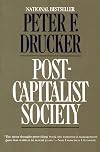
Summary: Describes the transformation of a society based on capital to one based on knowledge whose key structure is the responsibility-based organization.
Peter Drucker, who died in 2005 was the business guru I looked to as a young leader in a non-profit organization. He wrote Post-Capitalist Society in 1993. In many ways, it captures a number of his key ideas, and in many ways seems prophetic, twenty-eight years later.
His key idea here is that we have witnessed a transformation from a show more capitalist society to a knowledge society, based on the successive Industrial, Productivity, and Management Revolutions. Now we are not in a situation of knowledge but knowledges–specialized knowledge for work in more highly specialized organizations. Organizations make knowledge productive for a special purpose. In a knowledge society, the workers own the capital, which is their knowledge, but need the organization to make it productive.
He has a fascinating discussion on the source of capital in pension funds through institutional investors. Here as well, employees are the ultimate “owners” even while trustees manage these funds. He points to the critical role of corporate governance in creating organizations responsible to these employee-owners. As he looks at the question of productivity, he advocates for corporate restructuring and outsourcing so that organizations concentrate on what they are most effective at doing. Effective responsible organizations are ones where everyone takes responsibility for the organization.
He then turns from the knowledge society of organizations to the wider polity of which they are a part. He envisions the transitions from nations to megastates, as we see in the European Union, NAFTA, and other regional economic polities. Even in 1994, Drucker recognized the environment as one of the needs for transnational arrangements, as well as counter-terrorism efforts and arms control. Even while he recognizes this movement to regional entities and transnational agreements, he foresaw the rise of tribalism, and the stress on diversity rather than unity. For Drucker, tribal and transnational identities go together. And maybe this is so, but not in the ethnic ways he sees but in the radical political identities on the far right and left of the political spectrum that find iterations in many countries.
He is witheringly critical of “the nanny state” in which taxation and economic policy is designed not to make the “patient” healthy but rather to feel good. He points to the success of Germany (before 1989) and Japan and the “Asian tigers” that had high taxes but high investment in education, in facilities, and infrastructure. He argues that patriotism is not enough and that what is needed is the revitalization of community (even more true today) and citizenship expressed through voluntarism.
In the final section, he focuses even more on the cultivation of knowledge. He argues that we know more than we do and need to learn to “only connect,” to see how disparate pieces connect as a whole. He considers here the needs of education, and contends here, as well, for outsourcing and charter schools (an area that has a very mixed record of effectiveness). He advocates for the “accountable” school. While Drucker had a richer vision of the results he would seek from education, his was among the voices that sustained an accountability movement that has focused more on test-taking than learning, to the discouragement of many teachers. Ultimately Drucker believed people needed to be educated for work in two cultures simultaneously–“that of the ‘intellectual,’ who focuses on words and idea, and that of the ‘manager,’ who focuses on people and work.”
Where Drucker seems the most prescient is his understanding of the knowledge economy. What I don’t think he foresaw was the monetization of knowledge in the information economy. He recognized the growth of transnationalism, but didn’t fully reckon with the reactionary character of nationalism, often acting against its own interests. He had wisdom that both corporations and governments need about long-term planning and especially for governments, the follies of budget deficits in good times as well as bad. Perhaps most compelling to me was his call beyond patriotism to work for the common good and to citizenship expressed in voluntarism. He recognized that we need people educated both in humane ideals and technical skill, refusing to come down on one side or the other. None of us sees the future with complete clarity. Drucker saw it better than many, understanding the developments and trajectory of history and the challenges facing organizations and large polities of his time. show less
Peter Drucker, who died in 2005 was the business guru I looked to as a young leader in a non-profit organization. He wrote Post-Capitalist Society in 1993. In many ways, it captures a number of his key ideas, and in many ways seems prophetic, twenty-eight years later.
His key idea here is that we have witnessed a transformation from a show more capitalist society to a knowledge society, based on the successive Industrial, Productivity, and Management Revolutions. Now we are not in a situation of knowledge but knowledges–specialized knowledge for work in more highly specialized organizations. Organizations make knowledge productive for a special purpose. In a knowledge society, the workers own the capital, which is their knowledge, but need the organization to make it productive.
He has a fascinating discussion on the source of capital in pension funds through institutional investors. Here as well, employees are the ultimate “owners” even while trustees manage these funds. He points to the critical role of corporate governance in creating organizations responsible to these employee-owners. As he looks at the question of productivity, he advocates for corporate restructuring and outsourcing so that organizations concentrate on what they are most effective at doing. Effective responsible organizations are ones where everyone takes responsibility for the organization.
He then turns from the knowledge society of organizations to the wider polity of which they are a part. He envisions the transitions from nations to megastates, as we see in the European Union, NAFTA, and other regional economic polities. Even in 1994, Drucker recognized the environment as one of the needs for transnational arrangements, as well as counter-terrorism efforts and arms control. Even while he recognizes this movement to regional entities and transnational agreements, he foresaw the rise of tribalism, and the stress on diversity rather than unity. For Drucker, tribal and transnational identities go together. And maybe this is so, but not in the ethnic ways he sees but in the radical political identities on the far right and left of the political spectrum that find iterations in many countries.
He is witheringly critical of “the nanny state” in which taxation and economic policy is designed not to make the “patient” healthy but rather to feel good. He points to the success of Germany (before 1989) and Japan and the “Asian tigers” that had high taxes but high investment in education, in facilities, and infrastructure. He argues that patriotism is not enough and that what is needed is the revitalization of community (even more true today) and citizenship expressed through voluntarism.
In the final section, he focuses even more on the cultivation of knowledge. He argues that we know more than we do and need to learn to “only connect,” to see how disparate pieces connect as a whole. He considers here the needs of education, and contends here, as well, for outsourcing and charter schools (an area that has a very mixed record of effectiveness). He advocates for the “accountable” school. While Drucker had a richer vision of the results he would seek from education, his was among the voices that sustained an accountability movement that has focused more on test-taking than learning, to the discouragement of many teachers. Ultimately Drucker believed people needed to be educated for work in two cultures simultaneously–“that of the ‘intellectual,’ who focuses on words and idea, and that of the ‘manager,’ who focuses on people and work.”
Where Drucker seems the most prescient is his understanding of the knowledge economy. What I don’t think he foresaw was the monetization of knowledge in the information economy. He recognized the growth of transnationalism, but didn’t fully reckon with the reactionary character of nationalism, often acting against its own interests. He had wisdom that both corporations and governments need about long-term planning and especially for governments, the follies of budget deficits in good times as well as bad. Perhaps most compelling to me was his call beyond patriotism to work for the common good and to citizenship expressed in voluntarism. He recognized that we need people educated both in humane ideals and technical skill, refusing to come down on one side or the other. None of us sees the future with complete clarity. Drucker saw it better than many, understanding the developments and trajectory of history and the challenges facing organizations and large polities of his time. show less
The Effective Executive: The Definitive Guide to Getting the Right Things Done (Harperbusiness Essentials) by Peter F. Drucker
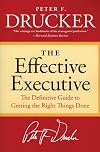
A very practical read that remains relevant, despite being written in 1966. Drucker premises the book about maximizing the effectiveness (getting the right things done) of a new class of 'knowledge workers' -- what strikes me as particularly relevant is the these lessons can be applied beyond the stereotypical white collar office worker, particularly in service and light manufacturing.
Today, I don't think there is as clear of a dichotomy as Drucker proposes. All workers would benefit from: show more
-Reducing the non-value add work that wastes their time and energy (Know Thy Time)
-Focusing their efforts on high-contribution initiatives (What Can I Contribute?)
-Having jobs that are designed to be demanding and big, so as to be engaged to grow personally and professionally (Making Strength Productive)
-Communicate what parts of their role could be abandoned or de-prioritized (First Things First)
The book can lose your attention a bit in written form, so I particularly enjoyed the free audiobook version available as a podcast: https://podcasts.google.com/feed/aHR0cHM6Ly9hbmNob3IuZm0vcy8xMjI1ZDRkMC9wb2RjYXN... show less
Today, I don't think there is as clear of a dichotomy as Drucker proposes. All workers would benefit from: show more
-Reducing the non-value add work that wastes their time and energy (Know Thy Time)
-Focusing their efforts on high-contribution initiatives (What Can I Contribute?)
-Having jobs that are designed to be demanding and big, so as to be engaged to grow personally and professionally (Making Strength Productive)
-Communicate what parts of their role could be abandoned or de-prioritized (First Things First)
The book can lose your attention a bit in written form, so I particularly enjoyed the free audiobook version available as a podcast: https://podcasts.google.com/feed/aHR0cHM6Ly9hbmNob3IuZm0vcy8xMjI1ZDRkMC9wb2RjYXN... show less
Lists
My List (2)
Awards


You May Also Like


Associated Authors
Statistics
- Works
- 258
- Also by
- 5
- Members
- 12,439
- Popularity
- #1,884
- Rating
- 3.9
- Reviews
- 95
- ISBNs
- 714
- Languages
- 23
- Favorited
- 20