
Peter Senge
Author of The Fifth Discipline: The Art and Practice of the Learning Organization
About the Author
Peter M. Senge is a senior lecturer at the MIT Sloan School of Management and the founder of the Society for Organizational Learning (SoL).
Works by Peter Senge
The Fifth Discipline: The Art and Practice of the Learning Organization (1990) 3,497 copies, 18 reviews
The Fifth Discipline Fieldbook: Strategies and Tools for Building a Learning Organization (1994) 1,048 copies, 6 reviews
The Dance of Change: The Challenges to Sustaining Momentum in Learning Organizations (1999) 467 copies, 2 reviews
Schools That Learn: A Fifth Discipline Fieldbook for Educators, Parents, and Everyone Who Cares About Education (2000) 277 copies, 2 reviews
The Necessary Revolution: How individuals and organizations are working together to create a sustainable world. (2008) 260 copies, 1 review
A Revolução Decisiva 3 copies
A Dança das Mudanças: Os Desafios de Manter o Crescimento e o Sucesso em Organizações que Aprendem 2 copies
"The Leader's New Work: Building Learning Organizations," Sloan Management Review; Fall90, Vol. 32 Issue 1, p7-23. (1997) 2 copies
Fifth Discipline 1 copy
Presence: Exploring Profound Change in People, Organizations and Society by Peter M. Senge (2005-05-26) (1800) 1 copy
Den femte disiplin 1 copy
Õppiv kool : [viie distsipliini käsiraamat haridustöötajatele, lapsevanematele ja kõigile, kellele haridus korda läheb] (2009) 1 copy
Group Development 1 copy
Associated Works
Servant Leadership: A Journey into the Nature of Legitimate Power and Greatness 25th Anniversary Edition (1977) — Afterword — 861 copies, 4 reviews
The World Cafe: Shaping Our Futures Through Conversations That Matter (2005) — Afterword — 324 copies, 2 reviews
Rethinking the Future: Rethinking Business, Principles, Competition, Control and Complexity, Leadership, Markets, and the World (1993) — Contributor — 122 copies
Leading from Within: Poetry That Sustains the Courage to Lead (2007) — Contributor — 115 copies, 3 reviews
Profit Beyond Measure: Extraordinary Results through Attention to Work and People (2000) — Foreword — 45 copies, 1 review
Tagged
Common Knowledge
- Canonical name
- Senge, Peter Michael
- Legal name
- Senge, Peter Michael
- Birthdate
- 1947
- Gender
- male
- Education
- Stanford University (B.S., Aerospace engineering)
Massachusetts Institute of Technology (M.S., 1972)
Massachusetts Institute of Technology (Sloan School of Management, Ph.D., 1978) - Occupations
- Director of the Center for Organizational Learning, MIT Sloan School of Management
systems scientist - Short biography
- Peter Senge received a B.S. in Aerospace engineering from Stanford University. While at Stanford, Senge also studied philosophy. He later earned an M.S. in social systems modeling from MIT in 1972. He also earned a Ph.D. from the MIT Sloan School of Management in 1978.[1][2]
He was the Director of the Center for Organizational Learning at the MIT Sloan School of Management, and is presently (2005) on the faculty at MIT.
He is the founding chair of the Society for Organizational Learning (SoL). This organization helps with the communication of ideas between large corporations. It replaced the previous organization known as, The center for Organizational Learning at MIT.
He has had a regular meditation practice since 1996 and began meditating with a trip to Tassajara, a Zen Buddhist monastery, before attending Stanford.[3] He recommends meditation or similar forms of contemplative practice. - Nationality
- USA
- Birthplace
- Stanford, California, USA
- Places of residence
- Stanford, California, USA
- Associated Place (for map)
- Stanford, California, USA
Members
Reviews
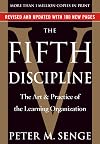
This book is the seminal statement of systems thinking – the philosophic idea that knowledge is increasingly aligned in groups of thought. And the goal of systems thinking is to produce an organization of human endeavors that – wait for it – learns. The learning organization trumps not only individual learners but also established organizations that have ceased to learn/grow/adapt effectively.
While this might seem obvious to those (like myself) in research, much of this runs counter to show more traditional American management thought. Senge, like many others in new management culture, says that not a hierarchy but the ability to learn across all levels is the distinctive feature of organizations that win. Like Deming and the Gemba Kaizen movement, he cites the productivity of the Toyota automobile corporation over prior decades as his proof. (He writes before Toyota had safety troubles that needed to be addressed.)
As a multi-disciplinary professional, I like Senge’s appreciation of the flatness of organizations. Knowledge, not positions, are what drive organizations forward. By applying a psychology of learning to business and management, he catalogs the practices in which knowledge forms and in which social organizations (not just individuals) learn.
The last full section (which is new to this edition) contains use cases of the application of systems thinking to real organizations in time and space. In it, Senge refines many of his concepts in response to feedback and so demonstrates the quality of learning that he so much espouses.
Engaging, accessible, and creative, this book speaks to those tired of mere control at work and to those who seek mastery at all spheres of life – not at just pleasing the boss. It promises to point the way to future learning and future productivity. It will expand the thoughts and refine the practices of any worker at any level who thumbs through this work. show less
While this might seem obvious to those (like myself) in research, much of this runs counter to show more traditional American management thought. Senge, like many others in new management culture, says that not a hierarchy but the ability to learn across all levels is the distinctive feature of organizations that win. Like Deming and the Gemba Kaizen movement, he cites the productivity of the Toyota automobile corporation over prior decades as his proof. (He writes before Toyota had safety troubles that needed to be addressed.)
As a multi-disciplinary professional, I like Senge’s appreciation of the flatness of organizations. Knowledge, not positions, are what drive organizations forward. By applying a psychology of learning to business and management, he catalogs the practices in which knowledge forms and in which social organizations (not just individuals) learn.
The last full section (which is new to this edition) contains use cases of the application of systems thinking to real organizations in time and space. In it, Senge refines many of his concepts in response to feedback and so demonstrates the quality of learning that he so much espouses.
Engaging, accessible, and creative, this book speaks to those tired of mere control at work and to those who seek mastery at all spheres of life – not at just pleasing the boss. It promises to point the way to future learning and future productivity. It will expand the thoughts and refine the practices of any worker at any level who thumbs through this work. show less
It has been a real treat to find so much wisdom in one book. Peter Senge clearly and logically explains how the systemic forces of organizational dynamics work, and then casts a compelling vision of how we can use this knowledge to resolve problems and create opportunities. He proposes that organizations can learn better survival skills, just as people can. The title comes from the last item in Senge's list of the five disciplines of a learning organization:
1. Personal Mastery (developing show more full human potential)
2. Mental Models (identifying and testing hidden assumptions)
3. Shared Vision (engaging everyone for a worthy goal)
4. Team Learning (practicing dialog to build trust and synergy)
5. Systems Thinking (discerning how influences in a system are interrelated and recognizing common dynamics, or "systems archetypes")
It turns out that living organizational systems need an ongoing, deliberate input of applied idealism to produce optimal results. What I mean by "idealism" is a set of high humanitarian standards, such as
- nurturing human development
- creating and sharing a worthy vision
- pursuing egalitarian dialog, honesty, and inquiry
- fostering a trust culture
- cultivating the kinds of relationships that create team synergy.
The convergence of interests between a fully engaged workforce and a true "learning organization" has great potential to bring prosperity to all concerned. It may be too much of a generalization, but I suspect that one of the underlying causes of our economic recession is a simple lack of engagement and alignment between the people and the institutions they work for. Perhaps the best way for American business to remain competitive in a global market over the long run is to leverage the full power and potential of the American workforce.
Whether or not the five disciplines might solve our country's economic woes, I am persuaded they can create the kind of work environments that seriously upgrade their employees' quality of life. I dearly hope these pragmatic ideals will soon transform the corporate world so that skilled practitioners of the five disciplines become the norm rather than the exception. With "over one million copies in print," and numerous other thinkers and authors promoting similar views, it seems that the movement is gathering momentum.
A tragic side note - one of the companies Senge profiled as a good example of a learning organization has recently become a byword for business practices gone wrong on a grand scale. Whatever BP was doing right when he wrote the book 20 years ago didn't work well enough to prevent disaster. However, I don't think this case necessarily undermines the validity of the model - it may simply underscore the need to apply the principles more thoroughly. show less
1. Personal Mastery (developing show more full human potential)
2. Mental Models (identifying and testing hidden assumptions)
3. Shared Vision (engaging everyone for a worthy goal)
4. Team Learning (practicing dialog to build trust and synergy)
5. Systems Thinking (discerning how influences in a system are interrelated and recognizing common dynamics, or "systems archetypes")
It turns out that living organizational systems need an ongoing, deliberate input of applied idealism to produce optimal results. What I mean by "idealism" is a set of high humanitarian standards, such as
- nurturing human development
- creating and sharing a worthy vision
- pursuing egalitarian dialog, honesty, and inquiry
- fostering a trust culture
- cultivating the kinds of relationships that create team synergy.
The convergence of interests between a fully engaged workforce and a true "learning organization" has great potential to bring prosperity to all concerned. It may be too much of a generalization, but I suspect that one of the underlying causes of our economic recession is a simple lack of engagement and alignment between the people and the institutions they work for. Perhaps the best way for American business to remain competitive in a global market over the long run is to leverage the full power and potential of the American workforce.
Whether or not the five disciplines might solve our country's economic woes, I am persuaded they can create the kind of work environments that seriously upgrade their employees' quality of life. I dearly hope these pragmatic ideals will soon transform the corporate world so that skilled practitioners of the five disciplines become the norm rather than the exception. With "over one million copies in print," and numerous other thinkers and authors promoting similar views, it seems that the movement is gathering momentum.
A tragic side note - one of the companies Senge profiled as a good example of a learning organization has recently become a byword for business practices gone wrong on a grand scale. Whatever BP was doing right when he wrote the book 20 years ago didn't work well enough to prevent disaster. However, I don't think this case necessarily undermines the validity of the model - it may simply underscore the need to apply the principles more thoroughly. show less
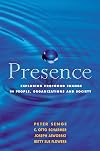
For a rational lover of non-fiction by Dawkins, Diamond and the like, reading this book caused a lot of aggravation. The basic message is maybe okay, though it does feel like a course for MBTI "S"s on how to become more of an intuitive "N".
The tone is intolerably smug, and factoids that are supposed to underpin certain outlandish theories are often given without reference to any reliable source. The American-centric point of view provides ludicrous distortions, such as in the passage where show more the authors discuss how on Sep 11, RNGs (random number generators) across the world started spouting non-random, correlated numbers because they sensed that humanity was suffering. As if that admittedly awful event was the greatest suffering that humanity ever knew.
I'll admit "natural mystique" experiences can feel very real, but here they are presented as attempts of a volitional universe to communicate with humans. The weather also communicates with us, eg when thunder strikes, it is the universe communicating with us and blessing our meeting, etc etc.
If the author of all this communication were described as a monotheistic deity, this book would be immediately dismissed. Since in this book the prime agent is described in new-agey fashion as the 'universe', some gullible people will find this inspirational (indeed, one of them recommended this book to me - I'll know what to do what any future recommendations by this person).
In short, I hated it. I filed this under "drivel" and "comfort for small minds" show less
The tone is intolerably smug, and factoids that are supposed to underpin certain outlandish theories are often given without reference to any reliable source. The American-centric point of view provides ludicrous distortions, such as in the passage where show more the authors discuss how on Sep 11, RNGs (random number generators) across the world started spouting non-random, correlated numbers because they sensed that humanity was suffering. As if that admittedly awful event was the greatest suffering that humanity ever knew.
I'll admit "natural mystique" experiences can feel very real, but here they are presented as attempts of a volitional universe to communicate with humans. The weather also communicates with us, eg when thunder strikes, it is the universe communicating with us and blessing our meeting, etc etc.
If the author of all this communication were described as a monotheistic deity, this book would be immediately dismissed. Since in this book the prime agent is described in new-agey fashion as the 'universe', some gullible people will find this inspirational (indeed, one of them recommended this book to me - I'll know what to do what any future recommendations by this person).
In short, I hated it. I filed this under "drivel" and "comfort for small minds" show less
Some books are perspective changing and some take a perspective already inside of you and develop it into a much more powerful and actionable set of tools. The Fifth Discipline is the latter sort of book. It is like an application of my attitude toward life directly to organizational leadership.
Even though this book is fairly short, it took me weeks to read. Every time I read it, there was an observation or a tool that I had to think about or share. (And oh, how I love systems show more thinking.)
There are many summaries available online, so I won't try to add another. Instead, I'll just say that if this book sounds at all intriguing to you, you should read it. show less
Even though this book is fairly short, it took me weeks to read. Every time I read it, there was an observation or a tool that I had to think about or share. (And oh, how I love systems show more thinking.)
There are many summaries available online, so I won't try to add another. Instead, I'll just say that if this book sounds at all intriguing to you, you should read it. show less
Lists
You May Also Like


Associated Authors
Statistics
- Works
- 36
- Also by
- 6
- Members
- 6,294
- Popularity
- #3,900
- Rating
- 3.9
- Reviews
- 34
- ISBNs
- 133
- Languages
- 15
- Favorited
- 7