

Peter Block
Author of Flawless Consulting: A Guide to Getting Your Expertise Used
About the Author
He is a Fellow in Media Management at the University of Hertfordshire Business School, Global CBT production manager for Management Consultancy Service for PricewaterhouseCoopers and former Multimedia consultant to Shell International. 050
Image credit: By Soil gurgaon - Own work, CC BY-SA 3.0, https://commons.wikimedia.org/w/index.php?curid=17035443
Works by Peter Block
The Flawless Consulting Fieldbook and Companion : A Guide Understanding Your Expertise (2000) 107 copies, 1 review
Flawless Consulting Set , Flawless Consulting (Second Edition) and The Flawless Consulting Fieldbook (2000) 54 copies, 1 review
Activating the Common Good: Reclaiming Control of Our Collective Well-Being (2023) 9 copies, 1 review
The Right Use of Power: How Stewardship Replaces Leadership (The Inner Art of Business Series) (2002) 5 copies
Associated Works
Tagged
Common Knowledge
Members
Reviews
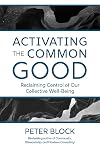
The Publisher Says: A powerful, inspiring, and achievable vision of a society based on cooperation and community instead of competition and commodification.
This book counters the dominant and destructive story that we are polarized, violent, selfish, and destined to consume everything in sight. That is not who we are.
The challenge, Peter Block says, is that we are suffering under an economic theology tat is based on scarcity, self-interest, competition, and infinite growth. We’re told we show more can purchase and outsource all that matters. Block calls this the “business perspective narrative.” It dominates not only the economy but also architecture, faith communities, journalism, arts, neighborhoods, and much more.
Block offers an alternative in the “common good narrative.” It embodies the belief that we are basically communal and cooperative. And that we have the capacity to communally produce what we care most raising a child, safety, livelihood, health, and a clean and sustainable environment.
This book describes how shifts to the common good perspective could transform many areas, fostering journalism that reports on what works, architecture that designs habitable spaces creating connection, faith collectives that build community, a market that is restrained and local, and leadership and activism that build social capital by creating trust among citizens. With these shifts, we would fundamentally change the world we live in for the better.
I RECEIVED A DRC FROM THE PUBLISHER VIA EDELWEISS+. THANK YOU.
My Review: A business guru wrote this book, this loud call to rein in our enshrined attitude of greed and selfishness. That delights me more than anything else about the read. I resonate like a struck bell to the author’s call to rethink our cultural norms. Given how entrenched the mindset of me first, me on top is, the best thing to do is to begin the process of change at the personal and local level.
Visit the website, The Abundant Community.com, that the author and his collaborator John McKnight run. It is chock-a-block with ideas and resources to accomplish this. The book at hand is an excellent read to guide you to the areas that you most need to focus on, be they personal or community based. Our individual well-being is tied closely to our social well-being and this is a frequently discussed facet of life that the author is at pains to weave throughout the short book. From the Introduction, entitled “We Are Not Divided”, forward, Author Block makes the case for beginning one’s journey with the personal commitment to calibrating one’s mind to a "we are not alone" mindset. The difference between "alone" and "divided" recurs throughout the book, very much ringing through the ideas for actions we as citizens of this system of divide-and-conquer tactics can effectively take.
There is nothing at all unattainable in any of the goals Author Block offers to us as models for effecting change. That he offers them in actionable formats and in digestible, relatable examples makes the read both pleasant, easy, and short and offers real-world results to those willing to undertake his tried-and-tested steps toward a common-good focused world. show less
This book counters the dominant and destructive story that we are polarized, violent, selfish, and destined to consume everything in sight. That is not who we are.
The challenge, Peter Block says, is that we are suffering under an economic theology tat is based on scarcity, self-interest, competition, and infinite growth. We’re told we show more can purchase and outsource all that matters. Block calls this the “business perspective narrative.” It dominates not only the economy but also architecture, faith communities, journalism, arts, neighborhoods, and much more.
Block offers an alternative in the “common good narrative.” It embodies the belief that we are basically communal and cooperative. And that we have the capacity to communally produce what we care most raising a child, safety, livelihood, health, and a clean and sustainable environment.
This book describes how shifts to the common good perspective could transform many areas, fostering journalism that reports on what works, architecture that designs habitable spaces creating connection, faith collectives that build community, a market that is restrained and local, and leadership and activism that build social capital by creating trust among citizens. With these shifts, we would fundamentally change the world we live in for the better.
I RECEIVED A DRC FROM THE PUBLISHER VIA EDELWEISS+. THANK YOU.
My Review: A business guru wrote this book, this loud call to rein in our enshrined attitude of greed and selfishness. That delights me more than anything else about the read. I resonate like a struck bell to the author’s call to rethink our cultural norms. Given how entrenched the mindset of me first, me on top is, the best thing to do is to begin the process of change at the personal and local level.
Visit the website, The Abundant Community.com, that the author and his collaborator John McKnight run. It is chock-a-block with ideas and resources to accomplish this. The book at hand is an excellent read to guide you to the areas that you most need to focus on, be they personal or community based. Our individual well-being is tied closely to our social well-being and this is a frequently discussed facet of life that the author is at pains to weave throughout the short book. From the Introduction, entitled “We Are Not Divided”, forward, Author Block makes the case for beginning one’s journey with the personal commitment to calibrating one’s mind to a "we are not alone" mindset. The difference between "alone" and "divided" recurs throughout the book, very much ringing through the ideas for actions we as citizens of this system of divide-and-conquer tactics can effectively take.
There is nothing at all unattainable in any of the goals Author Block offers to us as models for effecting change. That he offers them in actionable formats and in digestible, relatable examples makes the read both pleasant, easy, and short and offers real-world results to those willing to undertake his tried-and-tested steps toward a common-good focused world. show less
"The future is created one room at a time, one gathering at a time."
In an effort to expand my own knowledge and to become better connected to the concepts that power the field of planning, I read a respectable amount of planning related literature. Most of the literature takes a concept, explains it, provides some examples of how that concept is being used in other places, and then provides a stepping off point for others interested in integrating that concept into the planning efforts show more within their own jurisdiction. Community is not that book.
The author, Peter Block, attempts to create a more transformative dialog related to the concept of community engagement. Rather than tossing out some tried and true ideas that the reader might be looking for more information on, Block presents a more revolutionary narrative. With an extremely calm, collected demeanor Block explains the current situation as it relates to community and then shows how community can become more open, more engaging, and more inclusive. Block's model moves away from the more standard approaches that inevitably fuel the dichotomies often present in our communities today toward a model structured around understanding and belonging. Block also moves away from illustrating a cookie-cutter technique and instead illustrates the broad concepts that we can employee to create this dialog. The reader is granted an opportunity to fill in the appropriate gaps in order to make Block's ideas fit their needs.
Block's ideas of communities lend power to the individuals that occupy them. Citizens have control of their own future and aren't represented by "leaders" in a traditional sense. "In communal transformation, leadership is about intention, convening, valuing relatedness, and presenting choices." Block advocates for leaders that create opportunities to bring people together. Those individuals are "conveners" of meetings and aren't there to direct the conversations taking place, but instead they are there to ensure that the conditions are optimized for the conversations that need to take place.
I was intrigued by the concepts of questions and answers that Block presents. Instead of centering meetings around providing answers to questions, meetings can focus on presenting the right questions. Block theorizes that questions provide more openness and potential than answers which often doom us to repeat the past. Block also examines advice under a similar light pointing out that advice only limits our potential to the techniques that have been explored by those giving the advice.
I believe that the inclusive model that Block presents in Community: the Structure of Belonging is one that should be examined by community leaders and local government officials. Inclusion is often conspicuously absent in the meetings that shape our community. By bringing everyone to the table and creating an environment that allows everyone equal standing, we can create communities that perpetuate a feeling of belonging. This level of inclusion is a moral imperative in building community and it prevents efforts that perpetuate the isolation and marginalization. In reality inclusion is the only path to building true community.
Block presents his case in a format that allows the reader to incorporate his model into their community meetings. He gives vivid examples of areas where similar ideas have been employed and he shows how his ideas can be merged into our system of community engagement. Community: the Structure of Belonging is a great companion to the Organizer's Handbook. Block reaches a much greater level of detail and provides a graphic explanation as to why each concept is important (down to seemingly minute details such as room arrangement). Block's writing style is approachable, interesting, and extremely motivational. Block provides the information possible to enable us to "shift our conversations from the problems of community to the possibility of community". show less
In an effort to expand my own knowledge and to become better connected to the concepts that power the field of planning, I read a respectable amount of planning related literature. Most of the literature takes a concept, explains it, provides some examples of how that concept is being used in other places, and then provides a stepping off point for others interested in integrating that concept into the planning efforts show more within their own jurisdiction. Community is not that book.
The author, Peter Block, attempts to create a more transformative dialog related to the concept of community engagement. Rather than tossing out some tried and true ideas that the reader might be looking for more information on, Block presents a more revolutionary narrative. With an extremely calm, collected demeanor Block explains the current situation as it relates to community and then shows how community can become more open, more engaging, and more inclusive. Block's model moves away from the more standard approaches that inevitably fuel the dichotomies often present in our communities today toward a model structured around understanding and belonging. Block also moves away from illustrating a cookie-cutter technique and instead illustrates the broad concepts that we can employee to create this dialog. The reader is granted an opportunity to fill in the appropriate gaps in order to make Block's ideas fit their needs.
Block's ideas of communities lend power to the individuals that occupy them. Citizens have control of their own future and aren't represented by "leaders" in a traditional sense. "In communal transformation, leadership is about intention, convening, valuing relatedness, and presenting choices." Block advocates for leaders that create opportunities to bring people together. Those individuals are "conveners" of meetings and aren't there to direct the conversations taking place, but instead they are there to ensure that the conditions are optimized for the conversations that need to take place.
I was intrigued by the concepts of questions and answers that Block presents. Instead of centering meetings around providing answers to questions, meetings can focus on presenting the right questions. Block theorizes that questions provide more openness and potential than answers which often doom us to repeat the past. Block also examines advice under a similar light pointing out that advice only limits our potential to the techniques that have been explored by those giving the advice.
I believe that the inclusive model that Block presents in Community: the Structure of Belonging is one that should be examined by community leaders and local government officials. Inclusion is often conspicuously absent in the meetings that shape our community. By bringing everyone to the table and creating an environment that allows everyone equal standing, we can create communities that perpetuate a feeling of belonging. This level of inclusion is a moral imperative in building community and it prevents efforts that perpetuate the isolation and marginalization. In reality inclusion is the only path to building true community.
Block presents his case in a format that allows the reader to incorporate his model into their community meetings. He gives vivid examples of areas where similar ideas have been employed and he shows how his ideas can be merged into our system of community engagement. Community: the Structure of Belonging is a great companion to the Organizer's Handbook. Block reaches a much greater level of detail and provides a graphic explanation as to why each concept is important (down to seemingly minute details such as room arrangement). Block's writing style is approachable, interesting, and extremely motivational. Block provides the information possible to enable us to "shift our conversations from the problems of community to the possibility of community". show less
The main concept behind the book is that we have been conditioned to ask the wrong types of questions when making decisions. We often ask "How do I get X?" when we should first be asking "Why do I want this?" or "Is this Right?" If we base our decisions more on whether we're doing the right thing for the right reason (if we answer yes) then we can move to the how's of getting it done.
Organizations often place too much emphasis on the how versus why and that can lead to a stunted and show more ineffective environment. To act genuinely requires idealism, intimacy and depth. Business practicality often favors realism bordering on cynicism. We often forgo our values in business to simply get ahead. The author offers the idea that if you make yourself a commodity and you're willing to sell your values then others determine your worth and your life is left to the laws of supply and demand.
As the author puts it, "The diversity and imperfection of human soul is, ultimately, what makes institutions engaging, humane, and habitable. Human systems are imperfect, the homes for unsolvable problems. And we cannot take the tools and strategies of engineering and economics and apply them to the governance of organizations." To be effective, organizations need to be more humane and mindful of their values and motives. show less
Organizations often place too much emphasis on the how versus why and that can lead to a stunted and show more ineffective environment. To act genuinely requires idealism, intimacy and depth. Business practicality often favors realism bordering on cynicism. We often forgo our values in business to simply get ahead. The author offers the idea that if you make yourself a commodity and you're willing to sell your values then others determine your worth and your life is left to the laws of supply and demand.
As the author puts it, "The diversity and imperfection of human soul is, ultimately, what makes institutions engaging, humane, and habitable. Human systems are imperfect, the homes for unsolvable problems. And we cannot take the tools and strategies of engineering and economics and apply them to the governance of organizations." To be effective, organizations need to be more humane and mindful of their values and motives. show less
Community; The Structure of Belonging by Peter Block was just reissued in 2018 as a second edition. The book is divided into the Welcome and Introduction, Part 1 - The Fabric of Community, and Part 2 - The Alchemy of Belonging. Part 2 in addition to individual chapters includes a section titled 'Summing Up - Six Conversations" and "In Summary - The Social Architecture of Building Community." There are also reading lists and resources to be found online, as well as detailed information about show more inspirations and specific projects that embody the principles described in this book. There's also a brief section on how the book design itself reflects these principles, as well as several pages of advertisements for other books and initiatives from this author and colleagues.
It's a quick read and an engaging premise. To transform society, we need to engage in transformative conversations. Block argues that modern American society creates isolation, fragmentation, and unnecessary suffering with a national narrative of individualism, personal deficiencies, self-interest, blame and fault-finding, reliance on distant leaders/experts and a fear-retribution cycle; instead, what we need is a sense of belonging, a recognition of our interrelatedness, a vision of future possibilities, personal accountability for the greater good, and a way to welcome the gifts of everyone but especially people at the margins of society. This can be achieved by small groups of people representing the full range of diversity in the local community coming together to build trust and connection and committing to cocreate a restorative rather than retributive society through a series of discussions. The physical environment of these meetings of strangers who become collaborators in building a better future is just as important as the nature of the conversations that develop over time.
Lots of small local initiatives in this style can become an emergent grassroots movement. Block describes it as a kind of fractal movement--begin as you mean to go on; each element should embody the values of the end goal: belonging, community, wholeness; each meeting of unlike people is an opportunity to create something new; each heart open to new possibilities is a doorway into a future that is different from the present and the past.
For someone looking for concrete ways to change the way institutions function and to consciously build community, I think this may be a good resource. It will be interesting to see if I can apply these principles to the volunteer organizations that are important to me. I think it is worth trying. show less
It's a quick read and an engaging premise. To transform society, we need to engage in transformative conversations. Block argues that modern American society creates isolation, fragmentation, and unnecessary suffering with a national narrative of individualism, personal deficiencies, self-interest, blame and fault-finding, reliance on distant leaders/experts and a fear-retribution cycle; instead, what we need is a sense of belonging, a recognition of our interrelatedness, a vision of future possibilities, personal accountability for the greater good, and a way to welcome the gifts of everyone but especially people at the margins of society. This can be achieved by small groups of people representing the full range of diversity in the local community coming together to build trust and connection and committing to cocreate a restorative rather than retributive society through a series of discussions. The physical environment of these meetings of strangers who become collaborators in building a better future is just as important as the nature of the conversations that develop over time.
Lots of small local initiatives in this style can become an emergent grassroots movement. Block describes it as a kind of fractal movement--begin as you mean to go on; each element should embody the values of the end goal: belonging, community, wholeness; each meeting of unlike people is an opportunity to create something new; each heart open to new possibilities is a doorway into a future that is different from the present and the past.
For someone looking for concrete ways to change the way institutions function and to consciously build community, I think this may be a good resource. It will be interesting to see if I can apply these principles to the volunteer organizations that are important to me. I think it is worth trying. show less
Lists
Awards

You May Also Like


Associated Authors
Statistics
- Works
- 28
- Also by
- 1
- Members
- 2,607
- Popularity
- #9,853
- Rating
- 3.9
- Reviews
- 23
- ISBNs
- 110
- Languages
- 6
- Favorited
- 6