
Jim Collins (6) (1958–)
Author of Good to Great: Why Some Companies Make the Leap... and Others Don't
For other authors named Jim Collins, see the disambiguation page.
About the Author
Jim Collins holds B.S. and M.B.A. degrees from Stanford University. A visiting professor of business administration at Stanford Graduate School of Business, he is a management consultant. He has written several articles for the Harvard Business Review, Inc., Fortune magazine, California Management show more Review and Stanford Magazine. He is the co-author of Built to Last: Successful Habits of Visionary Companies; Managing the Small to Mid-Sized Firm: Readings, Cases and Instructor's Manual; Beyond Entrepreneurship; and Great by Choice. He has also worked with Hewlett Packard and McKinsey & Co. (Bowker Author Biography) show less
Image credit: By Mangoed - Own work, CC BY 3.0, https://commons.wikimedia.org/w/index.php?curid=6657822
Series
Works by Jim Collins
Good to Great: Why Some Companies Make the Leap... and Others Don't (2001) 9,450 copies, 103 reviews
Good to Great and the Social Sectors: A Monograph to Accompany Good to Great (2005) 1,583 copies, 9 reviews
Great by Choice: Uncertainty, Chaos, and Luck—Why Some Thrive Despite Them All (2011) 1,071 copies, 16 reviews
Jim Collins at the Summit 3 copies
Associated Works
The 7 Habits of Highly Effective People: Powerful Lessons in Personal Change (1989) — Preface, some editions — 20,928 copies, 196 reviews
Tagged
Common Knowledge
- Legal name
- Collins, James C.
- Other names
- Colins, Jim
- Birthdate
- 1958-01-25
- Gender
- male
- Education
- Stanford University (BS, Mathematical Sciences)
Stanford University (MBA) - Awards and honors
- Distinguished Teaching Award, Stanford University Graduate School of Business, (1992)
- Nationality
- USA
- Birthplace
- Aurora, Colorado, USA
- Places of residence
- Boulder, Colorado, USA
- Associated Place (for map)
- USA
Members
Reviews
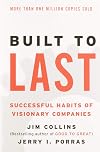
Why Built to Last Endures
The book resonates because people are deeply inspired by the idea that it is possible to build something truly enduring. In a world obsessed with short-term wins, the notion of creating a great company that lasts across generations feels both rare and meaningful.
Thoughtful readers are drawn to the book’s emphasis on time-tested fundamentals. While the world changes at an accelerating pace, Built to Last reminds us that not everything should change. Core principles show more matter precisely because they outlast trends and management fads.
The book is especially valuable for organizations in transition. Rather than asking, “How should we change?”, it urges leaders to begin with a more fundamental question: “What do we stand for, and why do we exist?” Productive change, the authors argue, must be built on a preserved core.
Visionary companies themselves find validation in the book. Many organizations already operating with strong values and long-term thinking recognize their own practices reflected in its pages.
Preserve the Core, Stimulate Progress
The central idea of the book is the balance between continuity and change. Visionary companies protect their core values and purpose while allowing everything else—strategies, structures, and practices—to evolve.
This principle extends beyond business. Nations, societies, families, and individuals all require an inner core to remain stable in a chaotic world. When people rely only on external structures for security, they risk losing their sense of self when those structures collapse.
The book suggests that it is more important to understand who you are than where you are going, because direction will almost certainly change over time.
What Defines Visionary Companies
They are leaders in their industries and widely admired by knowledgeable peers.
They leave a lasting imprint on the world.
They survive multiple generations of leadership and product cycles.
They endure setbacks and mistakes, yet display exceptional resilience.
Over the long term, these companies significantly outperform both the general market and their comparison peers, demonstrating that purpose-driven organizations are not only idealistic, but highly successful.
Challenging Common Myths
Great companies do not necessarily begin with great ideas; many start with uncertainty or even failure.
Charismatic visionary leaders are not required and can sometimes harm long-term continuity.
Profit maximization is not the primary objective; visionary companies pursue profit alongside a deeper purpose—and often achieve superior financial results because of it.
There is no single “correct” set of values. What matters is how deeply values are believed and consistently lived.
Change is constant, but core ideology should remain remarkably stable over time.
Core Ideology
Core ideology consists of core values and purpose.
Core values are enduring principles that are not compromised for short-term gain.
Purpose is the organization’s fundamental reason for existence beyond making money.
In visionary companies, these elements do not require external justification and do not bend to trends.
From Ideas to Action
Visionary companies translate values into concrete mechanisms rather than relying on good intentions.
They promote leaders from within to preserve culture.
They embrace continuous improvement and deliberately create discomfort to prevent complacency.
Alignment across goals, systems, and behaviors reinforces both stability and progress.
Big Hairy Audacious Goals (BHAGs)
BHAGs are bold, clear, and emotionally engaging goals that people immediately understand.
They focus energy and provide long-term direction.
They may take the form of ambitious targets, defeating a common enemy, emulating a respected role model, or transforming an organization from within.
Evolution Over Time
Visionary companies grow through experimentation and selection, adding new initiatives while pruning what no longer serves them.
Change is typically driven from within rather than imposed by external leadership.
The goal is not comfort, but sustained vitality and renewal.
Final Reflection
Visionary companies endure because they know who they are.
They preserve their core while stimulating progress.
This lesson applies as powerfully to individuals as it does to organizations: true stability comes from a strong inner core and the courage to adapt everything else. show less
The book resonates because people are deeply inspired by the idea that it is possible to build something truly enduring. In a world obsessed with short-term wins, the notion of creating a great company that lasts across generations feels both rare and meaningful.
Thoughtful readers are drawn to the book’s emphasis on time-tested fundamentals. While the world changes at an accelerating pace, Built to Last reminds us that not everything should change. Core principles show more matter precisely because they outlast trends and management fads.
The book is especially valuable for organizations in transition. Rather than asking, “How should we change?”, it urges leaders to begin with a more fundamental question: “What do we stand for, and why do we exist?” Productive change, the authors argue, must be built on a preserved core.
Visionary companies themselves find validation in the book. Many organizations already operating with strong values and long-term thinking recognize their own practices reflected in its pages.
Preserve the Core, Stimulate Progress
The central idea of the book is the balance between continuity and change. Visionary companies protect their core values and purpose while allowing everything else—strategies, structures, and practices—to evolve.
This principle extends beyond business. Nations, societies, families, and individuals all require an inner core to remain stable in a chaotic world. When people rely only on external structures for security, they risk losing their sense of self when those structures collapse.
The book suggests that it is more important to understand who you are than where you are going, because direction will almost certainly change over time.
What Defines Visionary Companies
They are leaders in their industries and widely admired by knowledgeable peers.
They leave a lasting imprint on the world.
They survive multiple generations of leadership and product cycles.
They endure setbacks and mistakes, yet display exceptional resilience.
Over the long term, these companies significantly outperform both the general market and their comparison peers, demonstrating that purpose-driven organizations are not only idealistic, but highly successful.
Challenging Common Myths
Great companies do not necessarily begin with great ideas; many start with uncertainty or even failure.
Charismatic visionary leaders are not required and can sometimes harm long-term continuity.
Profit maximization is not the primary objective; visionary companies pursue profit alongside a deeper purpose—and often achieve superior financial results because of it.
There is no single “correct” set of values. What matters is how deeply values are believed and consistently lived.
Change is constant, but core ideology should remain remarkably stable over time.
Core Ideology
Core ideology consists of core values and purpose.
Core values are enduring principles that are not compromised for short-term gain.
Purpose is the organization’s fundamental reason for existence beyond making money.
In visionary companies, these elements do not require external justification and do not bend to trends.
From Ideas to Action
Visionary companies translate values into concrete mechanisms rather than relying on good intentions.
They promote leaders from within to preserve culture.
They embrace continuous improvement and deliberately create discomfort to prevent complacency.
Alignment across goals, systems, and behaviors reinforces both stability and progress.
Big Hairy Audacious Goals (BHAGs)
BHAGs are bold, clear, and emotionally engaging goals that people immediately understand.
They focus energy and provide long-term direction.
They may take the form of ambitious targets, defeating a common enemy, emulating a respected role model, or transforming an organization from within.
Evolution Over Time
Visionary companies grow through experimentation and selection, adding new initiatives while pruning what no longer serves them.
Change is typically driven from within rather than imposed by external leadership.
The goal is not comfort, but sustained vitality and renewal.
Final Reflection
Visionary companies endure because they know who they are.
They preserve their core while stimulating progress.
This lesson applies as powerfully to individuals as it does to organizations: true stability comes from a strong inner core and the courage to adapt everything else. show less
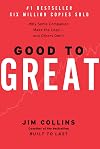
Good to Great is a perennial entry on lists of top business books, and for good reason. Jim Collins and his team of researchers spent years examining the characteristics of companies that made the transition from being merely “good” to being leaders in their respective industries.
The factors that Collins identified — hiring, training, and retaining the right people; identifying and building on core organizational strengths; and working for small, incremental growth — are factors that show more can also be used to build up great parishes, Catholic schools, and other ministries.
I love Good to Great’s reliance on solid research and data demonstrating that what we think are the characteristics of great organizations — especially the idea of a dynamic genius in charge — are rarely effective in promoting real success.
Collins wrote a short follow-up, Good to Great in the Social Sectors, in 2005 — it treats the Good to Great concept in the context of non-profit organizations. But the original book contains all the foundational themes of Collins’ work. show less
The factors that Collins identified — hiring, training, and retaining the right people; identifying and building on core organizational strengths; and working for small, incremental growth — are factors that show more can also be used to build up great parishes, Catholic schools, and other ministries.
I love Good to Great’s reliance on solid research and data demonstrating that what we think are the characteristics of great organizations — especially the idea of a dynamic genius in charge — are rarely effective in promoting real success.
Collins wrote a short follow-up, Good to Great in the Social Sectors, in 2005 — it treats the Good to Great concept in the context of non-profit organizations. But the original book contains all the foundational themes of Collins’ work. show less
All hype aside, you can question the author's research method. Heck, you can even argue that the conclusion and subsequent proposal on how to go from a good-to-great company is by and large common sense. But, being involved in positions that bring me in direct contact with key decision makers, you'd be amazed by how bullish, irrational and brazen decisions can be made. So, every now and then it's good to have someone remind us about what it takes to run a great company.
There appear to be some interesting ideas in this book, but overall, it seems to be a case of the author simply choosing a set of companies that happened to meet some criteria, then looking for similar facts about those companies, and calling them causes that the companies met the criteria.
Maybe I've been reading too many books about biases and fallacies in statistics and behavior lately, but I think this is all luck. See http://www.happen.com/article/good-to-great-or-just-lucky/ for another show more similar view.
As Steven Levitt (http://www.freakonomics.com/2008/07/28/from-good-to-great-to-below-average/) says, these companies have done worse than the overall market since this book was written. I understand Jim Collins has written a later book studying why companies fail, to somewhat try to explain this.
But the simpler explanation is that it's all luck. It was interesting to me to read in Good to Great that when the company CEOs were asked about what they have done to make their companies great, a lot of them said they were lucky. Collins did not take them at face value, but rather, decided that a characteristic of good CEOs is that they are humble and explain their successes as good luck. And similarly, bad CEOs blame their failures on bad luck.
But what if it just is all luck? Isn't that a simpler explanation.
I'm not saying there are factors that make a company successful or not, but this book hasn't convinced me of what any of them are by its use of data, which seems to fail many common tests. show less
Maybe I've been reading too many books about biases and fallacies in statistics and behavior lately, but I think this is all luck. See http://www.happen.com/article/good-to-great-or-just-lucky/ for another show more similar view.
As Steven Levitt (http://www.freakonomics.com/2008/07/28/from-good-to-great-to-below-average/) says, these companies have done worse than the overall market since this book was written. I understand Jim Collins has written a later book studying why companies fail, to somewhat try to explain this.
But the simpler explanation is that it's all luck. It was interesting to me to read in Good to Great that when the company CEOs were asked about what they have done to make their companies great, a lot of them said they were lucky. Collins did not take them at face value, but rather, decided that a characteristic of good CEOs is that they are humble and explain their successes as good luck. And similarly, bad CEOs blame their failures on bad luck.
But what if it just is all luck? Isn't that a simpler explanation.
I'm not saying there are factors that make a company successful or not, but this book hasn't convinced me of what any of them are by its use of data, which seems to fail many common tests. show less
Lists
Awards


You May Also Like


Associated Authors
Statistics
- Works
- 23
- Also by
- 1
- Members
- 16,508
- Popularity
- #1,373
- Rating
- 3.9
- Reviews
- 169
- ISBNs
- 209
- Languages
- 24
- Favorited
- 1