The Triple Package: How Three Unlikely Traits Explain the Rise and Fall of Cultural Groups in America by Amy Chua
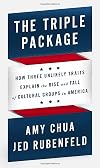
Insightful, yet controversial. Left me eager-to-agree and suspicious at the same time.
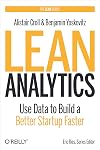
This book is a gem for entrepreneurs, product managers, business analysts, marketers and, honestly, anyone involved in the end-to-end development and operations (yes, pretty much everyone). It provides a structured look at issues you face on the job, and provides practical advice and methods in tackling them. For those seeking a sure business win, this is not the right book for you. For those who prefer to embrace the unknown through pure gut feeling, you will not be pleased. But for the rest of us dealing with the day to day challenges of meeting business needs in increasingly demanding circumstances, this book is a good guidance to help you and your team work in a more effective, meaningful and united manner.
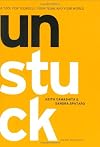
A solid attempt to help get people out of creative roadblocks. While I do not always agree with the patterns, I do appreciate the simplicity and control it brings to the often chaotic state of creative processes. The problem categories cover a broad and diverse field, and each is equipped with bespoke methods to help you get "unstuck".
The Black Swan: Second Edition: The Impact of the Highly Improbable: With a new section: "On Robustness and Fragility" (Incerto) by Nassim Nicholas Taleb
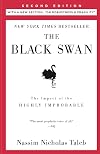
At times an arduous read, not made any easier by the author's arrogant mannerism, but he does get us to question our desire to find top-down patterns, to make predictions, to force things into Gaussian Bell curves. While I still believe some form of framework is necessary to help in the decision-making process, my personal takeaway comes in his call for us to embrace randomness, and a return to common sense, simplicity and real-world pragmatism. In the end, it's really just all about balancing between empiricism and (learned) intuition.
A great read, thought-provoking and my go-to reference when it comes to AI. Keeps me in the check when I'm out there shaping behaviors with new technology.
I found Taipei to be strangely addictive. Near the end it became a bit of a drag. It also ended somewhat melodramatically, which was a bit odd, a bit out of place. But, overall intriguingly enjoyable.
All hype aside, you can question the author's research method. Heck, you can even argue that the conclusion and subsequent proposal on how to go from a good-to-great company is by and large common sense. But, being involved in positions that bring me in direct contact with key decision makers, you'd be amazed by how bullish, irrational and brazen decisions can be made. So, every now and then it's good to have someone remind us about what it takes to run a great company.
Everyone has their favorite Rushdie, and this was mine. It was also my first. Back then it dug deep, left me with vivid imageries of a marred and deceptive world of relationships recounted through the memories of a fabulously flawed and hapless narrator.
Every now and then I like to return to that time when magical realism was still left untouched, and I was still impressionable enough to be awed by Rushdie's lyrical mysticism. While tempted, I dare not read the book again. It just won't be the same.
Every now and then I like to return to that time when magical realism was still left untouched, and I was still impressionable enough to be awed by Rushdie's lyrical mysticism. While tempted, I dare not read the book again. It just won't be the same.
The Triple Package: How Three Unlikely Traits Explain the Rise and Fall of Cultural Groups in America by Amy Chua
Insightful, yet controversial. Left me eager-to-agree and suspicious at the same time.
This book is a gem for entrepreneurs, product managers, business analysts, marketers and, honestly, anyone involved in the end-to-end development and operations (yes, pretty much everyone). It provides a structured look at issues you face on the job, and provides practical advice and methods in tackling them. For those seeking a sure business win, this is not the right book for you. For those who prefer to embrace the unknown through pure gut feeling, you will not be pleased. But for the rest of us dealing with the day to day challenges of meeting business needs in increasingly demanding circumstances, this book is a good guidance to help you and your team work in a more effective, meaningful and united manner.
A solid attempt to help get people out of creative roadblocks. While I do not always agree with the patterns, I do appreciate the simplicity and control it brings to the often chaotic state of creative processes. The problem categories cover a broad and diverse field, and each is equipped with bespoke methods to help you get "unstuck".
The Black Swan: Second Edition: The Impact of the Highly Improbable: With a new section: "On Robustness and Fragility" (Incerto) by Nassim Nicholas Taleb
At times an arduous read, not made any easier by the author's arrogant mannerism, but he does get us to question our desire to find top-down patterns, to make predictions, to force things into Gaussian Bell curves. While I still believe some form of framework is necessary to help in the decision-making process, my personal takeaway comes in his call for us to embrace randomness, and a return to common sense, simplicity and real-world pragmatism. In the end, it's really just all about balancing between empiricism and (learned) intuition.
A great read, thought-provoking and my go-to reference when it comes to AI. Keeps me in the check when I'm out there shaping behaviors with new technology.
Throughout the book I felt a sense of enragement and conflict. While Carnegie sets out to deliver the ultimate "how-to" guide in relationship building, he, in essence, draws a crippling image of humanity denouncing us all for being shallow, self-absorbed and judgmental. It's sad that we need to be taught to be human, and that genuine curiosity and compassion is twisted into manipulation.
Throughout the book I felt a sense of enragement and conflict. While Carnegie sets out to deliver the ultimate "how-to" guide in relationship building, he, in essence, draws a crippling image of humanity denouncing us all for being shallow, self-absorbed and judgmental. It's sad that we need to be taught to be human, and that genuine curiosity and compassion is twisted into manipulation.
I found Taipei to be strangely addictive. Near the end it became a bit of a drag. It also ended somewhat melodramatically, which was a bit odd, a bit out of place. But, overall intriguingly enjoyable.
Everyone has their favorite Rushdie, and this was mine. It was also my first. Back then it dug deep, left me with vivid imageries of a marred and deceptive world of relationships recounted through the memories of a fabulously flawed and hapless narrator.
Every now and then I like to return to that time when magical realism was still left untouched, and I was still impressionable enough to be awed by Rushdie's lyrical mysticism. While tempted, I dare not read the book again. It just won't be the same.
Every now and then I like to return to that time when magical realism was still left untouched, and I was still impressionable enough to be awed by Rushdie's lyrical mysticism. While tempted, I dare not read the book again. It just won't be the same.
All hype aside, you can question the author's research method. Heck, you can even argue that the conclusion and subsequent proposal on how to go from a good-to-great company is by and large common sense. But, being involved in positions that bring me in direct contact with key decision makers, you'd be amazed by how bullish, irrational and brazen decisions can be made. So, every now and then it's good to have someone remind us about what it takes to run a great company.
Reinventing Organizations: A Guide to Creating Organizations Inspired by the Next Stage of Human Consciousness by Frederic Laloux
This book is a gift for anyone who can attest to how self-management can enable businesses to serve from the inside out.
When I first became a manager, I started to introduce styles of self-management into my work. First, out of respect for the team of engineers with whom I used to work alongside. Then, out of practicality. Given the number of projects I oversaw, the amount of stakeholders I needed to keep updated, I knew that I could no longer go deep into a problem to make informed decisions on my own.
While I didn't have any precedence nor a MBA to show me the way, as someone fresh out of the team, it just "made sense". Having been on the receiving end of layers of management, I knew exactly how I (and those in the team) didn't want to be led. I knew that there was a lot of knowledge and real care for customers within the teams. I also knew that there was an unnecessary, yet growing gap between management and the team, which led to a lot of mistrust, scapegoating and political intrigues.
Eight years later, I've been able to set up conclaves of self-managing styled teams within Amber-Orange styled organizations. It's not an easy spiel to keep up, yet the success rate is baffling.
For those of us, who truly believe that the future of work needs to be more human, more considerate, more authentic. Thanks to Frederic Laloux, we now have the language, the case studies and community to move this agenda forward!
When I first became a manager, I started to introduce styles of self-management into my work. First, out of respect for the team of engineers with whom I used to work alongside. Then, out of practicality. Given the number of projects I oversaw, the amount of stakeholders I needed to keep updated, I knew that I could no longer go deep into a problem to make informed decisions on my own.
While I didn't have any precedence nor a MBA to show me the way, as someone fresh out of the team, it just "made sense". Having been on the receiving end of layers of management, I knew exactly how I (and those in the team) didn't want to be led. I knew that there was a lot of knowledge and real care for customers within the teams. I also knew that there was an unnecessary, yet growing gap between management and the team, which led to a lot of mistrust, scapegoating and political intrigues.
Eight years later, I've been able to set up conclaves of self-managing styled teams within Amber-Orange styled organizations. It's not an easy spiel to keep up, yet the success rate is baffling.
For those of us, who truly believe that the future of work needs to be more human, more considerate, more authentic. Thanks to Frederic Laloux, we now have the language, the case studies and community to move this agenda forward!
Reinventing Organizations: A Guide to Creating Organizations Inspired by the Next Stage of Human Consciousness by Frederic Laloux
This book is a gift for anyone who can attest to how self-management can enable businesses to serve from the inside out.
When I first became a manager, I started to introduce styles of self-management into my work. First, out of respect for the team of engineers with whom I used to work alongside. Then, out of practicality. Given the number of projects I oversaw, the amount of stakeholders I needed to keep updated, I knew that I could no longer go deep into a problem to make informed decisions on my own.
While I didn't have any precedence nor a MBA to show me the way, as someone fresh out of the team, it just "made sense". Having been on the receiving end of layers of management, I knew exactly how I (and those in the team) didn't want to be led. I knew that there was a lot of knowledge and real care for customers within the teams. I also knew that there was an unnecessary, yet growing gap between management and the team, which led to a lot of mistrust, scapegoating and political intrigues.
Eight years later, I've been able to set up conclaves of self-managing styled teams within Amber-Orange styled organizations. It's not an easy spiel to keep up, yet the success rate is baffling.
For those of us, who truly believe that the future of work needs to be more human, more considerate, more authentic. Thanks to Frederic Laloux, we now have the language, the case studies and community to move this agenda forward!
When I first became a manager, I started to introduce styles of self-management into my work. First, out of respect for the team of engineers with whom I used to work alongside. Then, out of practicality. Given the number of projects I oversaw, the amount of stakeholders I needed to keep updated, I knew that I could no longer go deep into a problem to make informed decisions on my own.
While I didn't have any precedence nor a MBA to show me the way, as someone fresh out of the team, it just "made sense". Having been on the receiving end of layers of management, I knew exactly how I (and those in the team) didn't want to be led. I knew that there was a lot of knowledge and real care for customers within the teams. I also knew that there was an unnecessary, yet growing gap between management and the team, which led to a lot of mistrust, scapegoating and political intrigues.
Eight years later, I've been able to set up conclaves of self-managing styled teams within Amber-Orange styled organizations. It's not an easy spiel to keep up, yet the success rate is baffling.
For those of us, who truly believe that the future of work needs to be more human, more considerate, more authentic. Thanks to Frederic Laloux, we now have the language, the case studies and community to move this agenda forward!