
Edgar H. Schein
Author of Organizational Culture and Leadership
About the Author
Edgar M. Schein is the Society of Sloan Fellows Professor of Management Emeritus and a professor emeritus at the MIT Sloan School Management. A world-renowned expert on organizational culture credited with founding the field, he is the bestselling author of Humble Inquiry, Helping, and Humble show more Consulting. show less
Image credit: via Alchetron
Series
Works by Edgar H. Schein
Coercive Persuasion : A Socio-psychological Analysis of the "Brainwashing" of American Civilian Prisoners by the Chinese Communists (1971) 18 copies, 1 review
Interpersonal dynamics: essays and readings on human interaction, (The Dorsey series in psychology) (1973) 13 copies
Führung und Veränderungsmanagement: Persönlichkeit als Motor von Organisationskultur und Organisationstransformation (2008) 7 copies
Culture d'impresa: come affrontare con successo le transizioni e i cambiamenti organizzativi (2000) 6 copies
Lezioni di consulenza: l'attualita della consulenza di processo come risposta necessaria alle sfide dello sviluppo organizzativo (1992) 4 copies
Humble Inquiry, 3rd Edition: The Gentle Art of Asking Instead of Telling (Humble Leadership) (2025) 4 copies
Bescheiden vragen 2 copies
Organizational Culture and Leadership, Fifth Edition (The Jossey-Bass Business & Management Series) (2017) 2 copies
Process Consultation : Its Role in Organization Development by Edgar H. Schein (1969-05-03) (1855) 2 copies
Career Anchors: The Changing Nature of Work & Careers, Participant Workbook, 4th Edition (2013) 2 copies
Helpen met Impact 1 copy
Organisatie-psygologie 1 copy
Associated Works
Covert Processes at Work : Managing the Five Hidden Dimensions of Organizational Change (2006) — Foreword, some editions — 29 copies
Tagged
Common Knowledge
- Gender
- male
Members
Reviews
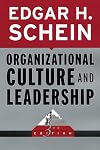
“Culture” has become a trendy word in today’s business talk. Many popular books espouse it as a cure-all to every organizational malady. Much hype certainly permeates those book, but Edgar Schein’s work cuts through the hype with an academic lens. Known as the father of the field of organizational culture, Schein describes his early explorations about it with the now-defunct DEC and how his ideas expanded with later work. As a result, this 5th edition presents an engaging textbook show more that moves seamlessly from theory to practical cases to elucidate key insights.
Not just for an academic crowd, this classic book contains many actionable topics, like how to analyze a culture is covered in depth. Many firms prefer culture surveys, but Schein warns that culture surveys, if wrongly done, can actually harm an organization by mistakenly exposing once-dormant artifacts. He also describes all that’s involved in changing culture, including potential mistakes to watch out for.
He identifies, better than I’ve ever read or heard before, how cultural dynamics and personal traits can translate into generative results, played out over time. I learned about how a group’s founder can successfully navigate the waters of letting others lead and learning from others’ contributions. I’ve seen too many promising ventures die when a leader exerts their ego over countervailing guidance.
If you’re in a position of influence over an organization – whether in its infancy, mid-life, mature years, or even in decline – reading this book can benefit you directly. Its comprehensive approach will point out what you need to improve in your circumstance. Many books only talk about one fix for one situation. This book offers a foundational, 360-degree look at a scholar contributions to the business world. show less
Not just for an academic crowd, this classic book contains many actionable topics, like how to analyze a culture is covered in depth. Many firms prefer culture surveys, but Schein warns that culture surveys, if wrongly done, can actually harm an organization by mistakenly exposing once-dormant artifacts. He also describes all that’s involved in changing culture, including potential mistakes to watch out for.
He identifies, better than I’ve ever read or heard before, how cultural dynamics and personal traits can translate into generative results, played out over time. I learned about how a group’s founder can successfully navigate the waters of letting others lead and learning from others’ contributions. I’ve seen too many promising ventures die when a leader exerts their ego over countervailing guidance.
If you’re in a position of influence over an organization – whether in its infancy, mid-life, mature years, or even in decline – reading this book can benefit you directly. Its comprehensive approach will point out what you need to improve in your circumstance. Many books only talk about one fix for one situation. This book offers a foundational, 360-degree look at a scholar contributions to the business world. show less
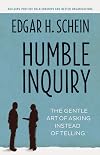
Well, at least it was short.
This book had two key problems. The first is that it was not particularly coherent. Schein covered a number of different elements that were all loosely related and tried to make them all be linked by the concept of humble inquiry. This didn't quite work, and instead I came away with an "it slices, it dices, it even makes julienne fries!" vibe. The last few chapters were especially hard to get through because they almost didn't even make sense.
The second is that show more much of the book is spent talking about status and why it's important for superiors (ugh) to grant status to their subordinates (ugh) by acknowledging that they have expertise that you don't (duh). I'm sure there are some people for whom this is a useful message. Those people are probably not going to be attracted to a book with this title.
For those of us who think that humble inquiry sounds like a good idea and are therefore likely to pick up the book, it has little to offer beyond common communication tips better covered in a myriad of other places (and probably most pithily summarized in Steven Covey's saying, "Seek first to understand, then to be understood).
That said, if you try, you can extract some good out of this book (although as noted, it's not novel).
The opening example, where someone feels the need to tell someone something without even seeing if they need to be told resonated with me. I hate when people do that, and it does immediately bias me against the teller. Thus, the general idea of humble inquiry is a good one. We should approach people and conversations with genuine curiosity and not assume you know the answers to your questions. If we all did that, then discourse would be much more civil.
Another good observation was that when organizations do not foster psychological safety, employees will not share information that could prevent bad outcomes because past experience shows that they will not be listened too and may suffer negative consequences for questioning / defying those with power.
These two factors become even more critical when teamwork is needed to get things done since effective teams are built on trust and understanding where everyone is able to contribute, whatever other status ques may be present.
Another bit of value is that while there are many ways of asking questions, not all of them are humble inquiry. In particular, questions that are asked for rhetorical effect or in a leading manner do not encourage honest, open answers from the recipient.
The book had few tips of how to ask questions which foster honest communication. Some that were there: Reflect on why you're asking a question before asking it. Make sure everyone has a chance to speak in group settings. Ask for examples when things are unclear. Ask about things you feel ignorant or uncomfortable about. Listen to the other person's answers and let that guide the conversation. Slow down; don't rush the conversation.
I did also like the definition of trust Schein uses: "Trust in the context of a conversation is believing that the other person will acknowledge me, not take advantage of me, not embarrass or humiliate me, tell me the truth, and, in the broader context, not cheat me, work on my behalf, and support the goals we agree to."
All in all though, if the book hadn't been less than 3 hours long, I would not have finished it. show less
This book had two key problems. The first is that it was not particularly coherent. Schein covered a number of different elements that were all loosely related and tried to make them all be linked by the concept of humble inquiry. This didn't quite work, and instead I came away with an "it slices, it dices, it even makes julienne fries!" vibe. The last few chapters were especially hard to get through because they almost didn't even make sense.
The second is that show more much of the book is spent talking about status and why it's important for superiors (ugh) to grant status to their subordinates (ugh) by acknowledging that they have expertise that you don't (duh). I'm sure there are some people for whom this is a useful message. Those people are probably not going to be attracted to a book with this title.
For those of us who think that humble inquiry sounds like a good idea and are therefore likely to pick up the book, it has little to offer beyond common communication tips better covered in a myriad of other places (and probably most pithily summarized in Steven Covey's saying, "Seek first to understand, then to be understood).
That said, if you try, you can extract some good out of this book (although as noted, it's not novel).
The opening example, where someone feels the need to tell someone something without even seeing if they need to be told resonated with me. I hate when people do that, and it does immediately bias me against the teller. Thus, the general idea of humble inquiry is a good one. We should approach people and conversations with genuine curiosity and not assume you know the answers to your questions. If we all did that, then discourse would be much more civil.
Another good observation was that when organizations do not foster psychological safety, employees will not share information that could prevent bad outcomes because past experience shows that they will not be listened too and may suffer negative consequences for questioning / defying those with power.
These two factors become even more critical when teamwork is needed to get things done since effective teams are built on trust and understanding where everyone is able to contribute, whatever other status ques may be present.
Another bit of value is that while there are many ways of asking questions, not all of them are humble inquiry. In particular, questions that are asked for rhetorical effect or in a leading manner do not encourage honest, open answers from the recipient.
The book had few tips of how to ask questions which foster honest communication. Some that were there: Reflect on why you're asking a question before asking it. Make sure everyone has a chance to speak in group settings. Ask for examples when things are unclear. Ask about things you feel ignorant or uncomfortable about. Listen to the other person's answers and let that guide the conversation. Slow down; don't rush the conversation.
I did also like the definition of trust Schein uses: "Trust in the context of a conversation is believing that the other person will acknowledge me, not take advantage of me, not embarrass or humiliate me, tell me the truth, and, in the broader context, not cheat me, work on my behalf, and support the goals we agree to."
All in all though, if the book hadn't been less than 3 hours long, I would not have finished it. show less
I think I tend toward (humble?) inquiry especially in my work, so the bigger ideas here weren't especially groundbreaking for me, but the clear articulation of them was helpful and validating. I don't think I learned a lot that'll change my behaviors, but I nodded a lot while reading. Like the best business books, this one takes a set of pretty simple ideas and explains them simply (but not patronizingly); in this case, the technique helps turn a more abstract sense or feeling about how we show more ought to behave into more concrete reasons those behaviors work. The book is better at the beginning and the end, a little flabby through some of the middle, but very brief in any case. show less
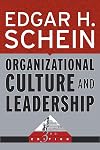
While this book is the classic on organizational culture, it's also incredibly verbose and tedious. There's value here, but a 100 page version with another 300 pages of examples linked to it would be a lot more useful. There were also a huge number of really dated examples (pre technology, companies were mainly dead dinosaurs like DEC), which is because the book is in 4th edition and only lightly revised.
I also listened on audible, rather than reading, which made it extra-tedious. (Textbook show more pricing for the printed or e-book, single credit for the audiobook, so...). I'd recommend reading this as an e-book instead.
I'd probably give it 5 stars as the canonical book on an important topic, except for being vastly too long and pretty tedious. show less
I also listened on audible, rather than reading, which made it extra-tedious. (Textbook show more pricing for the printed or e-book, single credit for the audiobook, so...). I'd recommend reading this as an e-book instead.
I'd probably give it 5 stars as the canonical book on an important topic, except for being vastly too long and pretty tedious. show less
Lists
You May Also Like


Associated Authors
Statistics
- Works
- 55
- Also by
- 2
- Members
- 2,237
- Popularity
- #11,465
- Rating
- 3.7
- Reviews
- 29
- ISBNs
- 189
- Languages
- 15
- Favorited
- 1