
Invisible Cities provides an abstract if not surreal vision into the many perspectives of the city. Set as conversation between the infamous Marco Polo and Kublai Khan Invisible Cities documents Marco Polo's vivid and imaginative descriptions of the cities that he has seen. Author Italo Calvino provides many philosophical musings regarding the nature of Marco Polo's travels and brings to question the very essence of existence and our conceptions of place.
Marco Polo's descriptions of cities are remarkable. He tells of each city not only through the lens of his own personal perspective, but he goes to great lengths to describe how the residents in each place understand the city and what emotions they attach to their location. As he recalls each city Marco Polo manages a certain detachment through which he describes the movement of each city's residents as if they were ants occupying an ant hill.
Calvino creates a complex mental puzzle in the conversation between Marco Polo and Kublai Khan that forces the reader to come to grips with the transient nature of physical space. As Invisible Cities progresses the reader becomes aware of the different emotions and conceptions that we all attach to cities and places and how our feelings can transform the physical manifestations of those places into an entirely different existence than what others experience.
Calvino is poetic in his descriptions of splendor and ruin. Invisible Cities is worth reading for the descriptive language show more alone. Marco Polo's descriptions make his places come alive and create a truly immersive experience through the use of Calvino's powerful imagery. show less
Marco Polo's descriptions of cities are remarkable. He tells of each city not only through the lens of his own personal perspective, but he goes to great lengths to describe how the residents in each place understand the city and what emotions they attach to their location. As he recalls each city Marco Polo manages a certain detachment through which he describes the movement of each city's residents as if they were ants occupying an ant hill.
Calvino creates a complex mental puzzle in the conversation between Marco Polo and Kublai Khan that forces the reader to come to grips with the transient nature of physical space. As Invisible Cities progresses the reader becomes aware of the different emotions and conceptions that we all attach to cities and places and how our feelings can transform the physical manifestations of those places into an entirely different existence than what others experience.
Calvino is poetic in his descriptions of splendor and ruin. Invisible Cities is worth reading for the descriptive language show more alone. Marco Polo's descriptions make his places come alive and create a truly immersive experience through the use of Calvino's powerful imagery. show less
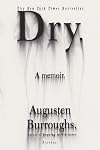
Augusten Burroughs has a talent for describing events with a sickening realism. Dry: A Memoir is a shining example of Burroughs talent. The book takes a dive into the life of alcohol-fueled workaholic and binge drinking Burroughs only days before an intervention sends him to rehab. The reader experiences the ups and downs of his journey and watches Burroughs troubled existence as he stumbles across his path to recovery.
Describing the book as emotional is somewhat unrealistic, as it extends deeper than the emotions that most of us can comprehend. Dry shows the cycles that Burroughs must travel through on his trip toward sobriety and the pitfalls that await him along the way. Dry also gets deeply personal diving into Burrough's personal life, his career life, and his love life. Burroughs spares nothing revealing his own personal successes and failures along with the most traumatic events that leave him teetering on the brink of relapsing.
Dry is at times painful, and you find yourself wanting to scream advice at Burroughs regarding his slip ups and the perils of substance abuse. Instead the reader is relegated to the sidelines forced to witness a series of mishaps and poor choices as Burroughs stumbles. It isn't all bad though. Dry balances Burrough's failing with his successes and his redemption. Dry is also uplifting as it shows the control that Burroughs regains over his life.
Dry a moving narrative. Burroughs does a spectacular job of conveying an extremely powerful show more experience through his own snarky sense of humor. I was a fan of Running with Scissors and I was a fan of Dry, but the Dry most certainly maintains a darker appeal. Dry isn't a light read, but it's certainly worth reading. It's riveting. It's harsh. It's realistic in an emotional way that most authors try to shield us from. show less
Describing the book as emotional is somewhat unrealistic, as it extends deeper than the emotions that most of us can comprehend. Dry shows the cycles that Burroughs must travel through on his trip toward sobriety and the pitfalls that await him along the way. Dry also gets deeply personal diving into Burrough's personal life, his career life, and his love life. Burroughs spares nothing revealing his own personal successes and failures along with the most traumatic events that leave him teetering on the brink of relapsing.
Dry is at times painful, and you find yourself wanting to scream advice at Burroughs regarding his slip ups and the perils of substance abuse. Instead the reader is relegated to the sidelines forced to witness a series of mishaps and poor choices as Burroughs stumbles. It isn't all bad though. Dry balances Burrough's failing with his successes and his redemption. Dry is also uplifting as it shows the control that Burroughs regains over his life.
Dry a moving narrative. Burroughs does a spectacular job of conveying an extremely powerful show more experience through his own snarky sense of humor. I was a fan of Running with Scissors and I was a fan of Dry, but the Dry most certainly maintains a darker appeal. Dry isn't a light read, but it's certainly worth reading. It's riveting. It's harsh. It's realistic in an emotional way that most authors try to shield us from. show less
How Starbucks Saved My Life: A Son of Privilege Learns to Live Like Everyone Else (Paperback) by Michael Gates Gill
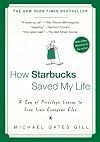
Starbucks tends to get a bad rap when it comes to its effect on our communities and our social lives often viewed as a corporate Satan hell bent on destroying our way of life. Michael Gates Gill has another point of view. After being forced out of a career working as a ranking member within the corporate hierarchy, Gill finds himself out of luck and running low on business prospects. He ends up in a Starbucks and waywardly steps into a position as a 64 year old barista.
Gill's story follows his own path learning the treacherous ropes of the coffee trade and reflects on his transformation from cruel corporate lackey to an enlightened employee who throws himself into a job he never would have wished on himself before. While at times How Starbucks Saved My Life comes off as Starbucks propaganda, Gill's transformation is very genuine. Starbucks places him into the harsh world that he has somehow avoided during his rather privileged life.
How Starbucks Saved My Life holds nothing back. Gill readily confesses the mistakes he has made throughout his life and looks for a way to pay his penance. His interaction with customers and his fellow employees shows how fulfilling life can be when we are not caught up in the pursuit of a career or a better life. Gill's account is sometimes painful as he reveals his past sins and the tragedy of the sacrifices he chose during his former life. How Starbucks Saved My Life provides an unparalleled perspective into the things that are truly show more important in life and reminds the reader what they might be missing or could miss if they don't place their focus in the right place. show less
Gill's story follows his own path learning the treacherous ropes of the coffee trade and reflects on his transformation from cruel corporate lackey to an enlightened employee who throws himself into a job he never would have wished on himself before. While at times How Starbucks Saved My Life comes off as Starbucks propaganda, Gill's transformation is very genuine. Starbucks places him into the harsh world that he has somehow avoided during his rather privileged life.
How Starbucks Saved My Life holds nothing back. Gill readily confesses the mistakes he has made throughout his life and looks for a way to pay his penance. His interaction with customers and his fellow employees shows how fulfilling life can be when we are not caught up in the pursuit of a career or a better life. Gill's account is sometimes painful as he reveals his past sins and the tragedy of the sacrifices he chose during his former life. How Starbucks Saved My Life provides an unparalleled perspective into the things that are truly show more important in life and reminds the reader what they might be missing or could miss if they don't place their focus in the right place. show less
It's a Sprawl World After All: The Human Cost of Unplanned Growth -- and Visions of a Better Future by Douglas E. Morris
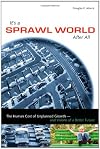
Sprawl is the nightmare of the urban planner manifested after decades of poor planning in the United States. We have lost control of the places that we inhabit and struggle to find a renewed sense of community. Douglas Morris, author of It's a Sprawl World After All acknowledges this loss of community, and examines the many facets of what sprawl has taken away from United States society. Rather than dwelling on the history of sprawl or wasting time with laying blame, Morris launches directly into an examination of the problems that sprawl is associated with and how we can fix them.
Morris presents a very compelling argument regarding the reasons urban sprawl is an undesirable force in our land development patterns. He moves beyond traditional arguments relating to increased infrastructure costs and increased environmental degradation and explains how sprawl affects us at a social level. The information presented links sprawl to a plethora of negative externalities including increased crime rates, incivility, and distance in personal relationships. He reinforces the argument that sprawl is inhibiting our ability to function as social creatures.
Instead of simply advocating that we raze our sprawling cities and start over again with vibrant downtowns and small villages, Morris offers solutions relating to how we can cope with sprawl. It's a Sprawl World After All removes our ability to become complacent victims of sprawl and places the impetus on us to become champions for show more better communities. Morris presents an empowering view of the problem that allows us to move forward in reality rather than aimlessly hoping that sprawl will vanish.
From an institutional perspective, It's a Sprawl World After All also offers a variety of suggestions on how we can prevent further sprawl. These suggestions move beyond draconian changes to land development regulations and instead propose a more holistic set of changes that would cause us to re-envision the way we live. The appendix summarizes the changes that helped to encourage sprawl in the first place and allows the reader to understand how those changes might be reversed in order to inspire livable communities.
This book is an excellent read for anyone interested in urban planning and community development because it combines the work of professional urban planners with the actions of citizens and illustrates how combined efforts can yield the types of robust communities that we desire to live in. show less
Morris presents a very compelling argument regarding the reasons urban sprawl is an undesirable force in our land development patterns. He moves beyond traditional arguments relating to increased infrastructure costs and increased environmental degradation and explains how sprawl affects us at a social level. The information presented links sprawl to a plethora of negative externalities including increased crime rates, incivility, and distance in personal relationships. He reinforces the argument that sprawl is inhibiting our ability to function as social creatures.
Instead of simply advocating that we raze our sprawling cities and start over again with vibrant downtowns and small villages, Morris offers solutions relating to how we can cope with sprawl. It's a Sprawl World After All removes our ability to become complacent victims of sprawl and places the impetus on us to become champions for show more better communities. Morris presents an empowering view of the problem that allows us to move forward in reality rather than aimlessly hoping that sprawl will vanish.
From an institutional perspective, It's a Sprawl World After All also offers a variety of suggestions on how we can prevent further sprawl. These suggestions move beyond draconian changes to land development regulations and instead propose a more holistic set of changes that would cause us to re-envision the way we live. The appendix summarizes the changes that helped to encourage sprawl in the first place and allows the reader to understand how those changes might be reversed in order to inspire livable communities.
This book is an excellent read for anyone interested in urban planning and community development because it combines the work of professional urban planners with the actions of citizens and illustrates how combined efforts can yield the types of robust communities that we desire to live in. show less
The Decline of Men: How the American Male Is Getting Axed, Giving Up, and Flipping Off His Future by Guy Garcia
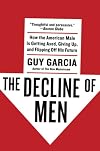
"The Decline of Men" isn't what you expect. When I first read the summary I envisioned some sort of counter-feminist rebuttal of women's rights, but what I found was an interesting venture into the plight of the modern day man. The author (Guy Garcia) dives headfirst into understanding the implications of modern society on the male gender and examines how work toward gender equality has impacted men. Written with a focus on modern society and pop-culture The Decline of Men manages to inform while entertaining.
Garcia weaves together a variety of topics from men's health to action figures in order to show how men are perceived in today's society. He doesn't make excuses for men, but instead shows how various elements of progress for women have displaced men or created confusion regarding their place in society. He looks at where men are losing traction (such as jobs and education) and he looks into areas where men have avoided taking care of themselves (such as preventative health). The cross-section of information that Garcia references is worth picking up the book in and of itself, his explosion of facts provides plenty of resources for additional research.
Instead of throwing together a droll recollection of history and explanation of gender, Garcia manages to present a powerfully entertaining glimpse of the male gender. I found it reminiscent of the stylistic prose found in "Freakonomics". He also works to explain where females are in relationship to males and where show more both genders are headed. I didn't find "The Decline of Men" to harp on any one particular perspective but in the same vein it can be a little hard on men. The facts concerning men can be somewhat difficult to accept as Garcia shows that the male position at the top of the foodchain is rapidly dissolving. He attempts to show the weaknesses in the male position and how those weaknesses should be addressed in order to prevent a disruption in establishing equality in gender relationships.
If you are interested in understanding how gender affects our position in modern society, "The Decline of Men" of men provides an excellent insight. While it is important to understand gender in a traditional sense, Garcia also enables the reader to think critically about how gender will shape society in the future. He allows us to understand that we must be constantly aware of how gender alters our communications and shapes our perceptions. "The Decline of Men" is really a warning about society overall. We can't ignore the needs of one group just because they are doing okay at that particular moment, Garcia points out that all of our actions need to be holistic and comprehensive to prevent marginalization of a previously dominant group. show less
Garcia weaves together a variety of topics from men's health to action figures in order to show how men are perceived in today's society. He doesn't make excuses for men, but instead shows how various elements of progress for women have displaced men or created confusion regarding their place in society. He looks at where men are losing traction (such as jobs and education) and he looks into areas where men have avoided taking care of themselves (such as preventative health). The cross-section of information that Garcia references is worth picking up the book in and of itself, his explosion of facts provides plenty of resources for additional research.
Instead of throwing together a droll recollection of history and explanation of gender, Garcia manages to present a powerfully entertaining glimpse of the male gender. I found it reminiscent of the stylistic prose found in "Freakonomics". He also works to explain where females are in relationship to males and where show more both genders are headed. I didn't find "The Decline of Men" to harp on any one particular perspective but in the same vein it can be a little hard on men. The facts concerning men can be somewhat difficult to accept as Garcia shows that the male position at the top of the foodchain is rapidly dissolving. He attempts to show the weaknesses in the male position and how those weaknesses should be addressed in order to prevent a disruption in establishing equality in gender relationships.
If you are interested in understanding how gender affects our position in modern society, "The Decline of Men" of men provides an excellent insight. While it is important to understand gender in a traditional sense, Garcia also enables the reader to think critically about how gender will shape society in the future. He allows us to understand that we must be constantly aware of how gender alters our communications and shapes our perceptions. "The Decline of Men" is really a warning about society overall. We can't ignore the needs of one group just because they are doing okay at that particular moment, Garcia points out that all of our actions need to be holistic and comprehensive to prevent marginalization of a previously dominant group. show less
I was initially excited about the title as I thought that it might provide insight into current barriers and problem areas regarding inter-gender communications. On its face, the book offers to examine gender issues and the ways in which women are subjugated and objectified. As I trudged through the reading, I found out that the author (Schmuley Boteach) isn't as concerned with gender issues as he is with attempting to preserve his own lifestyle by attempting to grant it some form of moral superiority (while openly condemning the secular world).
Boteach's writing clearly lacks a valuable female perspective. Throughout Hating Women he presents little more than his own opinion. The ideas are not cited or supported by any references to analytical literature and in some instances Boteach goes so far as to use the book as a marketing platform for his other titles. I don't mean to discredit Boteach's opinion, clearly it has value as does anyone's, but relying so heavily on his own ideas distracts from his credibility.
There are elements of truth peppered throughout the book and I'd be lying if I said it didn't force me to challenge some of my own preconceptions with regard to gender relations. Hating Women simply wasn't the book for me. I was hoping for something that was more deeply analytical, something that objectively weighed opposing viewpoints, and something that genuinely made me a more well-read person on the topic. What I got was a book written by an individual who is show more revered as a "talking head" on relationship issues and a book that was very much dedicated to a styling indicative of the crisis setting that he is accustomed to conversing in.
If you are looking to better understand communications and what can pose limitations in inter-gender communications, this isn't your book. If you are looking to understand some of the secularist vs. traditionalist debate when it comes to gender, you might find this book of more value. Don't expect to walk away with information on more complex gender issues (homosexuality or gender as a social construct), it's simply not there. Hating Women focuses largely on romantic relationships and the social norms that the author finds to be devolving. show less
Boteach's writing clearly lacks a valuable female perspective. Throughout Hating Women he presents little more than his own opinion. The ideas are not cited or supported by any references to analytical literature and in some instances Boteach goes so far as to use the book as a marketing platform for his other titles. I don't mean to discredit Boteach's opinion, clearly it has value as does anyone's, but relying so heavily on his own ideas distracts from his credibility.
There are elements of truth peppered throughout the book and I'd be lying if I said it didn't force me to challenge some of my own preconceptions with regard to gender relations. Hating Women simply wasn't the book for me. I was hoping for something that was more deeply analytical, something that objectively weighed opposing viewpoints, and something that genuinely made me a more well-read person on the topic. What I got was a book written by an individual who is show more revered as a "talking head" on relationship issues and a book that was very much dedicated to a styling indicative of the crisis setting that he is accustomed to conversing in.
If you are looking to better understand communications and what can pose limitations in inter-gender communications, this isn't your book. If you are looking to understand some of the secularist vs. traditionalist debate when it comes to gender, you might find this book of more value. Don't expect to walk away with information on more complex gender issues (homosexuality or gender as a social construct), it's simply not there. Hating Women focuses largely on romantic relationships and the social norms that the author finds to be devolving. show less
"The future is created one room at a time, one gathering at a time."
In an effort to expand my own knowledge and to become better connected to the concepts that power the field of planning, I read a respectable amount of planning related literature. Most of the literature takes a concept, explains it, provides some examples of how that concept is being used in other places, and then provides a stepping off point for others interested in integrating that concept into the planning efforts within their own jurisdiction. Community is not that book.
The author, Peter Block, attempts to create a more transformative dialog related to the concept of community engagement. Rather than tossing out some tried and true ideas that the reader might be looking for more information on, Block presents a more revolutionary narrative. With an extremely calm, collected demeanor Block explains the current situation as it relates to community and then shows how community can become more open, more engaging, and more inclusive. Block's model moves away from the more standard approaches that inevitably fuel the dichotomies often present in our communities today toward a model structured around understanding and belonging. Block also moves away from illustrating a cookie-cutter technique and instead illustrates the broad concepts that we can employee to create this dialog. The reader is granted an opportunity to fill in the appropriate gaps in order to make Block's ideas fit their needs.
Block's show more ideas of communities lend power to the individuals that occupy them. Citizens have control of their own future and aren't represented by "leaders" in a traditional sense. "In communal transformation, leadership is about intention, convening, valuing relatedness, and presenting choices." Block advocates for leaders that create opportunities to bring people together. Those individuals are "conveners" of meetings and aren't there to direct the conversations taking place, but instead they are there to ensure that the conditions are optimized for the conversations that need to take place.
I was intrigued by the concepts of questions and answers that Block presents. Instead of centering meetings around providing answers to questions, meetings can focus on presenting the right questions. Block theorizes that questions provide more openness and potential than answers which often doom us to repeat the past. Block also examines advice under a similar light pointing out that advice only limits our potential to the techniques that have been explored by those giving the advice.
I believe that the inclusive model that Block presents in Community: the Structure of Belonging is one that should be examined by community leaders and local government officials. Inclusion is often conspicuously absent in the meetings that shape our community. By bringing everyone to the table and creating an environment that allows everyone equal standing, we can create communities that perpetuate a feeling of belonging. This level of inclusion is a moral imperative in building community and it prevents efforts that perpetuate the isolation and marginalization. In reality inclusion is the only path to building true community.
Block presents his case in a format that allows the reader to incorporate his model into their community meetings. He gives vivid examples of areas where similar ideas have been employed and he shows how his ideas can be merged into our system of community engagement. Community: the Structure of Belonging is a great companion to the Organizer's Handbook. Block reaches a much greater level of detail and provides a graphic explanation as to why each concept is important (down to seemingly minute details such as room arrangement). Block's writing style is approachable, interesting, and extremely motivational. Block provides the information possible to enable us to "shift our conversations from the problems of community to the possibility of community". show less
In an effort to expand my own knowledge and to become better connected to the concepts that power the field of planning, I read a respectable amount of planning related literature. Most of the literature takes a concept, explains it, provides some examples of how that concept is being used in other places, and then provides a stepping off point for others interested in integrating that concept into the planning efforts within their own jurisdiction. Community is not that book.
The author, Peter Block, attempts to create a more transformative dialog related to the concept of community engagement. Rather than tossing out some tried and true ideas that the reader might be looking for more information on, Block presents a more revolutionary narrative. With an extremely calm, collected demeanor Block explains the current situation as it relates to community and then shows how community can become more open, more engaging, and more inclusive. Block's model moves away from the more standard approaches that inevitably fuel the dichotomies often present in our communities today toward a model structured around understanding and belonging. Block also moves away from illustrating a cookie-cutter technique and instead illustrates the broad concepts that we can employee to create this dialog. The reader is granted an opportunity to fill in the appropriate gaps in order to make Block's ideas fit their needs.
Block's show more ideas of communities lend power to the individuals that occupy them. Citizens have control of their own future and aren't represented by "leaders" in a traditional sense. "In communal transformation, leadership is about intention, convening, valuing relatedness, and presenting choices." Block advocates for leaders that create opportunities to bring people together. Those individuals are "conveners" of meetings and aren't there to direct the conversations taking place, but instead they are there to ensure that the conditions are optimized for the conversations that need to take place.
I was intrigued by the concepts of questions and answers that Block presents. Instead of centering meetings around providing answers to questions, meetings can focus on presenting the right questions. Block theorizes that questions provide more openness and potential than answers which often doom us to repeat the past. Block also examines advice under a similar light pointing out that advice only limits our potential to the techniques that have been explored by those giving the advice.
I believe that the inclusive model that Block presents in Community: the Structure of Belonging is one that should be examined by community leaders and local government officials. Inclusion is often conspicuously absent in the meetings that shape our community. By bringing everyone to the table and creating an environment that allows everyone equal standing, we can create communities that perpetuate a feeling of belonging. This level of inclusion is a moral imperative in building community and it prevents efforts that perpetuate the isolation and marginalization. In reality inclusion is the only path to building true community.
Block presents his case in a format that allows the reader to incorporate his model into their community meetings. He gives vivid examples of areas where similar ideas have been employed and he shows how his ideas can be merged into our system of community engagement. Community: the Structure of Belonging is a great companion to the Organizer's Handbook. Block reaches a much greater level of detail and provides a graphic explanation as to why each concept is important (down to seemingly minute details such as room arrangement). Block's writing style is approachable, interesting, and extremely motivational. Block provides the information possible to enable us to "shift our conversations from the problems of community to the possibility of community". show less
Authors Andres Duany, Jeff Speck, and Mike Lydon have created The Smart Growth Manual, a resource which not only explains the overarching ideals of smart growth, but a manual that takes the time to show smart growth principles at each geographic scale (region, neighborhood, street, building). The Smart Growth Manual bounces back and forth (in a beautifully organized manner) between steps for the implementation of smart growth and key concepts. The format of The Smart Growth Manual allows for each concept to be referenced and reviewed quickly (each concept is explained in about half a page).
I found The Smart Growth Manual to be the type of reference that you would throw in your bag before heading to your community association meeting or grab on your way to a city council hearing about a new development. The information is presented in such a simplistic, uncluttered format that you can use it almost like a dictionary. Instead of wondering whether a particular idea really is smart growth you can flip to it in the manual and understand how the concept would work and how it relates to other principles of smart growth. More importantly it can be used to better articulate community goals through providing an accessible guide to smart growth in an attainable format for charrettes, community meetings, etc.
To make The Smart Growth Manual all the more enticing, the pages are printed on 100% post-consumer recycled paper and it's pretty much pocket sized (so you don't have to lug show more around yet another huge manual in addition to ordinances and the like). The pages feature vivid illustrations and photographs of each concept so it's not a struggle to understand or explain a concept. I highly recommend The Smart Growth Manual as a part of any community participant's or urban planner's desktop references. show less
I found The Smart Growth Manual to be the type of reference that you would throw in your bag before heading to your community association meeting or grab on your way to a city council hearing about a new development. The information is presented in such a simplistic, uncluttered format that you can use it almost like a dictionary. Instead of wondering whether a particular idea really is smart growth you can flip to it in the manual and understand how the concept would work and how it relates to other principles of smart growth. More importantly it can be used to better articulate community goals through providing an accessible guide to smart growth in an attainable format for charrettes, community meetings, etc.
To make The Smart Growth Manual all the more enticing, the pages are printed on 100% post-consumer recycled paper and it's pretty much pocket sized (so you don't have to lug show more around yet another huge manual in addition to ordinances and the like). The pages feature vivid illustrations and photographs of each concept so it's not a struggle to understand or explain a concept. I highly recommend The Smart Growth Manual as a part of any community participant's or urban planner's desktop references. show less