
John Cleese
Author of Monty Python and the Holy Grail [1975 film]
About the Author
John Cleese, October 27, 1939 - John Cleese was born on October 27, 1939 in Weston-Super-Mare, Somerset, England to Reginald Cleese, and insurance salesman, and Muriel Cross. He attended Cambridge University beginning in 1960 and joined the Footlights Club in his second term. In 1963, a Footlights show more production called "A Clump of Plinths" became so popular that the production spawned Cambridge Circus and ran in London's West End. He eventually earned his law degree from Cambridge. In 1964, the show traveled first to New Zealand and then to America for 24 performances on Broadway. By the late 60's, Cleese was established as an actor and a writer. In 1969, the BBC, looking for a new show to fill an empty time slot, coupled Cleese and pal Graham Chapman with three graduates from Oxford, Eric Idle, Terry Jones and Michael Palin, as well as Terry Gilliam to create Monty Python's Flying Circus. The BBC produced 45 episodes which have been run and rerun over 30 years. Flying Circus became a cult classic and spawned yet another television show, "Fawlty Towers" as well as books and feature films such as "Monty Python's Life of Brian" and "Monty Python and the Holy Grail." Cleese then came down with a debilitating flu-like illness which his doctor suggested might be psychosomatic. After working with a therapist, Cleese returned with no signs of the illness and even joined the doctor in writing two books, "Families and How to Survive Them" and "Life and How to Survive It." He went on to create training films for corporations through his company called Video Arts. These videos enabled training to be fun as well as informative. Through all of this, Cleese has demonstrated his ability to perform in all walks of life and has made a name for himself doing what he loves best. (Bowker Author Biography) show less
Image credit: Photo by Alan Light, 1989 (Flickr & Cropped for Wikipedia)
Series
Works by John Cleese
Monty Python's The Meaning of Life [1983 film] (1983) — Screenwriter & Actor — 573 copies, 6 reviews
The Complete Monty Python's Flying Circus: All The Words, Vol.1 & Vol. 2 (1989) 529 copies, 3 reviews
And Now for Something Completely Different [1971 film] (1971) — Screenwriter and Actor — 172 copies, 2 reviews
The Golden Skits of Wing-commander Muriel Volestrangler, F.R.H.S. and Bar (1984) 68 copies, 1 review
The Monty Python Box Set (And Now For Something Completely Different/Monty Python and the Holy Grail/Life of Brian/The meaning of Life) (2006) 40 copies
Fawlty Towers: Fawlts and All: A 50th anniversary celebration of the nation's beloved sitcom (2025) 30 copies
Monty Python Holy Trinity (Monty Python and the Holy Grail / Monty Python's Life of Brian / Monty Python's The Meaning of Life) (1975) 19 copies
The Monty Python gift boks — Author — 14 copies
Fawlty Towers: Series 1 — Writer — 14 copies
Fawlty Towers - A Touch of Class/The Builders/The Wedding Party/The Hotel Inspectors (2001) 13 copies
Fawlty Towers - Waldorf Salad/The Kipper and the Corpse/The Anniversary/Basil the Rat (2001) 9 copies
Fawlty Towers,Vol. 4 - Communication Problems/The Anniversary/Basil The Rat (1975) — Actor/Writer — 7 copies
Trolls 7 copies
Fawlty Towers: Kipper and the Corpse/The Germans/Waldorf Salad/Gourmet Night v.2 (BBC Radio Collection) (Vol 2) (1981) 3 copies
John Cleese Comedy Collection / How To Irritate People, Romance With A Double Bass, Strange Case Of The End Of Civilization (2007) 3 copies
The secret policeman's ball 2 copies
Monty Python live! 20 years of Python, Parrot sketch not included [Monty Python's fliegender Zirkus] German episode #1 (2005) 2 copies, 1 review
$corched [DVD] 2 copies
Hold the Sunset 1 copy
The Naked Wanderer 1 copy
The Meaning Of Monty Python 1 copy
John Cleese greatest hits 1 copy
Say Cleese! 1 copy
The Magic Christian (screenplay, 3rd draft) -- based on 1st draft by Terry Southern 1 copy, 1 review
The importance of mistakes 1 copy
In two minds 1 copy
Un pez llamado Wanda [DVD] 1 copy
The Last Impresario [DVD] 1 copy
The Complete Fawlty Towers BBC TV Series 1 & 2 Complete DVD Collection [3 Discs] Boxset + Extras PAL 1 copy
A fish called Wanda : the screenplay ; original story by John Cleese and Charles Chrichton [Reclam] 1 copy
Art & the Creative Spirit 1 copy
Associated Works
The Cat in the Hat and Other Dr. Seuss Favorites (2003) — Narrator, some editions — 428 copies, 12 reviews
HP Double Feature: Harry Potter and the Sorcerer's Stone [and] Harry Potter and the Chamber of Secrets (Year 1 and Year 2) (2011) 72 copies, 1 review
Mickey's Magical Christmas: Snowed in at the House of Mouse [2001 film] (2001) — Narrator — 56 copies
2 Muppety Adventures: The Great Muppet Caper / Muppet Treasure Island Of Pirates & Pigs [Blu-ray] (2013) — Actor — 35 copies
Best of the Muppet Show: Vol. 4: Peter Sellers / John Cleese / Dudley Moore (2001) — Guest Star — 25 copies
The Swan Princess Triple Feature (Animated Video) — Actor — 15 copies
The Utterly Utterly Definitive and Pretty Damn Amusing Comic Relief Revue Book (1989) — Contributor — 11 copies
Scorched [2003 film] 10 copies
The Magic Pudding [2000 film] — Actor — 5 copies
Splitting Heirs [1993 film] — Actor — 1 copy
The Secret Policeman's Balls — Actor — 1 copy
Tagged
Common Knowledge
- Legal name
- Cleese, John Marwood
- Birthdate
- 1939-10-27
- Gender
- male
- Education
- Downing College, Cambridge
Clifton College - Occupations
- comedian
writer
producer
singer - Organizations
- Monty Python's Flying Circus
Artists for Brexit (supporter) - Relationships
- Booth, Connie (wife|1968-1978)
- Nationality
- UK
- Birthplace
- Weston-super-Mare, England, UK
- Places of residence
- Montecito, California, USA
Bath, Somerset, England, UK - Associated Place (for map)
- England, UK
Members
Reviews
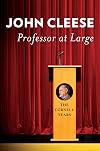
I will be upfront: I've been waiting for decades for an interlude between Cleese's marriages to snap him up for myself. And am an unreconstructed Monty Python fan. And once upon a time I was hired to work at a university where our new employee orientation included several of Cleese's customer service videos. So of COURSE I was going to read this.
This is NOT Monty Python. Or even Cleese's memoir "So, Anyway." Instead, it is a compilation of lectures, discussions, interviews, and even a show more sermon (!) conducted by Cleese during his stint as an invited professor-at-large at Cornell University. This is the very smart, thoughtful, curious Cleese with a wide-ranging and serious mind. The chapters explore the mysteries of writing, religion, psychology, facial recognition, creativity, group dynamics... and it's mostly interesting and enjoyable. Well, the screenwriting workshop with William Goldman was too long and repetitive, but worth the read for wannabe writers. And he can be a little flaky, fascinated by Jung, Watts, and other kind of woo-woo folks. But there is still the sharp, sarcastic, dry Cleese I love, and the requisite bits from Monty Python or Fawlty Towers still make me bark with laughter... Plus he adores cats. And there's a lemur on the back cover. A good read for fans. show less
This is NOT Monty Python. Or even Cleese's memoir "So, Anyway." Instead, it is a compilation of lectures, discussions, interviews, and even a show more sermon (!) conducted by Cleese during his stint as an invited professor-at-large at Cornell University. This is the very smart, thoughtful, curious Cleese with a wide-ranging and serious mind. The chapters explore the mysteries of writing, religion, psychology, facial recognition, creativity, group dynamics... and it's mostly interesting and enjoyable. Well, the screenwriting workshop with William Goldman was too long and repetitive, but worth the read for wannabe writers. And he can be a little flaky, fascinated by Jung, Watts, and other kind of woo-woo folks. But there is still the sharp, sarcastic, dry Cleese I love, and the requisite bits from Monty Python or Fawlty Towers still make me bark with laughter... Plus he adores cats. And there's a lemur on the back cover. A good read for fans. show less
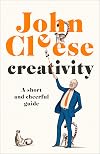
Very short book, the central idea of which lies in the two modes of thinking; fast and slow, perhaps best now known from Kahneman, but here given in the older Hare Brain vs Tortoise form. Practical advice around set and setting, letting your brain work, and some tips on how much to simmer work before getting feedback.
Most books like this would be filled with 200 pages of pointless bloat, so I appreciated there being none of that. (3 stars is a solid rating, not an insult).
Most books like this would be filled with 200 pages of pointless bloat, so I appreciated there being none of that. (3 stars is a solid rating, not an insult).
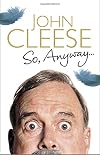
I received an advance copy of this autobiography from Netgalley in exchange for an honest review.
This is a very generous and unexpected autobiography. I say that because most books of these types merely retell the scandals, bask in the highlights, and dish the dirt on the nasty habits of famous people. Well, we all love that and if we are being honest, that is why we paid the price of admission.
Not so this time. While Mr. Cleese does tell us what he really thinks of some of the famous, and show more not so famous, people in his life, the book isn’t really about that. Even when he does roast someone, it is usually in terms that are so over the top, and above all so damn funny, that it is hard to see any animosity in it. No lurid tales. No hatchet jobs on celebrities. What you do get is an extended tour inside the mind of a comic genius.
Mr. Cleese is a very intelligent, well read, and introspective man---who just happens to enjoy and be very good at absurd and farce. For me though, his brand of comedy is superior to the more recent absurdist humor of say a Will Farrell or Seth Green because through it all, it never loses its intelligence. You don’t feel that you lost IQ points just by watching the movie. Quite the opposite, actually. I always felt that Cleese and the other writers that he worked with had a respect for their audience that I feel is lacking in some modern writers. Give me A Fish Called Wanda every time.
Writers. This is a book about comedy writers. That is a real distinction here. Cleese points it out and that is something I took away from this book. Cleese, Chapman, Idle, Palin, and Jones were first writers, and only secondarily performers. Cleese doesn’t focus on description of performances, other than telling in hilarious and self deprecating detail as to how nervous he was before many important performances or how something got screwed up and why. What he does do is describe his views on what is funny, and even why we perceive it as funny. As someone who might have been happy living the life of an academic, he gives the reader a master class in comedy, and human nature. He also lets us in on what makes him tick, both as a comedy writer, and as a person, which in turn shaped his individual mindset and, from there, his very original sense of humor. It is almost as if a famous musician would explain what he was thinking as he wrote a iconic song, which they seldom do. I doubt they would want us to know. Not so with Cleese who seems to enjoy the analysis, as did I.
If you are interested in hearing who had the drinking problems, who cheated on who, and who had the most sex with farm animals, this is not the right autobiography. If you are interested in an intelligent conversation with a comedy genius (who doesn’t consider himself to be one) about the nature of comedy and comedians, the history of British comedy, and his own place in the overall scheme of things, then you will enjoy this very thorough yet lightly conversational book. show less
This is a very generous and unexpected autobiography. I say that because most books of these types merely retell the scandals, bask in the highlights, and dish the dirt on the nasty habits of famous people. Well, we all love that and if we are being honest, that is why we paid the price of admission.
Not so this time. While Mr. Cleese does tell us what he really thinks of some of the famous, and show more not so famous, people in his life, the book isn’t really about that. Even when he does roast someone, it is usually in terms that are so over the top, and above all so damn funny, that it is hard to see any animosity in it. No lurid tales. No hatchet jobs on celebrities. What you do get is an extended tour inside the mind of a comic genius.
Mr. Cleese is a very intelligent, well read, and introspective man---who just happens to enjoy and be very good at absurd and farce. For me though, his brand of comedy is superior to the more recent absurdist humor of say a Will Farrell or Seth Green because through it all, it never loses its intelligence. You don’t feel that you lost IQ points just by watching the movie. Quite the opposite, actually. I always felt that Cleese and the other writers that he worked with had a respect for their audience that I feel is lacking in some modern writers. Give me A Fish Called Wanda every time.
Writers. This is a book about comedy writers. That is a real distinction here. Cleese points it out and that is something I took away from this book. Cleese, Chapman, Idle, Palin, and Jones were first writers, and only secondarily performers. Cleese doesn’t focus on description of performances, other than telling in hilarious and self deprecating detail as to how nervous he was before many important performances or how something got screwed up and why. What he does do is describe his views on what is funny, and even why we perceive it as funny. As someone who might have been happy living the life of an academic, he gives the reader a master class in comedy, and human nature. He also lets us in on what makes him tick, both as a comedy writer, and as a person, which in turn shaped his individual mindset and, from there, his very original sense of humor. It is almost as if a famous musician would explain what he was thinking as he wrote a iconic song, which they seldom do. I doubt they would want us to know. Not so with Cleese who seems to enjoy the analysis, as did I.
If you are interested in hearing who had the drinking problems, who cheated on who, and who had the most sex with farm animals, this is not the right autobiography. If you are interested in an intelligent conversation with a comedy genius (who doesn’t consider himself to be one) about the nature of comedy and comedians, the history of British comedy, and his own place in the overall scheme of things, then you will enjoy this very thorough yet lightly conversational book. show less
The Brand New Monty Python Bok / Tits`n Bums: a Weekly Look at Church Architecture by Graham Chapman

The Brand New Monty Python Bok [sic] is the second book to be published by the British comedy team. Edited by Eric Idle, it contains more text based humour than the first book, Monty Python's Big Red Book.
The hardback version was originally published with a white dust jacket that was deliberately designed to appear grubby, with realistic looking smudged fingerprints on the front, which fooled enough booksellers to complain to the publishers when it first hit the shelves in the 1970s. This show more was just the beginning of the real gag however. Should the offended parties attempt to dislodge the grubby dust cover, they were met with an even more 'grubby' mock pornographic magazine cover underneath which purported to be titled 'Tits 'n Bums - a weekly look at church architecture', with articles such as "Are you still a verger?". Just imagine the shriek of embarrassment from browsers in WH Smiths, innocently slipping off the dust cover out of curiosity and then going red in the face with panic as they fumbled to stuff the book back into its sleeve as tits and bums, blazoned across the cover, caught the attention of opinionated bystanders in the shop. Mutterings of 'pervert' and disdainful glares following them as they 'leg it' out the door before they are recognised! (Or, at least, I like to imagine such a scenario). I laughed myself to tears before I'd even opened the cover - which is a good way to start a comedy book.
If you did not find that offensive enough, then the first page contains a glued in school library fly sheet containing a list of all the students who withdrew the book; incl. J.P. Sartre, S. Davis Jr., Shirley Bassey, and lastly a certain 'M. Thatcher'.
Once again, I fell onto the floor visualising this crude porn cover sitting proudly on the shelves of Ferndean School Library. What a thing to suggest! At this point I was crying so hard with shame and laughter that I could barely read the words on the first page. I don't think there has ever been a funnier T.V. Tie in comedy book released before or since!
Inside:
Learn the secret Welsh art of self defence Llap-Goch, acquaint yourself with the Python Book of Etiquette, read the comic adventures of Walter the Wallabee, learn how to cook rat, learn to play Cheeseshop - an exciting new word game for two based on real life retailing, Hamsters: a warning, Teach yourself surgery, and many, many other ridiculous and amusing notions...
Its all good smutty fun. Naughty school-boy humour really; with one foot just over the line of decency which made this troop of comedians so cutting edge at a time when businessmen still wore bowler hats and rubbed shoulders on the tube with the first punk rockers. Strange days indeed!
p.s. Look out for page 71 !!! show less
The hardback version was originally published with a white dust jacket that was deliberately designed to appear grubby, with realistic looking smudged fingerprints on the front, which fooled enough booksellers to complain to the publishers when it first hit the shelves in the 1970s. This show more was just the beginning of the real gag however. Should the offended parties attempt to dislodge the grubby dust cover, they were met with an even more 'grubby' mock pornographic magazine cover underneath which purported to be titled 'Tits 'n Bums - a weekly look at church architecture', with articles such as "Are you still a verger?". Just imagine the shriek of embarrassment from browsers in WH Smiths, innocently slipping off the dust cover out of curiosity and then going red in the face with panic as they fumbled to stuff the book back into its sleeve as tits and bums, blazoned across the cover, caught the attention of opinionated bystanders in the shop. Mutterings of 'pervert' and disdainful glares following them as they 'leg it' out the door before they are recognised! (Or, at least, I like to imagine such a scenario). I laughed myself to tears before I'd even opened the cover - which is a good way to start a comedy book.
If you did not find that offensive enough, then the first page contains a glued in school library fly sheet containing a list of all the students who withdrew the book; incl. J.P. Sartre, S. Davis Jr., Shirley Bassey, and lastly a certain 'M. Thatcher'.
Once again, I fell onto the floor visualising this crude porn cover sitting proudly on the shelves of Ferndean School Library. What a thing to suggest! At this point I was crying so hard with shame and laughter that I could barely read the words on the first page. I don't think there has ever been a funnier T.V. Tie in comedy book released before or since!
Inside:
Learn the secret Welsh art of self defence Llap-Goch, acquaint yourself with the Python Book of Etiquette, read the comic adventures of Walter the Wallabee, learn how to cook rat, learn to play Cheeseshop - an exciting new word game for two based on real life retailing, Hamsters: a warning, Teach yourself surgery, and many, many other ridiculous and amusing notions...
Its all good smutty fun. Naughty school-boy humour really; with one foot just over the line of decency which made this troop of comedians so cutting edge at a time when businessmen still wore bowler hats and rubbed shoulders on the tube with the first punk rockers. Strange days indeed!
p.s. Look out for page 71 !!! show less
Lists
Awards


You May Also Like


Associated Authors
Statistics
- Works
- 115
- Also by
- 69
- Members
- 14,542
- Popularity
- #1,580
- Rating
- 4.1
- Reviews
- 187
- ISBNs
- 393
- Languages
- 17
- Favorited
- 4