
Kim "Howard" Johnson
Author of The First 20 Years of Monty Python
About the Author
Works by Kim "Howard" Johnson
Life Before and After Monty Python: The Solo Flights of the Flying Circus (1993) — Author — 89 copies
Associated Works
Tagged
Common Knowledge
- Birthdate
- 1955-08-06
- Gender
- male
- Short biography
- [from Illinois Authors website]
Kim "Howard" Johnson has written several books on Monty Python as well as comic books for Marvel, DC, and Event Comics. Johnson first met the members of the Monty Python troupe in 1978 when he was the publisher of a Monty Python fanzine. He also appeared in Life Of Brian, and once worked as John Cleese's personal assistant. Johnson and his wife, Laurie Bradach, own DoubleDare Books. He has also been a screenwriter, an award-winning newspaper writer, marketing director for a comic book company, radio newsman and feature reporter and magazine journalist. - Birthplace
- Ottawa, Illinois, USA
- Places of residence
- Illinois, USA
- Associated Place (for map)
- Illinois, USA
Members
Reviews
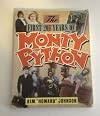
One of the best lines ever in the “Summarize Proust Competition” sketch, one of my all-time favourites:
Mee: “Harry Bagot, you're from Luton?”
Harry: “Yes, Arthur, yeah.”
Mee: “Now Harry what made you first want to try and start summarizing Proust?”
Harry: “Well, I first entered a seaside Summarizing Proust Competition when I was on holiday in Bournemouth, and my doctor encouraged me with it.”
Mee: “And Harry, what are your hobbies outside summarizing?”
Harry: “Well, show more strangling animals, golf and masturbating.”
Mee: “Well, thank you Harry Bagot!”
Harry walks off-stage. Music and applause.
Voice Over: “Well there he goes. Harry Bagot. He must have let himself down a bit on the hobbies, golf's not very popular around here...”
In the 80's Portuguese TV had only two channels, and on weekdays non-children programs began only at 7pm. The public broadcaster did news, sports, etc., the other eighty percent of the slots was filled by broadcasting organization representing protestants, Catholics, conservatives, liberals, social democrats and so on, all preaching to their own parishes.
For a young progressive minded schoolboy that was a recipe for total boredom in the evenings, there was however RTP2 that did offer three, four hours a week of progressive, creative, avant-garde, even risky programming. They brought Monty Python to Portugal and I was immediately hooked, it was such a difference from the smug, conformist type of comedy that ruled over here. My problem was however that the one TV set in the house was monopolized by my sister and my grandmother, plus my grandmother strongly disapproved of me watching 'subversive' material. I had to sneak after 23 pm or midnight to watch the programme after everybody else had gone to bed. I had to turn the sound down and sit as close to the TV as possible so as not to wake my grandmother and sister. The next day at school I was only able to discuss the episode with an increasingly smaller number of fellow fans who were either doing the same or who had more lenient parents. It's no wonder the viewing figures were so low. The potential audience was getting smaller and smaller as the broadcast time got later and later plus they weren't talking to the people who were actually watching the show.
I have it all on my hard disc now, it was never easier, but it was never better to watch that unique British comedy than as that 14-year old schoolboy knowing parents and teachers would be disgusted and more than ready to end the practice. Monty Python also introduced me to the English mindset more than anything else and it has prepared me more than anything else for the absurdities we are now the witnesses of. I also learned more about philosophy (e.g., “Germany vs Greece - Philosophers Football Match”: Hegel is arguing that the reality is merely an a priori adjunct of non-naturalistic ethics, Kant via the categorical imperative is holding that ontologically it exists only in the imagination, and Marx is claiming it was offside…; to this day every time I hear a serious reference to Immanuel Kant I start to hum to myself 'was a real pissant...'), political theory and English verb conjugation from Monty Python than I ever learned from school!
The demands of making a sketch series inevitably means there are going to be duds. Cleese has admitted that a good deal of the material wasn't great, but I think that would stand for any sketch comedy series. But the glorious bits are sublime. They were the Mozarts of comedy. The films were a good deal better. Even the somewhat scattershot “Meaning Of Life” was glorious. When they had to compress an entire concept down into 90 minutes, and within some sort of plot structure, it greatly benefited their brand of humour. “Life of Brian” is probably one of the most timeless comedy films ever made, and for sheer silliness nothing beats the opening credits of “Holy Grail”; for me, the incredible thing about “Life Of Brian” is that virtually every one of its lines are endlessly quotable: "Oh, it's the meek blessed are the meek, it's nice that they're getting something cos they have a hell of a time", "One more word out of you, and I'll take you to the fucking cleaners"…
Netflix has all the MP series and I watched them again. Some great bits of course. Some is half-baked and under-rehearsed. I much prefer the albums which, to me, are much funnier and sometimes even weirder than the TV shows. All hail Python anyway, my teenage years would have been much less exciting without them.
Bottom-line: Bloody university types going around belittling the rest of us with references to long-winded French novelists, not to mention making up songs about obscure foreigners with names like Heidegger and Descartes. I mean, how can you call it comedy when a joke is predicated on the audiences' knowledge of a painting by Leonardo or of their grasp of Latin grammar? Thank God for the inclusive lowest-common-denominatorism of a real comic genius like John Cleese! This book does not do full justice to the Monty Python Series. show less
Mee: “Harry Bagot, you're from Luton?”
Harry: “Yes, Arthur, yeah.”
Mee: “Now Harry what made you first want to try and start summarizing Proust?”
Harry: “Well, I first entered a seaside Summarizing Proust Competition when I was on holiday in Bournemouth, and my doctor encouraged me with it.”
Mee: “And Harry, what are your hobbies outside summarizing?”
Harry: “Well, show more strangling animals, golf and masturbating.”
Mee: “Well, thank you Harry Bagot!”
Harry walks off-stage. Music and applause.
Voice Over: “Well there he goes. Harry Bagot. He must have let himself down a bit on the hobbies, golf's not very popular around here...”
In the 80's Portuguese TV had only two channels, and on weekdays non-children programs began only at 7pm. The public broadcaster did news, sports, etc., the other eighty percent of the slots was filled by broadcasting organization representing protestants, Catholics, conservatives, liberals, social democrats and so on, all preaching to their own parishes.
For a young progressive minded schoolboy that was a recipe for total boredom in the evenings, there was however RTP2 that did offer three, four hours a week of progressive, creative, avant-garde, even risky programming. They brought Monty Python to Portugal and I was immediately hooked, it was such a difference from the smug, conformist type of comedy that ruled over here. My problem was however that the one TV set in the house was monopolized by my sister and my grandmother, plus my grandmother strongly disapproved of me watching 'subversive' material. I had to sneak after 23 pm or midnight to watch the programme after everybody else had gone to bed. I had to turn the sound down and sit as close to the TV as possible so as not to wake my grandmother and sister. The next day at school I was only able to discuss the episode with an increasingly smaller number of fellow fans who were either doing the same or who had more lenient parents. It's no wonder the viewing figures were so low. The potential audience was getting smaller and smaller as the broadcast time got later and later plus they weren't talking to the people who were actually watching the show.
I have it all on my hard disc now, it was never easier, but it was never better to watch that unique British comedy than as that 14-year old schoolboy knowing parents and teachers would be disgusted and more than ready to end the practice. Monty Python also introduced me to the English mindset more than anything else and it has prepared me more than anything else for the absurdities we are now the witnesses of. I also learned more about philosophy (e.g., “Germany vs Greece - Philosophers Football Match”: Hegel is arguing that the reality is merely an a priori adjunct of non-naturalistic ethics, Kant via the categorical imperative is holding that ontologically it exists only in the imagination, and Marx is claiming it was offside…; to this day every time I hear a serious reference to Immanuel Kant I start to hum to myself 'was a real pissant...'), political theory and English verb conjugation from Monty Python than I ever learned from school!
The demands of making a sketch series inevitably means there are going to be duds. Cleese has admitted that a good deal of the material wasn't great, but I think that would stand for any sketch comedy series. But the glorious bits are sublime. They were the Mozarts of comedy. The films were a good deal better. Even the somewhat scattershot “Meaning Of Life” was glorious. When they had to compress an entire concept down into 90 minutes, and within some sort of plot structure, it greatly benefited their brand of humour. “Life of Brian” is probably one of the most timeless comedy films ever made, and for sheer silliness nothing beats the opening credits of “Holy Grail”; for me, the incredible thing about “Life Of Brian” is that virtually every one of its lines are endlessly quotable: "Oh, it's the meek blessed are the meek, it's nice that they're getting something cos they have a hell of a time", "One more word out of you, and I'll take you to the fucking cleaners"…
Netflix has all the MP series and I watched them again. Some great bits of course. Some is half-baked and under-rehearsed. I much prefer the albums which, to me, are much funnier and sometimes even weirder than the TV shows. All hail Python anyway, my teenage years would have been much less exciting without them.
Bottom-line: Bloody university types going around belittling the rest of us with references to long-winded French novelists, not to mention making up songs about obscure foreigners with names like Heidegger and Descartes. I mean, how can you call it comedy when a joke is predicated on the audiences' knowledge of a painting by Leonardo or of their grasp of Latin grammar? Thank God for the inclusive lowest-common-denominatorism of a real comic genius like John Cleese! This book does not do full justice to the Monty Python Series. show less
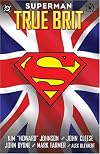
This farcical version of Superman has him landing in England and growing up as Colin Kent.
[b:Superman: True Brit|160469|Superman True Brit|Kim Howard Johnson|https://d.gr-assets.com/books/1172285333s/160469.jpg|154889]
It’s quite tongue in cheek with the writing influences of John Cleese, Kim Johnson and John Byrne. This is the British tale of Superman reared by his adoptive English parents.
The drawings depict the caricatures people think of about England, the fodder jokes and stereo types show more such as the men with pitch helmets, bad dentistry, continual rain and fish mongers having a go at one another.
Here’s another stereotype … Further on in the book you see Colin trying to blend in.
“And so, Colin Clark grows up British. Quietly. Respectably, and without causing embarrassment. NO super flying. No super speed. No X-Ray vision, no super dancing (he’s stepping on a girls foot whilst tying to dance at school).
The Monty Python humor shines through when poor Colin uses a bit too much enthusiasm at a cricket match and impales a schoolmate with a cricket bat. You have names like Mr. Whyte-Badger and places such as Weston Super-Mare featured in this book. It’s funny, it’s irreverent and a great sampling of British humor. show less
[b:Superman: True Brit|160469|Superman True Brit|Kim Howard Johnson|https://d.gr-assets.com/books/1172285333s/160469.jpg|154889]
It’s quite tongue in cheek with the writing influences of John Cleese, Kim Johnson and John Byrne. This is the British tale of Superman reared by his adoptive English parents.
The drawings depict the caricatures people think of about England, the fodder jokes and stereo types show more such as the men with pitch helmets, bad dentistry, continual rain and fish mongers having a go at one another.
Here’s another stereotype … Further on in the book you see Colin trying to blend in.
“And so, Colin Clark grows up British. Quietly. Respectably, and without causing embarrassment. NO super flying. No super speed. No X-Ray vision, no super dancing (he’s stepping on a girls foot whilst tying to dance at school).
The Monty Python humor shines through when poor Colin uses a bit too much enthusiasm at a cricket match and impales a schoolmate with a cricket bat. You have names like Mr. Whyte-Badger and places such as Weston Super-Mare featured in this book. It’s funny, it’s irreverent and a great sampling of British humor. show less
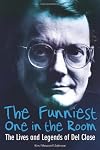
This book is a meticulously detailed biography of Del Close by his friend and student Kim “Howard” Johnson. It covers Close’s entire life from his boyhood in Manhattan, Kansas to his last days in Chicago (and a bit beyond). Del Close was incredibly influential in the development of improvisation as an art form. The reader will recognize whole generations of comedians who learned from Close (e.g. John Belushi, Bill Murray…). The book includes an Appendix listing all the known works of show more Del Close and an index. show less
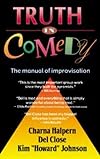
I get why people dislike this book — it's less a how-to manual than an advertisement for iO. Also, the language it uses is pretty dated (not in an offensive way, but in that improv schools have updated terminology these days).
Still, if you want something simple to guide you on stage, this book gives you just enough to encourage exploration. But there are more thorough and up-to-date books on the subject, which I intend to read next.
Still, if you want something simple to guide you on stage, this book gives you just enough to encourage exploration. But there are more thorough and up-to-date books on the subject, which I intend to read next.
You May Also Like


Associated Authors
Statistics
- Works
- 11
- Also by
- 1
- Members
- 1,280
- Popularity
- #20,031
- Rating
- 3.6
- Reviews
- 25
- ISBNs
- 31
- Languages
- 2
