
Richard Shepherd (2)
Author of Unnatural Causes
For other authors named Richard Shepherd, see the disambiguation page.
About the Author
Richard Shepherd is Senior Lecturer and Head of Department of the Forensic Medicine Unit at St. George's Medical and Dental School, London, UK.
Works by Richard Shepherd
Tagged
Common Knowledge
- Birthdate
- 1950s
- Gender
- male
- Occupations
- forensic pathologist
- Nationality
- UK
- Birthplace
- London, England, UK
- Associated Place (for map)
- England, UK
Members
Reviews
Unnatural Causes: The Life and Many Deaths of Britain's Top Forensic Pathologist by Richard Shepherd
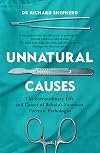
This is the memoir of forensic pathologist Richard Shepherd, whose career began in the late 1980s. Along the way he’s seen marvellous advances in forensic technology and been challenged by lots of cases. He participated in medical efforts following major national and international disasters, such as 9/11, the Bali nightclub bombing, and 7/7. He’s worked on teams that develop plans for responding to these kinds of disasters, and he’s developed a specialism in knife wounds. This story is show more about his own life and that of the profession as a whole: the toll it takes emotionally on its practitioners, the change in structure to make forensic pathology seem like a frill rather than a necessity (cost-recovery / direct billing is such a wrong decision), the ways in which society has changed and thus the types of cases he’s seen have changed.
I devoured this book in two days’ worth of reading. Shepherd writes in a straightforward, clear manner and is fairly frank about how his obsession with his job affected his marriage and other family relationships. He talks winningly of his love for flying (as a plane nerd, I was delighted to see a Cessna 172 make an appearance!) and how it helps him, ironically enough, stay grounded. He shares his struggles with PTSD, which built up over a 30-year career. He also talks about the importance of the truth and how the truth can be relative rather than absolute once it hits the court.
I highly recommend this book for anyone interested in forensics or medicine, especially those who read Working Stiff, by Judy Melinek — her boss at the time of 9/11 makes a cameo appearance here. show less
I devoured this book in two days’ worth of reading. Shepherd writes in a straightforward, clear manner and is fairly frank about how his obsession with his job affected his marriage and other family relationships. He talks winningly of his love for flying (as a plane nerd, I was delighted to see a Cessna 172 make an appearance!) and how it helps him, ironically enough, stay grounded. He shares his struggles with PTSD, which built up over a 30-year career. He also talks about the importance of the truth and how the truth can be relative rather than absolute once it hits the court.
I highly recommend this book for anyone interested in forensics or medicine, especially those who read Working Stiff, by Judy Melinek — her boss at the time of 9/11 makes a cameo appearance here. show less
Unnatural Causes: The Life and Many Deaths of Britain's Top Forensic Pathologist. by Richard Shepherd
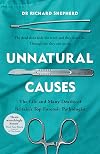
Dr Dick Shepherd is a senior forensic pathologist in the UK, most lately well known for a TV programme in the UK in which he explains the autopsies and hence reasons for death of famous names. Whilst I find the premise of that programme distasteful for using people's deaths to create TV enjoyment, I admit to being wholly hypocritical; when I've happened to switch on in the middle of it from time to time it's been absolutely fascinating.
So too is this book. For starters, it's well written. show more Shepherd backdrops his professional stories with insights into his personal life, in particular the challenges of leaving the job on the doorstep when he comes home to his family, and the toll that his and his wife's demanding careers took on their marriage. Whilst for some this may be unnecessary mass market fodder, I felt this helped to answer that obvious question of 'how does someone do this as their job every day?'
There wasn't a dull story amongst the many told in this book. Some were murder cases where Shepherd explains how the body held the truth about what had actually happened to cause death (was that person attacked or were those self-inflicted knife wounds? Was that wife really defending her own life or cold bloodily murdering her husband?). Shepherd developed a specialism in stabbing wounds and also in the deaths of prisoners under police or prison restraint, and whilst at first glance these sound like gruesome subject matter, the forensic science was so incredibly interesting I found it compulsive reading.
He was also involved in some terribly sad high profile tragedies, including the Hungerford disaster, the sinking of The Marchioness, the Bali bombing, Stephen Lawrence's murder and the Clapham Rail disaster. Whilst all incredibly sad tales, the perspective of a pathologist in supporting in such incidences was again fascinating, particularly the insights into the difficulties of coping with so many bodies after a major disaster when grieving relatives want quick answers.
Shepherd also increased his notoriety when he was assigned as pathologist on the inquest of the death of Princess Diana and Dodi Al Fayed. Although he did not perform the original post mortems, he was called in to review the original French post mortem reports which contained some inconsistencies which were feeding mass conspiracy theories.
Does this book capitalise on the sad deaths of many people? Undoubtedly yes. However, in its defence, real names are only used for those deaths which were already public knowledge, and where post mortem details had already usually been made public. I carry a bit of an unhealthy fear of death and get highly stressed at funerals, so I'm trying to educate myself around the topic a little more in hope that knowledge alleviates some of my terror. I knew very little about what happens to bodies after death, and it was interesting to become more informed around this. By using these high profile cases to explain some of his cases, it helped me put into context some of the public outcries that developed after these tragic deaths.
In all, a wholly fascinating read from start to finish. Some of the cases may not be known well outside of the UK, but I don't think that would detract from how interesting the science and pathology challenges are.
4.5 stars - definitely majorly ticks a box as a 'science for the unscientific' read. I'm just taking away half a star as the cover says he's Britain's top forensic pathologist - I get the impression that he's one of a number of senior pathologists, but that was probably his publisher more than him. show less
So too is this book. For starters, it's well written. show more Shepherd backdrops his professional stories with insights into his personal life, in particular the challenges of leaving the job on the doorstep when he comes home to his family, and the toll that his and his wife's demanding careers took on their marriage. Whilst for some this may be unnecessary mass market fodder, I felt this helped to answer that obvious question of 'how does someone do this as their job every day?'
There wasn't a dull story amongst the many told in this book. Some were murder cases where Shepherd explains how the body held the truth about what had actually happened to cause death (was that person attacked or were those self-inflicted knife wounds? Was that wife really defending her own life or cold bloodily murdering her husband?). Shepherd developed a specialism in stabbing wounds and also in the deaths of prisoners under police or prison restraint, and whilst at first glance these sound like gruesome subject matter, the forensic science was so incredibly interesting I found it compulsive reading.
He was also involved in some terribly sad high profile tragedies, including the Hungerford disaster, the sinking of The Marchioness, the Bali bombing, Stephen Lawrence's murder and the Clapham Rail disaster. Whilst all incredibly sad tales, the perspective of a pathologist in supporting in such incidences was again fascinating, particularly the insights into the difficulties of coping with so many bodies after a major disaster when grieving relatives want quick answers.
Shepherd also increased his notoriety when he was assigned as pathologist on the inquest of the death of Princess Diana and Dodi Al Fayed. Although he did not perform the original post mortems, he was called in to review the original French post mortem reports which contained some inconsistencies which were feeding mass conspiracy theories.
Does this book capitalise on the sad deaths of many people? Undoubtedly yes. However, in its defence, real names are only used for those deaths which were already public knowledge, and where post mortem details had already usually been made public. I carry a bit of an unhealthy fear of death and get highly stressed at funerals, so I'm trying to educate myself around the topic a little more in hope that knowledge alleviates some of my terror. I knew very little about what happens to bodies after death, and it was interesting to become more informed around this. By using these high profile cases to explain some of his cases, it helped me put into context some of the public outcries that developed after these tragic deaths.
In all, a wholly fascinating read from start to finish. Some of the cases may not be known well outside of the UK, but I don't think that would detract from how interesting the science and pathology challenges are.
4.5 stars - definitely majorly ticks a box as a 'science for the unscientific' read. I'm just taking away half a star as the cover says he's Britain's top forensic pathologist - I get the impression that he's one of a number of senior pathologists, but that was probably his publisher more than him. show less
Unnatural Causes: 'An absolutely brilliant book. I really recommend it, I don't often say that' Jeremy Vine, BBC Radio 2 by Richard Shepherd
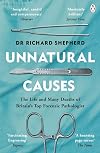
半職場 memoir 半 autobiography,作者對自己人際關係和性格由來的坦誠剖析讓冷酷法醫的形象霎時變得很貼地。
見證了太多 man's inhumanity to man 引發了作者對法醫發展乃至司法系統的反思(以及後期的PTSD)。比如作者遇到好幾例 restraint asphyxia show more 後決定必須採取行動,於是開始教警察們如何在抓捕犯人時不使用過度暴力。鐮刀型紅細胞貧血症基因携帶者雖然不至於表現出貧血症狀,但仍帶有少量有缺陷的紅細胞,部分亞非族裔(尤其是來自瘧疾肆虐地區的人種)容易受其影響,則是因爲携帶者抵禦瘧疾的能力較强;其次呼吸不足會誘發心臟病,而激烈掙扎更是增加了需氧量,也提升了心臟病的風險;最後毒物的參與也使得 restraint asphyxia 頻發。而這幾章,恰好與眼下的 George Floyd 案遙相呼應⋯⋯
作者將自己的深入思考融入案件之中,讓人看得手不釋卷,四百頁的書一週不到就能看完,好爽qwq show less
見證了太多 man's inhumanity to man 引發了作者對法醫發展乃至司法系統的反思(以及後期的PTSD)。比如作者遇到好幾例 restraint asphyxia show more 後決定必須採取行動,於是開始教警察們如何在抓捕犯人時不使用過度暴力。鐮刀型紅細胞貧血症基因携帶者雖然不至於表現出貧血症狀,但仍帶有少量有缺陷的紅細胞,部分亞非族裔(尤其是來自瘧疾肆虐地區的人種)容易受其影響,則是因爲携帶者抵禦瘧疾的能力較强;其次呼吸不足會誘發心臟病,而激烈掙扎更是增加了需氧量,也提升了心臟病的風險;最後毒物的參與也使得 restraint asphyxia 頻發。而這幾章,恰好與眼下的 George Floyd 案遙相呼應⋯⋯
作者將自己的深入思考融入案件之中,讓人看得手不釋卷,四百頁的書一週不到就能看完,好爽qwq show less
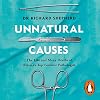
An interesting and fairly unique way of looking at forensic medicine in the UK. The differences between the 1980s and now is starkly thrown into contrast with the descriptions of cases from the 1980s, compared to today. Clearly a man that has suffered, and also a a man that made mistakes. He acknowledges that and I think that those floors are some of the things that make him so impressive. Very enjoyable, particularly for those people that have an interesting forensics, professional, show more careers, and memoirs. show less
Lists
Awards


You May Also Like


Statistics
- Works
- 3
- Members
- 779
- Popularity
- #32,679
- Rating
- 4.2
- Reviews
- 20
- ISBNs
- 52
- Languages
- 11