
Elisabeth Kübler-Ross (1926–2004)
Author of On Death and Dying: What the Dying Have to Teach Doctors, Nurses, Clergy, and Their Own Families
About the Author
Elisabeth Kubler-Ross was a psychiatrist with a particular interest in end-of-life care. Especially interested in the care of dying patients, she researched their attitudes to death.
Works by Elisabeth Kübler-Ross
On Death and Dying: What the Dying Have to Teach Doctors, Nurses, Clergy, and Their Own Families (1969) 3,862 copies, 34 reviews
On Grief and Grieving: Finding the Meaning of Grief Through the Five Stages of Loss (2005) 748 copies, 20 reviews
Life Lessons: Two Experts on Death and Dying Teach Us About the Mysteries of Life and Living (2000) 502 copies, 11 reviews
On Death & Dying; Questions & Answers on Death & Dying; On Life & Death (3 Books in 1) (1992) 5 copies
La muerte: un amanecer (Biblioteca Elisabeth Kübler-Ross) (Spanish Edition) (2014) 4 copies, 1 review
Viva Agora e Alem da Morte: Reflexoes da Medica Psiquiatra Que Mudou a Percepcao Sobre a Morte (2016) 3 copies
Dem Tod ins Gesicht sehen 1 copy
If You're Happy and You Know It by Kubler, Annie [Childs Play Intl Ltd, 2001] Hardcover [Hardcover] 1 copy
Hospice 1 copy
Sulla vita dopo la morte 1 copy
Vlinders 1 copy
Associated Works
Life after Life: The Investigation of a Phenomenon, Survival of Bodily Death (1975) — Foreword, some editions — 1,522 copies, 24 reviews
The Future of God: Personal Adventures in Spirituality With Thirteen of Today's Eminent Thinkers (1996) — Contributor — 27 copies
Tagged
Common Knowledge
- Canonical name
- Kübler-Ross, Elisabeth
- Legal name
- Kübler-Ross, Elisabeth
- Other names
- Kübler, Elisabeth (birth name)
- Birthdate
- 1926-07-08
- Date of death
- 2004-08-24
- Gender
- female
- Education
- University of Zurich Medical School, Switzerland ( [1957])
University of Colorado ( [1963]) - Occupations
- writer
author
psychiatrist
physician - Awards and honors
- National Women's Hall of Fame (2007)
Twenty honorary degrees from various institutions around the world. - Short biography
- Elisabeth Kübler was born one of identical triplets. She wanted to become a physician and worked as a hospital volunteer during World War II. She graduated from the University of Zurich in 1957. In 1958, she married Emanuel "Manny" Ross, a fellow medical student from the USA, and the couple moved to America, where she remained the rest of her life. Dr.
Kübler-Ross established herself in psychiatric practice, and was later appointed assistant professor at the University of Chicago Medical School. Her treatment of terminally ill patients, as well as her dismay over the lack of courses addressing death and dying in medical schools, led her to conduct research that became her famous work, On Death and Dying (1969). Her Kübler-Ross model, also known as The Five Stages of Loss, was widely accepted and revolutionized how the medical professions take care of the terminally ill today. - Nationality
- Switzerland
USA - Birthplace
- Zurich, Zurich, Switzerland
- Places of residence
- Zurich, Zurich, Switzerland
New York, New York, USA
Denver, Colorado, USA
Chicago, Illinois, USA
Escondido, California, USA
Scottsdale, Arizona, USA - Place of death
- Scottsdale, Arizona, USA
- Map Location
- Zurich, Switzerland
Members
Reviews

How do you look someone in the eye and tell them they are dying? Sure, every single one of us is dying by increments every single day. Some of us will die tomorrow, without warning. No fanfare. But, how do you tell someone they will die in a month? In a week? Days? On Death and Dying is exactly that, a chance to talk to terminally ill patients; to have a candid talk about what it means to moving towards death sooner rather than later. Kubler-Ross and her students interviewed over 200 show more patients towards this end. I think it is safe to safe we know what emerged from this seminal work:
Stage One: Denial and Isolation
Stage Two: Anger - the "Why Me?" stage.
Stage Three: Bargaining - not a lot to say about this stage except to say it is very childlike in believing you can strike a deal with a higher power to avoid death.
Stage Four: Depression (the stage I think I would live within the longest).
Stage Five: Acceptance. This is the most difficult of all the stages to reach. Even after achieving acceptance, it is easy for the patient to revert back to an earlier stage such as anger or denial. Stage five is also difficult for the patient's loved ones. How many families see a patient's acceptance as resignation or a loss of will to live? One must remember there are defense mechanisms as well as coping mechanisms at play.
My biggest takeaway from reading On Death and Dying is how the more training and experience a physician had, the less ready he or she was to become involved in Kubler-Ross's interviews. It is as if they lost the ability to see the patient as a human with a right to know their terminal future. We need to bring compassion back at every level of care. show less
Stage One: Denial and Isolation
Stage Two: Anger - the "Why Me?" stage.
Stage Three: Bargaining - not a lot to say about this stage except to say it is very childlike in believing you can strike a deal with a higher power to avoid death.
Stage Four: Depression (the stage I think I would live within the longest).
Stage Five: Acceptance. This is the most difficult of all the stages to reach. Even after achieving acceptance, it is easy for the patient to revert back to an earlier stage such as anger or denial. Stage five is also difficult for the patient's loved ones. How many families see a patient's acceptance as resignation or a loss of will to live? One must remember there are defense mechanisms as well as coping mechanisms at play.
My biggest takeaway from reading On Death and Dying is how the more training and experience a physician had, the less ready he or she was to become involved in Kubler-Ross's interviews. It is as if they lost the ability to see the patient as a human with a right to know their terminal future. We need to bring compassion back at every level of care. show less
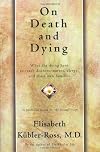
Elisabeth Kübler-Ross’s On Death and Dying is one of the most influential works ever written about grief, mortality, and the human experience of facing the end of life. First published in 1969, this groundbreaking book brought the topic of death out of the shadows and into open, compassionate discussion. Drawing on her work with terminally ill patients, Kübler-Ross introduced the now-famous five stages of grief: denial, anger, bargaining, depression, and acceptance. But what makes this show more book so powerful is not just the framework itself, but the deep empathy and honesty that run through every page.
Kübler-Ross listens without judgment. She records the fears, hopes, and regrets of her patients with a sensitivity that was rare in medicine at the time. She does not try to romanticize dying, nor does she reduce it to medical procedures. Instead, she explores it as a deeply human process that can reveal meaning and connection even in the midst of loss. Her interviews and reflections help readers understand that grief is not something to be fixed but something to be lived through.
The language of the book is simple yet profound. It encourages readers to confront death rather than avoid it, and to approach the dying with openness and presence rather than fear or pity. For anyone who has lost a loved one or works in a caring profession, On Death and Dying remains an essential text. It reminds us that facing mortality honestly can deepen our understanding of life itself.
More than half a century later, Kübler-Ross’s insights continue to guide caregivers, families, and individuals. Her message is timeless: when we speak about death with compassion and courage, we also learn how to live more fully. show less
Kübler-Ross listens without judgment. She records the fears, hopes, and regrets of her patients with a sensitivity that was rare in medicine at the time. She does not try to romanticize dying, nor does she reduce it to medical procedures. Instead, she explores it as a deeply human process that can reveal meaning and connection even in the midst of loss. Her interviews and reflections help readers understand that grief is not something to be fixed but something to be lived through.
The language of the book is simple yet profound. It encourages readers to confront death rather than avoid it, and to approach the dying with openness and presence rather than fear or pity. For anyone who has lost a loved one or works in a caring profession, On Death and Dying remains an essential text. It reminds us that facing mortality honestly can deepen our understanding of life itself.
More than half a century later, Kübler-Ross’s insights continue to guide caregivers, families, and individuals. Her message is timeless: when we speak about death with compassion and courage, we also learn how to live more fully. show less
On Grief and Grieving: Finding the Meaning of Grief Through the Five Stages of Loss by Elisabeth Kübler-Ross
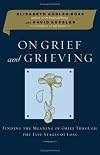
Well-written and poignant, this book is quite heartwarming and helpful. There is a disclaimer at the beginning of the book that tells us that grief is different for everyone, and that if you are really having a hard time you should see a therapist.
Using personal stories and other contributions, this book talks about the stages of grief, but also how grief manifests itself or could manifest itself in you. The five stages are too cut and dry to apply to every single person, and the book show more addresses that fact. It also claims that many people misunderstand the five stages as a whole. To me, this is also understandable. Take denial for instance; if someone has died that is close to you, you may accept their being gone, but expect to hear their voice, or see them in their favorite chair or something along those lines.
Throughout, it talks about how to deal with the fact that your loved one is gone in a consoling and understanding manner. Of course people want you to be happy, but grief is a natural part of loss and it is healthy to let it all out, even if it does make others uncomfortable.
It is split into seven sections with commentary by the authors occupying the last two sections. The first covers the classic five stages one by one and how they might manifest themselves in a person. The second section covers the Inner World of Grief. This talks about how you can deal with it by telling stories, cracking their jokes, seeing angels, getting dreams about them and so on. The third section talks about the Outer World of Grief. This is focused on stuff like "How do I celebrate our Wedding Anniversary?" or "what do I do with all of these possessions?" The fourth section deals with specific situations. Say your loved one had Alzheimer's Disease. It relates stories of people that had to go through that sort of thing and reach terrible decisions and regret those decisions later. It also talks about what to say to children about dying and how to handle their grief. The Fifth section talks about the changing face of grief, and the final two sections are personal notes from the authors on the grief they had experienced in their lives.
Final thoughts: this was a wonderful book, and if you are grieving or know someone grieving, this might help to relate to them or give them some solace. show less
Using personal stories and other contributions, this book talks about the stages of grief, but also how grief manifests itself or could manifest itself in you. The five stages are too cut and dry to apply to every single person, and the book show more addresses that fact. It also claims that many people misunderstand the five stages as a whole. To me, this is also understandable. Take denial for instance; if someone has died that is close to you, you may accept their being gone, but expect to hear their voice, or see them in their favorite chair or something along those lines.
Throughout, it talks about how to deal with the fact that your loved one is gone in a consoling and understanding manner. Of course people want you to be happy, but grief is a natural part of loss and it is healthy to let it all out, even if it does make others uncomfortable.
It is split into seven sections with commentary by the authors occupying the last two sections. The first covers the classic five stages one by one and how they might manifest themselves in a person. The second section covers the Inner World of Grief. This talks about how you can deal with it by telling stories, cracking their jokes, seeing angels, getting dreams about them and so on. The third section talks about the Outer World of Grief. This is focused on stuff like "How do I celebrate our Wedding Anniversary?" or "what do I do with all of these possessions?" The fourth section deals with specific situations. Say your loved one had Alzheimer's Disease. It relates stories of people that had to go through that sort of thing and reach terrible decisions and regret those decisions later. It also talks about what to say to children about dying and how to handle their grief. The Fifth section talks about the changing face of grief, and the final two sections are personal notes from the authors on the grief they had experienced in their lives.
Final thoughts: this was a wonderful book, and if you are grieving or know someone grieving, this might help to relate to them or give them some solace. show less
Rated: B
Classic work becoming a little dated with the passage of time and shifts in social norms. Her research and writings were in the 60's. Today, the awareness or disinterest in dying and death make it less taboo; however, we all will face it in our own way someday. Experiencing the death of my daugher and parents as well as various friends over the years allowed me to relate to many situations she revealed. While I was familiar with the five stages, what I didn't know was her observation show more that Hope transcends all stages.
"The one thing that usually persists through all these stages is hope. Just as children in Barracks L 318 and L 417 in the concentaration camp of Terezin maintained their hope years ago, although out of a total of about 15,000 children under fifteen years of age only around 100 came out of it alive.
The sun has made a veil of gold
So lovely that my body aches
Above, the heavens shriek with blue
Convinced I've smiled by some mistake.
The world's abloom and seems to smile.
I want to fly but where, how high?
If in barbed wire, things can bloom
Why couldn't I I will not die!
1944, Anonymous
"On a Sunny Evening" show less
Classic work becoming a little dated with the passage of time and shifts in social norms. Her research and writings were in the 60's. Today, the awareness or disinterest in dying and death make it less taboo; however, we all will face it in our own way someday. Experiencing the death of my daugher and parents as well as various friends over the years allowed me to relate to many situations she revealed. While I was familiar with the five stages, what I didn't know was her observation show more that Hope transcends all stages.
"The one thing that usually persists through all these stages is hope. Just as children in Barracks L 318 and L 417 in the concentaration camp of Terezin maintained their hope years ago, although out of a total of about 15,000 children under fifteen years of age only around 100 came out of it alive.
The sun has made a veil of gold
So lovely that my body aches
Above, the heavens shriek with blue
Convinced I've smiled by some mistake.
The world's abloom and seems to smile.
I want to fly but where, how high?
If in barbed wire, things can bloom
Why couldn't I I will not die!
1944, Anonymous
"On a Sunny Evening" show less
Lists
Awards


You May Also Like


Associated Authors
Statistics
- Works
- 73
- Also by
- 3
- Members
- 9,484
- Popularity
- #2,533
- Rating
- 3.9
- Reviews
- 121
- ISBNs
- 385
- Languages
- 18
- Favorited
- 7