

Kenneth Doka
Author of Living With Grief: After Sudden Loss Suicide, Homicide, Accident, Heart Attack, Stroke
About the Author
Dr. Kenneth J. Doka is a licensed mental health counselor and preeminent expert in grief He is Professor of Gerontology at the Graduate School of the College of New Rochelle, as well as Senior Consultant to the Hospice Foundation of America and an ordained Lutheran minister. Dr. Doka speaks around show more the world on dying, death, and bereavement, and his work has been featured in national publications and media outlets such as Time, The Wall Street Journal, Oprah's Spirit newsletter, CNN, and Nightline. show less
Series
Works by Kenneth Doka
Living With Grief: After Sudden Loss Suicide, Homicide, Accident, Heart Attack, Stroke (1996) 268 copies, 1 review
Disenfranchised Grief: New Directions, Challenges, and Strategies for Practice (1989) 39 copies, 1 review
Men Don't Cry, Women Do: Transcending Gender Stereotypes of Grief (Series in Death, Dying, and Bereavement) (2000) 35 copies
Living with Grief: Pain Management at the End of Life: Bridging the Gap Between Knowledge & Practice (2006) 26 copies
Grieving Beyond Gender: Understanding the Ways Men and Women Mourn, Revised Edition (Series in Death, Dying, and Bereavement) (2010) 26 copies
Living with Life-Threatening Illness: A Guide for Patients, Their Families, and Caregivers (1993) 15 copies
OMEGA JOURNAL OF DEATH AND DYING 3 copies
ZZ - Four R's for Grieving Children 2 copies
An introduction to grieving 1 copy
Tagged
Common Knowledge
- Gender
- male
Members
Reviews
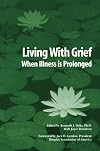
This book is a collection of papers about how a prolonged illness is slowly killing a person, and how that is different from a sudden death or one with a short illness. Prolonged illness means that the care giver is on call for a much longer time; this takes a huge toll on the caregiver both mentally and physically. On the one hand, a longer illness gives time for talking, finding out about the dying person’s life and opinions, and for understanding and forgiving. But the longer time show more needing care can bring on feelings of guilt in the dying person, fearing they are asking too much of their family.
It’s an interesting book, but because it’s written by several people, certain passages are much more user friendly than others. It goes over such things as anticipatory grief, ethical considerations, hospice care, and sections on AIDS, cancers, and Alzheimer’s disease. The final part consists of how long term disease effects children and teens, things the caregiver should do, and the use of rituals both before and after death. I’d give it five stars for useful information, but only 3 ½ stars for being reader friendly- many passages seem to be written for the professional hospice worker, mental health professional, or MD. So that leaves it with a 4 star rating. show less
It’s an interesting book, but because it’s written by several people, certain passages are much more user friendly than others. It goes over such things as anticipatory grief, ethical considerations, hospice care, and sections on AIDS, cancers, and Alzheimer’s disease. The final part consists of how long term disease effects children and teens, things the caregiver should do, and the use of rituals both before and after death. I’d give it five stars for useful information, but only 3 ½ stars for being reader friendly- many passages seem to be written for the professional hospice worker, mental health professional, or MD. So that leaves it with a 4 star rating. show less
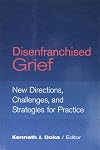
Disinfranchised grief is a concept that has sociological, psychological, social-psychological, spiritual and political implications. The book is comprehensive and rich in detail. It broadens our vision to include the disenfranchised other as well as aspects of our own loss and grief that we would otherwise marginalise.
(Research Press, 2002)
(Research Press, 2002)
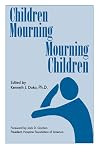
A collection of essays designed for those working with children and families during a bereavement. The book is divided into four sections: The Child's Perspective of Death; The Child's Response to Life-Threatening Illness; Children Mourning, Mourning Children; and Innovative Research. A good starting point for professionals seeking information on this topic.
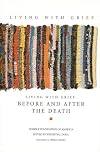
LIVING WITH GRIEF BEFORE AND AFTER THE DEATH
Kenneth J. Doka
This book is filled with excellent chapters that bring us up to date with the most current information on both pre-death and post-death interventions. These experts tell us what we currently know and point us in the direction of what we still need to investigate. These chapters include:
• The Dying Process: Understanding anticipatory grief and anticipatory mourning
• Grief: New insights and developments
• Implications for show more practice
• The importance of self-care show less
Kenneth J. Doka
This book is filled with excellent chapters that bring us up to date with the most current information on both pre-death and post-death interventions. These experts tell us what we currently know and point us in the direction of what we still need to investigate. These chapters include:
• The Dying Process: Understanding anticipatory grief and anticipatory mourning
• Grief: New insights and developments
• Implications for show more practice
• The importance of self-care show less
Lists
Deathreads (1)
You May Also Like


Associated Authors
Statistics
- Works
- 49
- Members
- 1,517
- Popularity
- #16,955
- Rating
- 4.1
- Reviews
- 7
- ISBNs
- 79
- Languages
- 1