Staff publication (Journal article) : Opioid-induced constipation: a stepwise treatment algorithm feasibility study by Shuchita Dhwiren Patel

1 2, 3, 4, Shuchita Dhwiren Patel 5, 6, 7
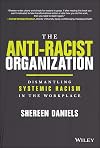
In The Anti-Racist Organization: Dismantling Systemic Racism in the Workplace, HR strategist Shereen Daniels delivers an incisive and honest discussion of how business leaders can change workplace practices to create a more anti-racist and equitable environment. The author draws on her personal and client-facing experience, historical fact, legal proceedings, HR insights, and quantitative analysis to equip readers with the knowledge and tools they need to transform their companies.
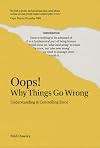
In this ground-breaking book, Niall Downey – a cardio-thoracic surgeon who retrained to become a commercial airline pilot – uses his expertise in medicine and aviation to explore the critical issue of managing human error. With further examples from business, politics, sport, technology, the civil service and other fields, Downey makes a powerful case that by following some clear guidelines any organisation can greatly reduce the incidence and impact of human error.
You Matter Because You Are You : an action plan for better palliative care by Cicely Saunders International

"Cicely Saunders International calls for urgent action after pandemic accelerates demand for palliative care by 20 years. Leading researchers are urgently calling for major reforms to the UK’s system of palliative care in response to a significant and persistent increase in demand caused by the Covid-19 pandemic. Researchers at Cicely Saunders International – the leading charity supporting palliative care – have published You Matter Because You Are You, a seven-point Palliative Care Action Plan that identifies the major challenges now facing the palliative care system, and outlines evidence-based solutions for each of them. ... The Action Plan draws on research carried out by Cicely Saunders International during the pandemic, as well as evidence from Government-commissioned reviews and independent reports. It sets out 24 achievable actions, each designed to improve the care patients receive and increase the efficiency of NHS services, ensuring the palliative care system can cope with the accelerated demand. The Action Plan advocates a holistic approach to improving the provision of palliative care, identifying challenges and solutions across the health and social care system. It recommends reforms to the care delivered in hospitals, hospices, care homes, patients’ homes and in the community, as well as calling for an overhaul of the education and training for health and social care professionals, and greater investment in research. A primary focus of the Action show more Plan is to increase and facilitate the provision of palliative care in all healthcare settings, in order to improve patients’ experience and alleviate pressures caused by unnecessary hospital admissions." show less
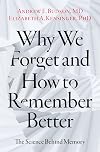
Why We Forget and How to Remember Better shows you how to use these answers to improve your memory. In its pages you will learn:
· How memory's most important function isn't to help you remember details from your past.
· How memory is actually a collection of different abilities.
· How you create, store, and retrieve memories of your daily life.
· Ways to control what you remember and what you forget.
· Ways to distinguish between a true and false memory.
· Effective ways to study for an exam.
· How to remember people's names, all your passwords, 50 digits of Pi, and anything else you wish.
· How memory changes in normal aging, Alzheimer's disease, depression, anxiety, PTSD, ADHD, and other disorders-including COVID brain fog.
· How exercise, nutrition, alcohol, cannabis, sleep, mindfulness, and music affect your memory.
· How memory's most important function isn't to help you remember details from your past.
· How memory is actually a collection of different abilities.
· How you create, store, and retrieve memories of your daily life.
· Ways to control what you remember and what you forget.
· Ways to distinguish between a true and false memory.
· Effective ways to study for an exam.
· How to remember people's names, all your passwords, 50 digits of Pi, and anything else you wish.
· How memory changes in normal aging, Alzheimer's disease, depression, anxiety, PTSD, ADHD, and other disorders-including COVID brain fog.
· How exercise, nutrition, alcohol, cannabis, sleep, mindfulness, and music affect your memory.
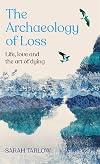
'This memoir has been compared to The Salt Path by Raynor Winn, and I can see why . . . In the end, there is so much love in this book. In writing such a meticulously honest book, she memorialises her cant-hating husband in the best way possible. I think he would be proud of her too.' The Times
Sarah Tarlow's husband Mark began to suffer from an undiagnosed illness, leaving him incapable of caring for himself. One day, about six years after he first started showing symptoms, Mark waited for Sarah and their children to leave their home before ending his own life.
Although Sarah had devoted her professional life to the study of death and how we grieve, she found that nothing could have prepared her for the reality of illness and the devastation of loss.
Fiercely vulnerable, deeply intimate and yet authoritative, The Archaeology of Loss describes a universal experience with an unflinching and singular gaze. With humour, intelligence and urgency, it is in its very honesty that it offers profound consolation.
Sarah Tarlow's husband Mark began to suffer from an undiagnosed illness, leaving him incapable of caring for himself. One day, about six years after he first started showing symptoms, Mark waited for Sarah and their children to leave their home before ending his own life.
Although Sarah had devoted her professional life to the study of death and how we grieve, she found that nothing could have prepared her for the reality of illness and the devastation of loss.
Fiercely vulnerable, deeply intimate and yet authoritative, The Archaeology of Loss describes a universal experience with an unflinching and singular gaze. With humour, intelligence and urgency, it is in its very honesty that it offers profound consolation.
In this collection, a diverse group of authors focuses on concrete and practical forms of redress and accountability, assessing existing practices and marking paths forward. They use a variety of forms--from toolkits to personal essays--to delve deeply into the "how to" of transformative justice, providing alternatives to calling the police, ways to support people having mental health crises, stories of community-based murder investigations, and much more. At the same time, they document the history of this radical movement, creating space for long-time organizers to reflect on victories, struggles, mistakes, and transformations.
Wendy Mitchell doesn't fear anything anymore. After her diagnosis of young-onset dementia in 2014, all of Wendy's old fears - the dark, animals - melted away. What more was there to be afraid of when she faced her worst fear: losing her own mind?
While living with her diagnosis and facing the extreme changes that come along with a progressive terminal illness, Wendy wrote two Sunday Times-bestselling books, went skydiving for the first time and supports multiple dementia advocacy groups in the UK. She is known for talking about living with dementia, but now - while she is still able to - she explores dying with it.
In One Last Thing, Wendy embarks on a journey to explore all angles of death: how we can prepare for it, how we talk about it with our loved ones and how we can be empowered to make our own choices. With conversations on the topic of assisted dying, from those who are fighting to make it legal to those vehemently opposed to its practice, Wendy reminds us that to get on with the business of living, we need to talk about death.
While living with her diagnosis and facing the extreme changes that come along with a progressive terminal illness, Wendy wrote two Sunday Times-bestselling books, went skydiving for the first time and supports multiple dementia advocacy groups in the UK. She is known for talking about living with dementia, but now - while she is still able to - she explores dying with it.
In One Last Thing, Wendy embarks on a journey to explore all angles of death: how we can prepare for it, how we talk about it with our loved ones and how we can be empowered to make our own choices. With conversations on the topic of assisted dying, from those who are fighting to make it legal to those vehemently opposed to its practice, Wendy reminds us that to get on with the business of living, we need to talk about death.

People who are trans and gender diverse deserve support as much as anyone else. We have a legal duty to improve care both from the Health and Care Act 2022 and the Equality Act 2010 but we also have a moral duty to improve this simply because it’s the right thing to do.
This report highlights so many challenges trans people face. The stripping away of who they are, their name, their pronouns, their personal care and the safety of their chosen family. The barriers to marrying and dying in the gender they’ve lived as.
This report highlights so many challenges trans people face. The stripping away of who they are, their name, their pronouns, their personal care and the safety of their chosen family. The barriers to marrying and dying in the gender they’ve lived as.
How do students learn to reason and think about complex issues?This book fills a critical gap in our understanding of along-neglected facet of the critical thinking process: reflectivejudgment. Drawing on extensive cross-sectional and longitudinalresearch, King and Kitchener detail the series of stages that laythe foundation for reflective thinking, and they trace thedevelopment of reflective judgment through adolescence andadulthood.
Gawande gives us an inside look at his own life as a practicing surgeon, offering a searingly honest firsthand account of work in a field where mistakes are both unavoidable and unthinkable. At once unflinching and compassionate, Better is an exhilarating journey narrated by arguably the best nonfiction doctor-writer around (Salon).
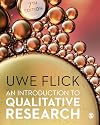
Continuing to be THE guide to the whole qualitative research process for students, this book looks at both the theory behind qualitative research and how to put it into practice in your own work. For students across a range of social science disciplines and beyond, this is a must to help you enhance your research project.
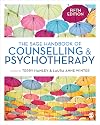
The SAGE Handbook of Counselling and Psychotherapy is the most comprehensive and accessible introduction to the field of counselling and psychotherapy. This handbook supports all levels of training and modalities, providing an essential entry point to theory, practice and research.
Jennifer Todd
Elizabeth Reed
Louise Hogh
Craig Gannon
Elizabeth Reed
Louise Hogh
Craig Gannon
Staff publication (Journal article) : Identification of Digital Health Priorities for Palliative Care Research: Modified Delphi Study by Amara Nwosu

Nwosu AC, McGlinchey T, Sanders J, Stanley S, Palfrey J, Lubbers P, Chapman L, Finucane A, Mason S. Identification of Digital Health Priorities for Palliative Care Research: Modified Delphi Study. JMIR Aging. 2022 Mar 21;5(1):e32075. doi: 10.2196/32075. PMID: 35311674; PMCID: PMC9090235.
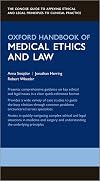
The Oxford Handbook of Medical Ethics and law provides a practical and accessible guide to the legal and ethical issues which a medical professional might face. It explains the major ethical theories - consequentialism, deontology, virtue ethics and principlism -and presents a method for moral decision-making, based on the application of theory and critical reasoning. The books sets out the key legal principles governing medical practice including the obtaining of consent; the law of negligence; the principles of confidentiality; the law on organ donation; and the legal regulation of end of life. The book goes on to present a number of ‘real life’ situations in which the ethical and legal principles are applied in a concrete and clear way. The book also contains extracts from the key legislation governing the practice of medicine.
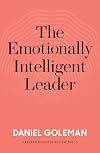
Become a Better Leader by Improving Your Emotional Intelligence
Bestselling author DANIEL GOLEMAN first brought the concept of emotional intelligence (EI) to the forefront of business through his articles in Harvard Business Review, establishing EI as an indispensable trait for leaders. The Emotionally Intelligent Leader brings together three of Goleman's bestselling HBR articles.
Bestselling author DANIEL GOLEMAN first brought the concept of emotional intelligence (EI) to the forefront of business through his articles in Harvard Business Review, establishing EI as an indispensable trait for leaders. The Emotionally Intelligent Leader brings together three of Goleman's bestselling HBR articles.
Do you think that something is holding you back in life and in your career?
Do you feel like you lack leadership skills and would like to develop them to stay ahead of the pack?
If you answered “yes” to any of these questions, keep reading.
In today’s competitive marketplace, leadership is increasingly becoming a required skill. So whether you need to progress at work or at home with your family, you need to be a leader. You need to take charge and responsibility, get things done and delegate others so everyone can work together to achieve a common goal.
Do you feel like you lack leadership skills and would like to develop them to stay ahead of the pack?
If you answered “yes” to any of these questions, keep reading.
In today’s competitive marketplace, leadership is increasingly becoming a required skill. So whether you need to progress at work or at home with your family, you need to be a leader. You need to take charge and responsibility, get things done and delegate others so everyone can work together to achieve a common goal.
Do you sabotage your own happiness and success? Are you struggling to make sense of yourself? Do your emotions sometimes dictate your life?
The Chimp Paradox is an incredibly powerful mind management model that can help you become a happy, confident, healthier and more successful person. Prof Steve Peters explains the struggle that takes place within your mind and then shows how to apply this understanding to every area of your life so you can:
- Recognise how your mind is working
- Understand and manage your emotions and thoughts
- Manage yourself and become the person you would like to be
The Chimp Paradox is an incredibly powerful mind management model that can help you become a happy, confident, healthier and more successful person. Prof Steve Peters explains the struggle that takes place within your mind and then shows how to apply this understanding to every area of your life so you can:
- Recognise how your mind is working
- Understand and manage your emotions and thoughts
- Manage yourself and become the person you would like to be
Cite Them Right: The essential referencing guide (Palgrave Study Skills) (12th ed.) by Richard Pears
Cite them right is renowned as the most comprehensive yet easy-to-use guide to referencing text available to students and authors. Academics and teachers rely on the advice in Cite them right to guide their students in the skills of identifying and referencing information sources and avoiding plagiarism.
There is no room for error in the ICU. Full focus is required at all times.
It can be the difference between life and death.
Through the remarkable stories of his patients, Dr. Matt Morgan guides you through the body and its organs. He explains how various critical conditions arise, and all that goes into treating them – from the science, research and technology, to the tireless efforts of the doctors and nurses. This book gives you powerful insights about intensive care, many of which may prevent you, or those close to you, from ending up there. It will even teach you how to save a life.
Movingly and compassionately, Matt writes about the cases and the people that have stayed with him, both the recoveries and the losses. This book shows the fragility of life, but also the incredible resilience of the human body and spirit.
It can be the difference between life and death.
Through the remarkable stories of his patients, Dr. Matt Morgan guides you through the body and its organs. He explains how various critical conditions arise, and all that goes into treating them – from the science, research and technology, to the tireless efforts of the doctors and nurses. This book gives you powerful insights about intensive care, many of which may prevent you, or those close to you, from ending up there. It will even teach you how to save a life.
Movingly and compassionately, Matt writes about the cases and the people that have stayed with him, both the recoveries and the losses. This book shows the fragility of life, but also the incredible resilience of the human body and spirit.
With a highflying career, a renowned surgeon as a husband, and four gorgeous children, Ulla-Carin Lindquist is a woman who seemingly has everything. Then, on her fiftieth birthday, she is suddenly diagnosed with ALS, an aggressive and incurable form of motor neurone disease. Within a year, Ulla-Carin will die.
Rowing without Oars is the story of this final year. In writing striking for its honesty, simplicity and unexpected humour, Ulla-Carin describes how it feels to be losing control of her life, and to know that soon she will die and leave her beloved husband and children. The result is a heart-breaking book. It is also one of the most inspiring and uplifting memoirs of recent years.
Rowing without Oars is the story of this final year. In writing striking for its honesty, simplicity and unexpected humour, Ulla-Carin describes how it feels to be losing control of her life, and to know that soon she will die and leave her beloved husband and children. The result is a heart-breaking book. It is also one of the most inspiring and uplifting memoirs of recent years.
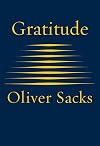
Oliver Sacks died in August 2015 at his home in Greenwich Village, surrounded by his close friends and family. He was 82. He spent his final days doing what he loved: playing the piano, swimming, enjoying smoked salmon – and writing . . .
As Dr Sacks looked back over his long, adventurous life his final thoughts were of gratitude. In a series of remarkable, beautifully written and uplifting meditations, in Gratitude Dr Sacks reflects on and gives thanks for a life well lived, and expresses his thoughts on growing old, facing terminal cancer and reaching the end.
As Dr Sacks looked back over his long, adventurous life his final thoughts were of gratitude. In a series of remarkable, beautifully written and uplifting meditations, in Gratitude Dr Sacks reflects on and gives thanks for a life well lived, and expresses his thoughts on growing old, facing terminal cancer and reaching the end.
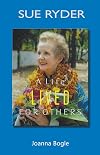
Sue Ryder became a household name in the UK in the 1950s thanks to the Homes she founded and the help she gave to the survivors of the concentration camps, the disabled and anyone in need of long-term care who she brought to Britain. This work expanded to people living in Britain and was funded by various methods and in no small part by the well-known high street charity shops, which still operate today under her name. But her full story involves so much more-service with SOE in World War II, prison visiting in Germany in the immediate post-war years, long-haul relief work in countries all around the world and a life driven by a commitment to care for those in need. In this new biography the story of an extraordinary life unfolds. It is a story of courage, dedication and adventure with a challenge.
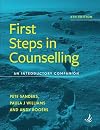
First Steps in Counselling is essentially a book about helping and this fifth edition has been updated and revised with the help of two co-authors; Paula J Williams and Andy Rogers. It is for anyone thinking of becoming a counsellor, working or volunteering in a role that requires helping and listening skills, or simply caring for someone. It explains in clear language what counselling is, the theories on which it is based, how it works and how it is positioned in relation to contemporary debates about culture, politics, language, race and power. This is not a ‘how to help' manual; rather it is a questioning, curious, explorative and challenging companion. It aims to be your guide along whichever route you are taking, answer your questions and help you decide if you want to take your interest in counselling to the next steps. First Steps in Counselling remains the text of choice for students and tutors of introductory courses.
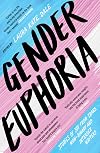
So often the stories shared by trans people about their transition centre on gender dysphoria: a feeling of deep discomfort with their birth-assigned gender, and a powerful catalyst for coming out or transitioning. But for many non-cisgender people, it s gender euphoria which pushes forward their transition: the joy the first time a parent calls them by their new chosen name, the first time they have the confidence to cut their hair short, the first time they truly embrace themself.
In this groundbreaking anthology, nineteen trans, non-binary, agender, gender-fluid and intersex writers share their experiences of gender euphoria: an agender dominatrix being called Daddy , an Arab trans man getting his first tattoos, a trans woman embracing her inner fighter.
In this groundbreaking anthology, nineteen trans, non-binary, agender, gender-fluid and intersex writers share their experiences of gender euphoria: an agender dominatrix being called Daddy , an Arab trans man getting his first tattoos, a trans woman embracing her inner fighter.
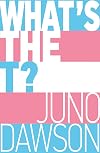
Discover what it means to be a young transgender or non-binary person in the 21st century in this frank and funny guide for 14 teens, from the author of This Book Is Gay.
In What's the T?, Stonewall ambassador, best-selling trans author and former PSHE teacher Juno Dawson defines a myriad of labels and identities and offers uncensored advice on coming out, sex and relationships with her trademark humour and lightness of touch. Juno has also invited her trans and non-binary friends to make contributions, ensuring this inclusive book reflects as many experiences as possible and features the likes of Travis Alabanza and Jay Hulme.
The companion title to the groundbreaking This Book Is Gay, What's the T? tackles the complex realities of growing up trans with honesty and humour and is joyfully illustrated by gender non-conforming artist Soofiya.
In What's the T?, Stonewall ambassador, best-selling trans author and former PSHE teacher Juno Dawson defines a myriad of labels and identities and offers uncensored advice on coming out, sex and relationships with her trademark humour and lightness of touch. Juno has also invited her trans and non-binary friends to make contributions, ensuring this inclusive book reflects as many experiences as possible and features the likes of Travis Alabanza and Jay Hulme.
The companion title to the groundbreaking This Book Is Gay, What's the T? tackles the complex realities of growing up trans with honesty and humour and is joyfully illustrated by gender non-conforming artist Soofiya.
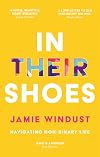
Combining light-hearted anecdotes with their own hard-won wisdom, Jamie Windust explores everything from fashion, dating, relationships and family, through to mental health, work and future key debates. From trying on clothes in secret to iconic looks, first dates to polyamorous liaisons, passports to pronouns, Jamie shows you how to navigate the world and your evolving identity in every type of situation.
Frank, funny, and brilliantly feisty, this must-read book is a call to arms for non-binary self-acceptance, self-appreciation and self-celebration.
Frank, funny, and brilliantly feisty, this must-read book is a call to arms for non-binary self-acceptance, self-appreciation and self-celebration.
No Barriers Here: for people excluded by identity, culture, ethnicity and race by NHS Charities Together

A research study exploring a different approach to advance care planning, using artsbased methods to deepen conversations, relationships and gain understanding of the experiences and preferences of people excluded by identity, culture, ethnicity and
race.
race.

Annual Accounts for year ended 31st March 2021