
Ira Byock
Author of Dying Well: Peace and Possibilities at the End of Life
About the Author
Ira Byock, MD, is Director of Palliative Medicine at Dart-mouth-Hitchcock Medical Center in Lebanon, New Hampshire, and a professor at the Geisel School of Medicine at Dartmouth. Dr. Byock has been a consistent advocate for the voice and rights of seriously ill patients and their families. The show more author of Dying Well, Byock has been featured prominently in a Peabody Award-winning 60 Minutes story titled "The Cost of Dying" and profiled in The New York Times Magazine, The Boston Globe, and Prevention. He lives in Lebanon, New Hampshire. show less
Works by Ira Byock
The Best Care Possible: A Physician's Quest to Transform Care Through the End of Life (2012) 115 copies, 3 reviews
Consider the Conversation DVD 2 copies
The ethics of loving care 1 copy
Associated Works
Being with Dying: Cultivating Compassion and Fearlessness in the Presence of Death (1997) — Foreword, some editions — 272 copies, 4 reviews
Tagged
Common Knowledge
- Birthdate
- 1951-02-13
- Gender
- male
- Occupations
- physician
- Organizations
- Providence St. Joseph Health Institute for Human Caring (founder)
- Nationality
- USA
- Birthplace
- Newark, New Jersey, USA
- Associated Place (for map)
- New Jersey, USA
Members
Reviews
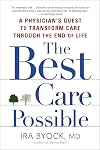
It is harder to die in this country than ever before. Though the vast majority of Americans would prefer to die at home—which hospice care provides—many of us spend our last days fearful and in pain in a healthcare system ruled by high-tech procedures and a philosophy to “fight disease and illness at all cost.”
Dr. Ira Byock, one of the foremost palliative-care physicians in the country, argues that how we die represents a national crisis today. To ensure the best possible elder show more care, Dr. Byock explains we must not only remake our healthcare system but also move beyond our cultural aversion to thinking about death. The Best Care Possible is a compelling meditation on medicine and ethics told through page-turning life-or-death medical drama. It has the power to lead a new national conversation. show less
Dr. Ira Byock, one of the foremost palliative-care physicians in the country, argues that how we die represents a national crisis today. To ensure the best possible elder show more care, Dr. Byock explains we must not only remake our healthcare system but also move beyond our cultural aversion to thinking about death. The Best Care Possible is a compelling meditation on medicine and ethics told through page-turning life-or-death medical drama. It has the power to lead a new national conversation. show less
This book made me cry. It made me cry for my dad and all the people like me, who are poor and therefore don't"qualify" for a good end-of-life experience.
The author is a pioneer in the field of community-wide hospice. The cases he inscribes here, where he assisted, or was a consultant, had meaningful death.
Here in our society, especially if you are poor, or of color, have mental illness, you are at-risk. "You need to just die and make way for younger people who can contribute to society." show more That is pretty much what our country's attitude to you will be when your time comes. show less
The author is a pioneer in the field of community-wide hospice. The cases he inscribes here, where he assisted, or was a consultant, had meaningful death.
Here in our society, especially if you are poor, or of color, have mental illness, you are at-risk. "You need to just die and make way for younger people who can contribute to society." show more That is pretty much what our country's attitude to you will be when your time comes. show less
The author of this book, Dr. Ira Byock, has dedicated his life as a hospice director to make sure that no one should have to die in pain, or die alone. He is prominent spokesperson for the hospice movement. In this book, he shares the true stories of dying patients, and how important emotional work can be accomplished in the final months, weeks, and even days of life.
Through the stories of the patients, families and those that are dying that can learn to deal with doctors, how to talk to show more friends and relatives, and how to make the time towards the end of life meaningful.
I chose this book because I am now in palliative care for metastatic breast cancer; I'm not at that point yet where I need hospice care, but learning as much as I can about the death and dying process helps me to fear it less. I have learned something from every family that I read about in this book. It's a comfort to know that there are things that can be done to ease suffering, especially with pain, right up until the very end.
The hardest story in this book to read, but the most rewarding, was that of 8 year old Michael Merseal, being cared for at home by his dedicated single father, and an equally dedicated hospice team. Michael's story is also featured in the HBO documentary Letting Go: A Hospice Journey. (Dr. Byock is also in this film.) You can watch this 90 minute film for free on You Tube, and I highly recommend it as a companion to this book.
I highly recommend this book to anyone facing a terminal illness, and those who may have to deal with the terminal illness of a family member or friend. show less
Through the stories of the patients, families and those that are dying that can learn to deal with doctors, how to talk to show more friends and relatives, and how to make the time towards the end of life meaningful.
I chose this book because I am now in palliative care for metastatic breast cancer; I'm not at that point yet where I need hospice care, but learning as much as I can about the death and dying process helps me to fear it less. I have learned something from every family that I read about in this book. It's a comfort to know that there are things that can be done to ease suffering, especially with pain, right up until the very end.
The hardest story in this book to read, but the most rewarding, was that of 8 year old Michael Merseal, being cared for at home by his dedicated single father, and an equally dedicated hospice team. Michael's story is also featured in the HBO documentary Letting Go: A Hospice Journey. (Dr. Byock is also in this film.) You can watch this 90 minute film for free on You Tube, and I highly recommend it as a companion to this book.
I highly recommend this book to anyone facing a terminal illness, and those who may have to deal with the terminal illness of a family member or friend. show less
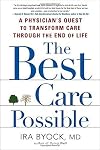
Dr. Byock is the head of the department of palliative care at Dartmouth-Hitchcock Medical Center and a professor at the associated medical school. This means he has dealt with a lot of patients who are reaching the end of their lives; his job is to make that end as comfortable and stress free as possible for both them and their families. It is his contention that Americans today suffer more and die worse deaths- and more expensive deaths- than ever before. How is this possible in an age when show more there are so many medical treatments available?
Part of it is that the patients don’t make their wishes known via advance directives. If a person comes into a hospital without one, and they are unable to make their wishes known, the hospital has the right and obligation to do everything they can to prolong life. While this is absolutely the right thing to do most of the time, it isn’t always what the person really wants. When a person is near death from cancer, say, and takes a fall that creates a brain bleed, the hospital will put them on life support and prolong their life, even if there is no chance of recovery. Would that person have wanted that, or would they prefer to let go at that point? Who wants to live another 2 weeks if they are intubated, on a ventilator and semi-conscious at best? But doctors have an obligation to preserve life, and the family feels guilty if they say ‘pull the plug’.
Add to this problem the fact that doctors get almost no training in palliative care and end of life issues. Many don’t know the best ways to deal with pain and fear, or even how to broach the subject of impending death. Some even hesitate to prescribe opiates because they are addictive- as if that could possibly be an issue for a dying person. These things need to be addressed in medical school. Medicare adds to the problem by not paying for palliative care or hospice care if the patient is still being treated for their health problem; I know from experience that some of these treatments should NOT be considered as trying to cure the patient but rather offering a better quality to their remaining life.
This book achieved what I would have thought impossible: it’s both very difficult to read, because the subject matter is emotional and painful for someone who has dealt with end of life issues, but easy to read because of Dr. Byock’s talent with words. He includes medical details but at a level that is understandable to all; he includes details about death that don’t gross a sensitive person out. I hope that this book gets very widely read by both doctors and lay people; having gone through five deaths in our families it would have been much easier on us as family and on the patients if we’d known a lot of what is in this book way ahead of time- and if the doctors had been more comfortable dealing with end of life. show less
Part of it is that the patients don’t make their wishes known via advance directives. If a person comes into a hospital without one, and they are unable to make their wishes known, the hospital has the right and obligation to do everything they can to prolong life. While this is absolutely the right thing to do most of the time, it isn’t always what the person really wants. When a person is near death from cancer, say, and takes a fall that creates a brain bleed, the hospital will put them on life support and prolong their life, even if there is no chance of recovery. Would that person have wanted that, or would they prefer to let go at that point? Who wants to live another 2 weeks if they are intubated, on a ventilator and semi-conscious at best? But doctors have an obligation to preserve life, and the family feels guilty if they say ‘pull the plug’.
Add to this problem the fact that doctors get almost no training in palliative care and end of life issues. Many don’t know the best ways to deal with pain and fear, or even how to broach the subject of impending death. Some even hesitate to prescribe opiates because they are addictive- as if that could possibly be an issue for a dying person. These things need to be addressed in medical school. Medicare adds to the problem by not paying for palliative care or hospice care if the patient is still being treated for their health problem; I know from experience that some of these treatments should NOT be considered as trying to cure the patient but rather offering a better quality to their remaining life.
This book achieved what I would have thought impossible: it’s both very difficult to read, because the subject matter is emotional and painful for someone who has dealt with end of life issues, but easy to read because of Dr. Byock’s talent with words. He includes medical details but at a level that is understandable to all; he includes details about death that don’t gross a sensitive person out. I hope that this book gets very widely read by both doctors and lay people; having gone through five deaths in our families it would have been much easier on us as family and on the patients if we’d known a lot of what is in this book way ahead of time- and if the doctors had been more comfortable dealing with end of life. show less
Lists
Awards

You May Also Like


Statistics
- Works
- 13
- Also by
- 1
- Members
- 780
- Popularity
- #32,629
- Rating
- 4.1
- Reviews
- 11
- ISBNs
- 14
- Languages
- 2