
Sherwin B. Nuland (1930–2014)
Author of How We Die: Reflections on Life's Final Chapter
About the Author
Dr. Sherwin B. Nuland was born Shepsel Ber Nudelman on December 8, 1930 in the Bronx, New York. He received a bachelor's degree from New York University in 1951 and a medical degree from Yale University in 1955. He decided to specialize in surgery and in 1958, became the chief surgical resident at show more Yale-New Haven Hospital. From 1962 to 1991, he was a clinical professor of surgery at Yale University, where he also taught bioethics and medical history. Before retiring to write full-time, he was a surgeon at Yale-New Haven Hospital from 1962 to 1992. His books include Doctors: The Biography of Medicine, The Wisdom of the Body, The Doctors' Plague, The Uncertain Art, and the memoir Lost in America. His book, How We Die, won the National Book Award for nonfiction in 1994. He was also a contributing editor to The American Scholar and The New Republic. He died of prostate cancer on March 3, 2014 at the age of 83. (Bowker Author Biography) show less
Image credit: Jerry Bauer
Works by Sherwin B. Nuland
The Doctors' Plague: Germs, Childbed Fever, and the Strange Story of Ignac Semmelweis (2003) 285 copies, 6 reviews
Lister and the Germ Theory 1 copy
Hiểu về sự chết 1 copy
Vesalius and the Renaissance 1 copy
The Paradox of Galen 1 copy
Der Blick unter die Haut. Der Weg der Medizin von der Magie zur Wissenschaft - und zurück (2002) 1 copy
The Awakening 1 copy
The Beast in the Belly 1 copy
Associated Works
The Book That Changed My Life: 71 Remarkable Writers Celebrate the Books That Matter Most to Them (2006) — Contributor — 411 copies, 18 reviews
Collected Stories of William Carlos Williams (New Directions Paperbook, Ndp827) (1996) — Introduction, some editions — 77 copies, 1 review
Tagged
Common Knowledge
- Canonical name
- Nuland, Sherwin B.
- Legal name
- Nuland, Sherwin Bernard
- Other names
- Nudelman, Shepsel Ber (birth name)
- Birthdate
- 1930-12-08
- Date of death
- 2014-03-03
- Gender
- male
- Education
- New York University (1951)
Yale University (MD|1955) - Occupations
- surgeon
professor
medical ethicist - Organizations
- Yale University
American Philosophical Society - Awards and honors
- Jonathan Rhoads Gold Medal
National Book Award - Relationships
- Nuland, Victoria (daughter)
- Nationality
- USA
- Birthplace
- The Bronx, New York, USA
- Place of death
- Hamden, Connecticut, USA
- Associated Place (for map)
- USA
Members
Reviews
The Doctors' Plague: Germs, Childbed Fever, and the Strange Story of Ignac Semmelweis (Great Discoveries) by Sherwin B. Nuland
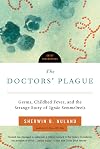
I'm not saying that only formally-trained historians can write history books, but I am saying that this book is a solid example of the kind of bad history that a non-historian can produce when writing about a topic that they're in many ways quite knowledgeable about.
Sherwin Nuland was a physician, and so knows what he's talking about when it comes to puerperal fever—a possibly fatal form of infection or sepsis that can be contracted by post-partum people—and the technical processes by show more which the Hungarian-born Ignać Semmelweis discovered the disease's causation in the mid-nineteenth century.
He's on much shakier ground, however, when it comes to understanding the history of medicine, claiming that physicians didn't really understand that their ideas needed to be based on evidence until the nineteenth century and demonstrating little familiarity with the scholarship on pregnancy and childbirth during the Middle Ages and in early modern Europe.
And then there's the weird, fictional intro where Nuland imagines a virginal upper-class Viennese teenager who gets pregnant and is kicked out of the house by her "Papa", so is taken in by her former maidservant and ultimately dies shortly after giving birth from puerperal feveral. It's weird and creepy, and also unnecessary given how many real life women actually died an agonizing death from it—but then again, throughout Nuland seems not particularly interested in writing a history which centres women overly much. show less
Sherwin Nuland was a physician, and so knows what he's talking about when it comes to puerperal fever—a possibly fatal form of infection or sepsis that can be contracted by post-partum people—and the technical processes by show more which the Hungarian-born Ignać Semmelweis discovered the disease's causation in the mid-nineteenth century.
He's on much shakier ground, however, when it comes to understanding the history of medicine, claiming that physicians didn't really understand that their ideas needed to be based on evidence until the nineteenth century and demonstrating little familiarity with the scholarship on pregnancy and childbirth during the Middle Ages and in early modern Europe.
And then there's the weird, fictional intro where Nuland imagines a virginal upper-class Viennese teenager who gets pregnant and is kicked out of the house by her "Papa", so is taken in by her former maidservant and ultimately dies shortly after giving birth from puerperal feveral. It's weird and creepy, and also unnecessary given how many real life women actually died an agonizing death from it—but then again, throughout Nuland seems not particularly interested in writing a history which centres women overly much. show less
How We Die: Reflections on Life's Final Chapter, New Edition (National Book Award Winner) by Sherwin B. Nuland
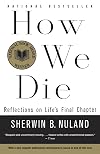
An elegant deep dive into how we go from being alive to being not so alive through such things like disease, heart attacks, or getting brutally struck by trucks that don't send you to magical isekai wonderlands. While there were some bits of pretentious, almost navel-gazy moments, I enjoyed how the poetic writing style of this book managed to mix the intrinsic beauty of life with the hideous moments where it all has to end eventually. Truly, Mr. Nuland had the minds and hands of a show more well-seasoned physician, but the heart and tongue of a poet with eternal messages to share with all. show less
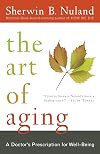
A few years back I read with great interest and enjoyment Sherwin Nuland's memoir about his immigrant father, LOST IN AMERICA. It explained a lot about the author's ambition and success as a physician and scholar. Then I began reading his best known book, HOW WE DIE, but still have not finished it. But now I have done a quick read of his THE ART OF AGING and quite enjoyed it. My own aging process hasn't been very artful, but is anyone's?
In his clinical descriptions of the process, you're show more bound to learn something. For instance -
"... testicles hang lower than they did years ago, because of loss of turgor in the skin muscle of the scrotum, a muscle called the dartos."
Turgor? Dartos? Your scrotum has muscles? See what I mean? Who knew?
But seriously - for this is a serious book - Nuland looks far beyond the physiological aspects of aging here, with a chapter about choices, in which he gives us three case studies of people who suffered strokes and how they coped and came back from them. One of these was actress Patricia Neal, who credits her then-husband Roald Dahl with forcing her recovery and return to acting.. Another chapter, "A Friendship in Letters" gives us Nuland's years-long correspondence with an aged Indian widow and her struggles with and recovery from suicidal depression.
"Drinking from the Fountain of Youth" was an especially entertaining chapter, as Nuland related his friendship with a med school classmate, Frank Scott, inventor of an inflatable penile implant playfully labeled "the hydraulic hard-on."
Later he tells us that wisdom - so often equated with age - is not just knowledge, but the proper management of knowledge. And that "caring" is vital to a happy old age. And lots more. So much more. And yes, there is wisdom here. Nuland knew how to manage his accumulated years of study and the knowledge he had gleaned. A wise man. Dr Nuland died in 2013.
This is a good book, filled with useful information - and yes, wisdom. Very highly recommended.
- Tim Bazzett, author of the memoir, BOOKLOVER show less
In his clinical descriptions of the process, you're show more bound to learn something. For instance -
"... testicles hang lower than they did years ago, because of loss of turgor in the skin muscle of the scrotum, a muscle called the dartos."
Turgor? Dartos? Your scrotum has muscles? See what I mean? Who knew?
But seriously - for this is a serious book - Nuland looks far beyond the physiological aspects of aging here, with a chapter about choices, in which he gives us three case studies of people who suffered strokes and how they coped and came back from them. One of these was actress Patricia Neal, who credits her then-husband Roald Dahl with forcing her recovery and return to acting.. Another chapter, "A Friendship in Letters" gives us Nuland's years-long correspondence with an aged Indian widow and her struggles with and recovery from suicidal depression.
"Drinking from the Fountain of Youth" was an especially entertaining chapter, as Nuland related his friendship with a med school classmate, Frank Scott, inventor of an inflatable penile implant playfully labeled "the hydraulic hard-on."
Later he tells us that wisdom - so often equated with age - is not just knowledge, but the proper management of knowledge. And that "caring" is vital to a happy old age. And lots more. So much more. And yes, there is wisdom here. Nuland knew how to manage his accumulated years of study and the knowledge he had gleaned. A wise man. Dr Nuland died in 2013.
This is a good book, filled with useful information - and yes, wisdom. Very highly recommended.
- Tim Bazzett, author of the memoir, BOOKLOVER show less
In this well-written book, Nuland, a practicing surgeon and faculty member of Yale Medical School, describes six of the most common illnesses that kill us, from heart disease to cancer. By educating us non-physicians, he aims to enable us to make more informed choices when faced with terminal disease.
Nothing can change the fact that we will die. Without minimizing the sobering impact of this, Nuland stresses that our death is necessary for the future vitality of life on earth— just as with show more each plant or animal.
Further, he stresses from the outset to the conclusion that our hopes for death with dignity are illusory for most of us. The transition from life to death is not pretty. He urges his readers to focus on a life with dignity instead.
To help us make choices, Nuland stresses the recognition that specialists see pathology as a puzzle and tend to forget the aspect of the reasonable limits of treatment (reminds one of Dr. House, doesn’t it?). Nuland writes: “The Riddle is the doctor’s lodestone as an applied scientist; it is his albatross as a humane caregiver.” Thus, the need for family physicians. Their long-term acquaintance with the afflicted person makes them valuable in helping weigh the benefits and risks of any proposed treatment.
Medical science has made breathtaking advances (and has continued to in the thirty years since this book was published). Survival rates have extended life for many (of course, our mortality rate remains at 100%). This progress must be measured against the suffering an ultimately futile battle brings. Thus, the need for informed patients and loved ones. Another need that Nuland advocates is more availability of hospice care.
Despite the sometimes gruesome details, I found this book engaging and readable. Since it was a library book, I copied many passages. I hope to remember the lessons this book imparts when my life draws to its close. show less
Nothing can change the fact that we will die. Without minimizing the sobering impact of this, Nuland stresses that our death is necessary for the future vitality of life on earth— just as with show more each plant or animal.
Further, he stresses from the outset to the conclusion that our hopes for death with dignity are illusory for most of us. The transition from life to death is not pretty. He urges his readers to focus on a life with dignity instead.
To help us make choices, Nuland stresses the recognition that specialists see pathology as a puzzle and tend to forget the aspect of the reasonable limits of treatment (reminds one of Dr. House, doesn’t it?). Nuland writes: “The Riddle is the doctor’s lodestone as an applied scientist; it is his albatross as a humane caregiver.” Thus, the need for family physicians. Their long-term acquaintance with the afflicted person makes them valuable in helping weigh the benefits and risks of any proposed treatment.
Medical science has made breathtaking advances (and has continued to in the thirty years since this book was published). Survival rates have extended life for many (of course, our mortality rate remains at 100%). This progress must be measured against the suffering an ultimately futile battle brings. Thus, the need for informed patients and loved ones. Another need that Nuland advocates is more availability of hospice care.
Despite the sometimes gruesome details, I found this book engaging and readable. Since it was a library book, I copied many passages. I hope to remember the lessons this book imparts when my life draws to its close. show less
Lists
Awards


You May Also Like


Associated Authors
Statistics
- Works
- 32
- Also by
- 6
- Members
- 4,978
- Popularity
- #5,032
- Rating
- 3.8
- Reviews
- 73
- ISBNs
- 134
- Languages
- 16
- Favorited
- 6