
Jerome Groopman
Author of How Doctors Think
About the Author
Jerome Groopman, M.D., is chief of experimental medicine at Beth Israel Deaconess Medical Center in Boston
Image credit: Jerome Groopman
Works by Jerome Groopman
Second Opinions: Eight Clinical Dramas of Decision Making on the Front Lines of Medicine (2000) 146 copies, 1 review
Associated Works
Tagged
Common Knowledge
- Legal name
- Groopman, Jerome E.
- Birthdate
- 1952
- Gender
- male
- Education
- Columbia University (M.D.)
- Occupations
- physician
professor
journalist - Organizations
- Harvard University
The New Yorker - Nationality
- USA
- Places of residence
- Boston, Massachusetts, USA
- Associated Place (for map)
- Massachusetts, USA
Members
Reviews
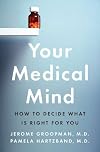
Chances are, you don't fully grasp your own biases in making medical decisions. Drs. Groopman and Hartzband discuss psychological aspects of decision-making such as risk-aversion, framing statistics, and the availability of stories of others who have had the disease, using stories of patients to illustrate how complicated finding the "best" answer can be.
I have a much greater understanding of the complexity of patient care after reading this book. Doctors have a variety of opinions and show more understanding of the best treatments. So do their patients. And sometimes, there is no clear-cut answer. Numbers drive decisions more and more - pushes for efficiency, or insurance companies covering one treatment and not another. Patients vary in what types of treatment they want, and can change their mind in the midst of treatment making following advance directives difficult. I discovered that I'm a minimalist, in their phraseology: one who likes to take the least amount of medication possible, which helped me understand why it took me so long for one of my doctors to convince me to take a medication I now swear by, and why I like that my primary care's default response is a "wait and see" approach. I'm still young and fairly healthy, but I will want to revisit this again and will definitely have it in mind if and when I need treatment for anything in the future. show less
I have a much greater understanding of the complexity of patient care after reading this book. Doctors have a variety of opinions and show more understanding of the best treatments. So do their patients. And sometimes, there is no clear-cut answer. Numbers drive decisions more and more - pushes for efficiency, or insurance companies covering one treatment and not another. Patients vary in what types of treatment they want, and can change their mind in the midst of treatment making following advance directives difficult. I discovered that I'm a minimalist, in their phraseology: one who likes to take the least amount of medication possible, which helped me understand why it took me so long for one of my doctors to convince me to take a medication I now swear by, and why I like that my primary care's default response is a "wait and see" approach. I'm still young and fairly healthy, but I will want to revisit this again and will definitely have it in mind if and when I need treatment for anything in the future. show less
I think the subtitle of this book my be a little bit misleading. If you're hoping for detailed advice on how to navigate the healthcare system and how to decide on specific medical treatments, you may find this isn't quite what you're looking for. It does have some potentially useful advice on different ways to think about those decisions, and on evaluating medical statistics, but mostly its focus is on the general importance of tailoring healthcare to the individual patient, and on the show more difficult and complicated nature of doing so.
The authors' main contention is that everyone, doctor or patient, has their own set of values when it comes to making their healthcare choices. Some people want the most aggressive healthcare possible, treating even vague potential problems as soon as there's any reason to think they might become an issue. Others prefer a more minimalist approach, preferring not to intervene in their body's workings without a truly compelling reason to do so. Groopman and Hartzband believe very firmly that it's important to take these mindsets into account and for doctors to respect and work with them. They also point out that while science can give us statistical information about which treatments are most likely to have which effects, only the individual can make value judgments about those effects. For instance, a drug's potential side effects may be quite acceptable to one person, but deeply problematic for another.
There are a lot of things, of course, that make all this decision-making intensely complicated. There can be vast amounts of uncertainty about what is likely to help, what is likely to hurt, and when it's best simply to do nothing at all. People are often very bad at predicting how possible medical outcomes will affect their quality of life. And then there are all the complex ethical questions of what to do when a patient isn't in a position to tell anyone what they want. (The book cites some really rather depressing studies and anecdotes suggesting that advance directives, which are supposed to make decision-making easier in a crisis, often really don't.)
All of this is illustrated with lots of personal stories, because, as the authors point out, stories have much more of an influence on us than statistics do. Which, of course, can also be a problem, as hearing one horror story -- or success story -- about a particular treatment can sway our decision-making far more than is necessarily justified.
The book makes some really good and thoughtful points on what is surely an extremely important topic, and uses science as well as stories to back up its points. Generally, it's good, and it's definitely worth reading. But I do have two quibbles with it.
First, in all these discussions of people making healthcare choices, some very important practical considerations seem to get left out. We read about a guy debating which of two top specialists to see, one of whom is apparently in a different part of the country than he is, but there aren't really any stories about people who have to deal with limited choices based on what their insurance will cover, or whether they have the wherewithal to travel, or live in a rural area with a limited choice of doctors. Maybe an in-depth discussion of this kind of thing is outside the scope of the book, but it would have been nice to have at least some acknowledgment that when it comes to healthcare, there are considerations other than medical statistics and personal preference that most of us also have to deal with.
The second quibble is a rather bigger one, namely that the authors don't draw a clear line between medical treatments that are based on some degree of actual evidence, however messy and uncertain that evidence may be, and pseudo-scientific alternative medicine treatments that have no valid basis at all. While that's not a subject they go into in any depth, they do seem, in their enthusiasm for respecting patients' own values and mindsets, to be positioning those two things as equally valid ends on a spectrum of preference, which I really don't see as justifiable. show less
The authors' main contention is that everyone, doctor or patient, has their own set of values when it comes to making their healthcare choices. Some people want the most aggressive healthcare possible, treating even vague potential problems as soon as there's any reason to think they might become an issue. Others prefer a more minimalist approach, preferring not to intervene in their body's workings without a truly compelling reason to do so. Groopman and Hartzband believe very firmly that it's important to take these mindsets into account and for doctors to respect and work with them. They also point out that while science can give us statistical information about which treatments are most likely to have which effects, only the individual can make value judgments about those effects. For instance, a drug's potential side effects may be quite acceptable to one person, but deeply problematic for another.
There are a lot of things, of course, that make all this decision-making intensely complicated. There can be vast amounts of uncertainty about what is likely to help, what is likely to hurt, and when it's best simply to do nothing at all. People are often very bad at predicting how possible medical outcomes will affect their quality of life. And then there are all the complex ethical questions of what to do when a patient isn't in a position to tell anyone what they want. (The book cites some really rather depressing studies and anecdotes suggesting that advance directives, which are supposed to make decision-making easier in a crisis, often really don't.)
All of this is illustrated with lots of personal stories, because, as the authors point out, stories have much more of an influence on us than statistics do. Which, of course, can also be a problem, as hearing one horror story -- or success story -- about a particular treatment can sway our decision-making far more than is necessarily justified.
The book makes some really good and thoughtful points on what is surely an extremely important topic, and uses science as well as stories to back up its points. Generally, it's good, and it's definitely worth reading. But I do have two quibbles with it.
First, in all these discussions of people making healthcare choices, some very important practical considerations seem to get left out. We read about a guy debating which of two top specialists to see, one of whom is apparently in a different part of the country than he is, but there aren't really any stories about people who have to deal with limited choices based on what their insurance will cover, or whether they have the wherewithal to travel, or live in a rural area with a limited choice of doctors. Maybe an in-depth discussion of this kind of thing is outside the scope of the book, but it would have been nice to have at least some acknowledgment that when it comes to healthcare, there are considerations other than medical statistics and personal preference that most of us also have to deal with.
The second quibble is a rather bigger one, namely that the authors don't draw a clear line between medical treatments that are based on some degree of actual evidence, however messy and uncertain that evidence may be, and pseudo-scientific alternative medicine treatments that have no valid basis at all. While that's not a subject they go into in any depth, they do seem, in their enthusiasm for respecting patients' own values and mindsets, to be positioning those two things as equally valid ends on a spectrum of preference, which I really don't see as justifiable. show less
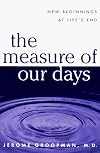
Heavy, densely emotional, soul searching, heart wrenching, spiritual and hopeful are but some of the words I use to describe this book containing complicated medical terminology and eight cases of cancer patients who faced death. Groopman powerfully describes both his spiritual insights and his patient's journey with serious illness.
It took longer than usual for me to read this because I wanted to do justice to each story.
A frequent contributor to The New Yorker, this prolific writer also show more has a string of credentials that are amazingly incredible and include the Recanati Professor of Immunology at Harvard Medical Center, the head of the experimental medicine program at Beth Israel Deaconess Medical Center and he is a cutting edge research specialist regarding aids, cancer and diseases of the blood.
With all those hard-earned roles, you would think the book would be egoistic, pedantic and difficult to understand. But, this isn't the case. He explains medical terminology in a fascinating way and I learned a great deal about the complexities of cancer.
While filled with complicated medical descriptions, it is the heart breaking stories that make this a stellar book written by a truly remarkable man.
These are gut wrenching stories of his journey walked with patients who face cancer, their struggles, pain, desiccation of the body and their experiences of living in hope against the overwhelming odds of survival.
I wholeheartedly agree with Lindapanzo when she said in her review "Due to its subject matter, I thought it'd be a depressing book and yes, I did shed a few tears while reading it. Overall, though, it was more uplifting than I'd expected."
I highly recommend this book and give it five stars --a rating I use sparingly. show less
It took longer than usual for me to read this because I wanted to do justice to each story.
A frequent contributor to The New Yorker, this prolific writer also show more has a string of credentials that are amazingly incredible and include the Recanati Professor of Immunology at Harvard Medical Center, the head of the experimental medicine program at Beth Israel Deaconess Medical Center and he is a cutting edge research specialist regarding aids, cancer and diseases of the blood.
With all those hard-earned roles, you would think the book would be egoistic, pedantic and difficult to understand. But, this isn't the case. He explains medical terminology in a fascinating way and I learned a great deal about the complexities of cancer.
While filled with complicated medical descriptions, it is the heart breaking stories that make this a stellar book written by a truly remarkable man.
These are gut wrenching stories of his journey walked with patients who face cancer, their struggles, pain, desiccation of the body and their experiences of living in hope against the overwhelming odds of survival.
I wholeheartedly agree with Lindapanzo when she said in her review "Due to its subject matter, I thought it'd be a depressing book and yes, I did shed a few tears while reading it. Overall, though, it was more uplifting than I'd expected."
I highly recommend this book and give it five stars --a rating I use sparingly. show less
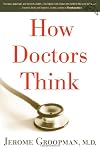
It makes perfect sense when you reflect on it, but Groopman's description of the Bayesian indoctrination of doctor training provides a lot of insight into the common conflicts or deficits of medical interaction. The takeaways aren't simplistic so much as simply reinforcing that patients and peers should remember that doctors are human. Cognitive errors are common, no matter how elite and trained a professional is. Patient advocacy and a deeper engagement with a specialist's rationale is not show more easy to appreciate or apply until you realize just how often common medical conventions prevent them from even being considered. show less
Lists
Awards


You May Also Like


Associated Authors
Statistics
- Works
- 12
- Also by
- 5
- Members
- 3,094
- Popularity
- #8,252
- Rating
- 3.8
- Reviews
- 78
- ISBNs
- 65
- Languages
- 9
- Favorited
- 5