
Danielle Ofri
Author of What Doctors Feel: How Emotions Affect the Practice of Medicine
About the Author
Danielle Ofri, MD, PhD, is a clinical professor of medicine at the New York University School of Medicine and has cared for patients at New York's Bellevue Hospital for more than two decades. She is the author of seven acclaimed books, and her writing appears in the New Yorker and the New York show more Times. show less
Image credit: Wikipedia
Works by Danielle Ofri
On the Bellevue Literary Review 4 copies
Bellevue Literary Review [Vol 01, No 1; Fall 2001] — Editor — 3 copies
Bellevue Literary Review [Vol 04, No 2; Fall 2004] — Editor — 3 copies
Bellevue Literary Review [Vol 05, No 2; Fall 2005] — Editor — 3 copies
Incidental Findings 2 copies
Bellevue Literary Review [Vol 14, No 2; Fall 2014] — Editor — 2 copies
Bellevue Literary Review [Vol 15, No 2; Fall 2015] — Editor — 2 copies
Bellevue Literary Review [Vol 04, No 1; Spring 2004] — Editor — 2 copies
Bellevue Literary Review [Vol 15, No 1; Spring 2015] — Editor — 2 copies
Bellevue Literary Review [Vol 13, No 2; Fall 2013] — Editor — 2 copies
Bellevue Literary Review [Vol 14, No 1; Spring 2014] — Editor — 2 copies
Bellevue Literary Review [Vol 02, No 2; Fall 2002] — Editor — 2 copies
Bellevue Literary Review (Vol 18 No 1; Spring 2018) — Editor — 1 copy
Bellevue Literary Review [Vol 07, No 1; Spring 2007] — Editor — 1 copy
Bellevue Literary Review [Vol 02, No 1; Spring 2002] — Editor — 1 copy
Bellevue Literary Review [Vol 03, No 2; Fall 2003] — Editor — 1 copy
Bellevue Literary Review [Vol 16, No 2; Fall 2016] — Editor — 1 copy
Bellevue Literary Review (Vol 17 No 2; Fall 2017) — Editor — 1 copy
Bellevue Literary Review (Vol 17 No 1; Spring 2017) — Editor — 1 copy
Bellevue Literary Review [Vol 16, No 1; Spring 2016] — Editor — 1 copy
Bellevue Literary Review [Vol 06, No 1; Spring 2006] — Editor — 1 copy
Associated Works
Tagged
Common Knowledge
- Birthdate
- 1964
- Gender
- female
- Education
- McGill University
New York University - Occupations
- doctor
professor
editor - Organizations
- New York University
Bellevue Hospital Center
Bellevue Literary Review - Nationality
- USA
- Associated Place (for map)
- USA
Members
Reviews
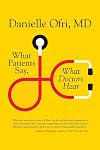
This book is all about conversation, a key diagnostic tool whose value is often not appreciated. The medical system revolves around efficiency and quality indicators and tests that have quantitative values attached to them, but it is in open-ended questions and active listening that the real work happens. Dr. Ofri showcases this with examples from her own practice and from others around the world about the power of conversation to save money (not ordering expensive, unnecessary tests), make show more connections, and even stave off lawsuits in situations of medical error. As always, Dr. Ofri writes movingly and honestly—she is not afraid to hold up events from her own past and examine her biases in order to improve and grow.
I think this book would pair nicely with with Kathryn Mannix’s book Listen: How to Find the Words for Tender Conversations. show less
I think this book would pair nicely with with Kathryn Mannix’s book Listen: How to Find the Words for Tender Conversations. show less
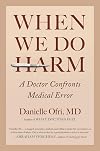
Medicine, wherever it is practiced, involves heavy things that are not for the faint of heart. Outcomes sometimes involve death, and errors are not always (or often) easy to spot. Poor outcomes can haunt doctors and nurses both professionally and personally – almost as much as they can haunt the families of patients. Nonetheless, in the United States, no comprehensive system exists to monitor medical errors. As Ofri details in this well-written and timely book, this situation neither show more provides justice to the needs of patients and their families nor allows the medical system to learn from its mistakes.
This book probes two medical cases that were particularly error-filled. One involved a patient with leukemia, a form of cancer, and the other involved a patient whose case was clearly mismanaged at several points. Errors accumulated in each case, and each was met with silence and obfuscation by the medical establishment. At the outset, positive outcomes were not guaranteed, but compounding errors guaranteed horrific outcomes involving death. Families of both patients sought corrective measures for the causative systemic problems, but despite noble intentions and proper efforts, neither family were successful.
Ofri holds the Danish medical system as an example. In this small country, parliament passed a Patient Safety Act of 2005 to set up a system that judges and potentially compensates patients for negative outcomes. Gone were the excesses of legal case and drama of the courtroom; also gone were the huge settlements for hyperbolic cases. In its place was something more equitable and more enlightened. Instead of requiring excessive, provable harm like death or permanent disability, the Danish system just required preponderance of the evidence for more mundane claims.
The author rightly questions whether such a system could ever succeed in the United States. For one, we are more brashly capitalistic and individualistic than Denmark. Further, our country is much larger and more diverse. We also have a long and deep suspicion of centralized medical data collection. But the Danish system simply seems fairer and more just to both parties. In it, the doctor-patient relationship never transforms into an adversarial duel filled with legal tactics. Medicine at its best aims to be humane; doesn’t this system better fit that ethos?
This work can find an obvious home among American healthcare workers, whether doctors, hospital administrators, or nurses. Particularly those with patient contact should attend to Ofri’s clear message. Policymakers and administrators of public health might also want to give this one a read because of obvious import into government. Ofri’s call may yet be a bit early for legislation to be passed, but my experiences concur that it needs to be heard. It deserves to be on the radar for public health advocates once the challenges of COVID dissipate. I’m glad that I found and read this book. show less
This book probes two medical cases that were particularly error-filled. One involved a patient with leukemia, a form of cancer, and the other involved a patient whose case was clearly mismanaged at several points. Errors accumulated in each case, and each was met with silence and obfuscation by the medical establishment. At the outset, positive outcomes were not guaranteed, but compounding errors guaranteed horrific outcomes involving death. Families of both patients sought corrective measures for the causative systemic problems, but despite noble intentions and proper efforts, neither family were successful.
Ofri holds the Danish medical system as an example. In this small country, parliament passed a Patient Safety Act of 2005 to set up a system that judges and potentially compensates patients for negative outcomes. Gone were the excesses of legal case and drama of the courtroom; also gone were the huge settlements for hyperbolic cases. In its place was something more equitable and more enlightened. Instead of requiring excessive, provable harm like death or permanent disability, the Danish system just required preponderance of the evidence for more mundane claims.
The author rightly questions whether such a system could ever succeed in the United States. For one, we are more brashly capitalistic and individualistic than Denmark. Further, our country is much larger and more diverse. We also have a long and deep suspicion of centralized medical data collection. But the Danish system simply seems fairer and more just to both parties. In it, the doctor-patient relationship never transforms into an adversarial duel filled with legal tactics. Medicine at its best aims to be humane; doesn’t this system better fit that ethos?
This work can find an obvious home among American healthcare workers, whether doctors, hospital administrators, or nurses. Particularly those with patient contact should attend to Ofri’s clear message. Policymakers and administrators of public health might also want to give this one a read because of obvious import into government. Ofri’s call may yet be a bit early for legislation to be passed, but my experiences concur that it needs to be heard. It deserves to be on the radar for public health advocates once the challenges of COVID dissipate. I’m glad that I found and read this book. show less
The latest book by Danielle Ofri, an internist and professor of medicine at NYU, is her best yet. It centers on the doctor-patient relationship, "the single most important tool of medical care", and features Dr. Ofri's relationships with several patients of hers, along with a remarkable Emory University student and her physician, the different barriers that affect these relationships, research about effective communication, and, most importantly, tools that both physicians and patients can show more use to enhance their relationships. This book made me reflect repeatedly, think about my own successes and shortcomings in my communications with patients and families that I like and respect, and especially those who I find difficult and dislikable, and it will undoubtedly affect my approach to all of those who fall under my care. I received an advance review copy of this book from LibraryThing, and it will be available to the general public on February 7 of next year. I highly recommend this book to all health care professionals and patients, i.e. everyone. show less
 This review was written for LibraryThing Early Reviewers.
Medical error is not a comfortable topic for anyone to think about, whether patient or doctor. However, not thinking about it doesn’t make it go away. In this book, Dr. Ofri chronicles real-life cases of patients whose lives were destroyed by medical error, their relatives’ struggles to simply find out why the situation occurred, and the consequences of a health-care system designed to prevent lawsuits instead of promote instead of promote patient care. Dr. Ofri writes eloquently and show more does not shy away from her own errors as a doctor, analyzing how the situation occurred and what could have been done to prevent it. Dr. Ofri explains the tactics used to reduce the likelihood and impact of errors, the approaches taken by different countries (e.g., Denmark), and what individuals can do to educate themselves and advocate for patient safety. This was an illuminating, brilliantly written book, and I’m looking forward to reading Dr. Ofri’s other books. show less
Lists
You May Also Like


Associated Authors
Statistics
- Works
- 46
- Also by
- 3
- Members
- 679
- Popularity
- #37,220
- Rating
- 3.8
- Reviews
- 50
- ISBNs
- 60
- Favorited
- 2

