
Perri Klass
Author of A Not Entirely Benign Procedure: Four Years As A Medical Student
About the Author
Perri Klass is a practicing pediatrician, an acclaimed author of fiction & nonfiction, & a prizewinning journalist. She has won five O. Henry Awards for her short stories, including three of the stories in "Love & Modern Medicine". Her fiction includes two novels, "Recombinations & Other Women's show more Children", & a collection of short stories, "I Am Having an Adventure". She has also written two collections of essays about medicine, "A Not Entirely Benign Procedure: Four Years as a Medical Student" & "Baby Doctor: A Pediatrician's Training". Her columns & articles have appeared in the "New York Times Magazine", the "Washington Post", the "Boston Globe", "Discover", & "Parenting". She recently won a James Beard Foundation Award for an article in "Gourmet", "The Lunch Box as Battlefield." Both Klass's fiction & her journalism have dealt with issues of medicine & society. In her medical career she practices pediatrics at Dorchester House, a neighborhood health center in Boston, & is medical director of the national literacy program Reach Out & Read, dedicated to making books & literacy promotion part of pediatric primary care. Klass lives in Cambridge, Massachusetts, with Larry Wolff, a professor of history at Boston College, & their children. (Bowker Author Biography) show less
Image credit: Perri Klass
Works by Perri Klass
Quirky Kids: Understanding and Helping Your Child Who Doesn't Fit In- When to Worry and When Not to Worry (2003) 96 copies, 3 reviews
Every Mother Is a Daughter: The Neverending Quest for Success, Inner Peace, and a Really Clean Kitchen (Recipes and Knitting Patterns Included) (2006) 63 copies, 1 review
A Good Time to Be Born: How Science and Public Health Gave Children a Future (2020) 37 copies, 3 reviews
Taking Care of Your Own: Parenthood and the Medical Mind (The Grand Rounds Press Series) (1992) 14 copies
Other People's Children 1 copy
Associated Works
The Strange History of Suzanne LaFleshe and Other Stories of Women and Fatness (2003) — Contributor — 31 copies, 1 review
Tagged
Common Knowledge
- Canonical name
- Klass, Perri
- Birthdate
- 1958
- Gender
- female
- Education
- Harvard Medical School
- Occupations
- pediatrician
writer
journalism professor - Organizations
- New York University
Reach Out and Read
The New York Times
Boston University (School of Medicine) - Relationships
- Klass, Sheila Solomon (mother)
Tenn, William (uncle) - Nationality
- USA
- Birthplace
- Trinidad
- Places of residence
- Trinidad
Leonia, New Jersey, USA
New York, New York, USA - Associated Place (for map)
- USA
Members
Reviews
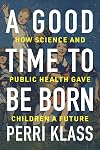
The life-or-death fate of children has changed dramatically over the past 200 years due to research, medicine, and public health. Abraham and Mary Todd Lincoln famously grieved the loss of their child in the White House years ago, but they were hardly alone. Rather in that era, losing a child, often due to illness or mishaps, was pretty much normal though still tragic. Today, such an experience is the exception, and we are all better for it. In this book, pediatrician Perri Klass examines show more the slow but steady triumph of science over common childhood ailments.
Science, especially in the twentieth century, witnessed advances over most diseases of childhood. A list of the most common causes of death in 1900 looks very different than a similar list in 2000. Tuberculosis, rheumatic fever, scarlet fever, measles, and diphtheria are presently known – or forgotten – as historical anomalies, yet they were all dreaded entities decades ago. Research advances in treatment and vaccines prevention spare us today.
Disease by disease, Klass describes the story behind each of these victories. Reading this work can open a reader’s eyes to the power of science and the power of empowering researchers. She concludes by dwelling on how societal attitudes have changed due to these breakthroughs. We are now hyperaware – and thus often overprotective – of dangers to the young. Childhood death sometimes casts shame over a family today. We can expect too much perfection instead of too little, as we did in prior eras. We also deal with massive misinformation and mistrust of medicine… despite all its triumphs.
This book is well suited to those interested in medical history. It’s also good preparation for those entering health professions to learn about these diseases through the engaging lens of history. Klass tells a good story that shouldn’t pass into the dustheaps of a forgotten past. Life is a treasure, and remembering prior successes can refine our focus towards engaging present challenges – and hopefully winning future successes. This book offers a nice narrative to dwell upon these themes. show less
Science, especially in the twentieth century, witnessed advances over most diseases of childhood. A list of the most common causes of death in 1900 looks very different than a similar list in 2000. Tuberculosis, rheumatic fever, scarlet fever, measles, and diphtheria are presently known – or forgotten – as historical anomalies, yet they were all dreaded entities decades ago. Research advances in treatment and vaccines prevention spare us today.
Disease by disease, Klass describes the story behind each of these victories. Reading this work can open a reader’s eyes to the power of science and the power of empowering researchers. She concludes by dwelling on how societal attitudes have changed due to these breakthroughs. We are now hyperaware – and thus often overprotective – of dangers to the young. Childhood death sometimes casts shame over a family today. We can expect too much perfection instead of too little, as we did in prior eras. We also deal with massive misinformation and mistrust of medicine… despite all its triumphs.
This book is well suited to those interested in medical history. It’s also good preparation for those entering health professions to learn about these diseases through the engaging lens of history. Klass tells a good story that shouldn’t pass into the dustheaps of a forgotten past. Life is a treasure, and remembering prior successes can refine our focus towards engaging present challenges – and hopefully winning future successes. This book offers a nice narrative to dwell upon these themes. show less

This is not the book I was promised. It was obsessively focused on the USA, despite the original summary that caused me to pick it up implying it was going to be a global survey of the history of paediatric medicine (if I had been sufficiently familiar with the names mentioned, that might have been obvious). The historical sections gloss over what was happening elsewhere, except for very short sections, usually a sentence long, none more than a paragraph. There were also a lot of times where show more I was bemused that what I've read about American medical research (in medical journals) paints a much less rosy picture that this -- there were times when I wondered if the author had looked outside their own demographic (there is mention of some of it, but argh). One section that talks exclusively about US and UK writings on child death seems to think that these are representative of the whole world (also: author is not a literary scholar and certainly, from the works quoted, doesn’t seem to have gone very far from a very limited literary ‘classics’ collection, talking about them in a way that assumed familiarity with all of the works -- I, as a middle aged middle class white Anglo Australian missed most of the references)
I would recommend against reading the introduction/first two chapters, as not being relevant to the thesis of the book. My reading notes on the intro say:
"*wow is there some willing ignorance here - that there are no child deaths due to the various ills like poor water, poor nutrition etc. There is acknowledgement that the death rates are higher in poor and marginalised communities, but there isn't the recognition about how inaccessible some of the medical treatments are for populations both within and without the USA.*"
Chapter two, for inexplicable reasons, is entirely about the American civil war. Includes abhorent details of the treatment of African American women, including what reads as medical research without consent. From my reading notes:
"*I am bemused at how this chapter's recounting in detail the mistreatment of people under the American slavery system counts as either science or public health*"
Sections I did like: The sections on scarlet fever and diptheria were fascinating; slightly more European history there, not least because that is where some of the dramatic discoveries were made, and it is harder to gloss over them. I noted that p252 had an interesting discussion of ethics (which: I don't remember whether this was because it was the only mention, or because I had been so horrified at the lack of mention of ethics in other sections, but that I'm referencing a single page is concerning).
I would not normally keep a book that I rated this low, but there are sections that are potentially worth revisiting. show less
I would recommend against reading the introduction/first two chapters, as not being relevant to the thesis of the book. My reading notes on the intro say:
"*wow is there some willing ignorance here - that there are no child deaths due to the various ills like poor water, poor nutrition etc. There is acknowledgement that the death rates are higher in poor and marginalised communities, but there isn't the recognition about how inaccessible some of the medical treatments are for populations both within and without the USA.*"
Chapter two, for inexplicable reasons, is entirely about the American civil war. Includes abhorent details of the treatment of African American women, including what reads as medical research without consent. From my reading notes:
"*I am bemused at how this chapter's recounting in detail the mistreatment of people under the American slavery system counts as either science or public health*"
Sections I did like: The sections on scarlet fever and diptheria were fascinating; slightly more European history there, not least because that is where some of the dramatic discoveries were made, and it is harder to gloss over them. I noted that p252 had an interesting discussion of ethics (which: I don't remember whether this was because it was the only mention, or because I had been so horrified at the lack of mention of ethics in other sections, but that I'm referencing a single page is concerning).
I would not normally keep a book that I rated this low, but there are sections that are potentially worth revisiting. show less
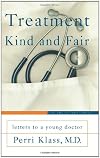
The epitome of Klass' work -- a pedantic and often obnoxious narrative voice overlying the fantasies and fears that are, in fact ubiquitous among medical trainees. After reading this I knew that I wasn't the first to secretly desire running off to practice medicine in some rural third-world country -- not out of benevolence, but to be able to utilize history and physical skills, without any pesky high technology to ruin my intellectual fun and I now know that I share the mixed dread and show more exhilaration boarding an aircraft knowing that they may call "Is someone on board a doctor?"
Klass is maybe the most renowned medical writer and although she is far from the best, she never fails to entertain. show less
Klass is maybe the most renowned medical writer and although she is far from the best, she never fails to entertain. show less
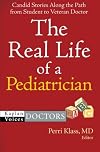
This is a well-written collection of essays composed by a number of pediatricians regarding learning moments in their careers. Perri Klass, who has published extensively on her experiences as a pediatrician, edited this brief volume and wrote two of the essays within it. I enjoyed each story, which integrated experiences from internship, residency and the developed pediatric career. Each story was one in which the pediatrician learned a truth about their profession and/or something that show more helped them to grow as a physician. Several of the essays addressed a cultural barrier as the pediatrician faced a cross-cultural hurdle in the effort to reach the family of the sick child. Each story was vividly told and captivating. A great little book! I just wish it could have been longer! show less
Lists
Awards

You May Also Like


Associated Authors
Statistics
- Works
- 19
- Also by
- 8
- Members
- 925
- Popularity
- #27,744
- Rating
- 3.6
- Reviews
- 19
- ISBNs
- 57
- Languages
- 1
- Favorited
- 2