
Mary Gordon (1) (1949–)
Author of Joan of Arc
For other authors named Mary Gordon, see the disambiguation page.
About the Author
Mary Gordon teaches at Barnard College.
Image credit: Mary Gordon, in 2021
Works by Mary Gordon
Eleanor's Music 1 copy
The Deacon 1 copy
Associated Works
Axel's Castle: A Study of the Imaginative Literature of 1870-1930 (FSG Classics) (1931) — Introduction, some editions — 729 copies, 7 reviews
Writers on Writing: Collected Essays from the New York Times (2001) — Contributor — 480 copies, 5 reviews
You've Got to Read This: Contemporary American Writers Introduce Stories that Held Them in Awe (1994) — Introduction — 415 copies, 3 reviews
The Writer on Her Work, Volume I: Contemporary Women Writers Reflect on their Art and Situation (1980) — Contributor — 199 copies, 1 review
What My Mother Gave Me: Thirty-one Women on the Gifts That Mattered Most (2013) — Contributor — 106 copies, 19 reviews
Mentors, Muses & Monsters: 30 Writers on the People Who Changed Their Lives (2009) — Contributor — 71 copies, 2 reviews
Face to Face: Women Writers on Faith, Mysticism, and Awakening (2004) — Contributor — 39 copies, 1 review
Antaeus No. 64/65, Spring/Autumn 1990 - Twentieth Anniversary Issue (1990) — Contributor — 14 copies
Tagged
Common Knowledge
- Legal name
- Gordon, Mary Catherine
- Birthdate
- 1949-12-08
- Gender
- female
- Education
- Barnard College
Syracuse University - Occupations
- professor (English, Barnard University)
- Organizations
- American Academy of Arts and Letters (Literature, 2007)
Syracuse University - Awards and honors
- American Academy of Arts and Letters Academy Award (Literature ∙ 2006)
Guggenheim Fellowship (1993)
New York Writers Hall of Fame (2010) - Agent
- Peter Matson (Sterling Lord Literistic)
- Relationships
- Cash, Arthur H. (husband)
- Short biography
- Mary Gordon was born in 1949 in Far Rockaway, New York. She was an only child, raised in a tightly-knit and pious Catholic home. She began writing as a child and dreamed of becoming a nun. The loss of her father in 1957, when she was seven years old, was the most important event of her youth, and she would later channel her grief into many works of fiction, and finally into her memoir, The Shadow Man: A Daughter’s Search for her Father (1996). She attended Barnard College over her mother's objections (as it was not a Catholic institution) and worked at a series of secretarial and babysitting jobs in order to pay her way. She became involved in the feminist and anti-war movements of the late 1960s, and has continued to contribute to progressive causes throughout her life. She received an M.A. from Syracuse University, but left short of a Ph.D. in order to marry Jim Brain, an English professor nearly 30 years her senior. She taught writing at Duchess County Community College, and lived with her husband in London for a year. Her first marriage dissolved when she became involved with Arthur Cash, another much-older English professor; they married in 1979. Her first novel, Final Payments, was published in 1978 to tremendous critical acclaim, followed quickly by The Company of Women in 1981. Although she continued to write poetry, essays, reviews and nonfiction, her attention was divided for a time by the birth of her two children, and it was four years before her next book was published. She became the Millicent Macintosh Chair of English at Barnard College. The New York Times has called her "her generation's preeminent novelist of Roman Catholic mores and manners."
Other works include Men and Angels (1985),
The Other Side (1989), Pearl (2005),
The Love of My Youth (2011), The Rest of Life: Three Novellas (1994), and
The Liar's Wife (2014). - Nationality
- USA
- Birthplace
- Far Rockaway, New York, USA
- Places of residence
- Far Rockaway, New York, USA (birth)
Valley Stream, New York, USA
New Paltz, New York, USA
New York, New York, USA
Hope Valley, Rhode Island, USA - Associated Place (for map)
- New York, USA
Members
Discussions
AMERICAN AUTHORS CHALLENGE--JUNE 2023--MARY GORDON in 75 Books Challenge for 2023 (June 2023)
Reviews
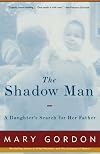
Mary Gordon actually spends a fair amount of time detailing her research in the library and in contacting strangers. The reader gets to participate in the research process. This is like following Nancy Drew’s progress in solving a mystery–albeit without the imprisonment in the cistern, tarantula/black widow spider, etc.
The twist in Gordon’s book is that Mary Gordon was raised Catholic by her parents, although her father was born Jewish. But he had become a (IMO dangerous) anti-Semite show more and this made Gordon’s search for his past–and really the man himself as he had died while she was so young–a very complicated emotional ordeal.
Let me say that Mary Gordon’s book is gorgeously written. Maybe this heavy reliance on process wouldn’t work in the hands of a lesser writer, but it really works here. Will you enjoy the book? I’m not sure. It depends on the type of books you like. I think someone like me who is curious about family history, 20th century history, family relations, and beautiful, almost lyrical, writing will love it. show less
The twist in Gordon’s book is that Mary Gordon was raised Catholic by her parents, although her father was born Jewish. But he had become a (IMO dangerous) anti-Semite show more and this made Gordon’s search for his past–and really the man himself as he had died while she was so young–a very complicated emotional ordeal.
Let me say that Mary Gordon’s book is gorgeously written. Maybe this heavy reliance on process wouldn’t work in the hands of a lesser writer, but it really works here. Will you enjoy the book? I’m not sure. It depends on the type of books you like. I think someone like me who is curious about family history, 20th century history, family relations, and beautiful, almost lyrical, writing will love it. show less
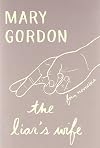
“The Liar’s Wife” is only one of the four novellas in this book. Veteran writer Gordon has produced stories where the protagonists are all knocked out of their comfort zones and find themselves contemplating life changing moral issues.
In the first, the title story, a 70-some year old woman is surprised by the appearance of her ex-husband. They were only married a short time before she fled, unable to settle into a life in Ireland with a musician husband who, of course, lies show more continually. Her life has been comfortable; happy children, career she liked, good husband, three houses. His has been the opposite, but he feels he’s lived life to the fullest. Whose life has been better? Has one been a waste?
In “Simone Weil in New York” the protagonist is a young woman who was one of Weil’s students in France. Now married to an American doctor who is stationed in the Pacific Theater during WW 2, with a baby and living with her brother, she encounters Weil in the street. She is not happy to see her; she represents all that has been lost because of the war. As a student she had loved and revered Weil; now she feels a tangle of feelings. Weil feels an obligation to live as the poorest live; does that help anyone? Should Genevieve feel guilty for being safe in America instead of being part of the French Resistance? Can she break free of Weil’s philosophy?
The narrator in “Thomas Mann in Gary, Indiana” is an old man, looking back on his life. The high point of his life was when, in high school, he was selected to present the visiting Thomas Mann to the school. Mann has left Germany because of the Nazi regime and is visiting the school to lecture on what is happening in Germany. Like Weil, Mann cannot enjoy his own freedom and success because of guilt over what is going on in his native country; this opens the high school boy’s eyes to the racism that is so casually accepted in America- so casually that no one ever really sees it.
My favorite story is the last one, “Fine Arts”. A college student who has been given a grant to go overseas to study the work of sculptor Citivali for her doctoral thesis. Theresa has had a hard life; her childhood was taken up with caring for a bed ridden father; her teens taken up with studying. Her one indulgence has been an affair with her married mentor, who is a self absorbed ass. Two of the sculptures that she wishes to study are in a private collection; the owner turns Theresa’s life upside down and completely reverses her situation.
All four protagonists wrestle with moral issues. Is what they are doing worthwhile? Are they wasting their lives? Is it all right to enjoy your life while others suffer? It sounds grim, but the stories are very engaging and thought provoking without being heavy. The prose is so… perfect… that it just leads you on into the stories. show less
In the first, the title story, a 70-some year old woman is surprised by the appearance of her ex-husband. They were only married a short time before she fled, unable to settle into a life in Ireland with a musician husband who, of course, lies show more continually. Her life has been comfortable; happy children, career she liked, good husband, three houses. His has been the opposite, but he feels he’s lived life to the fullest. Whose life has been better? Has one been a waste?
In “Simone Weil in New York” the protagonist is a young woman who was one of Weil’s students in France. Now married to an American doctor who is stationed in the Pacific Theater during WW 2, with a baby and living with her brother, she encounters Weil in the street. She is not happy to see her; she represents all that has been lost because of the war. As a student she had loved and revered Weil; now she feels a tangle of feelings. Weil feels an obligation to live as the poorest live; does that help anyone? Should Genevieve feel guilty for being safe in America instead of being part of the French Resistance? Can she break free of Weil’s philosophy?
The narrator in “Thomas Mann in Gary, Indiana” is an old man, looking back on his life. The high point of his life was when, in high school, he was selected to present the visiting Thomas Mann to the school. Mann has left Germany because of the Nazi regime and is visiting the school to lecture on what is happening in Germany. Like Weil, Mann cannot enjoy his own freedom and success because of guilt over what is going on in his native country; this opens the high school boy’s eyes to the racism that is so casually accepted in America- so casually that no one ever really sees it.
My favorite story is the last one, “Fine Arts”. A college student who has been given a grant to go overseas to study the work of sculptor Citivali for her doctoral thesis. Theresa has had a hard life; her childhood was taken up with caring for a bed ridden father; her teens taken up with studying. Her one indulgence has been an affair with her married mentor, who is a self absorbed ass. Two of the sculptures that she wishes to study are in a private collection; the owner turns Theresa’s life upside down and completely reverses her situation.
All four protagonists wrestle with moral issues. Is what they are doing worthwhile? Are they wasting their lives? Is it all right to enjoy your life while others suffer? It sounds grim, but the stories are very engaging and thought provoking without being heavy. The prose is so… perfect… that it just leads you on into the stories. show less
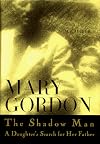
19. The Shadow Man by Mary Gordon
published: 1996
format: 286 page hardcover
acquired: 2009 library book sale at Fondren Library of Rice University.
read: Apr 17-29
rating: 4
I was struggling to find a book after reading Pynchon's Mason & Dixon. I needed something readable, but the books I tried felt too light, and loose, even serious stuff. Then I opened this book, and started the introduction, actually titled "To The Reader". It was so intense, direct, serious. I had found my book.
Gordon had a show more special and inspirational relationship with her father, who was older and died of a heart attack when she was seven. But he had her taught to read, wrote her poetry and parental love letters, and their relationship would define who she was and tie into what made her into the author she became. "My father died when I was seven years old. I've always thought this was the most important thing anyone could know about me."
She knew he was born Jewish, and later converted to Catholicism and became very devout. It wasn't clear to me whether she realized he had become antisemitic, but she grew up later with insults from her family along the lines of something being "the Jew in her". And yet, "When I was ten, and he'd been dead only three years, I attempted his biography. It began, "My father is the greatest man I have ever known.""
She started writing this book when she was 44, my age now. And what she found was that her father was nothing like what he said he was, or what he appeared to be. Every discovery undermined something else about him. For example, he never worked during her childhood, even as he left the house everyday with a briefcase, and he hadn't gone Harvard, like he said. He hadn't even graduated high school. He was writer, but not a fine one. He published pornography and, during WII, antisemitic articles.
Unfortunately the book as a whole fails to maintain the fascination that the intensity of the early sections conjured up. Gordon is an emotional writer, and she struggles with her Jewish past, which she wants to get in touch with, and her Catholic present which she values deeply but doesn't exactly believe. And she struggles with the relationships with her family, her bitter memories and her mixed discoveries about them later. Yet, somehow the book loses some steam. It's, despite the 37 years or more since her father's death, a book of grief, of finding the man she learns she never really knew...and losing the one she thought she did know. And, I guess that the book just needed to evolve that way. I'm glad I read it, but not in a rush to recommend it on.
Side note: I discovered this book on the radio through Garrison Keillor's Writer's Almanac, on the way to work in December of 2005 (link). It struck me, and I still remember his voice now. I was quite excited when I found a copy at a library book sale 3 plus years later, in 2009. Now I've finally read it, another 8 years later.
2017
https://www.librarything.com/topic/244568#6031408 show less
published: 1996
format: 286 page hardcover
acquired: 2009 library book sale at Fondren Library of Rice University.
read: Apr 17-29
rating: 4
I was struggling to find a book after reading Pynchon's Mason & Dixon. I needed something readable, but the books I tried felt too light, and loose, even serious stuff. Then I opened this book, and started the introduction, actually titled "To The Reader". It was so intense, direct, serious. I had found my book.
Gordon had a show more special and inspirational relationship with her father, who was older and died of a heart attack when she was seven. But he had her taught to read, wrote her poetry and parental love letters, and their relationship would define who she was and tie into what made her into the author she became. "My father died when I was seven years old. I've always thought this was the most important thing anyone could know about me."
She knew he was born Jewish, and later converted to Catholicism and became very devout. It wasn't clear to me whether she realized he had become antisemitic, but she grew up later with insults from her family along the lines of something being "the Jew in her". And yet, "When I was ten, and he'd been dead only three years, I attempted his biography. It began, "My father is the greatest man I have ever known.""
She started writing this book when she was 44, my age now. And what she found was that her father was nothing like what he said he was, or what he appeared to be. Every discovery undermined something else about him. For example, he never worked during her childhood, even as he left the house everyday with a briefcase, and he hadn't gone Harvard, like he said. He hadn't even graduated high school. He was writer, but not a fine one. He published pornography and, during WII, antisemitic articles.
Unfortunately the book as a whole fails to maintain the fascination that the intensity of the early sections conjured up. Gordon is an emotional writer, and she struggles with her Jewish past, which she wants to get in touch with, and her Catholic present which she values deeply but doesn't exactly believe. And she struggles with the relationships with her family, her bitter memories and her mixed discoveries about them later. Yet, somehow the book loses some steam. It's, despite the 37 years or more since her father's death, a book of grief, of finding the man she learns she never really knew...and losing the one she thought she did know. And, I guess that the book just needed to evolve that way. I'm glad I read it, but not in a rush to recommend it on.
Side note: I discovered this book on the radio through Garrison Keillor's Writer's Almanac, on the way to work in December of 2005 (link). It struck me, and I still remember his voice now. I was quite excited when I found a copy at a library book sale 3 plus years later, in 2009. Now I've finally read it, another 8 years later.
2017
https://www.librarything.com/topic/244568#6031408 show less
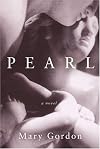
I'm Pearl-ruling Pearl. I don't care for the style, or the patronising, self-important authorial tone in the guise of an omniscient narrator who makes a point of deciding when to tell us what. Any desire I may have had to understand why a young American woman would chain herself to an embassy fence in Ireland, determined to die like Bobby Sands, to "bear witness" to something, has preceded her in death. (If she's actually going to die, which I doubt.) I think there's an excellent story in show more there somewhere, but Gish Jen, Maxine Hong Kingston and Margaret Drabble to the contrary notwithstanding, I have yet to see a glimpse of the compassion, suspense or lyrical intensity they're on about; Gordon's habit of speaking directly to the reader, as if we're likely to miss the point but she's going to make it clear, makes me twitch; and I just don't have the patience to stick with it. Perhaps it's because I was not brought up to believe that voluntary suffering is its own reward? show less
Lists
Awards


You May Also Like


Associated Authors
Statistics
- Works
- 29
- Also by
- 35
- Members
- 3,804
- Popularity
- #6,666
- Rating
- 4.0
- Reviews
- 82
- ISBNs
- 201
- Languages
- 10
- Favorited
- 4

