
Reynolds Price (1933–2011)
Author of Kate Vaiden
About the Author
Reynolds Price (February 1, 1933 - January 20, 2011), born Edward Reynolds Price in Macon, North Carolina, was an American poet, novelist, dramatist, essayist and James B. Duke Professor of English at Duke University. After graduating from Duke University in 1955, he won a Rhodes scholarship to show more study at Oxford University. Despite being living as a paraplegic after receiving radiation treatment for a spinal tumor since the mid-1980s, he produced approximately one book a year. His first novel, A Long and Happy Life (1962) won the William Faulkner Award. His other works include The Names and Faces of Heroes, Clear Pictures: First Loves, First Guides, A Whole New Life, and The Good Priest's Son. Kate Vaiden won the National Books Critics Circle Award. His plays have been produced on stage and on PBS's American Playhouse. He died due to complications of a heart attack on January 20, 2011 at the age of 77. (Bowker Author Biography) Reynolds Price, the author of numerous volumes of fiction, poetry, memoir, plays, essays, & translation, has won the National Book Critics Circle Award, the William Faulkner Award, & the Levinson, Blumenthal, & Tietjans poetry awards. A member of the American Academy of Arts & Letters & a regular commentator on National Public Radio's "All Things Considered", he lives in Durham, North Carolina. (Publisher Provided) show less
Image credit: Reynolds Price, an English professor at Duke University and author of more than 30 books, winner of a National Book Critics Circle Award and other honors
Series
Works by Reynolds Price
A Palpable God: Thirty Stories Translated from the Bible With an Essay on the Origins and Life of Narrative (1978) 100 copies
A Final Letter 1 copy
Night dance 1 copy
Faggots 1 copy
The Archive, 90th Ann. Issue 1 copy
The Annual Heron 1 copy
Associated Works
For the Love of Books: 115 Celebrated Writers on the Books They Love Most (1999) — Contributor — 479 copies, 4 reviews
Literary Genius: 25 Classic Writers Who Define English & American Literature (2007) — Contributor — 95 copies, 2 reviews
Published and Perished: Memoria, Eulogies, and Remembrances of American Writers (2002) — Contributor — 41 copies, 1 review
Fresh Air with Terry Gross: Faith, Reason, and Doubt: Interviews on Religion (2008) — Contributor — 9 copies, 1 review
Tagged
Common Knowledge
- Canonical name
- Price, Reynolds
- Legal name
- Price, Edward Reynolds
- Birthdate
- 1933-02-01
- Date of death
- 2011-01-20
- Gender
- male
- Education
- Duke University (B.A.|1955)
University of Oxford (Merton College ∙ B.Litt ∙ |1958|British Literature ∙ Creative Writing) - Occupations
- professor
novelist
short story writer
poet
playwright
translator (show all 7)
essayist - Organizations
- American Academy of Arts and Letters (Literature ∙ 1988)
Fellowship of Southern Writers (charter member)
Duke University - Awards and honors
- American Academy of Arts and Letters Academy Award (Literature, 1971)
William Faulkner Award for notable first novel for A Long and Happy Life (1962)
National Book Critics Circle Award
Rhodes Scholar
University Medal for Distinguished Meritorious Service (1987) - Short biography
Reynolds Price was born in Macon, North Carolina in 1933. Educated in the public schools of his native state, he earned an A.B. summa cum laude from Duke University; and in 1955 he traveled as a Rhodes Scholar to Merton College, Oxford University to study English literature. He returned to Duke where he taught for over fifty years. He was James B. Duke Professor of English, and published more than thirty books. He also pursued a life-long interest in ancient languages and Biblical scholarship. He was invited to the White House during President Clinton's first term, and wrote lyrics for two songs by James Taylor. A paraplegic since treatment for a spinal tumor in 1984, he died on January 20, 2011, from an apparent heart attack.- Cause of death
- heart attack (complications)
- Nationality
- USA
- Birthplace
- Macon, North Carolina, USA
- Places of residence
- Macon, North Carolina, USA (birth)
- Place of death
- Durham, North Carolina, USA
- Associated Place (for map)
- North Carolina, USA
Members
Reviews
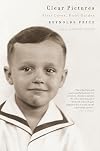
Near the end of this memoir of his childhood, Reynolds Price reminds us that "no human being sees much" -- which only heightens our need for a gifted author to create those "clear pictures" of the title. The young Reynolds struggled to find a way to paint them -- first through art, then music, then photography. Eventually -- in part because of the countless stories he'd listened to as a boy -- and because he was blessed with several remarkable teachers who encouraged his love of words -- but show more mostly because of his own passion and determination to give us those pictures -- he became a writer.
In this book, Price turns the illuminating light of his prose on major influences of his boyhood: parents, relatives, teachers, friends, heroes. Born in North Carolina in 1933, Reynolds was fortunate to spend part of each summer with his Aunt Ida, a woman fighting her own quiet battle against melancholia, and in her home he was given the blessed gift of solitude -- time in which a boy might explore, dream, create, read, draw, plan, stare at the wall, or sit for long periods beside his aunt on her front-porch swing, perhaps listening to others tell old family stories, but more often simply enjoying the quiet, a blessed gift for both aunt and nephew.
There was much for the boy to wonder about: his father's struggle with alcohol, his own confusion about the nature of God, and, all around him in the South, racism. How could people he respected and loved -- people he knew were decent and kind in every other way -- be so blind to the evil they were doing? The story of his father's friendship with a black man named Grant Terry is poignant and haunting.
As I read this book, there were times when I grew impatient with Price's telling of his story -- his need to examine every thread in the tapestry -- and I would start to skim or even skip over a section. But then I would remember that sometimes you just have to trust a writer -- and, after all, this was a writer I'd trusted for much of my adult life and that trust had always been richly rewarded -- so I decided I could do no less now, especially with this most personal of stories. Then I would imagine myself sitting in the swing beside Aunt Ida and falling into the rhythm of Reynolds' storytelling and often I would find myself -- without realizing it at first -- reading those glorious sentences out loud -- and I'd smile, because whenever that happens to me, it is a sign to me that the author is telling it straight, getting it right, making it clear. show less
In this book, Price turns the illuminating light of his prose on major influences of his boyhood: parents, relatives, teachers, friends, heroes. Born in North Carolina in 1933, Reynolds was fortunate to spend part of each summer with his Aunt Ida, a woman fighting her own quiet battle against melancholia, and in her home he was given the blessed gift of solitude -- time in which a boy might explore, dream, create, read, draw, plan, stare at the wall, or sit for long periods beside his aunt on her front-porch swing, perhaps listening to others tell old family stories, but more often simply enjoying the quiet, a blessed gift for both aunt and nephew.
There was much for the boy to wonder about: his father's struggle with alcohol, his own confusion about the nature of God, and, all around him in the South, racism. How could people he respected and loved -- people he knew were decent and kind in every other way -- be so blind to the evil they were doing? The story of his father's friendship with a black man named Grant Terry is poignant and haunting.
As I read this book, there were times when I grew impatient with Price's telling of his story -- his need to examine every thread in the tapestry -- and I would start to skim or even skip over a section. But then I would remember that sometimes you just have to trust a writer -- and, after all, this was a writer I'd trusted for much of my adult life and that trust had always been richly rewarded -- so I decided I could do no less now, especially with this most personal of stories. Then I would imagine myself sitting in the swing beside Aunt Ida and falling into the rhythm of Reynolds' storytelling and often I would find myself -- without realizing it at first -- reading those glorious sentences out loud -- and I'd smile, because whenever that happens to me, it is a sign to me that the author is telling it straight, getting it right, making it clear. show less

Kate Vaiden is one of the least sympathetic heroines I have fallen in love with since Scarlett O'Hara. Her own brand of selfishness results from a feeling that she is responsible for bad things (including death) happening to everyone she gets close to, starting with her parents. The story is told in her voice, with scarcely any emotional overtone, despite the circumstances of her life, ranging from the mildly disturbing to the downright horrific. From time to time, beginning in her middle show more teens, Kate just abandons her life and the people in it (many of whom she seems to love until she quits them), and starts over. This includes leaving behind her "saint" of an aunt, her beloved horse, and later her infant son. We discover at the end that her purpose in telling her story at the age of 57 is to give it to her son, now a successful grown man she hasn't seen in 40 years. We have to wonder how he will take it, since other people throughout her life have not reacted well to hearing the details. Sometimes her family and friends draw her back, and sometimes they push her onward or reject her outright. She never feels sorry for herself, so I never felt sorry for her either, although I wanted to. show less
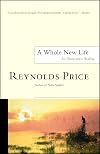
This is an achingly painful memoir of North Carolina writer Reynolds Price's life and death/health and wholeness issues between 1984 and 1994. From a dragging foot to finding a 10 inch long malignant tumor intertwined in his spinal cord, through radiation, excrutiating pain, paralysis, paraplegia and upwards to hope, renewed faith, and increasing professional output and creative success, Price minces no words, leaves no emotions or reactions uncovered, and reaches and shares some remarkable show more conclusions. The title, A Whole New Life is wonderfully apt and the subtitle, An Illness and a Healing, traces a remarkable recovery of a surprising sort. show less
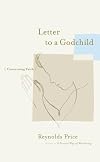
Price was a critically esteemed novelist and longtime Duke University professor, but more interestingly to me he wrote several books in his later decades of life sharing his religious experiences and beliefs. He had an individualist approach to a form of liberal Christianity deeply informed by a handful of mystical experiences with the divine which he was not embarrassed to write about, perhaps something of a surprise given his social and academic position.
In this slim but extremely rich show more volume Price is writing to his godson in hopes of providing him with something useful to consult as part of his own future spiritual life. This may seem odd given that he writes here that he is possessed of the suspicion that written arguments are useless in transmitting faith; that faith must be personally experienced, with a generally popularly unacknowledged necessity of God actively bringing a person closer to Him, which He does not always seem to do (though figures such as Aquinas, Calvin, Kierkegaard, and Barth are said to discuss this).
Nevertheless, Price shares his own experiences and beliefs that evolved from them. He writes of being six or seven years old when
Price goes on to talk about his journey in a personal sort of faith as he grew up, eschewing a church community, feeling more comfort in an empty church or alone in nature. He counsels against an "unadmirable appetite for display [that] was part of formal worship", not connecting it with Matthew 6:5-6 (do not pray in public like the hypocrites to be seen, but in private... if I may paraphrase) but a clear echo. He admits that finding a church home is not necessarily bad and may provide good, but clearly be wary of being led astray by an organized group of people claiming to speak in God's name. His suspicion of churches likely grows out of seeing the white Southern churches in operation during Jim Crow days, but is still an interesting perspective. He does not however attempt to wrestle with how one can be a "Christian in isolation" in what is really a strongly communitarian faith.
He counsels his godson to stick to and grow in the faith tradition he was given. He writes that there was nothing in his visions communicating that Christianity is the only or approved way to approach the Creator, and other faith traditions are of equal value and worth, but that it is best to approach the divine through the stories and traditions of one's birth.
He discusses the relationship of his beliefs to his career. Mostly he tried to keep them separate, both because of his idiosyncratic approach to his faith and because he didn't want to scare off those for whom talk of Jesus, God, Christianity is off-putting. But that the moral values of his faith, especially the compassion demonstrated by Jesus, has been the bedrock of his career.
Famously recounted in more depth elsewhere, Price was diagnosed with spinal cancer at 51. A surgery was unsuccessful, and was followed by radiation treatments that largely defeated the cancer but left him paralyzed from the waist down and in constant pain the rest of his life. Between the surgery and radiation he had another astonishing vision.
Fascinating stuff.
To his godson, he cannot promise any such experiences. And he doubts the ability of written accounts to transmit faith either. Nevertheless he hopes his godson will be a curious seeker, and to that end recommends a good amount of reading, including of course the ancient Hebrew and Christian texts, as well as Aquinas and St. Francis of Assisi, and exploration among the great religious painters and composers of later ages (Gorecki, Pärt, etc.). And to begin trying to talk to God, out loud (though not around others, you might be dragged off). Listen for answers. And if they come, examine them with great care. show less
In this slim but extremely rich show more volume Price is writing to his godson in hopes of providing him with something useful to consult as part of his own future spiritual life. This may seem odd given that he writes here that he is possessed of the suspicion that written arguments are useless in transmitting faith; that faith must be personally experienced, with a generally popularly unacknowledged necessity of God actively bringing a person closer to Him, which He does not always seem to do (though figures such as Aquinas, Calvin, Kierkegaard, and Barth are said to discuss this).
Nevertheless, Price shares his own experiences and beliefs that evolved from them. He writes of being six or seven years old when
In brief, in a single full moment, I was allowed to see how intricately the vast contraption of nature all round me - and nature included me, my parents a few yards away in the house, all the animal life in the dense surroundings, and every other creature alive on Earth - was bound into a single vast ongoing wheel by one immense power that had willed us into being and intended our futures, wherever they might lead through the pattern, the enormous intricately woven pattern somehow bound at the rim and cohering for as long as the Creator willed it... At my age then, of course, I couldn't have conceived a thing of such perfect complexity on my own; nor could I have described the gift I'd received in any such words. But memory tells me that the description is honest.And here I think of a curious French book by the 20th Century French journalist and intellectual Andre Frossard called Dieu existe, je L'ai rencontré. Frossard, an incurious atheist, writes about being a young adult and walking into a chapel one day looking for a friend and suddenly, in an instant, being given an astonishing vision of God and of an ordered universe with purpose. One minute, atheist, the next, stunned convert. Price here recounts something quite similar. I'm fascinated by these stories, and immensely curious about them.
Price goes on to talk about his journey in a personal sort of faith as he grew up, eschewing a church community, feeling more comfort in an empty church or alone in nature. He counsels against an "unadmirable appetite for display [that] was part of formal worship", not connecting it with Matthew 6:5-6 (do not pray in public like the hypocrites to be seen, but in private... if I may paraphrase) but a clear echo. He admits that finding a church home is not necessarily bad and may provide good, but clearly be wary of being led astray by an organized group of people claiming to speak in God's name. His suspicion of churches likely grows out of seeing the white Southern churches in operation during Jim Crow days, but is still an interesting perspective. He does not however attempt to wrestle with how one can be a "Christian in isolation" in what is really a strongly communitarian faith.
He counsels his godson to stick to and grow in the faith tradition he was given. He writes that there was nothing in his visions communicating that Christianity is the only or approved way to approach the Creator, and other faith traditions are of equal value and worth, but that it is best to approach the divine through the stories and traditions of one's birth.
He discusses the relationship of his beliefs to his career. Mostly he tried to keep them separate, both because of his idiosyncratic approach to his faith and because he didn't want to scare off those for whom talk of Jesus, God, Christianity is off-putting. But that the moral values of his faith, especially the compassion demonstrated by Jesus, has been the bedrock of his career.
Famously recounted in more depth elsewhere, Price was diagnosed with spinal cancer at 51. A surgery was unsuccessful, and was followed by radiation treatments that largely defeated the cancer but left him paralyzed from the waist down and in constant pain the rest of his life. Between the surgery and radiation he had another astonishing vision.
It's enough to say here that I was half-upright in my bed; then suddenly without apparent transport - and I was certainly not dreaming - I was lying on the stony shore of a huge lake. I knew at once that I was by the Sea of Galilee (Lake Kinnereth, as it's called in modern Israel) and in a moment, a man whom I knew to be Jesus had silently beckoned me into the water with him.
In another moment - still silent - he was washing the foot-long wound from the failed surgery that had gouged for hours deep into my spinal cord; that wound was also the proposed site of my weeks of radiation. At last Jesus spoke, only a four-word sentence - "Your sins are forgiven." But nearly overwhelmed as I'd been by a month of surgery and the discouraging aftermath, I pushed onward for the answer I most wanted - "Am I also healed?" As if I'd forced it from him, he said only "That too."... The experience ended there as inexplicably as it came. It had been nonetheless a long moment as vivid as any other in my life - and as undeniable in its force.
My conviction, more than twenty years after that second vision, is that the experience was in some crucial sense real. In a human action that apparently lasted no longer than two minutes, I was essentially healed. By healed I mean that I was repaired in the sense that a man I had every reason to trust had guaranteed me a long stretch of ongoing vigorous existence. The fact that my legs were subsequently paralyzed by twenty-five X-ray treatments... was a mere complexity in the ongoing narrative which God intended me to make of my life.
Fascinating stuff.
To his godson, he cannot promise any such experiences. And he doubts the ability of written accounts to transmit faith either. Nevertheless he hopes his godson will be a curious seeker, and to that end recommends a good amount of reading, including of course the ancient Hebrew and Christian texts, as well as Aquinas and St. Francis of Assisi, and exploration among the great religious painters and composers of later ages (Gorecki, Pärt, etc.). And to begin trying to talk to God, out loud (though not around others, you might be dragged off). Listen for answers. And if they come, examine them with great care. show less
Lists
Awards


You May Also Like


Associated Authors
Statistics
- Works
- 67
- Also by
- 29
- Members
- 4,567
- Popularity
- #5,507
- Rating
- 4.0
- Reviews
- 60
- ISBNs
- 165
- Languages
- 6
- Favorited
- 18