
Clyde Edgerton
Author of Walking across Egypt
About the Author
Clyde Edgerton was born on May 20, 1944 in Durham, North Carolina. He received a B.A. in English education in 1966, a M.A.T. in English education in 1972, and a Ph.D in curriculum and instruction in 1977, all from the University of North Carolina, Chapel Hill. He teaches creative writing at the show more University of North Carolina, Wilmington. Hi first novel, Raney, was published in 1985. His other novels include Walking Across Egypt, Killer Diller, Where Trouble Sleeps, Lunch at the Piccadilly, The Bible Salesman, and The Night Train. He has also written a book of advice entitled Papadaddy's Book for New Fathers and a memoir entitled Solo, My Adventures in the Air. He has received several awards including the Lyndhurst Prize and the North Carolina Award for Literature. (Bowker Author Biography) show less
Works by Clyde Edgerton
Understanding The Floatplane 1 copy
Associated Works
Best of the South: From the Second Decade of New Stories from the South (2005) — Contributor — 52 copies
The Good Book: Writers Reflect on Favorite Bible Passages (2015) — Contributor — 44 copies, 3 reviews
Christmas in the South: Holiday Stories from the South's Best Writers (2004) — Contributor — 31 copies, 1 review
Tagged
Common Knowledge
- Birthdate
- 1944-05-20
- Gender
- male
- Education
- University of North Carolina, Chapel Hill
- Occupations
- US Air Force Fighter Pilot
High school English teacher - Organizations
- Fellowship of Southern Writers
- Nationality
- USA
- Places of residence
- Durham, North Carolina, USA
- Associated Place (for map)
- North Carolina, USA
Members
Discussions
Clyde Edgerton banned from public school property: the insidious nature of institutionalized racism in Pro and Con (June 2016)
Reviews
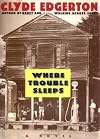
In Listre, North Carolina, in 1950, life is centered around the Baptist church where salvation is as easy as walking down the aisle, and/or Train's place, where you can buy a cold beer to drink while you wait for your oil change or just set a spell. The state highway does pass through, and there's that blinker light at the intersection now, since that awful mule/truck collision that almost crippled Train. But his old bulldog, Trouble, still sleeps in the middle of the road, unless rain is show more coming. Occasionally somebody from somewhere else stops in town and upsets people, but outsiders should know that even harmless little old ladies keep loaded shotguns handy, and "trouble" isn't just some gimpy old dog. This was fun, although I've enjoyed other Edgertons more. He has a dark humor that I really appreciate, and he can lacerate a hypocrite with such compassion that they feel loved. show less

Clyde Edgerton is superb! His witty portrayal of characters and storylines precisely express the South's culture and zeitgeist regardless of historical period. The tentative friendships between whites and blacks and the beginnings of white appreciation for black music, both constrained by the sense of threat that civil rights activism posed for whites, are subtly yet clearly revealed. It is music that provides a central storyline told with quiet irony, while subplots expand the theme. A show more particularly resonant passage refers to the greater ease whites felt with blacks (and perhaps vice versa) prior to the civil rights movement - yet it was an unquestionably false ease that had to be erased to attain a truly equal relationship between the races. (Despite the book's upbeat conclusion, that equal relationship remains in large part a dream not only in North Carolina but throughout the country.) The teenage protagonists make this an excellent candidate for YA book discussions or individual recommendation. show less

The burial of the cat toward the beginning of the book is well worth the price of admission (David Sedaris gives a plug for the "burial tuck" on the cover of the book). It's not often that words on a page make me laugh at loud, but Edgerton is one of the folks who can do it (Sedaris is another). Add to that the character of the Bible salesman who muses on the disturbing inconsistencies of the Scriptures he's hawking and...well...I'm sold!
The burial of the cat toward the beginning of the book is well worth the price of admission (David Sedaris gives a plug for the "burial tuck" on the cover of the book). It's not often that words on a page make me laugh at loud, but Edgerton is one of the folks who can do it (Sedaris is another). Add to that the character of the Bible salesman who muses on the disturbing inconsistencies of the Scriptures he's hawking and...well...I'm sold!
Lists
Southern Fiction (5)
Carole's List (3)
Awards


You May Also Like


Associated Authors
Statistics
- Works
- 18
- Also by
- 12
- Members
- 3,882
- Popularity
- #6,524
- Rating
- 3.6
- Reviews
- 92
- ISBNs
- 110
- Languages
- 1
- Favorited
- 19