
Jill McCorkle
Author of Life after Life
About the Author
Five of Jill McCorkle's seven previous books have been named New York Times Notable Books. Winner of the New England Book Award, the John Dos Passos Award for Literature, and the North Carolina Award for Literature, she lives near Boston with her husband, their two children, several dogs, and a show more collection of toads. show less
Image credit: Tom Rankin
Works by Jill McCorkle
Associated Works
My Bookstore: Writers Celebrate Their Favorite Places to Browse, Read, and Shop (2012) — Contributor — 621 copies, 16 reviews
These United States: Original Essays by Leading American Writers on Their State within the Union by John Leonard (1995) — Contributor — 102 copies, 1 review
Best of the South: From the Second Decade of New Stories from the South (2005) — Contributor — 52 copies
Money Changes Everything: Twenty-Two Writers Tackle the Last Taboo with Tales of Sudden Windfalls, Staggering Debts, and (2007) — Contributor — 51 copies, 1 review
Christmas in the South: Holiday Stories from the South's Best Writers (2004) — Contributor — 31 copies, 1 review
It's Only Rock and Roll: An Anthology of Rock and Roll Short Stories (1998) — Contributor — 24 copies
Tagged
Common Knowledge
- Legal name
- McCorkle, Jill Collins
- Birthdate
- 1958-07-07
- Gender
- female
- Education
- University of North Carolina
Hollins College - Occupations
- short story writer
novelist - Organizations
- Fellowship of Southern Writers
- Awards and honors
- John Dos Passos Prize (2000)
- Nationality
- USA
- Birthplace
- Lumberton, North Carolina, USA
- Associated Place (for map)
- North Carolina, USA
Members
Reviews
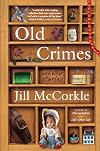
Written with wisdom, much emotional depth and insight, the stories in Old Crimes: and Other Stories by Jill McCorkle depict how secrets, mistakes, and regrets can leave an indelible impact on the human psyche and relationships. Despite the short length of each of these stories, they are emotionally heavy reads that inspire pause and reflection.
In the first story, ” Old Crimes” (4.5/5), we meet a high school teacher who ruminates on her memories of a trip to New Hampshire from decades show more ago when she was a college student. Her encounter with a six-year-old girl in the run-down inn where she was staying prompted her to think about her own expectations from life and influenced her perception of cruelty and evil in the world -thoughts that have remained with her through the years. “The Lineman”(4.5/5) revolves around a telephone lineman who tries to come to terms with how human connections and relationships have been impacted by dependence on technology and digitization. He regrets his failed relationships and struggles to hold on to those he holds dear, hoping that one day, when all technology fails, he will be appreciated for his skills. A woman experiences much regret over her inability to speak up for herself or her son as she reflects on the forty years, she has spent in an abusive marriage to a man who was loved and admired by everyone in town in “Low Tones”(5/5). In “Commandments” (5/5), we follow a group of women, a “self-help group of sorts”, each of whom was romantically involved with and dumped by the same man. Their interactions with the strong-willed waitress who serves them in the café where they meet once a month, inspire them to take stock of their lives and reevaluate their priorities.
Our protagonist in “Swinger”(4/5) is grappling with the recent loss of the man with whom she had been in a live-in relationship for the past three years. As she prepares to vacate the home they shared, a box of photographs she finds among his belongings seems to deepen her insecurities, prompting her to question the depth of his commitment to her. In “A Simple Question”(4/5) a woman reflects on her friendship with her older colleague, a woman twice her age, from twenty-five years ago and how own insensitivity and immaturity contributed to their drifting apart. In “Baby in the Pan”(4.5/5) we meet a young mother whose choices cause friction with own her mother, who harbors painful childhood memories. A man rents a room in his late grandparents' former home which is now a gas station when he visits his hometown to visit his dying high school shop teacher in “Filling Station”(4/5) but his attempts to surround himself with happy memories from his childhood for his peace of mind don’t quite go according to plans.
A young couple purchases an old confessional from an antique shop unprepared for the awkward and uncomfortable situations that arise from what was intended to be a source of entertainment among their friends in “Confessional”(5/5). We meet a retired elementary school librarian who does not back down from expressing her opinions and holds her own in her crusade against several social issues in “The Last Station." (4.5/5) A holiday gathering with her adult children and their families brings back memories of the years gone by for a retired high school drama teacher as she contemplates sharing news of her failing health in “Act III”.(5/5) While attending her son’s Little League matches, a young newly divorced mother of two is befriended an elderly woman who shares stories about the town in the aftermath of a recent tragedy, in ”Sparrow”. (4.5/5)
In turn, profoundly insightful, heartbreaking yet reflective and thought-provoking, these stories explore the human condition through complex yet real and relatable characters in various stages of life. The common thread among these stories is deep-rooted sorrow, loneliness and the desire for human connection, the life changing consequences of the choices people make and the emotions they choose to internalize – voluntarily or otherwise – the “crimes’’ they commit toward oneself and those they hold dear. Few of the characters appear in more than one story, allowing us to explore their character arcs from different vantage points. The tone of these stories ranges from melancholic to nostalgic and contemplative, though there are some moments of humor to be within the pages as well . Overall, I found this to be an impactful and exceptionally well-written collection of short stories that I would not hesitate to recommend this collection to those who enjoy character-driven short fiction.
Many thanks to Algonquin Books for both the digital review copy via NetGalley and the physical ARC. All opinions expressed in this review are my own. This book was published on January 9, 2024. show less
In the first story, ” Old Crimes” (4.5/5), we meet a high school teacher who ruminates on her memories of a trip to New Hampshire from decades show more ago when she was a college student. Her encounter with a six-year-old girl in the run-down inn where she was staying prompted her to think about her own expectations from life and influenced her perception of cruelty and evil in the world -thoughts that have remained with her through the years. “The Lineman”(4.5/5) revolves around a telephone lineman who tries to come to terms with how human connections and relationships have been impacted by dependence on technology and digitization. He regrets his failed relationships and struggles to hold on to those he holds dear, hoping that one day, when all technology fails, he will be appreciated for his skills. A woman experiences much regret over her inability to speak up for herself or her son as she reflects on the forty years, she has spent in an abusive marriage to a man who was loved and admired by everyone in town in “Low Tones”(5/5). In “Commandments” (5/5), we follow a group of women, a “self-help group of sorts”, each of whom was romantically involved with and dumped by the same man. Their interactions with the strong-willed waitress who serves them in the café where they meet once a month, inspire them to take stock of their lives and reevaluate their priorities.
Our protagonist in “Swinger”(4/5) is grappling with the recent loss of the man with whom she had been in a live-in relationship for the past three years. As she prepares to vacate the home they shared, a box of photographs she finds among his belongings seems to deepen her insecurities, prompting her to question the depth of his commitment to her. In “A Simple Question”(4/5) a woman reflects on her friendship with her older colleague, a woman twice her age, from twenty-five years ago and how own insensitivity and immaturity contributed to their drifting apart. In “Baby in the Pan”(4.5/5) we meet a young mother whose choices cause friction with own her mother, who harbors painful childhood memories. A man rents a room in his late grandparents' former home which is now a gas station when he visits his hometown to visit his dying high school shop teacher in “Filling Station”(4/5) but his attempts to surround himself with happy memories from his childhood for his peace of mind don’t quite go according to plans.
A young couple purchases an old confessional from an antique shop unprepared for the awkward and uncomfortable situations that arise from what was intended to be a source of entertainment among their friends in “Confessional”(5/5). We meet a retired elementary school librarian who does not back down from expressing her opinions and holds her own in her crusade against several social issues in “The Last Station." (4.5/5) A holiday gathering with her adult children and their families brings back memories of the years gone by for a retired high school drama teacher as she contemplates sharing news of her failing health in “Act III”.(5/5) While attending her son’s Little League matches, a young newly divorced mother of two is befriended an elderly woman who shares stories about the town in the aftermath of a recent tragedy, in ”Sparrow”. (4.5/5)
In turn, profoundly insightful, heartbreaking yet reflective and thought-provoking, these stories explore the human condition through complex yet real and relatable characters in various stages of life. The common thread among these stories is deep-rooted sorrow, loneliness and the desire for human connection, the life changing consequences of the choices people make and the emotions they choose to internalize – voluntarily or otherwise – the “crimes’’ they commit toward oneself and those they hold dear. Few of the characters appear in more than one story, allowing us to explore their character arcs from different vantage points. The tone of these stories ranges from melancholic to nostalgic and contemplative, though there are some moments of humor to be within the pages as well . Overall, I found this to be an impactful and exceptionally well-written collection of short stories that I would not hesitate to recommend this collection to those who enjoy character-driven short fiction.
Many thanks to Algonquin Books for both the digital review copy via NetGalley and the physical ARC. All opinions expressed in this review are my own. This book was published on January 9, 2024. show less
Women and their discontents
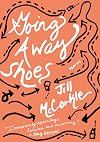
Jill McCorkle’s Going Away Shoes concentrates on the plight of mostly middle-aged women struggling with the consequences of their flawed relationships. McCorkle is an acute observer of the foibles of domestic life, and in stories like the title tale, in which a woman is yoked to her dying mother as a caretaker while her younger sisters carp at her from a distance, or “Surrender,” where a grandmother must suffer the childish cruelty of her late son’s show more five-year-old daughter, she blends empathy for her characters’ predicaments with an unsparing take on those grim circumstances.
Still, McCorkle’s stories don’t lack for humor, as in “Midnight Clear,” where a single mother gets a new outlook on life from a septic tank philosopher who answers her distress call on Christmas Eve, or “PS,” a sardonic farewell letter from a woman to her family therapist.
The collection builds to a powerful climax in “Driving to the Moon,” as former lovers reunite while one faces death from cancer, and “Magic Words,” which features interwoven narratives of a married woman about to embark on an affair, a troubled teenage girl and a retired school teacher. Both stories are impressive demonstrations of McCorkle’s ability to infuse short fiction with an almost novelistic scope.
Copyright 2009 ProMotion, Inc. show less
Jill McCorkle’s Going Away Shoes concentrates on the plight of mostly middle-aged women struggling with the consequences of their flawed relationships. McCorkle is an acute observer of the foibles of domestic life, and in stories like the title tale, in which a woman is yoked to her dying mother as a caretaker while her younger sisters carp at her from a distance, or “Surrender,” where a grandmother must suffer the childish cruelty of her late son’s show more five-year-old daughter, she blends empathy for her characters’ predicaments with an unsparing take on those grim circumstances.
Still, McCorkle’s stories don’t lack for humor, as in “Midnight Clear,” where a single mother gets a new outlook on life from a septic tank philosopher who answers her distress call on Christmas Eve, or “PS,” a sardonic farewell letter from a woman to her family therapist.
The collection builds to a powerful climax in “Driving to the Moon,” as former lovers reunite while one faces death from cancer, and “Magic Words,” which features interwoven narratives of a married woman about to embark on an affair, a troubled teenage girl and a retired school teacher. Both stories are impressive demonstrations of McCorkle’s ability to infuse short fiction with an almost novelistic scope.
Copyright 2009 ProMotion, Inc. show less

Lil and Frank move south from their Boston home to be closer to their grown daughter, Becca - and they are also close to the site of the train crash that killed Frank's father when Frank was a boy. Shelley and her young son Harvey live in the house where Frank finished growing up, with his mother and younger brother and stepfather; Shelley works as a court transcriptionist, and Harvey is troubled by the details of the cases she hears and tales from his older brother. Frank wants to see show more inside his old house and find out whether the small cache of treasures he left there remain, but Shelley - who survived a violent upbringing - is wary and won't let him in. Lil, meanwhile, sifts through years of notes-to-self and newspaper clippings and memories as she writes to her daughter and son.
Each of the adults in the story - Lil, Frank, and Shelley - were formed by the traumatic death of a parent (Lil's mother died in the infamous Cocoanut Grove fire) - and their personalities formed in response, seeking stability and safety.
Quotes
We are all haunted by something - something we did or didn't do - and the passing years either add to the weight or diminish it. (Lil, 9)
...even though people are rarely appreciate for the right thing at the right time. (Lil, 33)
It seems, since the very beginning of time, people have been preparing for the end. (Lil, 111)
The knowledge and experience of tragedy groaned and heaved like an old furnace in the basement - and ultimately, sent waves of warmth that radiated and lit the good parts. (Frank, 131)
..and so she actively seeks ways to distract herself so she won't feel afraid, something she learned to do a long time ago... (Shelley, 155)
Shelley has always been hopeful, which is surprising, given her life; she is so hopeful, in fact, that a lot of people might think it's stupid....Perhaps this optimism is what sees her through. (193)
...there is nothing cheaper and more superficial than someone unauthorized stealing and using another's pet name. (Lil, 200)
People say hearts get broken all the time. They say people die all the time. But what does that help? What does that even do, other than attempt to diminish the emotions at hand....I suspect...that there have been times in my attempt to make you feel better you might have felt I was slighting your pain. (Lil, 202)
He wonders where my memory has gone, and I keep saying it's not that it has gone but simply that I have run out of space. I have filled every nook and cranny with things I wish I could now box up and store elsewhere... (Lil, 258)
It is possible that there can be one thing in your life that you never stop working on. (Lil, 260)
People don't get stolen. People leave. They make choices, and choices have consequences. (Lil, 269)
As parents, we pack your bags and strap them to your little backs before you are even old enough to carry them, and then you have to spend the rest of your life unpacking and figuring it all out. (Lil, 270)
I suppose some of us have to see the edge before we understand how good it all is, and then if lucky, you still have time on the other side. (Lil, 274) show less
Each of the adults in the story - Lil, Frank, and Shelley - were formed by the traumatic death of a parent (Lil's mother died in the infamous Cocoanut Grove fire) - and their personalities formed in response, seeking stability and safety.
Quotes
We are all haunted by something - something we did or didn't do - and the passing years either add to the weight or diminish it. (Lil, 9)
...even though people are rarely appreciate for the right thing at the right time. (Lil, 33)
It seems, since the very beginning of time, people have been preparing for the end. (Lil, 111)
The knowledge and experience of tragedy groaned and heaved like an old furnace in the basement - and ultimately, sent waves of warmth that radiated and lit the good parts. (Frank, 131)
..and so she actively seeks ways to distract herself so she won't feel afraid, something she learned to do a long time ago... (Shelley, 155)
Shelley has always been hopeful, which is surprising, given her life; she is so hopeful, in fact, that a lot of people might think it's stupid....Perhaps this optimism is what sees her through. (193)
...there is nothing cheaper and more superficial than someone unauthorized stealing and using another's pet name. (Lil, 200)
People say hearts get broken all the time. They say people die all the time. But what does that help? What does that even do, other than attempt to diminish the emotions at hand....I suspect...that there have been times in my attempt to make you feel better you might have felt I was slighting your pain. (Lil, 202)
He wonders where my memory has gone, and I keep saying it's not that it has gone but simply that I have run out of space. I have filled every nook and cranny with things I wish I could now box up and store elsewhere... (Lil, 258)
It is possible that there can be one thing in your life that you never stop working on. (Lil, 260)
People don't get stolen. People leave. They make choices, and choices have consequences. (Lil, 269)
As parents, we pack your bags and strap them to your little backs before you are even old enough to carry them, and then you have to spend the rest of your life unpacking and figuring it all out. (Lil, 270)
I suppose some of us have to see the edge before we understand how good it all is, and then if lucky, you still have time on the other side. (Lil, 274) show less
You have to swoon over a character who has quotes from Charlotte’s Web tattooed on her arm, whose life was changed by a book read by a librarian.
The characters in these stories are humanely rendered with great sympathy and insight. They make you laugh and bring tears.
There is the sister who sticks a needle into her brother’s condoms because she wants his girlfriend as a sister-in-law. And the mother who considers her gathered family and imagines a Rod Serling voiceover narrating the show more truth she is hiding from them.
Life is filled with unsolved mysteries, crimes unsolved, innocent people sacrificed, a young woman thinks. A lineman recalls learning his ‘sister’ was really his mother as he dwells on the tenuous lines of communication. A man esteemed by the community is abusive behind closed doors. Women gather in spiteful gossip sessions to trash the man who dumped them.
With complex and relatable characters and conjuring emotions from laughter to sadness, I loved these stories.
Thanks to the publisher for a free book. show less
The characters in these stories are humanely rendered with great sympathy and insight. They make you laugh and bring tears.
There is the sister who sticks a needle into her brother’s condoms because she wants his girlfriend as a sister-in-law. And the mother who considers her gathered family and imagines a Rod Serling voiceover narrating the show more truth she is hiding from them.
Life is filled with unsolved mysteries, crimes unsolved, innocent people sacrificed, a young woman thinks. A lineman recalls learning his ‘sister’ was really his mother as he dwells on the tenuous lines of communication. A man esteemed by the community is abusive behind closed doors. Women gather in spiteful gossip sessions to trash the man who dumped them.
With complex and relatable characters and conjuring emotions from laughter to sadness, I loved these stories.
Thanks to the publisher for a free book. show less
Lists
Awards


You May Also Like


Associated Authors
Statistics
- Works
- 19
- Also by
- 24
- Members
- 2,194
- Popularity
- #11,693
- Rating
- 3.6
- Reviews
- 155
- ISBNs
- 82
- Languages
- 3
- Favorited
- 4


