
Ellen Gilchrist (1935–2024)
Author of Victory over Japan: A Book of Stories
About the Author
She is the author of 16 works of fiction, including the story collection Victory Over Japan, which won the National Book Award & most recently, The Cabal & Other Stories. She lives in Fayetteville, Arkansas, Ocean Springs, Mississippi & New Orleans, Louisiana. (Bowker Author Biography)
Series
Works by Ellen Gilchrist
Associated Works
The Bitch in the House: 26 Women Tell the Truth About Sex, Solitude, Work, Motherhood, and Marriage (2002) — Contributor — 736 copies, 20 reviews
Growing Up in the South: An Anthology of Modern Southern Literature (1991) — Contributor — 165 copies, 1 review
More Stories We Tell: The Best Contemporary Short Stories by North American Women (2004) — Contributor — 66 copies
The Magazine of Fantasy and Science Fiction June 1995, Vol. 88, No. 6 (1995) — Author - Black Winter — 22 copies
Tagged
Common Knowledge
- Legal name
- Gilchrist, Ellen Louise
- Birthdate
- 1935-02-20
- Date of death
- 2024-01-30
- Gender
- female
- Education
- Vanderbilt University
Millsaps College (BA | English)
University of Arkansas (Mx | English) - Occupations
- novelist
short story writer
poet - Organizations
- University of Arkansas, Fayetteville
- Nationality
- USA
- Birthplace
- Vicksburg, Mississippi, USA
- Places of residence
- Vicksburg, Mississippi, USA
Hopedale Plantation, Issaquena County, Mississippi, USA
Courtland, Alabama, USA
Fayetteville, Arkansas, USA
New Orleans, Louisiana, USA
Ocean Springs, Mississippi, USA - Place of death
- Ocean Springs, Mississippi, USA
- Associated Place (for map)
- USA
Members
Reviews

Fourteen years went by and the Wilsons' luck held. Fourteen years is a long time to stay lucky even for rich people who don't cause trouble for anyone.
I went through it with this short story collection written by Ellen Gilchrist and first published in 1981. I began the collection and was quickly enamored of the voice; it's like Flannery O'Connor and Dorothy Parker were collaborating to have the most terrible things happen to cruel and thoughtless people. And slowly, sometime around the show more fourth or fifth use of the n-word, I felt qualms. 'Maybe Gilchrist is just really committed to using the words her characters, white people living in the South in the 1970s, would have used?' I rationalized, and maybe? It shows up as a descriptive term used by the omniscient narrator as well, so I will say that perhaps some short stories age better than others and there's a reason she isn't much read nowadays. And about the fourth or fifth short story I started to get tired of bad things happening to bad and careless people.
Then, two-thirds through this book about mean people the author clearly disliked, something extraordinary happened. I reached Revenge, a longer short story in which a girl is sent to spend the summer of 1942 in the South with her grandparents and her cousins, all boys, who exclude her from their project of becoming Olympic athletes. She is enraged by their behavior.
I prayed they would get polio, would be consigned forever to iron lungs. I put myself to sleep at night imagining their labored breathing, their five little wheelchairs lined up by the store as I drove by in my father's Packard, my arm around the jacket of his blue uniform, on my way to Hollywood for my screen test.
Rhoda is not exactly a sympathetic character, but Gilchrist here takes the time to inhabit her life so that I understood her frustration with being stuck inside when she really needed to run around outside. It's a great story with a fantastic ending, one that fully respects who Rhoda is. A perfect story and one I don't think I will soon forget. And, in the stories that follow, Gilchrist continues to excel, each story centering a girl unable to conform to what's expected, while still fully inhabiting the prejudices and expectations of her time and place. It's superbly well done.
How to reconcile a book of stories that have aged badly, but that include some brilliant stories? I have no idea. show less
I went through it with this short story collection written by Ellen Gilchrist and first published in 1981. I began the collection and was quickly enamored of the voice; it's like Flannery O'Connor and Dorothy Parker were collaborating to have the most terrible things happen to cruel and thoughtless people. And slowly, sometime around the show more fourth or fifth use of the n-word, I felt qualms. 'Maybe Gilchrist is just really committed to using the words her characters, white people living in the South in the 1970s, would have used?' I rationalized, and maybe? It shows up as a descriptive term used by the omniscient narrator as well, so I will say that perhaps some short stories age better than others and there's a reason she isn't much read nowadays. And about the fourth or fifth short story I started to get tired of bad things happening to bad and careless people.
Then, two-thirds through this book about mean people the author clearly disliked, something extraordinary happened. I reached Revenge, a longer short story in which a girl is sent to spend the summer of 1942 in the South with her grandparents and her cousins, all boys, who exclude her from their project of becoming Olympic athletes. She is enraged by their behavior.
I prayed they would get polio, would be consigned forever to iron lungs. I put myself to sleep at night imagining their labored breathing, their five little wheelchairs lined up by the store as I drove by in my father's Packard, my arm around the jacket of his blue uniform, on my way to Hollywood for my screen test.
Rhoda is not exactly a sympathetic character, but Gilchrist here takes the time to inhabit her life so that I understood her frustration with being stuck inside when she really needed to run around outside. It's a great story with a fantastic ending, one that fully respects who Rhoda is. A perfect story and one I don't think I will soon forget. And, in the stories that follow, Gilchrist continues to excel, each story centering a girl unable to conform to what's expected, while still fully inhabiting the prejudices and expectations of her time and place. It's superbly well done.
How to reconcile a book of stories that have aged badly, but that include some brilliant stories? I have no idea. show less
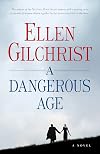
"I'm searching the dictionary every day for new words to talk about the things I can't stop thinking", writes Winifred, as she grapples with what to do, and what is right in Ellen Gilchrist’s A Dangerous Age. This phenomenally intense and complicated look at the lives of three American women and their families from 2001 to 2006 acts as both an intriguing story and cutting social commentary. This very relevant story of love and loss focuses on three cousins, Louise, Winifred and Olivia, who show more stoically and bravely navigate their lives forever changed by 9/11 and by the seeming endless conflicts in Iraq and Afghanistan. Newspaper editor Olivia rails against America’s ambivalence toward the war and the sacrifices of servicemen from her editorial job for the Tulsa World, and her articles become poignantly personal when the war touches her life very deeply. As daily tragic headlines continue to bombard her senses, Olivia is buoyed by her extended Cherokee clan, and many warm and supporting characters float in and out the fabric of the story, comforting each other through the inexplicable events that unfold. Cherokee culture permeates the the sparse dialogue, pacing and descriptions, and provides a window into a proud and strong culture. I found the common bond of the family, and their determination to carry on, do the hard work and the good deeds, to defend and challenge their nation in the patriot tradition, a very real depiction of the conflict felt by many Americans.
"A poet is a painter, giving us images so beautifully worded that they have the power to become engraved upon our hearts" writes Olivia about Robert Frost's poetry. The same can be said of Ellen Gilchrists' story, as she paints an unforgettable portrait of beautifully rich characters who endure, both in the story and in the reader's heart.
I heartily recommend this novel, though I suspect some may find the subject matter too timely or politically charged for their taste. My recommendation to the author is that if anything, the story could be longer. I wanted to spend more time with each of the cousins and their worlds, to allow more time for the various stories to seep in.
Editorial note:
The Mary Oliver poem should be included in the text if at all possible, to spare the reader from pausing to read its beautiful words. The typo on the last page needs to be corrected:
Pray that we care for them as we have promise that we would - should be promised.
Footnote: The Hand family is featured in other short stories and novellas by Ellen Gilchrist, which helps explain why the characters feel so comfortable - they have history. I look forward to reading previous books featuring Olivia and the cousins to help fill in my blanks. show less
"A poet is a painter, giving us images so beautifully worded that they have the power to become engraved upon our hearts" writes Olivia about Robert Frost's poetry. The same can be said of Ellen Gilchrists' story, as she paints an unforgettable portrait of beautifully rich characters who endure, both in the story and in the reader's heart.
I heartily recommend this novel, though I suspect some may find the subject matter too timely or politically charged for their taste. My recommendation to the author is that if anything, the story could be longer. I wanted to spend more time with each of the cousins and their worlds, to allow more time for the various stories to seep in.
Editorial note:
The Mary Oliver poem should be included in the text if at all possible, to spare the reader from pausing to read its beautiful words. The typo on the last page needs to be corrected:
Pray that we care for them as we have promise that we would - should be promised.
Footnote: The Hand family is featured in other short stories and novellas by Ellen Gilchrist, which helps explain why the characters feel so comfortable - they have history. I look forward to reading previous books featuring Olivia and the cousins to help fill in my blanks. show less
 This review was written for LibraryThing Early Reviewers.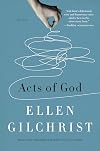
Ellen Gilchrist has long been considered one of our finest short story writers. And “Acts of God,” her latest story collection, is sure to reinforce her reputation and assure fans that Gilchrist is still very much at the top of her game. The characters in all ten of the book’s stories experience “acts of God” that will forever change – or, perhaps, end - their lives. Whether they suffer hurricane, tornado, flood, terrorist attack, or simply a new neighbor whose dogs never seem to show more stop barking, most of them manage to benefit from the experience. In fact, even those who die, do so on their own terms.
Two stories, “Toccata and Fugue in D Minor” and “The Dogs,” are particularly outstanding in the way they display the author’s wit and insight into the culture and gentry of the old South. Gilchrist is herself a product of the Mississippi Delta, and she knows her people well. “Toccata” tells of three middle-aged Vanderbilt sorority sisters traveling together to Italy for a much anticipated reunion. Comfortably settled in one of Heathrow’s first class lounges while waiting for their final flight connection, the women are suddenly caught up in an airport lockdown that threatens to scuttle their plans. The conversations between themselves and their fellow travelers are brilliant in the ease with which Gilchrist manages to fully develop so many characters in a handful of pages.
“The Dogs” is told through a series of letters exchanged by a writer and her neighbor whose constantly-barking dogs make it impossible for the writer to work at home. As things between the two escalate, there are letters to and from the writer, her attorney, other neighbors, and the dog owner. The unexpected resolution of the story involves a lesson about shifting alliances that is both funny and ironic. Other favorites of mine include the title story about an elderly couple that escapes their “sitter” for one final day of independence and another titled “Miracle in Adkins, Arkansas” that recounts the day that a tornado positively changes the life of a 16-year-old girl forever.
Ellen Gilchrist’s characters, be they witty, irritating, or sentimental ones, are always memorable, and the stories in “Acts of God” offer just such a cast. They, along with Gilchrist’s remarkable sense of time and place, assure that this collection will be appreciated by her fans. show less
Two stories, “Toccata and Fugue in D Minor” and “The Dogs,” are particularly outstanding in the way they display the author’s wit and insight into the culture and gentry of the old South. Gilchrist is herself a product of the Mississippi Delta, and she knows her people well. “Toccata” tells of three middle-aged Vanderbilt sorority sisters traveling together to Italy for a much anticipated reunion. Comfortably settled in one of Heathrow’s first class lounges while waiting for their final flight connection, the women are suddenly caught up in an airport lockdown that threatens to scuttle their plans. The conversations between themselves and their fellow travelers are brilliant in the ease with which Gilchrist manages to fully develop so many characters in a handful of pages.
“The Dogs” is told through a series of letters exchanged by a writer and her neighbor whose constantly-barking dogs make it impossible for the writer to work at home. As things between the two escalate, there are letters to and from the writer, her attorney, other neighbors, and the dog owner. The unexpected resolution of the story involves a lesson about shifting alliances that is both funny and ironic. Other favorites of mine include the title story about an elderly couple that escapes their “sitter” for one final day of independence and another titled “Miracle in Adkins, Arkansas” that recounts the day that a tornado positively changes the life of a 16-year-old girl forever.
Ellen Gilchrist’s characters, be they witty, irritating, or sentimental ones, are always memorable, and the stories in “Acts of God” offer just such a cast. They, along with Gilchrist’s remarkable sense of time and place, assure that this collection will be appreciated by her fans. show less
This review was written for LibraryThing Early Reviewers.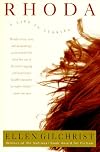
This was an amazing assembly of stories tracing the life of Rhoda Manning, from her earliest inception, to her descent into being elderly. The stories read true, sometimes harsh, and unapologetic in their bearing. Most important, they feel real and imbued with life. There is much to be had here, especially since we are able to appreciate the formation-- and development, of Rhoda throughout the entirety of her life. This is something that I was very surprised I liked, but it was a welcome show more treat.
4 stars. VERY impressive. show less
4 stars. VERY impressive. show less
Lists
Awards


You May Also Like


Associated Authors
Statistics
- Works
- 34
- Also by
- 17
- Members
- 4,805
- Popularity
- #5,229
- Rating
- 3.8
- Reviews
- 79
- ISBNs
- 134
- Languages
- 3
- Favorited
- 15
