
William Faulkner (1897–1962)
Author of The Sound and the Fury
About the Author
Born in an old Mississippi family, William Faulkner made his home in Oxford, seat of the University of Mississippi. After the fifth grade he went to school only off and on-lived, read, and wrote much as he pleased. In 1918, refusing to enlist with the "Yankees," he joined the Canadian Air Force, show more and was transferred to the British Royal Air Force. After the war he studied a little at the University, did house painting, worked as a night superintendent at a power plant, went to New Orleans and became a friend of Sherwood Anderson, then to Europe and back home to Oxford. By this time he had written two novels. The Sound and the Fury followed in 1929. Financial success came with Sanctuary in 1931, which he assisted in filming. Faulkner 's novels are intense in their character portrayals of disintegrating Southern aristocrats, poor whites, and African Americans. A complex stream-of-consciousness rhetoric often involves Faulkner in lengthy sentences of anguished power. Most of his tales are set in the mythical Yoknapatawpha County, Mississippi, and are characterized by the use of many recurring characters from families of different social levels spanning more than a century. His best subjects are the old, dying South and the newer materialistic South. As I Lay Dying (1930), is a grotesquely tragicomic story about a family of poor southern whites. With Absalom, Absalom! (1936); the difficult parts of his famous short novel "The Bear" (published in Go Down, Moses, 1942); and the allegorical A Fable (1954), a non-Yoknapatawpha novel set in France during World War I; Faulkner returned to an innovative and difficult style that most readers have trouble with. Yet, interspersed among such works are collections of easily read stories originally published in popular magazines. There seems to be a growing sentiment among critics that the Snopes trilogy-The Hamlet (1940), The Town (1957), and The Mansion (1959)-for the most part an example of Faulkner's "moderate" style, could well be among his most important works. Faulkner was awarded the 1949 Nobel Prize for literature "for his powerful and artistically independent contribution to the new American novel," but it would appear now that he also deserved to win that honor for his contribution to world literature. When reporting his death, the Boston Globe quoted Faulkner's having once told an interviewer: "Since man is mortal, the only immortality for him is to leave something behind him that is immortal since it will always move. That is the artist's way of scribbling "Kilroy was here" on the wall of the final and irrevocable oblivion through which he must some day pass." In addition to the Nobel Prize, Faulkner received the Howells Medal of the American Academy of Arts and Letters in 1950, and in 1951 he was given the National Book Award for his Collected Stories Collected Stories. For his novel A Fable he received the National Book Award for the second time, as well as the Pulitzer Prize in 1955. The Reivers (1962) was awarded the Pulitzer Prize in 1963. In 1957 and 1958, he was the University of Virginia's first writer-in-residence, and in January 1959 he accepted an appointment as consultant on contemporary literature to the Alderman Library of that university. Although Faulkner was not without honors in his lifetime and has received world recognition since then, it is surprising to learn that, when Malcolm Cowley edited The Portable Faulkner in 1946, he found that almost all of Faulkner's books were out of print. By arranging selections from the works to form a continuous chronicle, Cowley deserves much of the credit for making readers aware of the way in which Faulkner was creating a fictive world on a scale grander than that of any novelist since Balzac. William Faulkner died in Oxford, Mississippi, in 1962. (Bowker Author Biography) show less
Disambiguation Notice:
This is not the same person as William Falkner (d. 1682), English theologian. Do not combine the two.
Image credit: William Faulkner, 1954
Series
Works by William Faulkner
Novels 1930-1935 : As I Lay Dying, Sanctuary, Light in August, Pylon (1985) — Author — 780 copies, 9 reviews
Novels 1936-1940 : Absalom, Absalom! / The Unvanquished / If I Forget Thee, Jerusalem / The Hamlet (1990) 649 copies, 5 reviews
Novels 1942-1954 : Go Down, Moses / Intruder in the Dust / Requiem for a Nun / A Fable (1994) — Author — 511 copies, 4 reviews
Novels 1926-1929 : Soldiers' Pay / Mosquitoes / Flags in the Dust / The Sound and the Fury (2006) 432 copies, 1 review
Faulkner in the university : class conferences at the University of Virginia, 1957-1958 (1959) 86 copies, 1 review
Works of William Faulkner: The Sound and the Fury / Sanctuary / Light in August / As I Lay Dying (1929) 66 copies
Thinking of Home: William Faulkner's Letters to His Mother and Father, 1918-1925 (1992) 37 copies, 1 review
Ghosts of Rowan Oak: William Faulkner's Ghost Stories for Children (1980) — Contributor — 34 copies, 1 review
Czerwone liście : opowiadania 15 copies
A Fable: William Faulkner Manuscripts 20, Volume 1: Miscellaneous Manuscript & Typescript Pages, Part 1 (1987) 12 copies
Yoknapatawpha vanaaeg. jutustused / 1 {Yoknapatawpha Olden Time: Tales} — Author — 8 copies
Lo! 8 copies
A Faulkner Perspective A Companion-Guide to the Limited First Edition of the Selected Letters of William Faulkner (1976) 7 copies
Yoknapatawpha uusaeg. jutustused / 2 {Yoknapatawpha Modern Times: Tales} — Author — 6 copies
Red Leaves {story} — Author — 6 copies
Obras escogidas 6 copies
William Faulkner's speech of acceptance upon the award of the Nobel Prize for literature : delivered in Stockholm o 6 copies, 1 review
SARTORIS - SIGNET CLASSIC 5 copies
Shimgles for the Lord 5 copies
Hell Creek Crossing 4 copies
The Modern Library 4 copies
The Saint Magazine Reader 4 copies
A Justice 4 copies
A Bear Hunt 4 copies
Best-in-Books: Grand Hotel / Voice of Bugle Ann / Life with Father / Mutiny on the Bounty / Postman Always Rings Twice (1962) — Contributor — 3 copies
Kirjailijan työ : Saul Bellow, William Faulkner, Ernest Hemingway, Boris Pasternak, Kurt Vonnegut (1985) 3 copies
William Faulkner Manuscripts 22, Volumes I and II: The Mansion: The Early Typescript, Parts 1 and 2 3 copies
Pylon Los invictos 3 copies
世界文学全集 : カラー版. 第50巻 (フォークナー). 3 copies
Father Abraham Tree: William Faulkner Manuscripts II: Holograph Manuscript and Typescripts; and, The Wishing Tree: Ribbon and Carbon Typescripts (1987) 3 copies
Septembertørke og andre noveller 3 copies
Mistral 3 copies
Stary 3 copies
Honor 3 copies
Shall Not Perish 3 copies
Centaur in Brass 3 copies
That Will Be Fine 3 copies
A Courtship 3 copies
The Broach 3 copies
The Tall Men 3 copies
Elly 3 copies
Mule in the Yard 3 copies
I fantasmi di Rowan Oak. Storie di sogno e di paura scritte e raccontate da William Faulkner (2005) 3 copies
Correspondance Malcolm Cowley-William Faulkner.Lettres et souvenirs de 1944 à 1962 commentés par M.Cowley traduit de l'anglais par René Hilleret (1970) 2 copies
Tomorrow [short story] 2 copies
Faulkner William (William Falkner) 2 copies
Hajnali hajtóvadászat : elbeszélések 2 copies
Neodpočívej v pokoji 2 copies
Discurso en el banquete del premio Nobel: Discurso en el Delta Council (Colección Discursos Alpha Decay) (2008) 2 copies
I negri e gli indiani 2 copies
Divorce in Naples 2 copies
Zstąp, Mojżeszu 2 copies
Literatura-Mundo Comparada: Perspectivas em Português III Pelo Tejo Vai-se para o Mundo (vol. 5 e 6) (2020) 2 copies
O Homem e o Rio Livro 1 2 copies
Els invictes 2 copies
Mosquitoes 2 copies
Poesía reunida : El fauno de mármol ; Una rama verde ; Poemas de Misisipi ; Helen ; Un cortejo (2008) 2 copies
William Faulkner papers 2 copies
Light in August / The Mansion 2 copies
Death Drag 2 copies
Crevasse 2 copies
os desgarrados 2 copies
FAULKNER: NOVELS 1930-1935 2 copies
There Was a Queen 2 copies
The Leg 2 copies
Carcassonne — Author — 2 copies
Artist at Home 2 copies
Golden Land 2 copies
Novelas escogidas, II (Una fábula; El ruido y la furia; Santuario; ¡Absalom, Absalom!; Novelas cortas) (1960) 2 copies
Beyond 2 copies
Victory 2 copies
Fox Hunt 2 copies
Jefferson, Mississippi; Anthologie établie et présenté par Michel Mohrt; illustrations de Jacques Noël; typographie Massin. (1956) 1 copy, 1 review
Sartoris 1 copy
The Sound And the Fury - William Faulkner - Oxford University Press (1983) - The Oxford Library Of The World's Great Books (1967) 1 copy
William Faulkner. Sanctuaire. Préface d'André Malraux. Traduit de l'anglais par B. N. Raimbault et Henri Delgove (1933) 1 copy
William Faulkner. Le Docteur Martino : Et autres histoires eDoctor Martino and other storiese, traduit de l'américain par R.-N. Raimbault et Ch.-P. Vorce (1948) 1 copy, 1 review
Gespräche mit Faulkner 1 copy
Pylone. Traduit de l'anglais par R.-N. Raimbault avec la collaboration de G. Louis-Rousselet. 1 copy, 1 review
BJÖRNEN 1 copy
L' Intrus 1 copy
Três Histórias de Guerra 1 copy
Humphrey Bogart Classics: Volume 2 — Writer — 1 copy
La Pallida Zilphia Gant 1 copy
A William Faulkner Reader 1 copy
Obras Completas II 1 copy
Obras Completas III 1 copy
Obras escogidas I 1 copy
mansión, La 1 copy
Copacul Dorintelor 1 copy
DUMAN 1 copy
TYMI 1 copy
Moskity 1 copy
Opowiadania. T. 2 1 copy
Opowiadania. T. 1 1 copy
Die Stadt, Roman 1 copy
Ὁ γέρος 1 copy
Santuário 1 copy
Семь рассказов 1 copy
Lumière D' Aout 1 copy
Un Sanctuaire 1 copy
اللصوص 1 copy
Two Decades of Criticism 1 copy
The Road to Glory 1 copy
A Cosmos of My Own 1 copy
Elmer; and, "A Portrait of Elmer": William Faulker Manuscripts I: The Typescripts, Manuscripts, and Miscellaneous Pages (1987) 1 copy
Pylon: William Faulkner Manuscripts 12: Typescript Setting Copy and Miscellaneous Holograph Pages (1987) 1 copy
Larmen Og Vreden 1 copy
Obras Completas III 1 copy
Country Lawyer 1 copy
Rose of Lebanon 1 copy
Wilde Palmen und Der Strom 1 copy
Faulkner - Premio Nobel 1949 1 copy
Requiem for a Nun: William Faulkner Manuscripts 19, Volume III: Typescript Setting Copy (1987) 1 copy
Amerikaanse verhalen — Contributor — 1 copy
Extrait - L'Intrus 1 copy
The Mansion: Typescript Setting Copy & Miscellaneous Material (William Faulkner Manuscripts 22, Volumes III & IV) (1991) 1 copy
The Waifs 1 copy
Absalom, Absalom! / Intruder in the Dust / Light in August / The Reivers / The Sound and the Fury 1 copy
An Error in Chemistry 1 copy
With Caution and Dispatch 1 copy
A Point of Law 1 copy
Folklore of the Air 1 copy
Hand Upon the Waters 1 copy
Monk [short story] 1 copy
Faulkner's University Pieces 1 copy
Opere 1 copy
Selected Short Works of William Faulkner — Author — 1 copy
Pennsylvania Station 1 copy
The Evening Sun 1 copy
My Grandmother Millard 1 copy
Erzählungen II 1 copy
Le opere 1 copy
Svetloba v avgustu 1 copy
Smásögur 1 copy
Az öreg [kisregény] 1 copy
Lion in the Garden: Interviews with William Faulkner 1926-1962 Edited By James B. Meriwether and Michael Millgate (1968) 1 copy
William Faulkner Collection 1926-1929: Soldiers' Pay / Mosquitoes / Intruder in the Dust / The Sound and the Fury (1926) 1 copy
Het oude volk 1 copy
Mink 1 copy
Růže pro Emilii 1 copy
Nepřemožení 1 copy
Griðastaður 1 copy
Snobovi 1 copy
The Story of My Life 1 copy
Novelas escogidas, I (Mientras agonizo; Pylon, Los invictos; El villorrio; ¿Desciende, Moisés?) 1 copy
Aşk ve Ölüm 1 copy
Kırmızı Yapraklar 1 copy
Duman 1 copy
Rare -SELECTED LETTERS OF WILLIAM FAULKNER First ed! Deluxe Leather! & Companion Guide (1976) 1 copy
[Title missing] 1 copy
This Earth : A Poem 1 copy
Fumo 1 copy
Smasogur 1 copy
Khi tôi nằm chết 1 copy
“The Tall Men” 1 copy
The Reivers: A Reminiscence 1 copy
Associated Works
Literature: An Introduction to Fiction, Poetry, and Drama (1995) — Contributor, some editions — 1,017 copies, 7 reviews
Perrine's Literature: Structure, Sound, and Sense (1970) — Contributor, some editions — 898 copies, 4 reviews
The World of the Short Story: A 20th Century Collection (1986) — Contributor — 513 copies, 4 reviews
Great Detectives: A Century of the Best Mysteries from England and America (1984) — Contributor — 408 copies, 4 reviews
The American Short Story: A Collection of the Best Known and Most Memorable Stories by the Great American Authors (1994) — Contributor — 371 copies
The Arbor House Treasury of Horror and the Supernatural (1981) — Contributor — 220 copies, 3 reviews
This is My Best: American Greatest Living Authors Present and Give Their Reasons Why (1942) — Contributor — 214 copies
First Fiction: An Anthology of the First Published Stories by Famous Writers (1994) — Contributor — 197 copies, 1 review
In Another Part of the Forest: An Anthology of Gay Short Fiction (1994) — Contributor — 193 copies, 2 reviews
Growing Up in the South: An Anthology of Modern Southern Literature (1991) — Contributor — 165 copies, 1 review
The Graphic Canon, Vol. 3: From Heart of Darkness to Hemingway to Infinite Jest (2013) — Contributor — 162 copies, 1 review
An American Album: One Hundred and Fifty Years of Harper's Magazine (2000) — Contributor — 146 copies, 1 review
The Norton Anthology of American Literature, Volume 2: 1865 to Present (1979) — Contributor, some editions — 137 copies
Adaptations: From Short Story to Big Screen: 35 Great Stories That Have Inspired Great Films (2005) — Contributor — 136 copies, 1 review
The Sophisticated Cat: A Gathering of Stories, Poems, and Miscellaneous Writings About Cats (1992) — Contributor — 112 copies, 1 review
The Heath Anthology of American Literature, Concise Edition (2003) — Contributor — 74 copies, 1 review
Gentlemen, Scholars and Scoundrels: A Treasury of the Best of Harper's Magazine from 1850 to the Present (1972) — Contributor — 62 copies
The World of Law, Volumes I-II: The Law in Literature, The Law as Literature (1960) — Contributor — 54 copies
The lucifer society;: Macabre tales by great modern writers (1972) — Contributor — 51 copies, 1 review
The Edge of the Chair: A Superlative Collection, Some Fact, Some Fiction, All Suspense (1967) — Contributor — 50 copies, 1 review
The Signet Classic Book of Contemporary American Short Stories (1985) — Contributor — 47 copies, 1 review
Best of The Oxford American: Ten Years from the Southern Magazine of Good Writing {anthology} (2002) — Contributor — 45 copies
Out of the Best Books: An Anthology of Literature, Vol. 1: The Individual and Human Values (1964) — Contributor — 40 copies
The Greatest War Stories Ever Told: Twenty-Four Incredible War Tales (2001) — Contributor — 31 copies, 1 review
The Greatest American Short Stories: Twenty Classics of Our Heritage (1953) — Contributor — 21 copies, 1 review
Fifty Years of the American Short Story from the O. Henry Awards 1919-1970 (1970) — Contributor — 17 copies, 1 review
The Best Short Stories of 1932 and the Yearbook of the American Short Story (1932) — Contributor — 15 copies
The night before Chancellorsville, and other Civil War stories (1957) — Contributor — 14 copies, 1 review
The Best Short Stories of 1941 and the Yearbook of the American Short Story (1941) — Contributor — 11 copies
Amerikanische Kurzgeschichten (American Short Stories) (English and German Edition) (1956) — Contributor — 10 copies
Yoknapatawpha, Images and Voices: A Photographic Study of Faulkner's County (2009) — Contributor — 9 copies
The Best Short Stories of 1940 and the Yearbook of the American Short Story (1940) — Contributor — 8 copies
The Best Short Stories of 1937 and the Yearbook of the American Short Story (1937) — Contributor — 8 copies
The Best Short Stories of 1931 and the Yearbook of the American Short Story (1931) — Contributor — 7 copies, 1 review
De mooiste verhalen van James Baldwin, John Berger, Jorge Luis Borges, Jane Bowles, Joseph Brodsky, Charles Bukowski, Wi (1990) — Contributor — 6 copies
Contemporary Short Stories: Representative Selections, Volume 3 — Contributor — 6 copies
The Best Short Stories of 1936 and the Yearbook of the American Short Story (1936) — Contributor — 5 copies
Reader's Digest Condensed Books 1951 v02: Blandings' Way / Operation Cicero / Two Soldiers / The Nymph and the Lamp (1951) — Author — 4 copies
Story in America, 1933-1934: Thirty-Four Selections from the American Issues of "Story," the Magazine Devoted Solely to the Short Story (1934) — Contributor — 3 copies
Modern Short Stories — Contributor — 3 copies
Fifty Years of the American Short Story from the O. Henry Awards 1919-1970, Volume 1 (1970) — Contributor — 3 copies
Reader's Digest Condensed Books: The Desperate Hours • The Goat Boy • My Brother's Keeper • Two Soldiers • The Young Elizabeth (1956) 2 copies
The Best Short Stories of 1935 and the Yearbook of the American Short Story (1935) — Contributor — 2 copies
Modern Short Stories — Contributor — 2 copies
American Short Stories: Anthology [Mi-Sefarim Amerikai'im: Antologiyah shel Ha-Sipur Ha-Ketsar Ha-Amerkai] — Contributor — 1 copy
Los premios Nobel de literatura. En la ciudad / Elias Portolu / El Maestro — Contributor — 1 copy
The Ethnic Image in Modern American Literature, 1900-1950, Volumes 1-2 (1984) — Contributor — 1 copy
The New York quarterly : NYQ : Number 36, Summer 1988 — Contributor — 1 copy
Um pilar de ferro - A travessia de Hell Creek - O advogado do diabo - Flor do mar (1965) — Contributor — 1 copy, 1 review
Mine Verdener / To Soldater / Digby / Pashaen på Gudindeøen / Det Store X — Contributor — 1 copy
The Saturday Evening Post Stories 1957 — Contributor — 1 copy
Tagged
Common Knowledge
- Legal name
- Faulkner, William Cuthbert
- Other names
- Faulkner, Will
- Birthdate
- 1897-09-25
- Date of death
- 1962-07-06
- Gender
- male
- Education
- University of Mississippi
- Occupations
- novelist
short story writer
poet
literary critic
essayist
screenwriter (show all 14)
playwright
bank clerk
postmaster
roof painter
carpenter
deckhand
coal shoveler
pilot - Organizations
- British Armed Forces
American Academy of Arts and Letters
Sigma Alpha Epsilon
University of Mississippi (postmaster)
Metro-Goldwyn-Mayer (screenwriter)
Warner Brothers (screenwriter) (show all 8)
University of Virginia (writer-in-residence)
National Institute of Arts and Letters - Awards and honors
- Nobel Prize (Literature, 1949)
National Institute of Arts and Letters (1939)
American Academy of Arts and Letters (1948)
William Dean Howells Medal (1950)
Chevalier de la Legion d'honneur (1951)
Silver Medal of the Greek Academy (1957) (show all 8)
National Institute of Arts and Letters Gold Medal (1962)
Created the PEN/Faulkner Award - Relationships
- Faulkner, John (brother)
Falkner, Murry C. (brother)
Faulkner, Jim (nephew)
Falkner, William Clark (great-grandfather)
Percy, William Alexander (friend)
Anderson, Sherwood (friend) (show all 9)
West, Nathanael (friend)
Franklin, Malcolm A. (stepson)
Wells, Dean Faulkner (niece) - Short biography
- William Cuthbert Faulkner (September 25, 1897 – July 6, 1962) was an American writer and Nobel Prize laureate from Oxford, Mississippi. Faulkner wrote novels, short stories, screenplays, poetry, essays, and a play. He is primarily known for his novels and short stories set in the fictional Yoknapatawpha County, based on Lafayette County, Mississippi, where he spent most of his life.
Faulkner is one of the most celebrated writers in American literature generally and Southern literature specifically. Though his work was published as early as 1919 and largely during the 1920s and 1930s, Faulkner's renown reached its peak upon the publication of Malcolm Cowley's The Portable Faulkner and his 1949 Nobel Prize in Literature, making him the only Mississippi-born Nobel winner. Two of his works, A Fable (1954) and his last novel The Reivers (1962), each won the Pulitzer Prize for Fiction. In 1998, the Modern Library ranked his 1929 novel The Sound and the Fury sixth on its list of the 100 best English-language novels of the 20th century; also on the list were As I Lay Dying (1930) and Light in August (1932). Absalom, Absalom! (1936) appears on similar lists. - Cause of death
- a fall (from his horse)
thrombosis - Nationality
- USA
- Birthplace
- New Albany, Mississippi, USA
- Places of residence
- Oxford, Mississippi, USA
New Orleans, Louisiana, USA - Place of death
- Byhalia, Mississippi, USA
- Burial location
- St. Peter's Cemetery, Oxford, Mississippi, USA
- Map Location
- USA
- Disambiguation notice
- This is not the same person as William Falkner (d. 1682), English theologian. Do not combine the two.
Members
Discussions
Folio Society Devotees: Sound and Fury in Book talk (October 2023)
Folio Society Devotees: Sound and Fury in Folio Society Devotees (October 2023)
The Snopes Trilogy, Volume III, The Mansion in Club Read 2023 (September 2023)
The Snopes Trilogy, Volume II, The Town in Club Read 2023 (August 2023)
The Snopes Trilogy Group Read: The Hamlet in Club Read 2023 (July 2023)
The Sound and the Fury LE in Folio Society Devotees (May 2021)
Faulkner and james Branch Cabell in William Faulkner and his Literary Kin (October 2020)
As I Lay Dying: The More You Know. in William Faulkner and his Literary Kin (November 2018)
William Faulkner- American Author Challenge in 75 Books Challenge for 2014 (March 2014)
LIGHT IN AUGUST - Group Read Discussion Thread in 75 Books Challenge for 2013 (August 2013)
The Sound and the Fury GROUP READ in 2013 Category Challenge (April 2013)
Reviews
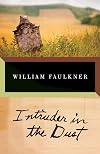
Told through the eyes of a teenage Charles Mallison, this is a murder mystery wrapped up in race. Lucas Beauchamp, the mixed-race independent minded descendent of the white McCaslins, is arrested for murder, shooting a white man in a very closed rural community ten miles outside Jefferson Mississippi. A lynching feels imminent, leaving anxious energy throughout the un-protesting town. Lucas is one of Faulkner's best characters, and he's at his best here in the opening sections, but he's show more ultimately not really a main character. Instead we have Charles, who is largely listening to his uncle, Gavin Stevens, the Harvard educated country attorney whose strong sense of common-sense has only one problem - it's always wrong.
So, reader, we spend a lot of time listening to Gavin rant, in wordy, thick, Faulknerese. That, to me, is Faulkner as his most unpleasant. Charles and Gavin also narrate The Town, my least favorite Faulkner novel. But this is much better than The Town. As Gavin's rants roll along, he begins to lay out several of Faulkner's life-long philosophies - on race, the south, history, and the eternal presence of history here, now, always. (As Faulkner said elsewhere, "The past is never dead. It’s not even past."). Faulkner's sense of the legacy of the Civil War is fronted here in one of these rants in a very revealing way, one that feels central to all his work. Faulkner always talks around the central dramatic issues. You aren't likely to see a gun go off, but you will hear the lead up and after affects. And you aren't likely to hear about the Civil War and southern audacity, but it's woven into the text, altering and coding everything. Here, waxing on the moment before Pickett's charge, when that southern audacity had its highest promising moment, just a decision away from destruction on Gettysburg, had General Lee merely chosen not to attack...
The problem with all this is, of course, it's fucking racist. The southern audacity was a white-supremacist slave culture. And Faulkner knows better. Through most of Faulkner's writing, his better writer-voice comes out, instead of his far too conservative, racism-permitting real voice. Here it wavers hard. This is a book that gets closer to Faulkner's true senses. They're way outdated. But they're presented in Gavin Steven's voice, and he's confident and always wrong. So, a game is in there.
As a moment in history, this book was published in 1948. Hiroshima was 3 years past. Gavin includes 1933 and post-War Europe in his rants. The Portable Faulkner came out in 1946, sparking Faulkner's 1st widespread sales. His previous novel, Go Down, Moses, had been published in 1942, six years earlier. And, in 1949, Faulkner would win the Nobel Prize. Whatever Faulkner's racist sense, American and European readers were fascinated and found him insightful on the southern mindset. And he was.
Like Faulkner's novel, my review has lost track of the mystery, and Lucas Beauchamp. The novel eventually comes around to them, if anticlimactically also satisfactorily enough. Not my favorite Faulkner by any means. But an interesting, thought-provoking, discomforting mixture of character and ranted-iffy ideas.
2025
https://www.librarything.com/topic/372264#8913368 show less
So, reader, we spend a lot of time listening to Gavin rant, in wordy, thick, Faulknerese. That, to me, is Faulkner as his most unpleasant. Charles and Gavin also narrate The Town, my least favorite Faulkner novel. But this is much better than The Town. As Gavin's rants roll along, he begins to lay out several of Faulkner's life-long philosophies - on race, the south, history, and the eternal presence of history here, now, always. (As Faulkner said elsewhere, "The past is never dead. It’s not even past."). Faulkner's sense of the legacy of the Civil War is fronted here in one of these rants in a very revealing way, one that feels central to all his work. Faulkner always talks around the central dramatic issues. You aren't likely to see a gun go off, but you will hear the lead up and after affects. And you aren't likely to hear about the Civil War and southern audacity, but it's woven into the text, altering and coding everything. Here, waxing on the moment before Pickett's charge, when that southern audacity had its highest promising moment, just a decision away from destruction on Gettysburg, had General Lee merely chosen not to attack...
"It's all now you see. Yesterday won't be over until tomorrow and tomorrow began ten thousand years ago. For every Southern boy fourteen years old, not once but whenever he wants it, there is the instant when it's still not yet two o'clock on that July afternoon in 1863, the brigades are in position behind the rail fence, the guns are laid and ready in the woods and the furled flags are already loosened to break out and Pickett himself with his long oiled ringlets and his hat in one hand probably and his sword in the other looking up the hill waiting for Longstreet to give the word and it's all in the balance, it hasn't happened yet, it hasn't even begun yet, it not only hasn't begun yet but there is still time for it not to begin against that position ..."
The problem with all this is, of course, it's fucking racist. The southern audacity was a white-supremacist slave culture. And Faulkner knows better. Through most of Faulkner's writing, his better writer-voice comes out, instead of his far too conservative, racism-permitting real voice. Here it wavers hard. This is a book that gets closer to Faulkner's true senses. They're way outdated. But they're presented in Gavin Steven's voice, and he's confident and always wrong. So, a game is in there.
As a moment in history, this book was published in 1948. Hiroshima was 3 years past. Gavin includes 1933 and post-War Europe in his rants. The Portable Faulkner came out in 1946, sparking Faulkner's 1st widespread sales. His previous novel, Go Down, Moses, had been published in 1942, six years earlier. And, in 1949, Faulkner would win the Nobel Prize. Whatever Faulkner's racist sense, American and European readers were fascinated and found him insightful on the southern mindset. And he was.
Like Faulkner's novel, my review has lost track of the mystery, and Lucas Beauchamp. The novel eventually comes around to them, if anticlimactically also satisfactorily enough. Not my favorite Faulkner by any means. But an interesting, thought-provoking, discomforting mixture of character and ranted-iffy ideas.
2025
https://www.librarything.com/topic/372264#8913368 show less

This is less "experimental" than Faulkner's earlier novels, The Sound and the Fury and As I Lay Dying, more linear, more "comprehensible", perhaps. The story is told mainly by an omniscient narrator, rather than through the stream of consciousness, internal monologues of his tormented characters. Faulkner may have considered himself a "failed poet", but I believe his only failure was in not realizing that his poetry was never meant to be confined to traditional forms. The writing here is show more often profoundly poetic. The story is grim, being primarily concerned with the fate of an orphan and eventual murderer named Joe Christmas, who believes himself to be carrying the "taint" of Negro blood. As a child, he is abandoned by his family, tormented by other children, harassed by staff members at the orphanage, and eventually brought up under rigid religious constraints by his adoptive parents. None of this can come to good, of course. Although he could "pass" for white (and he may be white for all the factual evidence we are given to the contrary), he chooses to wave his assumed racial identity like a red flag in the face of everyone with whom he becomes close. He hates himself, he hates the rest of the human race, and in his view there is no salvation possible. His violent death is a foregone conclusion. Framing this tragic tale is the almost innocent "love story" of Lena Grove and Byron Bunch, while underlying it all are the back stories and obsessions of Christmas's victim, Joanna Burden, and his would-be savior, the Rev. Gail Hightower. An argument has been made that every principal character in this novel is pathological. There are certainly more archetypical outcasts in this story than you are likely to find in any other single work. It can seem a bit grotesque, in retrospect, but it does not feel like that in the active reading. I would give the book 5 full stars, except that every time I read it (at least 3 times in the last 40-some years) I get mired in Hightower's final chapter, stumbling over pronouns and generations, and never completely grasping the significance of his vision.
(Read a different edition Reviewed in 2013) show less
(Read a different edition Reviewed in 2013) show less

14. Flags in the Dust by William Faulkner
publication history: cut version published 1929, full version published 1973. Corrected 2006
format: 319-page Nook ebook (published 2011)
acquired: February 29 read: Mar 1-15 time reading: 16:22, 3.1 mpp
rating: 4
genre/style: Classic novel theme: Faulkner
locations: Yoknapatawpha, Mississippi, ~1920
about the author: 1897-1962. American Noble Laureate who was born in New Albany, MS, and lived most of his life in Oxford, MS.
This is an important Faulkner show more novel. It's his 3rd published novel, but it's the first he set in his fictional Yoknapatawpha county Mississippi. It sets the backdrop of the Snopes trilogy and I think much or most of his other work going forward. But is it any good?
It wasn't published as he wanted in his lifetime. The publisher of Faulkner's first two novels rejected it, saying it was “diffuse and non-integral with neither very much plot development nor character development.... The story really doesn't get anywhere and has a thousand loose ends." That's an entirely accurate description. Without plot drive or clear purpose, it walks along slowly. It opens with a breath of wonderful prose and author control on the pace, intentionally slowing us readers down without losing us. But that doesn't last. Eventually the book drifts. I spent swaths of pages wondering why Faulkner was telling me what he was telling me, and even after I set the book down, found myself mulling over this question and not able to answer it. The eventual publisher cut out a huge chunk of it, maybe 25 percent.
I don't know how to approach the race aspects of this book except to say race is important to the book, and it's a racism fail. Faulkner loves his black servant characters, but he loves them as black servants playing secondary humans, not as regular people who are entirely dependent financially, with limited to no opportunities for themselves or their children. You can't overlook these aspects, the love and hard misunderstanding. It's so fundamental to the book, to everything beautiful within the book. I cringed, but also found myself open to letting Faulkner give me his own take. If you want to destroy this book on race, you have easy target.
So recommended for Faulkner pursuers, but maybe not for samplers.
2024
https://www.librarything.com/topic/358760#8473610 show less
publication history: cut version published 1929, full version published 1973. Corrected 2006
format: 319-page Nook ebook (published 2011)
acquired: February 29 read: Mar 1-15 time reading: 16:22, 3.1 mpp
rating: 4
genre/style: Classic novel theme: Faulkner
locations: Yoknapatawpha, Mississippi, ~1920
about the author: 1897-1962. American Noble Laureate who was born in New Albany, MS, and lived most of his life in Oxford, MS.
This is an important Faulkner show more novel. It's his 3rd published novel, but it's the first he set in his fictional Yoknapatawpha county Mississippi. It sets the backdrop of the Snopes trilogy and I think much or most of his other work going forward. But is it any good?
It wasn't published as he wanted in his lifetime. The publisher of Faulkner's first two novels rejected it, saying it was “diffuse and non-integral with neither very much plot development nor character development.... The story really doesn't get anywhere and has a thousand loose ends." That's an entirely accurate description. Without plot drive or clear purpose, it walks along slowly. It opens with a breath of wonderful prose and author control on the pace, intentionally slowing us readers down without losing us. But that doesn't last. Eventually the book drifts. I spent swaths of pages wondering why Faulkner was telling me what he was telling me, and even after I set the book down, found myself mulling over this question and not able to answer it. The eventual publisher cut out a huge chunk of it, maybe 25 percent.
"After a while John Sartoris departed also, withdrawn rather to the place where the peaceful dead contemplate their glamourous frustrations"And yet I enjoyed it. I took in these characters, and embraced with the glee the introductions to characters who are fleshed out in the Snopes trilogy, and I closed in with real affection. The novel hovers over the mythological Civil War colonel, John Sartoris, his memory and spirit hovering "like an odor, like the clean dusty smell of his faded overalls". His son, Old Bayard, runs his bank in this same Mississippi town. Old Bayard's grandson, also Bayard, has just returned from serving as a pilot in WWI, watching his own twin brother die in air combat. There are lot of missing Sartorises, moms, wifes, dads. They don't come out well. And young Bayard can't settle after his experiences, constantly pushing limits and unable to stop. Mixed in, and largely cut in 1929, is the younger Bayard's eventual spouse, inaptly named Narcissa, a beautiful warm character Faulkner created, first in love warmly with her brother (in a healthy way), also a WWI veteran. The sibling relationship is as beautiful as anything in the book.
I don't know how to approach the race aspects of this book except to say race is important to the book, and it's a racism fail. Faulkner loves his black servant characters, but he loves them as black servants playing secondary humans, not as regular people who are entirely dependent financially, with limited to no opportunities for themselves or their children. You can't overlook these aspects, the love and hard misunderstanding. It's so fundamental to the book, to everything beautiful within the book. I cringed, but also found myself open to letting Faulkner give me his own take. If you want to destroy this book on race, you have easy target.
So recommended for Faulkner pursuers, but maybe not for samplers.
2024
https://www.librarything.com/topic/358760#8473610 show less
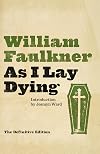
Here, in grief, things tumble into their constituents, into inanimacy, an unknowing, or in some instances a knowing too well that supercedes reductive language. Pride and vanity bear through carrying out a woman's revenge, one metted towards all but the man upon whom it was fixed. While it is not allotted so much direct pronouncement as other concerns, the tragedy and sorrow of womanhood is perhaps the most pronounced theme, everpresent as undercurrent, rising occasionally to wash away the show more bridge or drive a rushing log through the ford. After some chapters I had to set it aside and go for a walk. Impeccably written, at times genuinely visceral. show less
Lists
Existentialism (1)
1900s: America (1)
scav (1)
el (1)
Romans (1)
NTS Book Channel (1)
100 knjiga (1)
bound (1)
1950s (1)
Dead narrators (1)
To read (1)
Read These Too (1)
history (1)
Backlisted (1)
Robin (1)
A Novel Cure (1)
BitLife (1)
Schwob Nederland (1)
100 (1)
1920s (1)
Unread books (4)
Modernism (3)
. (3)
Best First Lines (2)
Southern Fiction (8)
1930s (6)
Favourite Books (5)
Five star books (4)
. (4)
AP Lit (4)
Overdue Podcast (2)
Elegant Prose (1)
Reiny (2)
Fave Books (1)
Carole's List (2)
My TBR (2)
"We" narration (2)
Folio Society (2)
Awards


You May Also Like


Associated Authors
Statistics
- Works
- 467
- Also by
- 214
- Members
- 99,579
- Popularity
- #91
- Rating
- 3.9
- Reviews
- 1,222
- ISBNs
- 1,598
- Languages
- 34
- Favorited
- 504


