

Herman Melville (1819–1891)
Author of Moby Dick
About the Author
Herman Melville (August 1, 1819 - September 28, 1891) was born into a seemingly secure, prosperous world, a descendant of prominent Dutch and English families long established in New York State. That security vanished when first, the family business failed, and then, two years later, in young show more Melville's thirteenth year, his father died. Without enough money to gain the formal education that professions required, Melville was thrown on his own resources and in 1841 sailed off on a whaling ship bound for the South Seas. His experiences at sea during the next four years were to form in part the basis of his best fiction. Melville's first two books, Typee (1846) and Omoo (1847), were partly romance and partly autobiographical travel books set in the South Seas. Both were popular successes, particularly Typee, which included a stay among cannibals and a romance with a South Sea maiden. During the next several years, Melville published three more romances that drew upon his experiences at sea: Redburn (1849) and White-Jacket (1850), both fairly realistic accounts of the sailor's life and depicting the loss of innocence of central characters; and Mardi (1849), which, like the other two books, began as a romance of adventure but turned into an allegorical critique of contemporary American civilization. Moby Dick (1851) also began as an adventure story, based on Melville's experiences aboard the whaling ship. However, in the writing of it inspired in part by conversations with his friend and neighbor Hawthorne and partly by his own irrepressible imagination and reading of Shakespeare and other Renaissance dramatists Melville turned the book into something so strange that, when it appeared in print, many of his readers and critics were dumbfounded, even outraged. By the mid-1850s, Melville's literary reputation was all but destroyed, and he was obliged to live the rest of his life taking whatever jobs he could find and borrowing money from relatives, who fortunately were always in a position to help him. He continued to write, however, and published some marvelous short fiction pieces Benito Cereno" (1855) and "Bartleby, the Scrivener" (1853) are the best. He also published several volumes of poetry, the most important of which was Battle Pieces and Aspects of the War (1866), poems of occasionally great power that were written in response to the moral challenge of the Civil War. His posthumously published work, Billy Budd (1924), on which he worked up until the time of his death, became Melville's last significant literary work, a brilliant short novel that movingly describes a young sailor's imprisonment and death. Melville's reputation, however, rests most solidly on his great epic romance, Moby Dick. It is a difficult as well as a brilliant book, and many critics have offered interpretations of its complicated ambiguous symbolism. Darrel Abel briefly summed up Moby Dick as "the story of an attempt to search the unsearchable ways of God," although the book has historical, political, and moral implications as well. Melville died at his home in New York City early on the morning of September 28, 1891, at age 72. The doctor listed "cardiac dilation" on the death certificate. He was interred in the Woodlawn Cemetery in The Bronx, New York, along with his wife, Elizabeth Shaw Melville. (Bowker Author Biography) show less
Image credit: from Wikipedia
Series
Works by Herman Melville
Redburn: His First Voyage, Being the Sailor-Boy, Confessions and Reminiscences of the Son-of-a-Gentleman, In the Merchant Service (1849) 658 copies, 6 reviews
Pierre, Israel Potter, The Piazza Tales, The Confidence-Man, Uncollected Prose, Billy Budd (1985) 595 copies, 3 reviews
Classics Illustrated: Moby Dick {graphic adaptation by Bill Sienkiewicz} (1990) — Original Author — 132 copies, 5 reviews
Herman Melville: Moby Dick, Billy Budd and Other Writings (Library of America College Editions) (2000) 91 copies
Romances of Herman Melville: Typee, Omoo, Mardi, Moby-Dick, White-Jacket, Israel Potter & Redburn (1928) 45 copies, 1 review
Piazza Tales and Other Prose Pieces, 1839-1860: Volume Nine, Scholarly Edition (Melville) (1987) 30 copies
Moby-Dick: 0 (Norton Critical Editions) 20 copies
Grolier Classics: Moby Dick/Life of Samuel Johnson/The Social Contract, The Odyssey (1957) 18 copies
Moby-Dick: A Picture Voyage : An Abridged and Illustrated Edition of the Original Classic (2002) 15 copies
Tre scene da Moby Dick tradotte e commentate da Alessandro Baricco. testo inglese a fronte (2009) 11 copies
Preferiría no hacerlo: Bartleby el escribiente de Herman Melville, seguido de tres ensayos sobre Bar (2005) 10 copies
Moby Dick, Story Book Grade 4: Steck-Vaughn Short Classics, Student Reader (American Short Stories) 8 copies
Moby-Dick: And an Extract from Narrative of the Most Extraordinary and Distressing Shipwreck of the Whale-ship Essex (Vintage Classics) (2007) 8 copies
Herman Melville: The Complete Works: Moby-Dick, The Piazza Tales,Typee, Omoo, White-Jacket... (Bauer Classics) (All Time Best Writers Book 15) (2021) 7 copies
Billy Budd, Sailor and Other Uncompleted Writings: The Writings of Herman Melville, Volume 13 (2017) 6 copies
Reading & Training : Herman Melville : Moby Dick [book + sound recording] (2008) — Writer — 6 copies
Short Fiction 5 copies
Putnam's monthly, Numbers 11 (November 1853), 20 (August 1854), 39 (March 1856), 44 (August 1856) 4 copies
Works of Herman Melville. (100 Works) Includes Moby Dick, Omoo, Billy Budd, Sailor, The Piazza Tales and more (mobi) (2007) 3 copies
Redburn, Israel Potter und sämtliche Erzählungen, Nachwort, Erläuterungen und aus dem Amerikanischen von Richard Mummendey, (1967) 3 copies
Israel Potter: His Fifty Years of Exile and Life and Remarkable Adventures of Israel R. Potter (Dover Thrift Editions) (2016) 3 copies
Moby-Dick, Riverside Editions A-9 3 copies
Ficção Curta Completa 3 copies
Works. Vol.16, Poems 3 copies
Be Careful In The Hunt 3 copies
Herman Melville: Complete Collection of Works with analysis and historical background (Annotated and Illustrated) (Annotated Classics) (2013) 3 copies
Poesie (testo inglese a fronte) 3 copies
Easton Press Moby Dick 3 copies
Moby Dick. Die Schatzinsel. Freibeuter der sieben Meere. Drei Geschichten in einem Band (1997) 3 copies
Moby Dick eller Den vita valen 2 3 copies
Moby Dick 2 copies
Quiquiriquic!: Antologia de contes (The Apple-Tree Table and Other Sketches - The Piazza Tales) (2023) 2 copies
Moby Dick - Dünya Cocuk Klasikleri 2 copies
Selected poems of Herman Melville 2 copies
Moby Dick (Adapted) 2 copies
Cojocelul alb 2 copies
Profili di donne 2 copies
Moby Dick 2 copies
Ficção curta completa 2 copies
Moby Dick eller Den vita valen 1 2 copies
The complete stories 2 copies
De betoverde eilanden / Bartleby 2 copies
Rescatando Nuestra Memoria: Represión, Refugio y Recuperación de las Poblaciones Desarraigadas por la Violencia en Guatemala (2009) 2 copies
La mesa de madera de manzano / El Paraíso de los solteros y el Tártaro de las doncellas (2013) 2 copies
Illustrated Classics Moby Dick 2 copies
Best of Melville: Moby-Dick D. H. Lawrence's critique of Moby-Dick Typee The Piazza Tales (The Piazza Bartleby Benito Cereno The Lightning-Rod ... Isles The Bell-Tower) The… (2013) 2 copies, 1 review
The Indispensable Melville 2 copies
Die große Kunst, die Wahrheit zu sagen. Von Walen, Dichtern und anderen Herrlichkeiten (2005) 2 copies
Moby Dick - Vol 2 2 copies
The Tartarus of Maids [short story] 2 copies
The Town Ho's Story 2 copies
Moby Dick - Vol 1 2 copies
El escribiente y otros relatos 2 copies
Melville on Melville 2 copies
The refugee 1 copy
Mody Dick ili Bijeli Kit 1 copy
MOBY DICK (Adventure Classic): Including D. H. Lawrence's critique of Moby-Dick (English Edition) (2017) 1 copy
Moby or "The White Whale" 1 copy
Great Short Stories 1 copy
Melville's Moby Dick 1 copy
Cá Voi Trắng 1 copy
The Complete Works 1 copy
[*] ΚΛΑΣΣΙΚΑ Εικονογραφημένα, Νο. 1181 (2η σειρά): Τύπη [Classics Illustrated, No. 1181 (Greek - 2nd series): Typee] (1846) 1 copy
Moby Dick or The White Whale (International Collectors Library Edition), Abridged for Modern Reading 1 copy
Čovek od poverenja 1 copy
אוסף סיפורי ים ונהר אחד — Author — 1 copy
Moby Dick 1 copy
Moby Dick or The Whale 1 copy
Tulák po ostrovech 1 copy
Annales 1 copy
[Title missing] 1 copy
Moby Dick (two chapters) 1 copy
Billy budd, marinero 1 copy
Moby Dick T.1-2 1 copy
tai-pi 1 copy
Moby Dick 2/2 1 copy
Moby Dick (Abridged Edition) 1 copy
Tales of the Dark Romantics and Beyond: Tales of the Dark Romantics — Contributor — 1 copy
(all) 1 copy
Moby Dick (Graphic Novel) 1 copy
Moby Dick (Abridged Version) 1 copy
Moby Dick Graphic Novel 1 copy
Moby Dick 1 copy
Moby Dick, Volume 1 1 copy
Redburn Roman 1 copy
Las estatuas de Roma 2010 1 copy
Moby Dick 3 volume 1 copy
Moby Dick - Abril Cultural 1 copy
Moby Dick 2 volume 1 copy
Moby Dick 1 volume 1 copy
Masa din lemn de măr 1 copy
Moby Dick Vol.2 1 copy
Bartlebly, el escribiente 1 copy
Moby Dick 1 copy
Moby Dick, Part 1 of 2 1 copy
Moby Dick, Part 2 of 2 1 copy
Typee 1 copy
Moby Dick 1 copy
Ca Voi Trang 1 copy
The Man-of-War Hawk [poem] 1 copy
Snowflakes (Annotated) 1 copy
Le Campanile 1 copy
Short novels 1 copy
Modern Masquerade 1 copy
Masa din lemn de mar 1 copy
Bartleby. Erzählungen. Aus dem Englischen von Marianne Graefe u.a. Mit einem Nachwort von Karl-Heinz Schönfelder. (1981) 1 copy
Reisefresken dreier Brüder: Dichter, Maler, Müssiggänger. Tagebuch einer Reise nach Europa und in die Levante (1856/57) (1991) 1 copy
Works 16 vols 1 copy
Shorter Novels 1 copy
Complete Stories 1 copy
The Birth-Mark (Annotated) 1 copy
Raj ľudožrútov 1 copy
Hooked on Phonics: Moby Dick 1 copy
Erzählungen 1 copy
Shorter novels 1 copy
Cocorico et autres contres 1 copy
Fast-Fish and Loose-Fish 1 copy
Contos 1 copy
Moby Dick Libro terzo 1 copy
Moby Dick, etc. [Abridged.] 1 copy
"Shiloh" 1 copy
Works of Herman Melville. Moby Dick, Omoo, Billy Budd, Sailor, The Piazza Tales & more (Mobi Collected Works) (2007) 1 copy
Moby Dick-Junior Classics 1 copy
10 Books by Melville 1 copy
Art 1 copy
MOBY DICK 2 1 copy
MOBY DICK 1 1 copy
“The Martyr” 1 copy
PACHUCHE BET 1 copy
Moby Dick Audio CD 1 copy
Izrael Potter 1 copy
Čovek od poverenja 1 copy
Cetologia 1 copy
Uncollected Poems 1 copy
Maldive Shark 1 copy
An Imposition of Whales 1 copy
El embaucador 1 copy
El temerario y otros poemas 1 copy
Moby Dick . Volumen II 1 copy
Moby Dick . Volumen I 1 copy
Moby Dick, EDCON abridged 1 copy
MOBY DICK 1 copy
Paraiso de canibais 1 copy
Fives Tales 1 copy
Moby Dick - vol. 26 1 copy
Má první plavba 1 copy
Melville. opere scelte 1 copy
Associated Works
The Best Poems of the English Language: From Chaucer Through Robert Frost (2004) — Contributor — 1,249 copies, 3 reviews
Great American Short Stories: From Hawthorne to Hemingway (2004) — Contributor — 675 copies, 2 reviews
World Poetry: An Anthology of Verse from Antiquity to Our Time (1998) — Contributor — 499 copies, 2 reviews
Four Classic American Novels (The Scarlet Letter / The Adventures of Huckleberry Finn / The Red Badge of Courage / Billy Budd) (1969) — Contributor — 379 copies
75 Short Masterpieces: Stories from the World's Literature (1961) — Contributor — 317 copies, 2 reviews
American Fantastic Tales : Terror and the Uncanny from Poe to the Pulps (2009) — Contributor — 290 copies, 4 reviews
The Civil War: The First Year Told By Those Who Lived It (2011) — Contributor — 268 copies, 2 reviews
The Graphic Canon, Vol. 2: From "Kubla Khan" to the Brontë Sisters to The Picture of Dorian Gray (2012) — Contributor — 213 copies, 2 reviews
The American Intellectual Tradition, A Sourcebook: Volume I, 1630-1865 (1989) — Contributor, some editions — 204 copies
The Moral Life: An Introductory Reader in Ethics and Literature (1999) — Contributor — 202 copies, 2 reviews
The Civil War: The Second Year Told By Those Who Lived It (2012) — Contributor — 193 copies, 1 review
Pages Passed from Hand to Hand: The Hidden Tradition of Homosexual Literature in English from 1748 to 1914 (1997) — Contributor — 185 copies, 1 review
Classic American Short Stories [Barnes & Noble Leatherbound Classics] (2001) — Contributor — 175 copies, 1 review
The Lincoln Anthology: Great Writers on His Life and Legacy from 1860 to Now (2008) — Contributor — 172 copies, 1 review
The Civil War: The Third Year Told by Those Who Lived It (2013) — Contributor — 168 copies, 1 review
American Antislavery Writings: Colonial Beginnings to Emancipation (2012) — Contributor — 146 copies
An American Album: One Hundred and Fifty Years of Harper's Magazine (2000) — Contributor — 145 copies, 1 review
The Glorious American Essay: One Hundred Essays from Colonial Times to the Present (2020) — Contributor — 118 copies
War No More: Three Centuries of American Antiwar and Peace Writing (2016) — Contributor — 110 copies, 2 reviews
The Mammoth Book of Men O'War: Stories from the Glory Days of Sail (1999) — Contributor — 106 copies, 1 review
Writing New York: A Literary Anthology (Expanded 10th-Anniversary Edition) (2008) — Contributor — 101 copies, 1 review
The Greatest Sailing Stories Ever Told: Twenty-Seven Unforgettable Stories (2002) — Contributor — 83 copies
The Heath Anthology of American Literature, Concise Edition (2003) — Contributor — 73 copies, 1 review
Gentlemen, Scholars and Scoundrels: A Treasury of the Best of Harper's Magazine from 1850 to the Present (1972) — Contributor — 62 copies
The Blithedale Romance [Norton Critical Edition, 2nd ed.] (2010) — Contributor — 62 copies, 2 reviews
The World of Law, Volumes I-II: The Law in Literature, The Law as Literature (1960) — Contributor — 54 copies
The Signet Classic Book of Contemporary American Short Stories (1985) — Contributor — 47 copies, 1 review
Benjamin Franklin's Autobiography [Norton Critical Edition, 2nd ed.] (2012) — Contributor — 47 copies
Shaking the Foundations: 200 Years of Investigative Journalism in America (Nation Books) (2003) — Contributor — 45 copies
Witches, Wraiths, and Warlocks: Supernatural Tales of the American Renaissance (1971) — Contributor — 42 copies
Great Short Stories: Russian, Japanese, American, Irish, French, English (2007) — Contributor — 36 copies
Out of the Best Books: An Anthology of Literature, Vol. 3: Intelligent Family Living (1967) — Contributor — 34 copies
Deep Blue: Stories of Shipwreck, Sunken Treasure, and Survival (Adrenaline) (2001) — Contributor — 32 copies
Lapham's Quarterly - Lines of Work: Volume IV, Number 2, Spring 2011 (2011) — Contributor — 32 copies, 2 reviews
American Literature: The Makers and the Making (In Two Volumes) (1973) — Contributor, some editions — 25 copies
"The Man Who Thought Himself a Woman" and Other Queer Nineteenth-Century Short Stories (Q19: The Queer American Nineteenth Century) (2017) — Contributor — 20 copies
The Serpent and the Fire: Poetries of the Americas from Origins to Present (2024) — Contributor — 17 copies
The Romantic Friendship Reader: Love Stories Between Men in Victorian America (2003) — Contributor — 17 copies
Oogst Der Tijden. keur uit de werken van schrijvers en dichters aller volken en eeuwen (1940) — Contributor — 12 copies
Sunlight on the River: Poems About Paintings, Paintings About Poems (2015) — Contributor — 11 copies, 2 reviews
Gran Colección de la Literatura Universal: Norteamericana I (1982) — Contributor — 5 copies, 1 review
Britten : Billy Budd {video recording} {2010 television film} {Glyndebourne/Elder} (2010) — Original author — 4 copies
Ode to Boy: Vol. 2: An Anthology of Same-Sex Attraction in Literature from the 19th Century Through the First World War (2014) — Contributor — 2 copies
Moby Dick #1 (of 6) (Marvel Illustrated) — Contributor — 2 copies
Lebensgut — Ein deutsches Lesebuch für Mädchen — 5. Teil (9. Schuljahr) — Contributor — 1 copy
Sehnsucht: "Südsee" : Gedichte und mehr — Contributor — 1 copy
Moby Dick #5 (of 6) (Marvel Illustrated) — Contributor — 1 copy
Moby Dick #3 (of 6) (Marvel Illustrated) — Contributor — 1 copy
Moby Dick #2 (of 6) (Marvel Illustrated) — Contributor — 1 copy
MHQ: The Quarterly Journal of Military History — Winter 2019 (2018) — Author "Poetry: What Like A Bullet..." — 1 copy
The Sea Beast [1926 film] — Original book — 1 copy
Tagged
Common Knowledge
- Canonical name
- Melville, Herman
- Legal name
- Melville, Herman
- Other names
- Melvill, Herman (birth name/original spelling)
- Birthdate
- 1819-08-01
- Date of death
- 1891-09-28
- Gender
- male
- Education
- New York Male School (1825)
Columbia Grammar School (1829-1830)
Albany Classical School (1835)
Albany Academy (1830-1831)
Albany Academy (1836-1837)
Lansingburgh Acadamy (1838) - Occupations
- bank clerk (1832-1834)
sailor
harpooner (whaleship Charles & Henry)
farm hand (1834-1835)
novelist
customs inspector (New York, New York, USA) (show all 9)
bookkeeper (1835-1837)
teacher (1837)
teacher (1839-1840) - Relationships
- Metcalf, Paul (great-grandson)
Hawthorne, Nathaniel (friend)
Dana, Richard Henry (friend) - Short biography
- Herman Melville, American author, was born in New York City on the 1st of August 1819. He shipped as a cabin-boy at the age of eighteen, thus being enabled to make his first visit to England, and at twenty-two sailed for a long whaling cruise in the Pacific. After a year and a half he deserted his ship at the Marquesas Islands, on account of the cruelty of the captain; was captured by cannibals on the island of Nukahiva, and detained, without hardship, four months; was rescued by the crew of an Australian vessel, which he joined, and two years later reached New York. Thereafter, with the exception of a passenger voyage around the world in 1860, Melville remained in the United States, devoting himself to literature -- though for a considerable period (1866-1885) he held a post in the New York custom-house -- and being perhaps Hawthorne's most intimate friend among the literary men of America. His writings were numerous, but judged of varying merit by his contemporaries; his verse, patriotic and other was forgotten; and his works of fiction and of travel were deemed of irregular execution. Nevertheless, few authors have been enabled so freely to introduce romantic personal experiences into their books. He portrayed seafaring life and character with vigour and originality, and from a personal knowledge equal to that of Cooper, Marryat or Clark Russell. But these records of adventure were followed by other tales that his contemporaries found so turgid, eccentric, opinionative, and loosely written as to seem the work of another author. He died a failed author in New York on the 28th of September 1891. The 20th century's collective reassessment of his work is much more favorable, and he is now classed among the greatest American writers.
- Cause of death
- cardiovascular disease
- Nationality
- USA
- Birthplace
- New York, New York, USA
- Places of residence
- New York, New York, USA (1819-1830)
Albany, New York, USA (1830-1838)
Troy, New York, USA (1838)
merchantman St. Lawrence (1839)
whaling ship Acushnet (1841)
whaling ship Charles & Henry (show all 7)
Pittsfield, Massachusetts, USA - Place of death
- New York, New York, USA
- Burial location
- Woodlawn Cemetery, The Bronx, New York, USA
- Map Location
- New York, USA
Members
Discussions
Moby Dick limited edition in Folio Society Devotees (Today 3:52pm)
Anisha's Book Bits & Pieces, started April 2026 in Journey In Books (Yesterday 10:54am)
Reading screenplays and screen adaptations in Journey In Books (Sunday 5:44am)
Pennyroyal Press "Billy Budd" in Fine Press Forum (December 2025)
Fine Press Melville in Fine Press Forum (July 2024)
Typee by Herman Melville – LIMITED EDITIONS CLUB 1935 in George Macy devotees (January 2024)
Price for Moby Dick in George Macy devotees (May 2023)
OT: Moby-Dick Sweetwater Press w/Rockwell Kent Illustrations in Folio Society Devotees (May 2022)
Billy Budd in Fine Press Forum (March 2022)
Moby Dick in Folio Society Devotees (February 2017)
The Great White Whale: Cynara and PurlPoet read Moby Dick in 75 Books Challenge for 2014 (August 2014)
Moby Dick in Writer-readers (April 2013)
To the Sea! in Le Salon Littéraire du Peuple pour le Peuple (January 2012)
***Group Read: Moby Dick (Spoiler Free) in 75 Books Challenge for 2010 (October 2010)
Moby Dick in Someone explain it to me... (July 2010)
Pierre: or, Bucolic Reading in Le Salon Littéraire du Peuple pour le Peuple (December 2009)
Reviews

I loved Moby Dick! I hated Moby Dick!
I read Moby Dick for my own personal enjoyment. I know this is a work I would have gotten more out of if I'd read it as part of a group. But I read through it for myself and my review reflects those views.
First things first: Herman Melville's writing was often beautiful. I will read more of his work.
The book starts off strong and finishes strong, with a breathless three day duel with the dreaded Moby Dick. In between there are countless memorable scenes show more and moments. Nailing up the dubloon. Ahab's moment of self-doubt/sanity. Even some of the detailed whaling chapters that everyone seems to hate are super interesting.
The problem I had was all the endless, metaphysical rambling. We get an entire chapter on the importance of Moby Dick being white when it feels like a couple of paragraphs would suffice.
I understand, I was reading this the same way I would read any other adventure novel and that isn't what Melville wanted. Without the endless metaphysical noodling, Moby Dick likely wouldn't be held in the regard it is now. But man oh man, it took me just over a month to get through this not terribly long book.
And even when I was sick to death of the philosophical, there was so much good stuff. Ishmael and Quequeeg's friendship. The clash between Ahab and Starbuck and even those whaling scenes, showing the crew extract the oil. All good stuff.
It was a tough read, but I'm glad I read it. Complaints aside, I already miss the book. show less
I read Moby Dick for my own personal enjoyment. I know this is a work I would have gotten more out of if I'd read it as part of a group. But I read through it for myself and my review reflects those views.
First things first: Herman Melville's writing was often beautiful. I will read more of his work.
The book starts off strong and finishes strong, with a breathless three day duel with the dreaded Moby Dick. In between there are countless memorable scenes show more and moments. Nailing up the dubloon. Ahab's moment of self-doubt/sanity. Even some of the detailed whaling chapters that everyone seems to hate are super interesting.
The problem I had was all the endless, metaphysical rambling. We get an entire chapter on the importance of Moby Dick being white when it feels like a couple of paragraphs would suffice.
I understand, I was reading this the same way I would read any other adventure novel and that isn't what Melville wanted. Without the endless metaphysical noodling, Moby Dick likely wouldn't be held in the regard it is now. But man oh man, it took me just over a month to get through this not terribly long book.
And even when I was sick to death of the philosophical, there was so much good stuff. Ishmael and Quequeeg's friendship. The clash between Ahab and Starbuck and even those whaling scenes, showing the crew extract the oil. All good stuff.
It was a tough read, but I'm glad I read it. Complaints aside, I already miss the book. show less

I know I'm not saying anything new here, but here's my take. Just finished this book and my brain is on fire (in a good way) and my mind is blown.
Beautiful novel.
Sure it requires some patience. Sure you have to slog through a few chapters on cetology. But don't let that stop you. The chapters are short, and what nobody told me is that Melville ties in the human condition at the end of many of these chapters.
Also, that's part of the beauty of the book. The obsession, the madness, the show more struggle of any human endeavor. Trying to find meaning in the meaningless.Trying to gain knowledge in an unknowable world.
It's Shakespearean in its grandeur. It's poetic. Melville was a genius. You could come close to earning your PhD just from following and studying the allusions in the book. It would require multiple readings to take it all in.
If you're a patient reader; if you're an intelligent reader - don't let the negative reviews or horror stories you've heard scare you off from reading as they did me. Don't put it off any longer. show less
Beautiful novel.
Sure it requires some patience. Sure you have to slog through a few chapters on cetology. But don't let that stop you. The chapters are short, and what nobody told me is that Melville ties in the human condition at the end of many of these chapters.
Also, that's part of the beauty of the book. The obsession, the madness, the show more struggle of any human endeavor. Trying to find meaning in the meaningless.Trying to gain knowledge in an unknowable world.
It's Shakespearean in its grandeur. It's poetic. Melville was a genius. You could come close to earning your PhD just from following and studying the allusions in the book. It would require multiple readings to take it all in.
If you're a patient reader; if you're an intelligent reader - don't let the negative reviews or horror stories you've heard scare you off from reading as they did me. Don't put it off any longer. show less
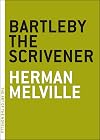
Considerada una obra maestra de la narración, "Bartebly el escribiente" constituye una pieza anticipatoria de la literatura existencialista y del absurdo. A través del protagonista, un escribiente que se enfrenta a las demandas de la realidad con una inquietante respuesta, "preferiría no hacerlo", el estoicismo, la ironía, el humor y el sordo desasosiego alegórico presente en la obra de Melville se aúnan para expresar la obstinación del ser humano en su afán de obtener respuesta a show more las grandes preguntas o, al menos, seguir buscándolas. show less
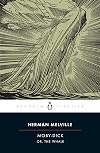
This novel is just as good as its mammoth (or should I say leviathan) reputation indicated it would be. It was caricatured to me as a dull slog through a science exhibit on whaling, but it's famous for a reason: it's a thoughtful examination of our relationship with nature, an extremely rewarding character study, and an informative investigation of an entire livelihood, all with plenty of wit, insight, depth, and great writing. In fact, while I was reading it I had several of those moments show more where I get irritated at how much more self-indulgent and less pleasurable a lot of contemporary novels seem than 19th century ones. It might seem odd to call anything more self-indulgent than this long, digressive, allusive tome about whaling that has not one but multiple sections where Melville stops the action to explain his own use of symbolism, but not only are those moments usually funny or informative, they help give the book an enjoyable rhythm that makes it speed along in a way that a truly self-indulgent book could never manage.
Most people who don't like the book seem to have two main complaints - first, that it's too long; and second, that there's too much whaling stuff. The only sensible responses are that it's interesting along its whole length; and that the whaling stuff is cool. If you actually pay attention to what Melville is talking about when he starts going off about hawsers, top-gallants, whale physiognomy, and proper flensing and blubber-sawing techniques, you can learn a lot about an important historical industry, though it helps to have read a Patrick O'Brien novel or two, and I think it also helps to think of those sections as worldbuilding on an incredible scale. It's interesting that the same people who can't get enough of The Lord of the Rings' royal genealogies, or catalogs of spells in Harry Potter, or lists of Federation starship classes have issues with the whaling details. What really separates those areas of nerdery? Is Moby Dick just out of the zeitgeist, or is there truly something different about the way he lovingly recounts the types of tasks a ship's carpenter can be called upon to perform in the course of his duties?
It can seem that Melville does drone on for a bit too long, particularly that long stretch of pontificating about the noble qualities of whales, but not only is his enthusiasm for his subject infectious, if you read carefully it's never pointless, nor aimless autistic rambling. A digression on, say, whale's tails, reveals a much broader point on careful inspection:
"Nor does this - its amazing strength, at all tend to cripple the graceful flexion of its motions; where infantileness of ease undulates through a Titanism of power. On the contrary, those motions derive their most appalling beauty from it. Real strength never impairs beauty or harmony, but it often bestows it; and in everything imposingly beautiful, strength has much to do with the magic. Take away the tied tendons that all over seem bursting from the marble in the carved Hercules, and its charm would be gone. As devout Eckerman lifted the linen sheet from the naked corpse of Goethe, he was overwhelmed with the massive chest of the man, that seemed as a Roman triumphal arch. When Angelo paints even God the Father in human form, mark what robustness is there. And whatever they may reveal of the divine love in the Son, the soft, curled, hermaphroditical Italian pictures, in which his idea has been most successfully embodied; these pictures, so destitute as they are of all brawniness, hint nothing of any power, but the mere negative, feminine one of submission and endurance, which on all hands it is conceded, form the peculiar practical virtues of his teachings."
I don't think there's a single chapter in the book with a long meander like that where the diversion doesn't have a real point being made, and his ability to smoothly draw the general point from multiple examples makes those excursions a pleasure. A list of my favorite chapters with insightful second layers would be nearly as long as the book itself: Chapter 89, "Fast-Fish and Loose-Fish", that brilliantly connects the legal status of whales with the applications of legal pseudo-doctrine of "possession is half of the law", and also with systems of justice more generally would rank up there; as would Chapter 24, "The Advocate", which is as impassioned a defense of the profession of whaling as a vital tool of peaceful communication between nations as you could ask for.
Plus Melville never forgets to be funny, inside those massive paragraph blocks and outside. His labyrinthine sentences wind their ways through all kinds of grand rhetorical flourishes that are just a joy to read, easily on the level of a Shakespearean soliloquy. The famous chapter on handjobs is worth quoting at length:
"Squeeze! squeeze! squeeze! all the morning long; I squeezed that sperm till I myself almost melted into it; I squeezed that sperm till a strange sort of insanity came over me; and I found myself unwittingly squeezing my co-laborers' hands in it, mistaking their hands for the gentle globules. Such an abounding, affectionate, friendly, loving feeling did this avocation beget; that at last I was continually squeezing their hands, and looking up into their eyes sentimentally; as much as to say - Oh! my dear fellow beings, why should we longer cherish any social acerbities, or know the slightest ill-humor or envy! Come; let us squeeze hands all round; nay, let us all squeeze ourselves into each other; let us squeeze ourselves universally into the very milk and sperm of kindness.
Would that I could keep squeezing that sperm for ever! For now, since by many prolonged, repeated experiences, I have perceived that in all cases man must eventually lower, or at least shift, his conceit of attainable felicity; not placing it anywhere in the intellect or the fancy; but in the wife, the heart, the bed, the table, the saddle, the fireside, the country; now that I have perceived all this, I am ready to squeeze case eternally. In thoughts of the visions of the night, I saw long rows of angels in paradise, each with his hands in a jar of spermaceti."
Its plot is too famous to spend much time recounting, and Melville doesn't really spend much time on it himself, based on simple page count. Yet the basic narrative become iconic even though it's over-ripe for parody: Ishmael's almost whimsical urge to go adventuring meets Ahab's implacable obsession with the whale, and aside from various minor characters who get a few lines or bits of page time, the overwhelming majority of the plot is focused on those two and their respective fascination with whales. All the philosophizing, all the digressions and allusions and cetology are just a platform for the main quest, though no less enjoyable for that. It's a great example of an author enjoying his subject, and even if it almost seems like he rushes the climactic battle between the Pequod and the whale at the end, that's only because the rest of the book has been so pleasant it's a shame to see it end.
Why am I still talking about this book? It definitely deserves its place in the canon, and DH Lawrence's famous essay that revived its reputation is also worth a read. show less
Most people who don't like the book seem to have two main complaints - first, that it's too long; and second, that there's too much whaling stuff. The only sensible responses are that it's interesting along its whole length; and that the whaling stuff is cool. If you actually pay attention to what Melville is talking about when he starts going off about hawsers, top-gallants, whale physiognomy, and proper flensing and blubber-sawing techniques, you can learn a lot about an important historical industry, though it helps to have read a Patrick O'Brien novel or two, and I think it also helps to think of those sections as worldbuilding on an incredible scale. It's interesting that the same people who can't get enough of The Lord of the Rings' royal genealogies, or catalogs of spells in Harry Potter, or lists of Federation starship classes have issues with the whaling details. What really separates those areas of nerdery? Is Moby Dick just out of the zeitgeist, or is there truly something different about the way he lovingly recounts the types of tasks a ship's carpenter can be called upon to perform in the course of his duties?
It can seem that Melville does drone on for a bit too long, particularly that long stretch of pontificating about the noble qualities of whales, but not only is his enthusiasm for his subject infectious, if you read carefully it's never pointless, nor aimless autistic rambling. A digression on, say, whale's tails, reveals a much broader point on careful inspection:
"Nor does this - its amazing strength, at all tend to cripple the graceful flexion of its motions; where infantileness of ease undulates through a Titanism of power. On the contrary, those motions derive their most appalling beauty from it. Real strength never impairs beauty or harmony, but it often bestows it; and in everything imposingly beautiful, strength has much to do with the magic. Take away the tied tendons that all over seem bursting from the marble in the carved Hercules, and its charm would be gone. As devout Eckerman lifted the linen sheet from the naked corpse of Goethe, he was overwhelmed with the massive chest of the man, that seemed as a Roman triumphal arch. When Angelo paints even God the Father in human form, mark what robustness is there. And whatever they may reveal of the divine love in the Son, the soft, curled, hermaphroditical Italian pictures, in which his idea has been most successfully embodied; these pictures, so destitute as they are of all brawniness, hint nothing of any power, but the mere negative, feminine one of submission and endurance, which on all hands it is conceded, form the peculiar practical virtues of his teachings."
I don't think there's a single chapter in the book with a long meander like that where the diversion doesn't have a real point being made, and his ability to smoothly draw the general point from multiple examples makes those excursions a pleasure. A list of my favorite chapters with insightful second layers would be nearly as long as the book itself: Chapter 89, "Fast-Fish and Loose-Fish", that brilliantly connects the legal status of whales with the applications of legal pseudo-doctrine of "possession is half of the law", and also with systems of justice more generally would rank up there; as would Chapter 24, "The Advocate", which is as impassioned a defense of the profession of whaling as a vital tool of peaceful communication between nations as you could ask for.
Plus Melville never forgets to be funny, inside those massive paragraph blocks and outside. His labyrinthine sentences wind their ways through all kinds of grand rhetorical flourishes that are just a joy to read, easily on the level of a Shakespearean soliloquy. The famous chapter on handjobs is worth quoting at length:
"Squeeze! squeeze! squeeze! all the morning long; I squeezed that sperm till I myself almost melted into it; I squeezed that sperm till a strange sort of insanity came over me; and I found myself unwittingly squeezing my co-laborers' hands in it, mistaking their hands for the gentle globules. Such an abounding, affectionate, friendly, loving feeling did this avocation beget; that at last I was continually squeezing their hands, and looking up into their eyes sentimentally; as much as to say - Oh! my dear fellow beings, why should we longer cherish any social acerbities, or know the slightest ill-humor or envy! Come; let us squeeze hands all round; nay, let us all squeeze ourselves into each other; let us squeeze ourselves universally into the very milk and sperm of kindness.
Would that I could keep squeezing that sperm for ever! For now, since by many prolonged, repeated experiences, I have perceived that in all cases man must eventually lower, or at least shift, his conceit of attainable felicity; not placing it anywhere in the intellect or the fancy; but in the wife, the heart, the bed, the table, the saddle, the fireside, the country; now that I have perceived all this, I am ready to squeeze case eternally. In thoughts of the visions of the night, I saw long rows of angels in paradise, each with his hands in a jar of spermaceti."
Its plot is too famous to spend much time recounting, and Melville doesn't really spend much time on it himself, based on simple page count. Yet the basic narrative become iconic even though it's over-ripe for parody: Ishmael's almost whimsical urge to go adventuring meets Ahab's implacable obsession with the whale, and aside from various minor characters who get a few lines or bits of page time, the overwhelming majority of the plot is focused on those two and their respective fascination with whales. All the philosophizing, all the digressions and allusions and cetology are just a platform for the main quest, though no less enjoyable for that. It's a great example of an author enjoying his subject, and even if it almost seems like he rushes the climactic battle between the Pequod and the whale at the end, that's only because the rest of the book has been so pleasant it's a shame to see it end.
Why am I still talking about this book? It definitely deserves its place in the canon, and DH Lawrence's famous essay that revived its reputation is also worth a read. show less
Lists
Funny Classics (1)
Epic Fiction (1)
BBC Big Read (1)
BitLife (1)
Obama Reads (1)
Art of Reading (1)
stories at work (1)
Ambleside Books (1)
Victorian Period (1)
. (1)
Mitski! (1)
100 (1)
Check Library (1)
1920s (1)
Folio Society (1)
Best First Lines (1)
readingList (1)
Graphic Novels (1)
Fiction For Men (1)
My List (1)
19th Century (1)
Read (1)
Pipoca & Nanquim (1)
Existentialism (1)
Overdue Podcast (1)
Read (1)
Macho Fiction (1)
Modernism (1)
Short and Sweet (2)
A Novel Cure (2)
Unread books (2)
Evan's Wish List (2)
BBC Top Books (1)
100 knjiga (1)
Out of Copyright (1)
BBC Big Read (1)
AP Lit (2)
Five star books (3)
A Reading List (2)
Franklit (2)
Best Sea Stories (2)
1850s (1)
Book Club read (1)
el (1)
Elegant Prose (1)
bound (1)
Sonlight Books (1)
Romans (1)
Greatest Books (1)
Favourite Books (1)
Ocean Setting (1)
Take Four Books (1)
DELETE (1)
Awards


You May Also Like


Associated Authors
Statistics
- Works
- 657
- Also by
- 171
- Members
- 78,286
- Popularity
- #158
- Rating
- 3.8
- Reviews
- 1,168
- ISBNs
- 3,550
- Languages
- 38
- Favorited
- 264

