
James Fenimore Cooper (1789–1851)
Author of The Last of the Mohicans
About the Author
James Fenimore Cooper, acclaimed as one of the first American novelists, was born in Burlington, N.J., on September 15, 1789. When he was one year old, his family moved to Cooperstown, N.Y., which was founded by his father. Cooper attended various grammar schools in Burlington, Cooperstown, and show more Albany, and entered Yale University in 1803 at the age of 13. In 1806, Cooper was expelled from Yale for pushing a rag with gunpowder under a classmate's door, causing it to explode. He then spent some time as a merchant seaman and served as a midshipman in the U.S. Navy from 1808-1811. In 1811, Cooper married Susan De Lancey, and lived the life of a country gentleman until one day in 1820. Cooper and his wife were reading a book together. When Cooper told Susan that he could write a better book than the one they were reading, she challenged him to do so. Thus began his career as an author, with Precaution (first published anonymously). Cooper is known for writing more than 50 works under his own name, Jane Morgan, and Anonymous. His works included fiction, nonfiction, history, and travel sketches. He gained insight for his travel works while the Cooper family lived in Europe from 1826 to 1833. Cooper is best known for the novel The Last of The Mohicans, which has been made into several motion picture adaptations, the most recent starring Daniel Day-Lewis as Hawkeye. The Last of the Mohicans is part of The Leatherstocking Tales, which includes the other novels, The Pioneers, The Deerslayer, and The Pathfinder. Hawkeye, whose given name is Nathaniel Bumpo, is a recurring character in the series which accurately chronicles early American pioneering life and events during the French and Indian War. In 1851, Cooper developed a liver condition, dying on September 14th of that year, just one day before his 62nd birthday. (Bowker Author Biography) show less
Image credit: George Henry Durrie self-portrait
Series
Works by James Fenimore Cooper
The American Democrat; or, hints on the social and civic relations of the United States of America (1838) 172 copies, 4 reviews
Leatherstocking Saga {abridged from the Leatherstocking Tales - Nevins, ed.} (1954) 159 copies, 4 reviews
The Last of the Mohicans [adapted - Saddleback Timeless Classics] (2001) — Original Writer — 52 copies, 1 review
Notions of the Americans: Picked up By a Traveling Bachelor [Volume I & Ii] (1991) 17 copies, 1 review
Collected Works of James Fenimore Cooper (Including The last of The Mohicans and The Spy) (1941) 15 copies
A Residence in France With an Excursion Up the Rhine, and a Second Visit to Switzerland (2006) 10 copies
The Ways of the Hour / The Wing-and-Wing / The Wept of Wish-ton-Wish / Precaution (1820) — Author — 9 copies
The Best Known Works of James Fenimore Cooper, Including The Last of the Mohicans and The Spy (1942) 6 copies
Lederstrumpf-Romane: Der letzte Mohikaner. Der Pfadfinder (Die grosse Erzähler-Bibliothek der Weltliteratur) (1986) — Author — 5 copies
The Last of the Mohicans 4 copies
The Last of the Mohicans, V. 1 3 copies
The Best Known Works of James Fenimore Cooper Including The Last of the Mohicans and The Spy (1942) 3 copies
Leatherstocking Tales Collection, Volume I: The Pioneers, The Last of the Mohicans, The Prairie (2021) 3 copies
The Water-Witch / The Crater — Author — 3 copies
Rajaleidja, ehk, Sisemeri : [romaan] 3 copies
James Fenimore Cooper: Representative Selections with Intorductions, Bibliography, and Notes (1977) 3 copies
The Leather-stocking Tales Volume 2 3 copies
Reading & Training : James Fenimore Cooper : The last of the Mohicans [book + sound recording] (2003) — Writer — 3 copies
The Collected Works of James Fenimore Cooper: The Complete Works PergamonMedia (Highlights of World Literature) (2015) 3 copies
LITTLEPAGE MANUSCRIPTS: Satanstoe, The Chainbearer & The Redskins (Complete Edition): Historical Novels - The Life of European Settlers and Native Americans during the… (2017) 3 copies, 1 review
Piraten - Die großen Romane: Der rote Freibeuter - Klaus Störtebeker - Der schwarze Korsar - Die Schatzinsel (2017) 2 copies
The Last of the Mohicans by James Fenimore Cooper & Fenimore Cooper's Literary Offenses (2012) 2 copies
The History of the Navy of the United States of America, Vol. 1 of 2 (Classic Reprint) (2012) 2 copies
The First James Fenimore Cooper's Collected Works: The Last of the Mohicans, The Pioneers , The Spy and More ( 10 Works ) (2015) 2 copies
Zvērkāvis : stāsts 2 copies
Der rote Freibeuter & Die Wassernixe (2 Abenteuerromane): Abenteuerromane des Autors von Der letzte Mohikaner und Der Wildtöter (German Edition) (2017) — Author — 2 copies
EL CAZADOR DE CIERVOS II 2 copies
La pradera 2 copies
Ojo de halcón 2 copies
Pilot: A Tale of the Sea 2 copies
Ravensnest, or, The redskins 2 copies
The Prairie / The Spy 2 copies
The Second James Fenimore Cooper’s Collected Works: The Pathfinder, The Deerslayer, Afloat And Ashore, and More ( 10 Works ) (2015) 2 copies
Cooper's Naval History 2 copies
Letter to Gen. Lafayette...and Related Correspondence on the Finance Controversy...With a Bibliographical Note by Robert E. Spiller (1931) 2 copies
The Letters and journals of James Fennimore Cooper edited by James Franklin Beard, Volume IV (1964) 2 copies
Tutte le avventure di calza di cuoio 2 copies
Oak Openings / Satanstoe 2 copies
The Last of the Mohicans, V. 2 — Author — 2 copies
The Deerslayer, Part 8 2 copies
The Red Rover / The Wing-and-Wing 2 copies
The Headsman / The Heidenmauer — Author — 2 copies
El jefe indio 2 copies
The complete works of J. Fenimore Cooper. Leather-stocking edition in thirty-two volumes (2015) 2 copies
Cooper James Fenimore 1 copy
A letter to his countrymen 1 copy
The Pathfinder, simplified 1 copy
Lederstrumpf-Geschichten II 1 copy
El darrer dels mohicans I 1 copy
El darrer dels mohicans II 1 copy
El darrer dels mohicans III 1 copy
Works of J. Fenimore Cooper, Vol. 2 of 10: The Last of the Mohicans; The Prairie; The Spy (Classic Reprint) (2016) 1 copy
The Malay Proas 1 copy
The Deerslayer (abridged) 1 copy
The Pioneers (abridged) 1 copy
The Prarie (abridged) 1 copy
Letter to Gen. Lafayette 1 copy
Die Ansiedler. Ins Deutsche übertragen von Ruth Gerull-Kardas. Illustrationen: Gerhard Goßmann 1 copy
El Bravo 1 copy
Aan de poorten van de hel 1 copy
De laatste der Mohicane 1 copy
The Lat of the Mohicans 1 copy
A Ilha do Vulcão 1 copy
The Wing-and-Wing 1 copy
Skórzana pończocha 1 copy
The Oak Openings 1 copy
Red Rover 1 copy
The Wept of Wish-Ton-Wish 1 copy
The Redskins 1 copy
Ways of the Hour 1 copy
Satanstoe 1 copy
S&S Little Classics 1 copy
Naval History to 1856 1 copy
GLEANINGS IN EUROPE (FRANCE) 1 copy
Шпион ; Последний из могикан 1 copy
The Last of the Mohecans 1 copy
Indián történetek 1 copy
James Fenimore Cooper (1789-1851). The Works of James Fenimore Cooper: Pathfinder Edition. New York: 1 copy
Prairie: A Tale 1 copy
Corsarul rosu 1 copy
Die Wildjagter 1 copy
Pren 1 copy
Crater Or Vulcans Peak 1 copy
La bruja del mar 1 copy
Excursions in Italy 1 copy
Bravo 1 copy
The Last of the Mohicans 1 copy
The Last of the Mohicans / The Pioneers — Author — 1 copy
F, Coopers Works 1 copy
Onder die Rooihuide 1 copy
Cooper's Works, Vol. IV 1 copy
Cooper's Work's, Vol. V 1 copy
Cooper's Works, Vol. VI 1 copy
El Bravo - Tomo I 1 copy
LO STERMINATORE 1 copy
The Prairie / The Wept of Wish-Ton-Wish — Author — 1 copy
Cooper's Works, Vol. VII 1 copy
Cooper's Works, Vol. VIII 1 copy
Cooper's Works, Vol. IX 1 copy
Cooper's Works, Vol. III 1 copy
Cooper's Works, Vol. II 1 copy
The French Revolution 1 copy
The Pathfinder — Author — 1 copy
El Robinsón Americano 1 copy
Indián történetek 1 copy
Leatherstocking Tales Vol II 1 copy
Cooper's Works, Vol. I 1 copy
Cooper's Works, Vol. X 1 copy
Cooper's Works, Vol. XI 1 copy
The Pathfinder (abridged) 1 copy
The Last of the Mohicans, F3 1 copy
Los primeros plantadores, tomo I y II — Author — 1 copy
The Spy / Wyandotte 1 copy
Satanstoe / The Chainbearer — Author — 1 copy
The Pilot / The Two Admirals — Author — 1 copy
England. With sketches of society in the metropolis. [Including Fenimore Cooper's "Letter to his Countrymen."] (2011) 1 copy
The History of the Navy of the United States of America, Vol. 2 of 2 (Classic Reprint) (2012) 1 copy
Sea Lions/Jack Tier 1 copy
Cooper's Works, Vol. XII 1 copy
Cooper's Works, Vol. XIII 1 copy
Cooper's Works, Vol. XIV 1 copy
Útmutató 1 copy
Wyandote / The Monikins 1 copy
Der Spion Band 1 1 copy
Zvērkāvis : [romāns] 1 copy
A Vadölő 1 copy
The Pilot - Red Rover 1 copy
Leatherstocking Tales, 5 Vols. The Deerslayer, Last of the Mohicans,The Pathfinder, The Prairie, The Pioneers, James Fenimore Cooper, 1 copy, 1 review
The Spy [annotated] 1 copy
Stories of the Sea 1 copy
The Ways of the Hours 1 copy
Romanzi 1 copy
The Last of the Mohicans (illustrated) + The Pathfinder + The Deerslayer (3 Unabridged Classics) 1 copy
Stanstoe 1 copy
Lederstrumpf - Erzählungen 1 copy
Os Pioneiros I Livro 1 1 copy
Os Pioneiros II Livro 1 1 copy
Captain Spike (3 vols.) 1 copy
The Leatherstocking Tales: The Library of America Edition by James Fenimore Cooper (2012-01-19) 1 copy
The Jack o'lantern 1 copy
The borderers : a tale 1 copy
Associated Works
The Heath Anthology of American Literature, Volume 1 (1990) — Contributor, some editions — 252 copies, 1 review
Writing New York: A Literary Anthology (Expanded 10th-Anniversary Edition) (2008) — Contributor — 101 copies, 1 review
60 Westerns: Cowboy Adventures, Yukon & Oregon Trail Tales, Famous Outlaws, Gold Rush Adventures & Much More (2017) 33 copies
The Tavern Lamps Are Burning: Literary Journeys through Six Regions and Four Centuries of New York State (1964) — Contributor — 25 copies
American Literature: The Makers and the Making (In Two Volumes) (1973) — Contributor, some editions — 25 copies
International Short Stories, Volume 1: American Stories (1910) — Contributor; Contributor — 15 copies
The Last of the Mohicans #1 (of 6) (Marvel Illustrated) — Contributor — 5 copies
Scarlett Pimpernel / Der letzte Mohikaner / Knulp / Irgendwo in Tibet (1973) — Contributor — 3 copies
The Last of the Mohicans #6 (of 6) (Marvel Illustrated) — Contributor — 2 copies
The Last of the Mohicans #5 (of 6) (Marvel Illustrated) — Contributor — 2 copies
The Last of the Mohicans #3 (of 6) (Marvel Illustrated) — Contributor — 2 copies
The Last of the Mohicans #2 (of 6) (Marvel Illustrated) — Contributor — 2 copies
The Last of the Mohicans #4 (of 6) (Marvel Illustrated) — Contributor — 2 copies
One hundred best novels condensed: 3 of 4 see note: Adam Bede; Tess of the D'Urbervilles; Don Quixote; East Lynne; Count of Monte Cristo; Paul and Virginia; Tom Brown's School… — Contributor — 1 copy
The princess's story book — Contributor — 1 copy
Tagged
Common Knowledge
- Canonical name
- Cooper, James Fenimore
- Legal name
- Cooper, James Fenimore
- Other names
- Cooper, James F.
- Birthdate
- 1789-09-15
- Date of death
- 1851-09-14
- Gender
- male
- Education
- Albany Academy for Boys
Yale College - Occupations
- writer
sailor
consul - Organizations
- United States Navy
- Awards and honors
- The Hall of Fame for Great Americans (1910)
- Relationships
- Cooper, Paul Fenimore (great-grandson)
Woolson, Constance Fenimore (great-niece)
Lafayette, Marquis de (friend)
Morse, Samuel (friend)
Cooper Jr., James Fenimore (great-grandson)
Cooper, Susan Fenimore (daughter) - Short biography
- James Fenimore Cooper (September 15, 1789 – September 14, 1851) was an American writer of the first half of the 19th century. His historical romances depicting frontier and Native American life from the 17th to the 19th centuries created a unique form of American literature. He lived much of his boyhood and the last fifteen years of life in Cooperstown, New York, which was founded by his father William on property that he owned. Cooper became a member of the Episcopal Church shortly before his death and contributed generously to it. He attended Yale University for three years, where he was a member of the Linonian Society.
After a stint on a commercial voyage, Cooper served in the U.S. Navy as a midshipman, where he learned the technology of managing sailing vessels which greatly influenced many of his novels and other writings. The novel that launched his career was The Spy, a tale about espionage set during the American Revolutionary War and published in 1821. He also created American sea stories. His best-known works are five historical novels of the frontier period, written between 1823 and 1841, known as the Leatherstocking Tales, which introduced the iconic American frontier scout, Natty Bumppo. Cooper's works on the U.S. Navy have been well received among naval historians, but they were sometimes criticized by his contemporaries. Among his most famous works is the Romantic novel The Last of the Mohicans, often regarded as his masterpiece. Throughout his career, he published numerous social, political, and historical works of fiction and non-fiction with the objective of countering European prejudices and nurturing an original American art and culture. - Nationality
- USA
- Birthplace
- Burlington, New Jersey, USA
- Places of residence
- Ostego Hall, Cooperstown, New York, USA
Cooperstown, New York, USA
New Haven, Connecticut, USA
Westchester County, New York, USA
Scarsdale, New York, USA
New York, New York, USA (show all 7)
Lyon, France - Place of death
- Cooperstown, New Jersey, USA
- Burial location
- Christ Churchyard, Cooperstown, New York, USA
- Map Location
- New York, Etats-Unis
- Associated Place (for map)
- New York, USA
Members
Discussions
Leatherstocking Tales in Easton Press Collectors (April 2023)
Correspondence of James Fenimore-Cooper in Book talk (September 2021)
Reviews

--May contain minor spoilers--
This novel held a few charms, but none were sustained throughout. Although the plot is one of adventure and suspense, to the modern reader the prose and dialogue often come off as goofy at best. The multiple epithets for each character, for example, imply a sense of grandeur to the pageant that simply wasn't there. The sentence structure, the narrative voice, the epigraphs that preface each chapter and the dialogue all shared in this effect. I was initially show more entertained by Cooper's eagerness to please, but eventually groans and eye-rolls began to take their toll.
The book is at its best when we're getting to know the characters. I became fond of Major Heyward, and much preferred his character to that of Hawkeye the scout. Hawkeye is likely meant to be portrayed as an amazing hero, but he starts out as a completely insufferable know-it-all. (Hawkeye becomes much more tolerable in the final third of the book, but by that point the book has other problems...) I enjoyed the banter with Gamut, the descriptions of the Munro family's love for and loyalty to one another, and the portrayal of Uncas's and Chingachgook's relationship. Magua makes a worthy foe.
Memorably, whenever a character is engaged in a debate or is called upon to make a stirring speech, Cooper goes to great lengths to describe the rhetorical strategy, cunning, and eloquence that must be employed for the occasion. One is asked to hear the listeners of these speeches oooh and aaah as Cooper praises the words of his noble and ignoble characters. These speeches on the page, however, are never all that different from how he has any given character speak the most casual dialogue anyway. It's goofball stuff.
Cooper asks for a heavy suspension of disbelief when it comes to the amazing prowess of Hawkeye, but even this does not prepare one for later chapters featuring characters infiltrating enemy villages by wearing... a bear costume. (There was also a brief moment of a character blending in with some beavers.) There are truly impressive moments in the book (the massacre outside the fort, for example) but having recently finished it I just can't take it seriously--I'm hung up on the complete cheese of the hero crawling around disguised as a gruff but domesticated bear and getting away with it. Only the experienced eye of Uncas can notice the subtle differences between this farce and the real thing!
I read this book out of literary/historical interest, and I'm glad I read it. I enjoyed it at times, although maybe not for the reasons Cooper may have intended. My curiosity is now satisfied, and I will not be looking to read more Cooper. show less
This novel held a few charms, but none were sustained throughout. Although the plot is one of adventure and suspense, to the modern reader the prose and dialogue often come off as goofy at best. The multiple epithets for each character, for example, imply a sense of grandeur to the pageant that simply wasn't there. The sentence structure, the narrative voice, the epigraphs that preface each chapter and the dialogue all shared in this effect. I was initially show more entertained by Cooper's eagerness to please, but eventually groans and eye-rolls began to take their toll.
The book is at its best when we're getting to know the characters. I became fond of Major Heyward, and much preferred his character to that of Hawkeye the scout. Hawkeye is likely meant to be portrayed as an amazing hero, but he starts out as a completely insufferable know-it-all. (Hawkeye becomes much more tolerable in the final third of the book, but by that point the book has other problems...) I enjoyed the banter with Gamut, the descriptions of the Munro family's love for and loyalty to one another, and the portrayal of Uncas's and Chingachgook's relationship. Magua makes a worthy foe.
Memorably, whenever a character is engaged in a debate or is called upon to make a stirring speech, Cooper goes to great lengths to describe the rhetorical strategy, cunning, and eloquence that must be employed for the occasion. One is asked to hear the listeners of these speeches oooh and aaah as Cooper praises the words of his noble and ignoble characters. These speeches on the page, however, are never all that different from how he has any given character speak the most casual dialogue anyway. It's goofball stuff.
Cooper asks for a heavy suspension of disbelief when it comes to the amazing prowess of Hawkeye, but even this does not prepare one for later chapters featuring characters infiltrating enemy villages by wearing... a bear costume. (There was also a brief moment of a character blending in with some beavers.) There are truly impressive moments in the book (the massacre outside the fort, for example) but having recently finished it I just can't take it seriously--I'm hung up on the complete cheese of the hero crawling around disguised as a gruff but domesticated bear and getting away with it. Only the experienced eye of Uncas can notice the subtle differences between this farce and the real thing!
I read this book out of literary/historical interest, and I'm glad I read it. I enjoyed it at times, although maybe not for the reasons Cooper may have intended. My curiosity is now satisfied, and I will not be looking to read more Cooper. show less

A classic for good reasons. A travel/adventure tale, set in the 1700's against the backdrop of the French and Indian War (7 Years War) in northern New York State. I thought this was an excellent portrayal of the times and a favorable portrayal of the native Americans, which was not always the case at the time. Well written, it conveys the feel of the forest and the emotions of those involved very well.
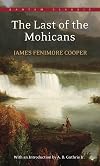
By and large, I found Cooper's The Last of the Mohicans a rather enjoyable read and even frequently humorous, though I'm reasonably sure that humor was not in the author's mind as he wrote in early 19th century America. This needs explaining, but first let's consider why I read the book in the first place. After all, it was first published in 1826, 197 years ago (and counting). The age of the novel is precisely why I determined to read it. After all, to quote history.com, it is considered to show more be “one of the earliest distinctive American novels.” To expand on this, britannica.com notes that “by the first decades of the 19th century, a truly American literature began to emerge. Though still derived from British literary tradition, the short stories and novels published from 1800 through the 1820s began to depict American society and explore the American landscape in an unprecedented manner.” Britannica goes on to cite Cooper as a defining example of a novelist of this period. It seemed obvious to me that, if one wishes to profess any knowledge of American literature, one needs to be at least familiar with Cooper's works, yet he was studied neither in my university course on “The Novel” nor in my course on “American Literature,” so I decided to rectify the omission.
Now to explain my introductory statement about humor. Language, being a social and cultural creation, is characterized by continuous evolution with neologisms popping up here and there, older words vanishing into the mists of forgetfulness, words remaining but with new uses and connotations, new styles of expression, and so on. In addition to language, societal assumptions, biases, and values are in a constant state of flux as well, and that which is considered a positive trait today may wear a negative face tomorrow, and that which is felt to be an objective truth now may well be seen as a prejudice born of ignorance in the future. Reading books such as The Last of the Mohicans opens a window through which one can view societal mores and the language by which they are described as they existed, in this case, nearly two centuries ago. Such an experience should thoroughly disabuse one of the erroneous belief that society is in any way permanent or stagnant and may also give the reader a chuckle or two at the changes that have occurred.
Cooper's writing style, while perfectly professional and polished for a literate man of his age, frequently appears stilted and grandiloquent when contrasted with 20th and 21st century styles. The apparent formality of the language contrasts so abruptly with the forested frontier environment and the struggles of the characters that I found it a source of continual amusement.
Similarly, many of the traits with which Cooper has imbued his characters have undergone significant social reappraisal in the most recent 200 years. For example, the two significant female characters in the novel receive the most admirable praise for their decorum and “alabaster” features. Portrayed as having achieved the very best features representative of their sex, they are in continual need of the strong care and protection of an honorable male member of the species, and, as their aging father laments, are surely unable to endure the privations of being captives in a wild forest. Far from appearing such fine examples of proper womanhood today, they would now be best described as “shrinking violets” and likely admonished to “stand on their own two feet.” It is amusing to compare the traits considered admirable in Cooper's time with such traits today.
In a similar vein, Cooper's depiction of his Native American characters highlights stereotypes beautifully. The character of Uncas, obviously the inspiration for the book's title, is the “noble savage” personified. All of the Natives, of course, display powers of concealment, of hearing, of discovery, and of every other facet of woodlore necessary for survival in the wilderness that far surpass those available to white men thanks to their intrinsic natures. True, as a result of his experience in the forest, Hawkeye exhibits similar traits, but every time the scout alludes to them he indicates how unusual it is for him who has no “cross” (i.e., mixed-race blood) to have such skills. He is very much the exception, not the rule, to be a white man with such abilities. As with our comely ladies, a comparison of yesterday's stereotypes with today's slightly more enlightened knowledge can evoke a few chuckles from the reader.
The very plot of the novel even has a humorous aspect. Really now, why are two very ladylike daughters of an elderly post commandant even being escorted through the trackless forest inhabited by hostile Indians in the midst of the French and Indian War far from the frontiers of civilization? That beggars belief. I am almost convinced that Cooper wrote this entertaining novel with his tongue firmly embedded in his cheek, and for that I rate him an even more entertaining author than I originally thought. Whether Cooper was intending to be deadly serious in his depictions and narratives or whether he was adroitly poking a bit of fun at his credulous 19th century readers, The Last of the Mohicans, as we read it in the 21st century, is an entertaining tale with more than a little levity in it—even if we modern readers have contributed that levity. True, the ending is a bit sad (not every character survives), but it's also an early and surprisingly progressive look (at least at the spiritual level) at what American society would later term amalgamation and, later still, miscegenation. Might Cooper be launching a very small and partially disguised criticism at one of society's prejudices?
Whether or not a reader will enjoy this novel depends greatly upon his or her reasons for picking it up as well as on his or her expectations. In its writing, it is quite different from a modern 21st century adventure novel. If one does choose to read it, enjoy the fictional and highly romanticized adventure, but keep a corner of the mind open to—just possibly—a touch of intentional humor and perhaps even a bit of social commentary hidden among the narratives. We can always debate later as to whether the author intended these things or whether we readers are injecting them ourselves. show less
Now to explain my introductory statement about humor. Language, being a social and cultural creation, is characterized by continuous evolution with neologisms popping up here and there, older words vanishing into the mists of forgetfulness, words remaining but with new uses and connotations, new styles of expression, and so on. In addition to language, societal assumptions, biases, and values are in a constant state of flux as well, and that which is considered a positive trait today may wear a negative face tomorrow, and that which is felt to be an objective truth now may well be seen as a prejudice born of ignorance in the future. Reading books such as The Last of the Mohicans opens a window through which one can view societal mores and the language by which they are described as they existed, in this case, nearly two centuries ago. Such an experience should thoroughly disabuse one of the erroneous belief that society is in any way permanent or stagnant and may also give the reader a chuckle or two at the changes that have occurred.
Cooper's writing style, while perfectly professional and polished for a literate man of his age, frequently appears stilted and grandiloquent when contrasted with 20th and 21st century styles. The apparent formality of the language contrasts so abruptly with the forested frontier environment and the struggles of the characters that I found it a source of continual amusement.
Similarly, many of the traits with which Cooper has imbued his characters have undergone significant social reappraisal in the most recent 200 years. For example, the two significant female characters in the novel receive the most admirable praise for their decorum and “alabaster” features. Portrayed as having achieved the very best features representative of their sex, they are in continual need of the strong care and protection of an honorable male member of the species, and, as their aging father laments, are surely unable to endure the privations of being captives in a wild forest. Far from appearing such fine examples of proper womanhood today, they would now be best described as “shrinking violets” and likely admonished to “stand on their own two feet.” It is amusing to compare the traits considered admirable in Cooper's time with such traits today.
In a similar vein, Cooper's depiction of his Native American characters highlights stereotypes beautifully. The character of Uncas, obviously the inspiration for the book's title, is the “noble savage” personified. All of the Natives, of course, display powers of concealment, of hearing, of discovery, and of every other facet of woodlore necessary for survival in the wilderness that far surpass those available to white men thanks to their intrinsic natures. True, as a result of his experience in the forest, Hawkeye exhibits similar traits, but every time the scout alludes to them he indicates how unusual it is for him who has no “cross” (i.e., mixed-race blood) to have such skills. He is very much the exception, not the rule, to be a white man with such abilities. As with our comely ladies, a comparison of yesterday's stereotypes with today's slightly more enlightened knowledge can evoke a few chuckles from the reader.
The very plot of the novel even has a humorous aspect. Really now, why are two very ladylike daughters of an elderly post commandant even being escorted through the trackless forest inhabited by hostile Indians in the midst of the French and Indian War far from the frontiers of civilization? That beggars belief. I am almost convinced that Cooper wrote this entertaining novel with his tongue firmly embedded in his cheek, and for that I rate him an even more entertaining author than I originally thought. Whether Cooper was intending to be deadly serious in his depictions and narratives or whether he was adroitly poking a bit of fun at his credulous 19th century readers, The Last of the Mohicans, as we read it in the 21st century, is an entertaining tale with more than a little levity in it—even if we modern readers have contributed that levity. True, the ending is a bit sad (not every character survives), but it's also an early and surprisingly progressive look (at least at the spiritual level) at what American society would later term amalgamation and, later still, miscegenation. Might Cooper be launching a very small and partially disguised criticism at one of society's prejudices?
Whether or not a reader will enjoy this novel depends greatly upon his or her reasons for picking it up as well as on his or her expectations. In its writing, it is quite different from a modern 21st century adventure novel. If one does choose to read it, enjoy the fictional and highly romanticized adventure, but keep a corner of the mind open to—just possibly—a touch of intentional humor and perhaps even a bit of social commentary hidden among the narratives. We can always debate later as to whether the author intended these things or whether we readers are injecting them ourselves. show less
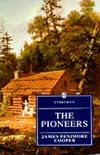
This must surely be one of the worst novels ever written. Check this out from the beginning of chapter 29:
“When Marmaduke Temple and his cousin rode through the gate of the former, the heart of the father had been too recently touched with the best feeling of our nature, to leave inclination for immediate discourse.”
Now that doesn't happen by accident, does it? He's written that on purpose and published it because he thinks it's good. Frightening. I read it to my mum and she got really show more angry on my behalf and asked why I didn't stop reading. Unfortunately I've started the series so now I have to finish. I could quote any number of passages which are equally bad or worse. A particular low point is the conversation between Richard and Agamemnon in chapter 32. I'll not quote that because I don't want anything so racist showing up under my name.
To put things in perspective, this is the best of the Leatherstocking series so far. The earlier novels suffered from their attempts to be adventure stories. Every time they build up to action you live in hope, only again and again to be subjected to frustration and disappointment by Cooper's determined incompetence. That doesn't happen here because not only does nothing happen, nothing ever looks like it's about to happen. What you're left with is deep, utter and complete boredom. It will seem like there's no end to it, but I promise you there is: I experienced the end earlier today and am currently basking in the glow that follows it.
This Everyman editions a nice one, with a sensible introduction that as much as admits that the book is a piece of shit, and in place of notes (which you don't really need), you have a selection of Cooper related criticism. show less
“When Marmaduke Temple and his cousin rode through the gate of the former, the heart of the father had been too recently touched with the best feeling of our nature, to leave inclination for immediate discourse.”
Now that doesn't happen by accident, does it? He's written that on purpose and published it because he thinks it's good. Frightening. I read it to my mum and she got really show more angry on my behalf and asked why I didn't stop reading. Unfortunately I've started the series so now I have to finish. I could quote any number of passages which are equally bad or worse. A particular low point is the conversation between Richard and Agamemnon in chapter 32. I'll not quote that because I don't want anything so racist showing up under my name.
To put things in perspective, this is the best of the Leatherstocking series so far. The earlier novels suffered from their attempts to be adventure stories. Every time they build up to action you live in hope, only again and again to be subjected to frustration and disappointment by Cooper's determined incompetence. That doesn't happen here because not only does nothing happen, nothing ever looks like it's about to happen. What you're left with is deep, utter and complete boredom. It will seem like there's no end to it, but I promise you there is: I experienced the end earlier today and am currently basking in the glow that follows it.
This Everyman editions a nice one, with a sensible introduction that as much as admits that the book is a piece of shit, and in place of notes (which you don't really need), you have a selection of Cooper related criticism. show less
Lists
War Literature (1)
A Reading List (1)
AP Lit (1)
100 (1)
Overdue Podcast (1)
Best War Stories (2)
My TBR (2)
Favourite Books (3)
Out of Copyright (3)
19th Century (3)
1820s (3)
Read in 2003 (1)
Best Spy Fiction (1)
Victorian Period (1)
Unread books (1)
Awards


You May Also Like


Associated Authors
Statistics
- Works
- 501
- Also by
- 39
- Members
- 30,630
- Popularity
- #648
- Rating
- 3.5
- Reviews
- 338
- ISBNs
- 2,809
- Languages
- 31
- Favorited
- 32


