
William Makepeace Thackeray (1811–1863)
Author of Vanity Fair
About the Author
William Makepeace Thackeray was born in Calcutta, India, where his father was in service to the East India Company. After the death of his father in 1816, he was sent to England to attend school. Upon reaching college age, Thackeray attended Trinity College, Cambridge, but he left before completing show more his degree. Instead, he devoted his time to traveling and journalism. Generally considered the most effective satirist and humorist of the mid-nineteenth century, Thackeray moved from humorous journalism to successful fiction with a facility that was partially the result of a genial fictional persona and a graceful, relaxed style. At his best, he held up a mirror to Victorian manners and morals, gently satirizing, with a tone of sophisticated acceptance, the inevitable failure of the individual and of society. He took up the popular fictional situation of the young person of talent who must make his way in the world and dramatized it with satiric directness in The Luck of Barry Lyndon (1844), with the highest fictional skill and appreciation of complexities inherent within the satiric vision in his masterpiece, Vanity Fair (1847), and with a great subtlety of point of view and background in his one historical novel, Henry Esmond (1852). Vanity Fair, a complex interweaving in a vast historical panorama of a large number of characters, derives its title from John Bunyan's Pilgrim's Progress and attempts to invert for satirical purposes, the traditional Christian image of the City of God. Vanity Fair, the corrupt City of Man, remains Thackeray's most appreciated and widely read novel. It contrasts the lives of two boarding-school friends, Becky Sharp and Amelia Smedley. Constantly attuned to the demands of incidental journalism and his sense of professionalism in his relationship with his public, Thackeray wrote entertaining sketches and children's stories and published his humorous lectures on eighteenth-century life and literature. His own fiction shows the influence of his dedication to such eighteenth-century models as Henry Fielding, particularly in his satire, which accepts human nature rather than condemns it and takes quite seriously the applicability of the true English gentleman as a model for moral behavior. Thackeray requested that no authorized biography of him should ever be written, but members of his family did write about him, and these accounts were subsequently published. (Bowker Author Biography) show less
Disambiguation Notice:
W. M. Thackeray also wrote as Charles James Yellowplush, Michael Angelo Titmarsh, George Savage Fitz-Boodle, The Fat Contributor, and Ikey Solomons.
Image credit: William Thackeray, Photograph by Herbert Watkins of 215 Regent Street, London
Series
Works by William Makepeace Thackeray
The Adventures of Philip On His Way Through the World Shewing Who Robbed Him, Who Helped Him, and Who Passed Him By, to Which is Now Prefixed A Shabby Genteel Story (New Century… (1862) 34 copies, 1 review
Ballads, and The rose and the ring 14 copies
Fåfängans marknad. D. 3 11 copies
Reading & Training : William Makepeace Thackeray : Vanity Fair [book + sound recording] (1992) — Writer — 11 copies
The Cornhill magazine 10 copies
The Adventures of Philip (1/2) — Author — 9 copies
Roundabout Papers / Second Funeral of Napoleon / Critical Reviews / The Four Georges / The English Humorists of the Eighteenth Century / Sketches and Travels in London (1887) — Author — 9 copies
Denis Duval / The Wolves and the Lamb / Lovel the Widower / Roundabout Papers (1899) — Author — 9 copies
Barry Lyndon / Great Hoggarty Diamond / Travels and Sketches in London / Character Sketches / Men's Wives (1884) — Author — 9 copies
Paris Sketchbook of Mr. M. A. Titmarsh / Eastern Sketches: A Journey From Cornhill To Cairo (1889) — Author — 8 copies
The History of Henry Esmond (1/2) 8 copies
The Adventures of Philip (2/2) — Author — 8 copies
A collection of letters of W.M. Thackeray, 1847-1855 : with portraits and reproductions of letters and drawings (1970) 7 copies
The History of Henry Esmond / The English Humorists of the Eighteenth Century / The Four Georges / Charity and Humour (1899) 7 copies, 1 review
Ballads and tales 6 copies
The History of Henry Esmond (2/2) 5 copies
The memoirs of Mr. Charles J. Yellowplush;: The history of Samuel Titmarsh and the great Hoggarty diamond; Cox's di (1899) 5 copies
History of Samuel Titmarsh; A little dinner at Timmins's; Notes of a journey from Cornhill to Grand Cairo (2015) 5 copies
The Paris Sketch Book / Eastern Sketches / The Irish Sketch Book / Character Sketches (1884) — Author — 5 copies
La foire aux vanités - Tome 2 4 copies
The Newcomes (1/3) — Author — 4 copies
The Comic almanack : an ephemeris in jest and earnest, containing merry tales, humorous poetry, quips, and oddities (2016) 4 copies
Our Street — Author — 4 copies
The memoirs of Mr. C. J. Yellowplush : The Fitzboodle papers: The wolves and the lamb: Stories and sketches (1889) 4 copies
Denis Duval / Lovel the Widower / The Wolves and the Lamb / The Second Funeral of Napoleon (2012) — Author — 4 copies
Vanity Fair (1/3) 4 copies
The History of Pendennis (3/3) 4 copies
Vanity Fair (2/3) 4 copies
The Yellowplush Papers, Major Gahagan, Stubb's Calendar, the Bedford Row Conspiracy, Flore Et Zepyr & Other Early Miscellanies (1999) 4 copies
Poems and Ballads 3 copies
The English Humourists of the Eighteenth Century and Charity and Humour (The Thackeray Edition) (2008) 3 copies
The Oxford Thackeray, volune VI: The Memoirs of Barry Lyndon, Esq. and the Miscellaneous Papers Written Between 1843 and 1847 (1930) 3 copies
The History of Pendennis (2/3) 3 copies
The History of Pendennis (1/3) — Author — 3 copies
LibriVox Horror Story Collection 005 3 copies
The Complete Works of William Makepeace Thackeray: Vol. XXV & XXVI - Literary Essays ~ Essays on Art 3 copies
The Newcomes (2/3) 3 copies
The Oxford Thackeray, volume X: Christmas Books + Rebecca and Rowena + Later Minor Papers, 1849 - 1861 (1930) 3 copies
Thackeray's Work's XIX: Roundabout Papers the Second Funeral of Napoleon Critical Reviews (1889) 3 copies
The Irish sketch book of 1842 ;: And Character sketches (The complete works of William Makepeace Thackeray, v. XII) (1889) 3 copies
Balciul desertaciunilor (volumul 2) 3 copies
Great Lives by Great Writers 3 copies
Catherine and Men's Wives 3 copies
Roundabout Papers, Etc. 3 copies
Letters to a young man about town 3 copies
Selections from The book of snobs, Roundabout papers, and Ballads (Little masterpieces) (Little masterpieces) (2016) 2 copies
THE BOOK OF SNOBS AND BARRY LYNDON 2 copies
Barry Lyndon, Great Hoggarty Diamond 2 copies
La fira de les vanitats II 2 copies
Some family letters of W.M. Thackeray : together with recollections by his kinswoman Blanche Warre Cornish (2009) 2 copies
Critical papers in literature 2 copies
Ballads and Miscellanies 2 copies
Yellowplush Papers Etc. 2 copies
"A Story" 2 copies
The Works Of Thackeray (10 vol) 2 copies
The history of Henry Esmond, esq.; The lectures (The works of William Makepeace Thackeray, vol 7) 2 copies
Miscellanies: prose and verse, Vol I 2 copies
Literary Essays 2 copies
Yellow Plush Papers and Fitznoodle 2 copies
Roundabout Papers and Denis Duval 2 copies
Barry Lyndon / Great Hoggarty Diamond / Sketches and Travels in London — Author — 2 copies
The Virginians (2/3) 2 copies
The Virginians (1/3) 2 copies
The Irish Sketch 2 copies
The Great Hoggarty Diamond / A Legend of the Rhine / A Shabby Genteel Story — Author — 2 copies
The Works of W. M. Thackeray: The History of Samuel Titmarsh and The Great Hoggarty Diamond, and Others 2 copies, 1 review
The Newcomes...A History 2 copies
Vanity Fair (abridged) 2 copies
Thackeray's Works: Roundabout Papers. To Which is Added The Second Funeral of Napoleon. The Four Georges. The English Humourists of the Eighteenth Century. Critical Reviews and… (1867) — Author — 2 copies
The English humorists of the Eighteenth century ;: Critical reviews ; The second funeral of Napoleon (1893) 2 copies
Paris Sketch Book 2 copies
Dzieje Pendennisa, czyli O jego sukcesach, klęskach, przyjaciołach i największym jego wrogu T. 2 1 copy
Lovel the Widower Etc 1 copy
Dzieje Pendennisa, czyli O jego sukcesach, klęskach, przyjaciołach i największym jego wrogu T. 1 1 copy
Thackeray Works VII 1 copy
The Complete Works of Wm. M. Thackeray - The Marlborough Edition (vols. IV, VI, XII & XVI) 1 copy, 1 review
Wdowiec Lovel 1 copy
Thackeray Works VI 1 copy
Stray papers 1 copy
Thackeray Works V 1 copy
North to Sweetgrass 1 copy
℗La ℗fiera della vanit© 1 copy
O Livro dos Esnobes 1 copy
Ярмарка тщеславия : Роман 1 copy
Thackeray Works IV 1 copy
Charity and Humour 1 copy
Thackeray Works, VIII 1 copy
Thackeray Works I 1 copy
Thackeray Works II 1 copy
Thackeray Works III 1 copy
Pendennis története I. 1 copy
Pendennis története II. 1 copy
The Count of Monte Cristo; The Canterbury Tales(3); Vanity Fair (The 100 Greatest Books Ever Written) (1990) 1 copy
Vanity Fair, Vol II 1 copy
Notes of a Journey 1 copy
The Gownsman 1 copy
The Works of William Makepeace Thackeray: In Twenty-four Volumes. The Virginians. Vol. 8-9 (2018) 1 copy
The Works of William Makepeace Thackeray Vanity Fair Volume I & II (A Novel Without a Hero) (1890) 1 copy
Snobs and other characters from the writings of William Makepeace Thackeray (Seven Seas Books-no.7) (1959) 1 copy
The Yellow Papers 1 copy
The Chronicle of the Drum 1 copy
Barbara Cox and the Cutting of his Comb in theThe Comic Almanack for 1840 by Cruikshank, George 1 copy
Etchings of the late William Makepeace Thackeray while at Cambridge Illustrative of University Life 1 copy
Vanity Fair vol. II 1 copy
Vanity Fair vol. I 1 copy
Thackeray: The Major Novels 1 copy
Vanity Fair, Vol I 1 copy
The History of Pendennis 1 copy
Kniha o snobech 1 copy
Aventuras de un fanfarrón 1 copy
La fiera delle vanità 5 - 7 1 copy
Vanity Fair, Part 2 of 3 1 copy
Vanity Fair, Part 3 of 3 1 copy
Humoristische Novellen 1 copy
La fiera delle vanità 1 - 4 1 copy
La feria de las vanidades II 1 copy
The book of snobs. By: W. M. Thackeray: The Book of Snobs is a collection of satirical works by William Makepeace Thackeray (2016) 1 copy
Works of William Makepeace Thackeray, The Vol. 23 (Miscellaneous Essays, Sketches & Reviews, Contributions to "Punch" ) (1886) 1 copy
Works of W. M Thackeray in 5 Volumes PLUS The Life of W. M. Thackeray by Lewis Melville (The London Edition) (1900) 1 copy
Juvenilia 1 copy
Short Series Sketches 1 copy
Dzieje Pendennisa T.1-2 1 copy
New Century Library - The Works of William Makepeace Thackeray Volume XIII Essays, Reviews etc. etc. 1 copy
Vanity Fair 1 copy
Miscellaneous Sketches 1 copy
The Four Georges Etc 1 copy
Christmas Stories Etc 1 copy
Irish Sketchbook Etc 1 copy
The Newcomes 1 copy
The Jungle 1 copy
Vanity Fair/Pendennis 1 copy
The Cane-bottomed Chair 1 copy
Critical papers in art 1 copy
The knights of Borsellen etc 1 copy
Philip Burlesque 1 copy
Barry Lyndon Miscellaneous 1 copy
Ala de cuervo novela 1 copy
Fairy days 1 copy
Sultan Stork 1 copy
The Devil's Wager 1 copy
Feine Gesellschaft — Author — 1 copy
A Book for Christmas Reading — Author — 1 copy
Vanity Fair, The Newcomes 1 copy
Vanity Fair Part lll & The History of Henry Esmond Part l — Author — 1 copy
Thackeray's Complete Works: Roundabout Papers, Four Georges, Sketches and Travels in London, etc (The People's Edition) (1883) 1 copy
The Works of William Makepeace Thackeray Volume III: Pendennis, Roundabout Papers, Lovel the Widower (1897) — Author — 1 copy
Henry Esmond (abridged) 1 copy
Thackeray's Complete Works, The University Edition. The Christmas Books. Ballads. Hoggarty Diamond. 1 copy
The Christmas Books, Samuel Titmarsh, the Great Hoggarty Diamond, Men's Wives, the Book of Snobs (The People's Edition) (1883) 1 copy
Thackeray's Works, Kensington Limited Edition, Book 3. Vanity Fair, Volume III. Lovel the Widower. 1 copy
Vanity Fair,Vol I & 2 (of 3) 1 copy
A Shabby Genteel Story. The Adventures Of Philip. Ballads. Catherine. Christmas Stories. (Volume II) (1879) 1 copy
Complete works 1 copy
The pocket Thackeray : being favorite passages chosen from the works of William Makepeace Thackeray 1 copy
Thackery's Novels--A Shabby Genteel Story; The Adventures of Philip on His Way Through the World 1 copy
Thackeray's Works, Volume 6 1 copy
The Chest of Cigars 1 copy
Dzieje Pendennisa czyli O jego sukcesach, klęskach, przyjaciołach i największym jego wrogu. T. 2 1 copy
Dzieje Pendennisa czyli O jego sukcesach, klęskach, przyjaciołach i największym jego wrogu. T. 1 1 copy
The Memoirs of Barry Lyndon, Esq. And the Miscellaneous Papers Written Between 1843 and 1847 (Classic Reprint) (2016) 1 copy
Lovel the Widower etc. 1 copy
The Works of William Makepeace Thackeray in Twenty-Four Volumes, Volume XXIII The Four Georges & The English Humourist (1879) 1 copy
The Adventures of Philip On His Way Through the World; A Shabby Genteel Story; Catherine: A Story 1 copy
Irish Sketchbook vol 20 1 copy
Paris Sketchbook vol 17 1 copy
Phillip vol 15,16 1 copy
The Virginians, vol 12,13,14 1 copy
The Newcomes vol 7,8,9 1 copy
Pendennis, volume 4,5,6 1 copy
Die Geschichte von Pendennis sein Glück und sein Unglück, seine Freunde und sein ärgster Feind Bd. 2 1 copy
Die Geschichte von Pendennis sein Glück und sein Unglück, seine Freunde und sein ärgster Feind Bd. 1 1 copy
The Prose Works Of William Makepeace Thackeray: Christmas Books. The Rose And The Ring, Etc (2023) 1 copy
The Paris Sketch Book; The Irish Sketch Book; Notes of a Journey from Cornhill to Grand Cairo [Eastern Sketchbook] (1885) 1 copy
Thackeray's Yellowplush Papers, Complete and Unabridged Edition. The Yellowplush Correspondence and Other Tales, Etc. (2010) 1 copy
Thackeray's Works, Kensington Limited Edition, Book 30. The Four Georges. Sketches and Travels. 1 copy
Thackeray's Works, Kensington Limited Edition, Book 19. Adventures of Philip, Volume III. Catherine. 1 copy
The Works of W. M. Thackeray Volume XX Catherine :A Story, Men's Wives, The Bedford-Row Conspiracy 1 copy
The Rose and the Ring, etc. 1 copy
The Works of William Makepeace Thackeray. Volume XVII: Paris sketch book of Mr. M.A. Titmarsh 1 copy
Works 1 copy
The Works of William Makepeace Thackeray. Volume XXII: Book of Snobs ; Character sketches ; Stories (1903) 1 copy
The Works of William Makepeace Thackeray. Volume XXIV: The Christmas books of Mr. M.A. Titmarsh 1 copy
The Works of William Makepeace Thackeray. Volume XXVII: Roundabout papers ; Little travels and roadside sketches (1903) 1 copy
The Works of William Makepeace Thackeray. Volume XXIX: Catherine : a story ; The Fitz-boodle papers ; Tales (1903) 1 copy
The Works of William Makepeace Thackeray. Volume XXX: Miscellaneous essays, sketches and reviews (1903) 1 copy
The Works of William Makepeace Thackeray. Volume XII: The Virginians : a tale of the last century [Vol.1] (1903) 1 copy
Rodzina Newcome’ów tom 1 1 copy
Rodzina Newcome’ów tom 2 1 copy
Associated Works
Spells of Enchantment: The Wondrous Fairy Tales of Western Culture (1991) — Contributor — 607 copies, 5 reviews
Devils & Demons: A Treasury of Fiendish Tales Old & New (1991) — Contributor — 290 copies, 2 reviews
Delphi Complete Works of Charles Dickens (Illustrated) (2012) — Contributor, some editions — 96 copies
Great British Tales of Terror: Gothic Stories of Horror and Romance 1765-1840 (1972) — Contributor — 86 copies
Doré's London: All 180 Images from the Original London Series with Selected Writings (2008) — Contributor — 62 copies
The World of Law, Volumes I-II: The Law in Literature, The Law as Literature (1960) — Contributor — 54 copies
Oogst Der Tijden. keur uit de werken van schrijvers en dichters aller volken en eeuwen (1940) — Contributor — 12 copies
Library of the World's Best Mystery and Detective Stories: English, Irish (1907) — Contributor — 11 copies
World's Greatest Literature Set (World's Greatest Literature, Volumes 1- 20 full set) (1936) — Contributor — 9 copies
Loves and Deaths: Novelists' Tales of the Nineteenth Century from Scott to Hardy (1972) — Contributor — 6 copies
Die englische Literatur 08 in Text und Darstellung. 19. Jahrhundert 2 (1982) — Contributor — 5 copies
The King's Story Book — Contributor — 1 copy
One hundred best novels condensed: 3 of 4 see note: Adam Bede; Tess of the D'Urbervilles; Don Quixote; East Lynne; Count of Monte Cristo; Paul and Virginia; Tom Brown's School… — Contributor — 1 copy
On the Nature of Things / The History of Henry Esmond / Old Goriot / The Praise of Folly / The Way of All Flesh (1947) — Contributor — 1 copy
English short stories of the nineteenth century — Contributor — 1 copy
Short Stories Retold - Book 1 — Contributor — 1 copy
Short Stories: Old and New — Contributor — 1 copy
Tagged
Common Knowledge
- Canonical name
- Thackeray, William Makepeace
- Other names
- Fitz-Boodle, George Savage (nom de plume)
Titmarsh, Michael Angelo (nom de plume)
Yellowplush, Charles James (nom de plume)
The Fat Contributor
Solomons, Ikey - Birthdate
- 1811-07-18
- Date of death
- 1863-12-24
- Gender
- male
- Education
- Charterhouse (Smithfield, London)
Trinity College, Cambridge
Middle Temple, London - Occupations
- novelist
journalist
essayist
travel writer
lecturer - Relationships
- Ritchie, Anne Thackeray (daughter)
Stephen, Leslie (son-in-law) - Short biography
- William Makepeace Thackery was second only to Charles Dickens in stature as an author during the Victorian era. His humorous and satirical writings were much in demand by periodicals, including Punch, and he was a popular lecturer. Today he's best known for his novel Vanity Fair, which is required reading in most college English courses. He experienced tragedy in his personal life due to the long deterioration and mental illness of his wife Isabella.
- Cause of death
- stroke
- Nationality
- UK
- Birthplace
- Calcutta, India
- Places of residence
- Paris, Île-de-France, France
Weimar, Germany - Place of death
- London, Middlesex, England, UK
- Burial location
- Kensal Green Cemetery, London, Middlesex, England, UK
- Map Location
- England, UK
- Disambiguation notice
- W. M. Thackeray also wrote as Charles James Yellowplush, Michael Angelo Titmarsh, George Savage Fitz-Boodle, The Fat Contributor, and Ikey Solomons.
Members
Discussions
Vanity Fair by William Makepeace Thackeray – LIMITED EDITIONS CLUB 1931 in George Macy devotees (November 2023)
December: Thackeray : Vanity Fair in Monthly Author Reads (January 2011)
Reviews

Türelem – nos, az kell ehhez a monstrumhoz. Főhősünk, Arthur Pendennis, a nem túl gazdag és nem túl sziporkázó főhős 18 éves, mikor először találkozunk vele e könyv lapjain, és a 175. oldalig kell várni, amíg az író egyáltalán eljuttatja őt az egyetemre. (Megjegyz.: nem az a megfejtés, hogy évvesztes a srác.) Erre mondta egy ismerősöm, hogy azért bámulatos: ilyen keveset ilyen sok szóval elmondani! Nevezett Pendennis uraság amúgy fairoaksi birtokán show more éldegél édesanyjával és Laura nevezetű csodabájos rokonával – aki mindazonáltal elég távoli rokon ahhoz, hogy az olvasó nagy összegben le merje fogadni: előbb-utóbb egymáséi lesznek. Aztán Pendennis pár száz oldal után elhagyja szülőföldjét, és a cselekmény Londonban folytatódik. Aminek következtében üdvösen fel is pörög, úgyhogy nekem senki egy rossz szót ne szóljon az ipari forradalomról meg az urbanizációról, ha ezek nincsenek, ott döglene meg az olvasó az unalomtól a kies angol vidék eseménytelenségében. (Megjegyz.: bennem felvetődött a kérdés, hogy rendben van, Arthur különböző kalandokat él át a nagyvárosban – de mit csinál addig a Fairoaksban ragadt Laura? Gondolom, nagyjából semmit, mert nem az a dolga, hogy csináljon valamit. Legfeljebb horgol pár terítőt. Agyagozik. Playstationnal csapatja agyon az időt. Hibernálva van, mint Ripley az Alien-ben. Mindegy az*.)
Mindazonáltal el kell fogadni, hogy ez a könyv nem elsősorban történetet mesél el. Alig vannak benne dickensi drámai jelenetek és színes dickensi karakterek – az olvasónak az az érzése, hogy ha a szereplők bele is keverednek valami hallatlan konfliktusba, valahogy mindig sikerül lágyan kitáncolniuk belőle. Sokkal inkább ráérős tabló ez a vidéki és nagyvárosi Anglia mindennapjairól, újarisztokratákról és tősgyökeres lordokról, katonákról, cselédekről, lelkészekről és patikusokról – azokról, akiket Thackeray oly jól ismer. Mert meg merem kockáztatni: e regény relatív eseménytelensége annak is betudható, hogy végtelenül személyes. Nem annyira szórakoztatni akarja az olvasót, mint inkább vallomást tenni. Túl sok olyan elem van ebben a könyvben, ami egyértelmű párhuzamot mutat Thackeray életeseményeivel: a fiatalon elvert családi örökség, az anyagi problémák, vagy az újságírók és irodalmárok világa. Az volt az érzésem, hogy Thackeray ugyanúgy saját ifjúkori tévelygéseinek állít emléket e könyvben, mint ahogy az íróvá váló Pendennis is önmagát írja meg regénybeli regényében, a Walter Lorraine-ben. És ez a fajta (képzelt vagy valós) személyesség sokat hozzátesz ehhez a könyvhöz.
Szóval ahogy az a klasszikus gigászoknál lenni szokott: amint elfelejtettem a rohanó időt meg a többi posztmodern fantáziát, finom kis élvezetet volt e ráérős prózán átkorzózni. Nem tagadom, voltak pillanatok, amikor egyszerűen leragadt tőle a szemem, de ha az ember befejezi, és egy nap múltán visszatekint rá, már nem az unalom jut eszébe, hanem valami kellemes, bágyadt jóérzés: mintha lankás zöld mezőkön barangolt volna a minap. Nem nagy hegycsúcsok és szédítő szakadékok kápráztatták el, csak valami nyugodt időtlenség. Valami elegáns puhaság. Jó ám az is.
* Amúgy elkelt volna ebben a könyvben egy rendes, igazán kimunkált, élő nőalak. Néha Laurában, néha Amoryban is mintha fellángolt volna valami, de összességében végig Arthur függelékeiként funkcionáltak. show less
Mindazonáltal el kell fogadni, hogy ez a könyv nem elsősorban történetet mesél el. Alig vannak benne dickensi drámai jelenetek és színes dickensi karakterek – az olvasónak az az érzése, hogy ha a szereplők bele is keverednek valami hallatlan konfliktusba, valahogy mindig sikerül lágyan kitáncolniuk belőle. Sokkal inkább ráérős tabló ez a vidéki és nagyvárosi Anglia mindennapjairól, újarisztokratákról és tősgyökeres lordokról, katonákról, cselédekről, lelkészekről és patikusokról – azokról, akiket Thackeray oly jól ismer. Mert meg merem kockáztatni: e regény relatív eseménytelensége annak is betudható, hogy végtelenül személyes. Nem annyira szórakoztatni akarja az olvasót, mint inkább vallomást tenni. Túl sok olyan elem van ebben a könyvben, ami egyértelmű párhuzamot mutat Thackeray életeseményeivel: a fiatalon elvert családi örökség, az anyagi problémák, vagy az újságírók és irodalmárok világa. Az volt az érzésem, hogy Thackeray ugyanúgy saját ifjúkori tévelygéseinek állít emléket e könyvben, mint ahogy az íróvá váló Pendennis is önmagát írja meg regénybeli regényében, a Walter Lorraine-ben. És ez a fajta (képzelt vagy valós) személyesség sokat hozzátesz ehhez a könyvhöz.
Szóval ahogy az a klasszikus gigászoknál lenni szokott: amint elfelejtettem a rohanó időt meg a többi posztmodern fantáziát, finom kis élvezetet volt e ráérős prózán átkorzózni. Nem tagadom, voltak pillanatok, amikor egyszerűen leragadt tőle a szemem, de ha az ember befejezi, és egy nap múltán visszatekint rá, már nem az unalom jut eszébe, hanem valami kellemes, bágyadt jóérzés: mintha lankás zöld mezőkön barangolt volna a minap. Nem nagy hegycsúcsok és szédítő szakadékok kápráztatták el, csak valami nyugodt időtlenség. Valami elegáns puhaság. Jó ám az is.
* Amúgy elkelt volna ebben a könyvben egy rendes, igazán kimunkált, élő nőalak. Néha Laurában, néha Amoryban is mintha fellángolt volna valami, de összességében végig Arthur függelékeiként funkcionáltak. show less

The Kickleburys on the Rhine (1850):
Thackeray's 1850 Christmas Book is a jolly little account of a summer holiday trip the author makes with a lawyer friend to the German spa-town of Rougetnoirburg (not too hard to identify as Baden Baden). Like the other Christmas Books, it's only about fifty pages long, plus a dozen or so full-page drawings by the author.
As a bonus, it comes with a preface in which the author reproduces in full a mocking review of the book that has appeared in the Times show more and then proceeds to tear the pompous reviewer into very small pieces. Something that authors are always advised against doing, but in this case he doesn't seem to have much to fear. It's a satirical book anyway, he's already warned readers that the Times advises them not to buy it and he's sold out the first edition within a week...
It isn't really a book about Germany, it's a send-up of the English abroad, a good topic for satire then as now. Mr Titmarsh's fellow passengers on the boat to Antwerp include an appalling noisy, snobby, selfish and self-important Englishwoman, Lady Kicklebury (widow of a baronet) who tyrannises her servants, her two daughters and her son-in-law, whilst slobbering all over anyone they meet who appears to be either rich or aristocratic (and thrusting her unmarried daughter at any of them who appear to be rich and single). Needless to say, the unmarried daughter, Fanny, whom Titmarsh is also half in love with, has quietly arranged for the man who's courting her to travel to Germany on the same boat. And Lady Kicklebury has a splendid humiliation lined up for her in Rougetnoirburg.
In passing, we get a few little glimpses of German scenery (most of which no-one is looking at, as already indicated by the man in the frontispiece), and a few comic notes on the economy of Rougetnoirburg, which depends entirely on the casino proprietor Lenoir, whilst the palace of the hereditary prince crumbles slowly away.
A pleasant little diversion, which still does exactly the job it was designed for 170 years ago. show less
Thackeray's 1850 Christmas Book is a jolly little account of a summer holiday trip the author makes with a lawyer friend to the German spa-town of Rougetnoirburg (not too hard to identify as Baden Baden). Like the other Christmas Books, it's only about fifty pages long, plus a dozen or so full-page drawings by the author.
As a bonus, it comes with a preface in which the author reproduces in full a mocking review of the book that has appeared in the Times show more and then proceeds to tear the pompous reviewer into very small pieces. Something that authors are always advised against doing, but in this case he doesn't seem to have much to fear. It's a satirical book anyway, he's already warned readers that the Times advises them not to buy it and he's sold out the first edition within a week...
It isn't really a book about Germany, it's a send-up of the English abroad, a good topic for satire then as now. Mr Titmarsh's fellow passengers on the boat to Antwerp include an appalling noisy, snobby, selfish and self-important Englishwoman, Lady Kicklebury (widow of a baronet) who tyrannises her servants, her two daughters and her son-in-law, whilst slobbering all over anyone they meet who appears to be either rich or aristocratic (and thrusting her unmarried daughter at any of them who appear to be rich and single). Needless to say, the unmarried daughter, Fanny, whom Titmarsh is also half in love with, has quietly arranged for the man who's courting her to travel to Germany on the same boat. And Lady Kicklebury has a splendid humiliation lined up for her in Rougetnoirburg.
In passing, we get a few little glimpses of German scenery (most of which no-one is looking at, as already indicated by the man in the frontispiece), and a few comic notes on the economy of Rougetnoirburg, which depends entirely on the casino proprietor Lenoir, whilst the palace of the hereditary prince crumbles slowly away.
A pleasant little diversion, which still does exactly the job it was designed for 170 years ago. show less
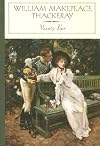
In discussing the origins of The Bonfire of the Vanities, his brilliant satire of the social and economic mores of New York City in the 1980s, Tom Wolfe was always quick to cite Thackeray’s Vanity Fair as his inspiration. Wolfe seemed particularly taken with that earlier work’s subtitle--A Novel Without a Hero--which he took to be a perfect characterization for the story that he himself wanted to tell. He even went so far as to arrange to have his work published in serial form in a show more magazine (Rolling Stone in Wolfe’s case), just as Thackeray did with his magnum opus a century and a half before. There can hardly be higher praise than that for one author to give to another.
Vanity Fair itself owes a considerable debt to a classic work that preceded it by 150 years, John Bunyan’s The Pilgrim’s Progress. In that religious allegory, a person on the path to Heaven first had to pass through the town of Vanity in which there was a fair that appealed to all the basest traits of humanity: greed, infidelity, deceit, avarice, envy, duplicity, and so on. Thackeray saw this as an apt metaphor for his story of the state of English society at the time of the Napoleonic Wars and the dawn of the Victorian Age. In fact, the frame that begins and ends Vanity Fair has two young girls putting on a puppet show during which all of the action in the book takes place. Toward the end of the novel, the author even reveals himself to be the narrator of the tale, and a most unreliable one at that.
If that level of historical detail is not absolutely necessary to summarize Vanity Fair, it is perhaps useful context for a prospective reader to understand what taking on this tome will entail. Because, make no mistake, this book requires a significant investment of time and attention to get through it to the end. It is indeed a meandering and occasionally sprawling tale, written in the style of a time far removed from what the modern audience is used to. But it is also remarkably observant about the human condition as well as wickedly funny; those two things alone make reading it today well worthwhile. Further, in the character of Becky Sharp, Thackeray has created an anti-heroine for the ages—with her resilient and scheming nature, she could hold her own now just as well as she did back then.
How the specific events in the story transpire is not the most important thing about the novel, serving as they do as the backdrop for the societal skewering that was the author’s true purpose. In short, Becky comes from an impoverished background in a culture where that is a serious impediment to advancement. Her school friend Amelia Sedley is from a well-to-do family, but she herself is a rather simple and unambitious girl. Both of these friends enter into disappointing marriages, Becky to a rich but rough-hewn fellow whose family disapproves of her while Amelia devotes herself to a philandering cad and ignores the less-dashing colleague who truly loves her. When Amelia’s family falls on hard economic times, it sets off chain of events that takes several hundred pages to unfold. In those pages, though, there is some real literary gold as Thackeray uses his razor-honed wit and gentle word play to expose a multitude of vanities and foibles as he saw them. I certainly can recommend this book, but only for those who understand what they are getting into first! show less
Vanity Fair itself owes a considerable debt to a classic work that preceded it by 150 years, John Bunyan’s The Pilgrim’s Progress. In that religious allegory, a person on the path to Heaven first had to pass through the town of Vanity in which there was a fair that appealed to all the basest traits of humanity: greed, infidelity, deceit, avarice, envy, duplicity, and so on. Thackeray saw this as an apt metaphor for his story of the state of English society at the time of the Napoleonic Wars and the dawn of the Victorian Age. In fact, the frame that begins and ends Vanity Fair has two young girls putting on a puppet show during which all of the action in the book takes place. Toward the end of the novel, the author even reveals himself to be the narrator of the tale, and a most unreliable one at that.
If that level of historical detail is not absolutely necessary to summarize Vanity Fair, it is perhaps useful context for a prospective reader to understand what taking on this tome will entail. Because, make no mistake, this book requires a significant investment of time and attention to get through it to the end. It is indeed a meandering and occasionally sprawling tale, written in the style of a time far removed from what the modern audience is used to. But it is also remarkably observant about the human condition as well as wickedly funny; those two things alone make reading it today well worthwhile. Further, in the character of Becky Sharp, Thackeray has created an anti-heroine for the ages—with her resilient and scheming nature, she could hold her own now just as well as she did back then.
How the specific events in the story transpire is not the most important thing about the novel, serving as they do as the backdrop for the societal skewering that was the author’s true purpose. In short, Becky comes from an impoverished background in a culture where that is a serious impediment to advancement. Her school friend Amelia Sedley is from a well-to-do family, but she herself is a rather simple and unambitious girl. Both of these friends enter into disappointing marriages, Becky to a rich but rough-hewn fellow whose family disapproves of her while Amelia devotes herself to a philandering cad and ignores the less-dashing colleague who truly loves her. When Amelia’s family falls on hard economic times, it sets off chain of events that takes several hundred pages to unfold. In those pages, though, there is some real literary gold as Thackeray uses his razor-honed wit and gentle word play to expose a multitude of vanities and foibles as he saw them. I certainly can recommend this book, but only for those who understand what they are getting into first! show less

This novel makes example of Becky's story as a demonstration that she can be the more interesting character versus Amelia; that is, that a reader will be most intrigued by whichever character is most active and eventful, rather than merely the most moral. If this helped widen the door to authors introducing more wicked protagonists in future, so much the better. Charlotte Bronte deeply admired this work and author, so I wonder how she didn't see this parallel with her sister Emily's show more "Wuthering Heights" which only seemed to trouble her.
Perhaps the humour is the difference. Vanity Fair is almost entirely filled with unlikeable characters (Captain Dobbin is the reader's life preserver in this morass, and Amelia to a lesser extent), but at least we can laugh at them, and the author acknowledges their faults by inserting some amusing commentary, ostensibly in their defence. His base argument is that such is life, and only a fool would expect nothing but Amelia to represent the real world around us. We do get a handful of more serious interludes, centred on war and death. I found Mr. Osbourne strangely sympathetic (when he wasn't encouraging his grandson to be a bully). Thackeray can be poignant when he isn't purposely undermining it.
PS - I'm mildly sorry I didn't read Tom Jones prior to this, since Thackeray apparently borrowed much from Henry Fielding's authorial style; and here I'd thought the name Vanity Fair was Thackeray's invention, but discover he rented it from "Pilgrim's Progress" and that society by Thackeray's time had already embraced it as an expression to encompass our world entire. show less
Perhaps the humour is the difference. Vanity Fair is almost entirely filled with unlikeable characters (Captain Dobbin is the reader's life preserver in this morass, and Amelia to a lesser extent), but at least we can laugh at them, and the author acknowledges their faults by inserting some amusing commentary, ostensibly in their defence. His base argument is that such is life, and only a fool would expect nothing but Amelia to represent the real world around us. We do get a handful of more serious interludes, centred on war and death. I found Mr. Osbourne strangely sympathetic (when he wasn't encouraging his grandson to be a bully). Thackeray can be poignant when he isn't purposely undermining it.
PS - I'm mildly sorry I didn't read Tom Jones prior to this, since Thackeray apparently borrowed much from Henry Fielding's authorial style; and here I'd thought the name Vanity Fair was Thackeray's invention, but discover he rented it from "Pilgrim's Progress" and that society by Thackeray's time had already embraced it as an expression to encompass our world entire. show less
Lists
1830s (1)
A Reading List (1)
Best Satire (1)
Out of Copyright (1)
United Kingdom (1)
Unread books (1)
BBC Top Books (1)
METAfiction (1)
Folio Society (1)
A Novel Cure (1)
Christmas Books (1)
BBC Big Read (1)
1840s (2)
19th Century (2)
. (1)
Read in 2006 (1)
Funny Classics (1)
Five star books (1)
Read These Too (1)
Reading LIst (1)
100 (1)
BBC Big Read (1)
. (1)
Victorian Period (1)
bound (1)
AP Lit (1)
Awards


You May Also Like


Associated Authors
Statistics
- Works
- 719
- Also by
- 67
- Members
- 24,564
- Popularity
- #854
- Rating
- 3.8
- Reviews
- 288
- ISBNs
- 1,753
- Languages
- 23
- Favorited
- 64


