
Bliss Perry (1860–1954)
Author of The Heart of Emerson's Journals
About the Author
Works by Bliss Perry
Little Masterpieces: Ralph Waldo Emerson — Editor — 3 copies
The Broughton house 1 copy
Fishing with a Worm 1 copy
Associated Works
Selections From Edmund Burke — Editor, some editions — 1 copy
Tagged
Common Knowledge
- Birthdate
- 1860-11-25
- Date of death
- 1954-02-13
- Gender
- male
- Education
- Williams College
University of Berlin
University of Strasburg (now University of Stasbourg, France) - Occupations
- professor
editor
critic
literary historian
essayist
novelist (show all 8)
short story writer
autobiographer - Organizations
- American Academy of Arts and Letters (Literature, 1905)
- Nationality
- USA
- Birthplace
- Williamstown, Massachusetts, USA
- Places of residence
- Williamstown, Massachusetts, USA (birth)
Exeter, New Hampshire, USA (death) - Place of death
- Exeter, New Hampshire, USA
- Associated Place (for map)
- New Hampshire, USA
Members
Reviews

Goethe exhorts the artist to create in forms of beauty, not to talk about it. [266]
The Renaissance was one of those ages of appreciation, when people looked upon Greek sculpture, and the epics of Homer and Virgil, and recognized that these products were the height of human achievement.
As a rationalist, Kant tended to separate the spheres of reason, sense, and morals, and to refer all three to subjective judgment. Schiller, his disciple, conceived of education as an aesthetic enterprise show more toward freeing man from bondage to the senses, leading him through culture, to a state of more perfect nature. There, as of the ancient Greeks, to stand among truth and goodness garbed in beauty. show less
The Renaissance was one of those ages of appreciation, when people looked upon Greek sculpture, and the epics of Homer and Virgil, and recognized that these products were the height of human achievement.
As a rationalist, Kant tended to separate the spheres of reason, sense, and morals, and to refer all three to subjective judgment. Schiller, his disciple, conceived of education as an aesthetic enterprise show more toward freeing man from bondage to the senses, leading him through culture, to a state of more perfect nature. There, as of the ancient Greeks, to stand among truth and goodness garbed in beauty. show less
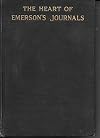
$25. VG condition. Emerson published his journals.
Lists
Awards

You May Also Like


Associated Authors
Statistics
- Works
- 60
- Also by
- 7
- Members
- 403
- Popularity
- #60,269
- Rating
- 3.9
- Reviews
- 2
- ISBNs
- 69
- Languages
- 1