
Edmund Wilson (1895–1972)
Author of To the Finland Station
About the Author
Wilson roamed the world and read widely in many languages. He was a journalist for leading literary periodicals: Vanity Fair, where he was briefly managing editor; The New Republic, where he was associate editor for five years; and the New Yorker, where he was book reviewer in the 1940s. These show more varied experiences were typical of Wilson's range of interests and ability. Eternally productive and endlessly readable, he conquered American literature in countless essays. If he is idiosyncratic and lacks a rigid mold, that probably contributes to his success as a literary critic, since he was not committed to interpretation in the straitjacket of some popular approach or dogma. His critical position suits his cosmopolitan background---historical and sociological considerations prevail. He went through a brief Marxist period and experimented with Freudian criticism. Axel's Castle (1931), a penetrating analysis of the symbolist writer, has exerted a great influence on contemporary literary criticism. Its dedication, to Christian Gauss of Princeton, reads:"It was principally from you that I acquired.. .my idea of what literary criticism ought to be---a history of man's ideas and imaginings in the setting of the conditions which have shaped them."His volume of satiric short stories, Memoirs of Hecate County (1946), with its frankly erotic passages, was the subject of court cases in a less tolerant decade than the present one. It was Wilson's own favorite among his writings, but he complained that those individuals who like his other work tend to disregard it. (Bowker Author Biography) show less
Image credit: Courtesy of the NYPL Digital Gallery (image use requires permission from the New York Public Library)
Series
Works by Edmund Wilson
Axel's Castle: A Study of the Imaginative Literature of 1870-1930 (FSG Classics) (1931) 733 copies, 7 reviews
Dear Bunny, Dear Volodya: The Nabokov-Wilson Letters, 1940-1971, Revised and Expanded Edition (1979) — Author — 287 copies
Edmund Wilson: Literary Essays and Reviews of the 1920s & 30s: The Shores of Light / Axel's Castle / Uncollected Reviews (Library of America #176) (2007) 250 copies, 1 review
The Shock of Recognition: The Development of Literature in the United States Recorded by the Men Who Made It (1943) 119 copies
Europe without Baedeker : Sketches Among the Ruins of Italy, Greece & England, Together With Notes from a European Diary (1966) 78 copies, 1 review
A Prelude: Landscapes, Characters & Conversations from the Earlier Years of My Life (1967) 41 copies
Travels in two democracies 8 copies
Three reliques of ancient Western poetry: Collected from the ruins of the twentieth century (1964) 3 copies
Poets, Farewell! 3 copies
Corrections and Comments 1 copy
RAIZES DA CRIACAO LITERARIA 1 copy
A Christmas Delirium 1 copy
CASTILLO AXEL. ED-32. 1 copy
THE TRIPLE THINKERS by Edmund Wilson, Oxford University Press. Twelve essays on literary subjects 1 copy
Az élet jelei 1 copy
The Kipling That Nobody Read 1 copy
Szkice 1 copy
Associated Works
The Last Tycoon (1941) — Foreword, some editions; Editor, some editions; Preface, some editions — 2,964 copies, 25 reviews
American Poetry: The Twentieth Century, Volume Two: E. E. Cummings to May Swenson (2000) — Contributor — 444 copies, 1 review
The Lincoln Anthology: Great Writers on His Life and Legacy from 1860 to Now (2008) — Contributor — 172 copies, 1 review
The Norton Anthology of American Literature, Volume 2: 1865 to Present (1979) — Contributor, some editions — 137 copies
Aspects of Alice: Lewis Carroll's Dream Child as Seen Through the Critics' Looking-glasses, 1865-1971 (1971) — Contributor — 124 copies, 3 reviews
The Glorious American Essay: One Hundred Essays from Colonial Times to the Present (2020) — Contributor — 119 copies
The Great Gatsby / Tender Is The Night / The Last Tycoon (1953) — Editor, some editions — 115 copies, 1 review
War No More: Three Centuries of American Antiwar and Peace Writing (2016) — Contributor — 111 copies, 2 reviews
Writing New York: A Literary Anthology (Expanded 10th-Anniversary Edition) (2008) — Contributor — 102 copies, 1 review
A Reader's Companion to the Hobbit and the Lord of the Rings (1995) — Contributor — 88 copies, 1 review
Years of Protest: A Collection of American Writings of the 1930's (1967) — Contributor — 44 copies, 1 review
The Complete Works of Kate Chopin (Southern Literary Studies) (1969) — Foreword, some editions; Foreword — 43 copies, 1 review
Published and Perished: Memoria, Eulogies, and Remembrances of American Writers (2002) — Contributor — 41 copies, 1 review
Twentieth-Century American Literature (Chelsea House Library of Literary Criticism) (1986) — Contributor — 20 copies
Contemporary Short Stories: Representative Selections, Volume 3 — Contributor — 6 copies
First Love: Stories by Sixteen of Today's Great Authors of Romantic Fiction (1948) — Contributor — 3 copies
A Book of Princeton Verse, Volume I — Contributor — 2 copies
The Dial, Vol LXXVII No 3, September 1924 — Contributor, some editions — 1 copy
The Ethnic Image in Modern American Literature, 1900-1950, Volumes 1-2 (1984) — Contributor — 1 copy
32 Współczesne Opowiadania Amerykańskie - Tom I — Contributor — 1 copy
Tagged
Common Knowledge
- Canonical name
- Wilson, Edmund
- Legal name
- Wilson, Edmund, Jr.
- Other names
- Bunny
- Birthdate
- 1895-05-08
- Date of death
- 1972-06-12
- Gender
- male
- Education
- Princeton University (BA|2016)
The Hill School, Pottstown, Pennsylvania, USA - Occupations
- managing editor (Vanity Fair)
newspaper reporter
associate editor (The New Republic)
book reviewer
literary critic
historian (show all 8)
translator
memoirist - Organizations
- The Sun (New York)
Vanity Fair
The New Republic
The New Yorker
The New York Review of Books - Awards and honors
- Presidential Medal of Freedom (1963)
Emerson-Thoreau Medal (1966)
National Book Award (1953, 1956, 1963)
Edward MacDowell Medal (1964) - Relationships
- McCarthy, Mary (wife)
Nabokov, Vladimir (friend)
Fitzgerald, F. Scott (friend)
Bishop, John Peale (friend)
Zabel, Morton Dauwen (friend) - Short biography
- Edmund Wilson was born in Red Bank, New Jersey. He attended The Hill School, a private boarding school in Pennsylvania, where he served as the editor-in-chief of the school's literary magazine, then went on to Princeton University, where he was a classmate of F. Scott Fitzgerald. Their friendship became one of the most important literary relationships in the history of American letters. Wilson read omnivorously across the spectrum of modern European and Russian writers, including Proust, Joyce, Eliot, Valéry, Dostoyevsky, Gogol, and Pushkin, along with almost all the 20th century American writers. He began his writing career as a reporter for the New York Sun, and became the managing editor of Vanity Fair in 1920. He later served as associate editor of The New Republic and as a book reviewer for The New Yorker and The New York Review of Books. He wrote plays, poems, and novels, but his greatest influence was as a literary critic, essayist, and historian. These books included Axel's Castle: A Study in the Imaginative Literature of 1870–1930 (1931) a sweeping survey of Symbolism. To the Finland Station (1940) was a broad study of European socialism up to the Bolsheviks Revolution. Wilson's work was heavily influenced by the ideas of Sigmund Freud and Karl Marx, and in turn, his work influenced novelists such as Upton Sinclair, John Dos Passos, Sinclair Lewis, and Theodore Dreiser. Wilson was married four times, most famously to Mary McCarthy, who was 17 years his junior, from 1938 to 1946.
Wilson edited the posthumous papers and notebooks of his college friend F. Scott Fitzgerald, The Crack-Up (1945), and also edited the novel The Last Tycoon (1941), which Fitzgerald had left uncompleted at his death. - Nationality
- USA
- Birthplace
- Red Bank, New Jersey, USA
- Places of residence
- Red Bank, New Jersey, USA
Talcottville, New York, USA
Wellfleet, Massachusetts, USA - Place of death
- Talcottville, New York, USA
- Burial location
- Wellfleet, Massachusetts, USA
- Map Location
- New Jersey, USA
Members
Reviews
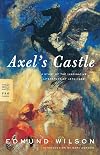
Wilson, Edmund. Axel’s Castle: A Study in the Imaginative Literature of 1870-1930. Charles Scribner’s Sons, 1931.
Anyone interested in the modernist movement in literature should read Edmund Wilson’s Axel’s Castle. It is much less dated than any work of literary criticism that is almost 90 years old has any right to be. Wilson writes with an almost journalistic clarity about subjects that are themselves sometimes intentionally vague, abstruse, and arcane, and he does so at a time when show more many of the works he discusses were just beginning to be read and understood in any depth. He writes about James Joyce’s Finnegans Wake, for example, when it was still being published in draft pieces. If the romantic poets were reacting against classicism and connecting their own subjective experience to our objective understanding of nature, the late 19th-century French symbolist poets, Wilson tells us, reacted against the objectivity of romanticism and against realism and naturalism. Wilson then locates Yeats in this new symbolist tradition and shows how later in his career he blends it with more realistic elements, as did the early work of Joyce and T. S. Eliot. In discussing Joyce and Proust, he points out that consciousness for them had a much more evanescent quality than it did for the romantics. They needed to catch it on the fly and connect it, not to nature, but to the depths of their own unconscious minds. Language for many of these writers was more important for its suggestive, often private, values than for its denotative connections. This explains, Wilson says, why so many of these works are difficult to decipher. Axel’s Castle is Wilson’s ultimate symbol for language that has become completely self-absorbed and private. He somewhat unfairly, I think, disparages the poetry of Gertrude Stein for this tendency. On a less serious note, Wilson gives me good reason not to read Proust, and suggests that maybe I ought to try to really read all the layers I can in in the palimpsest that is Finnegans Wake. Wilson gets five stars for this one. show less
Anyone interested in the modernist movement in literature should read Edmund Wilson’s Axel’s Castle. It is much less dated than any work of literary criticism that is almost 90 years old has any right to be. Wilson writes with an almost journalistic clarity about subjects that are themselves sometimes intentionally vague, abstruse, and arcane, and he does so at a time when show more many of the works he discusses were just beginning to be read and understood in any depth. He writes about James Joyce’s Finnegans Wake, for example, when it was still being published in draft pieces. If the romantic poets were reacting against classicism and connecting their own subjective experience to our objective understanding of nature, the late 19th-century French symbolist poets, Wilson tells us, reacted against the objectivity of romanticism and against realism and naturalism. Wilson then locates Yeats in this new symbolist tradition and shows how later in his career he blends it with more realistic elements, as did the early work of Joyce and T. S. Eliot. In discussing Joyce and Proust, he points out that consciousness for them had a much more evanescent quality than it did for the romantics. They needed to catch it on the fly and connect it, not to nature, but to the depths of their own unconscious minds. Language for many of these writers was more important for its suggestive, often private, values than for its denotative connections. This explains, Wilson says, why so many of these works are difficult to decipher. Axel’s Castle is Wilson’s ultimate symbol for language that has become completely self-absorbed and private. He somewhat unfairly, I think, disparages the poetry of Gertrude Stein for this tendency. On a less serious note, Wilson gives me good reason not to read Proust, and suggests that maybe I ought to try to really read all the layers I can in in the palimpsest that is Finnegans Wake. Wilson gets five stars for this one. show less

We almost always read fiction in what I call our 'uptown' reading group, but this time we tackled [To the Finland Station]. Very interesting discussion followed, to my surprise and pleasure. Edmund Wilson writes marvelously clear prose, even if it's in an older, more subordinate-clause style. While his section on Lenin is too much a hagiography (as he himself admitted later), the history of socialist and communist origins and philosophy in Europe really filled a hole in my education, and his show more concentration on the history and personalities of Marx and Engels made them very vivid to me. If you haven't read it, take a look, and forgive the first chapter or so on the French philosophers (it is rather deadly). show less

Thanks to Edmund Wilson's Patriotic Gore I have read one of America's masterpieces, A Personal Memoir of Ulysses S Grant. Wilson finds what is worthy of thought and comment on the massive amount of writing around and about the Civil War. So one expects and gets a generous exposition on Harriet Beecher Stowe, but Francis Grierson, William T Sherman, Sarah Morgan, Alboin W. Tourgee, George W Cable, Oliver Wendall Holmes, and many more may come as surprise in their numbers and completeness. show more Wilson sees the War as a clash of economic systems that could not tolerate the other and thus the resultant sometimes beautiful, sometimes stimulating mass of verbiage that mostly hides and obscures what the slaughter, the gore, was all about. This is my second reread of this provocative, thorough and informative commentary and I shall probably visit it again.
Quotes: (page 5) “To expose oneself to Uncle Tom may therefore prove a startling experience. It is a much more impressive work than one had ever been allowed to expect. The first thing that strikes one about it is a certain eruptive force. This is partly explained by the author in a preface to a late edition, in which she tells of the oppressive silence that hung over the whole question of slavery before she published her book.”
(page 536) “A Fool's Errand sold two hundred thousand copies, plus piracies, and was compared to Uncle Tom's Cabin, of which it did, indeed, have something of the compulsive and explosive force. In 1881 its sales declined steeply from the tens of thousands to the thousands...As we shall see, the people of the North and West did not by that time want to be worried by these painful intractable problems. And the problem presented by Tourgee was particularly intractable and painful, because this problem was not merely a matter of the villainy or barbarity of the South. He calls his book, A Fool's Errand, by One of the Fools, and the fool's errand is the Northerner's own mission in believing in, defending and attempting to carry out the policies of the Reconstruction government.”
(page 650) “What was it, then, that led Grant and Lincoln to express themselves with equal concision? It was undoubtedly the decisiveness with which they had to speak. They had no time in which to waist words. To temporize or deceive was too dangerous. They are obliged to issue orders and to lay down lines of policy that will immediately be understood. Their role is to convince and direct. This is the language of responsibility, and its accent of decisiveness will be carried on by the younger men who have served in the war: Ambrose Bierce in his stoical nightmare; by John De Forest in his Roman impassivity; by Justice Holmes in his judicial austerity. One finds this even in Cable when, emerging from the humid bayous and the rich dialects of Louisiana, he comes to present in unequivocal language his analysis of the problems of the South.” show less
Quotes: (page 5) “To expose oneself to Uncle Tom may therefore prove a startling experience. It is a much more impressive work than one had ever been allowed to expect. The first thing that strikes one about it is a certain eruptive force. This is partly explained by the author in a preface to a late edition, in which she tells of the oppressive silence that hung over the whole question of slavery before she published her book.”
(page 536) “A Fool's Errand sold two hundred thousand copies, plus piracies, and was compared to Uncle Tom's Cabin, of which it did, indeed, have something of the compulsive and explosive force. In 1881 its sales declined steeply from the tens of thousands to the thousands...As we shall see, the people of the North and West did not by that time want to be worried by these painful intractable problems. And the problem presented by Tourgee was particularly intractable and painful, because this problem was not merely a matter of the villainy or barbarity of the South. He calls his book, A Fool's Errand, by One of the Fools, and the fool's errand is the Northerner's own mission in believing in, defending and attempting to carry out the policies of the Reconstruction government.”
(page 650) “What was it, then, that led Grant and Lincoln to express themselves with equal concision? It was undoubtedly the decisiveness with which they had to speak. They had no time in which to waist words. To temporize or deceive was too dangerous. They are obliged to issue orders and to lay down lines of policy that will immediately be understood. Their role is to convince and direct. This is the language of responsibility, and its accent of decisiveness will be carried on by the younger men who have served in the war: Ambrose Bierce in his stoical nightmare; by John De Forest in his Roman impassivity; by Justice Holmes in his judicial austerity. One finds this even in Cable when, emerging from the humid bayous and the rich dialects of Louisiana, he comes to present in unequivocal language his analysis of the problems of the South.” show less
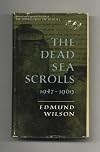
The Scrolls from the Dead Sea and The Dead Sea Scrolls 1947-1969
By Edmund Wilson
This is a review of Edmund Wilson’s original book about the Dead Sea Scrolls, published in 1955, and his updated and expanded book, published in 1969. Much like Elaine Pagels’ books about the Gnostic Gospels, Wilson’s books are about the history and interpretation of the Dead Sea scrolls, rather than a translation of the original texts. Wilson’s books, more than Pagels’, are full of high adventure and show more intrigue, especially because they take place in Palestine, a land notorious for religious and political upheaval, and because of the time in which they take place, from 1947, at the end of the British mandate, to 1969, two years after the Six-Day War between the Arabs and the Israelis. The Dead Sea Scrolls were discovered by a Bedouin boy in a cave along the western shore of the Dead Sea in 1947, two years after the discovery of the Nag Hammadi scrolls (gnostic gospels) in Egypt. Unlike the Nag Hammadi texts, which are Christian (written in Coptic), the Dead Sea Scrolls are Jewish (written in Hebrew). They are of interest, however, to both Jewish and Christian biblical scholars, although for different reasons.
Wilson explains why the discovery of the scrolls was problematic and upsetting for scholars and why it took some time for them to be accepted as authentic. He reminds us that up until about 400 BCE, the Israeli religion was practiced and handed down through oral tradition. Our earliest written Judeo-Christian scriptures are:
- [ ] The Alexandrian Septuagint (a Greek translation of the Hebrew Bible that dates from the third century BCE)
- [ ] St. Jerome’s Latin Vulgate (a Latin translation of the Christian Bible that dates from the late fourth century CE)
- [ ] The Masoretic texts (a translation of the Hebrew Bible that dates from the ninth century CE)
It’s important to remember that almost all knowledge of the Bible, up until the 1947 discovery had come from a small set of texts that span from a period of about 1,300 years - 400 years before Christ with the Septuagint to 900 years after him with the Masoretic texts. As Wilson says, “It took some courage to face new materials where none had been imagined to exist.”
Wilson, one of America’s greatest literary critics, is a brilliant writer. He masterfully weaves a story that combines political intrigue, place-setting in a dry, dusty land where if only the fighting would stop so that archaeologists (several of whom are also clergy) can get on with it, and scholarly bickering and possessiveness of not only the scrolls but of their interpretation as well. His theory, or not so much his but the general consensus of what he believes are the more objective scholars, is that the Essenes, a Jewish communal society who lived from the second century BCE to the first CE, may have been the precedent for Christianity. At the start of his book, Wilson somewhat dryly describes the archaeology of the Essene monastery - the “cave” where the Bedouin boy unknowingly discovered the sect’s library. Much later, after he’s woven his fascinating tale, he connects the archaeological, religious, and historical dots with a beautiful sentence: “The monastery, this structure of stone that endures, between the bitter waters and precipitous cliffs, with its oven and its inkwells, its mill and its cesspool, its constellation of sacred fonts and the unadorned graves of its dead, is perhaps, more than Bethlehem or Nazareth, the cradle of Christianity.“
I enjoyed the original of Wilson’s book more than I did the expanded version. The original story was more compelling, and while the expanded version was certainly interesting, it didn’t capture the imagination quite so effectively. Additionally, Wilson weakened the aura of his story with an offputting appendix in the expanded version. The appendix was intended to demonstrate a point he had made consistently throughout both books - that scholars, many of whom have their own personal religious allegiances, often focus on minutia as a way to deflect from the big picture impact of the scrolls on collective Biblical knowledge. Knowledge that for some can be uncomfortable to absorb. Wilson simply could have left it at that because an astute reader understood exactly his point. However, in his appendix, he includes a series of point / counterpoint letters between himself and an anonymous scholarly reviewer of another author’s book about the scrolls. Rather than making himself look good, instead, through the esoteric and bitchy back and forth, both ended up looking like petty cat-fighters. They were both trying to make scholarly points, but to the lay reader, the points didn’t mean much. Instead, I found myself thinking, “Would you both just give it a drink!”
Regardless, I greatly enjoyed the original Scrolls from the Dead Sea. It was exciting to read after having read about the gnostic gospels because it showed the connection between Judaism and Christianity at a time when both were evolving from semi-mythology into written, codified religions. show less
By Edmund Wilson
This is a review of Edmund Wilson’s original book about the Dead Sea Scrolls, published in 1955, and his updated and expanded book, published in 1969. Much like Elaine Pagels’ books about the Gnostic Gospels, Wilson’s books are about the history and interpretation of the Dead Sea scrolls, rather than a translation of the original texts. Wilson’s books, more than Pagels’, are full of high adventure and show more intrigue, especially because they take place in Palestine, a land notorious for religious and political upheaval, and because of the time in which they take place, from 1947, at the end of the British mandate, to 1969, two years after the Six-Day War between the Arabs and the Israelis. The Dead Sea Scrolls were discovered by a Bedouin boy in a cave along the western shore of the Dead Sea in 1947, two years after the discovery of the Nag Hammadi scrolls (gnostic gospels) in Egypt. Unlike the Nag Hammadi texts, which are Christian (written in Coptic), the Dead Sea Scrolls are Jewish (written in Hebrew). They are of interest, however, to both Jewish and Christian biblical scholars, although for different reasons.
Wilson explains why the discovery of the scrolls was problematic and upsetting for scholars and why it took some time for them to be accepted as authentic. He reminds us that up until about 400 BCE, the Israeli religion was practiced and handed down through oral tradition. Our earliest written Judeo-Christian scriptures are:
- [ ] The Alexandrian Septuagint (a Greek translation of the Hebrew Bible that dates from the third century BCE)
- [ ] St. Jerome’s Latin Vulgate (a Latin translation of the Christian Bible that dates from the late fourth century CE)
- [ ] The Masoretic texts (a translation of the Hebrew Bible that dates from the ninth century CE)
It’s important to remember that almost all knowledge of the Bible, up until the 1947 discovery had come from a small set of texts that span from a period of about 1,300 years - 400 years before Christ with the Septuagint to 900 years after him with the Masoretic texts. As Wilson says, “It took some courage to face new materials where none had been imagined to exist.”
Wilson, one of America’s greatest literary critics, is a brilliant writer. He masterfully weaves a story that combines political intrigue, place-setting in a dry, dusty land where if only the fighting would stop so that archaeologists (several of whom are also clergy) can get on with it, and scholarly bickering and possessiveness of not only the scrolls but of their interpretation as well. His theory, or not so much his but the general consensus of what he believes are the more objective scholars, is that the Essenes, a Jewish communal society who lived from the second century BCE to the first CE, may have been the precedent for Christianity. At the start of his book, Wilson somewhat dryly describes the archaeology of the Essene monastery - the “cave” where the Bedouin boy unknowingly discovered the sect’s library. Much later, after he’s woven his fascinating tale, he connects the archaeological, religious, and historical dots with a beautiful sentence: “The monastery, this structure of stone that endures, between the bitter waters and precipitous cliffs, with its oven and its inkwells, its mill and its cesspool, its constellation of sacred fonts and the unadorned graves of its dead, is perhaps, more than Bethlehem or Nazareth, the cradle of Christianity.“
I enjoyed the original of Wilson’s book more than I did the expanded version. The original story was more compelling, and while the expanded version was certainly interesting, it didn’t capture the imagination quite so effectively. Additionally, Wilson weakened the aura of his story with an offputting appendix in the expanded version. The appendix was intended to demonstrate a point he had made consistently throughout both books - that scholars, many of whom have their own personal religious allegiances, often focus on minutia as a way to deflect from the big picture impact of the scrolls on collective Biblical knowledge. Knowledge that for some can be uncomfortable to absorb. Wilson simply could have left it at that because an astute reader understood exactly his point. However, in his appendix, he includes a series of point / counterpoint letters between himself and an anonymous scholarly reviewer of another author’s book about the scrolls. Rather than making himself look good, instead, through the esoteric and bitchy back and forth, both ended up looking like petty cat-fighters. They were both trying to make scholarly points, but to the lay reader, the points didn’t mean much. Instead, I found myself thinking, “Would you both just give it a drink!”
Regardless, I greatly enjoyed the original Scrolls from the Dead Sea. It was exciting to read after having read about the gnostic gospels because it showed the connection between Judaism and Christianity at a time when both were evolving from semi-mythology into written, codified religions. show less
Lists
Backlisted (1)
Deathreads (1)
Awards


You May Also Like


Associated Authors
Statistics
- Works
- 94
- Also by
- 41
- Members
- 8,911
- Popularity
- #2,696
- Rating
- 3.8
- Reviews
- 83
- ISBNs
- 249
- Languages
- 7
- Favorited
- 18