
Lionel Trilling (1905–1975)
Author of The Liberal Imagination
About the Author
Trilling has exerted a wide influence upon literature and criticism: as university professor at Columbia, where he taught English literature, and in his long association with Partisan Review, Kenyon Review, and the Kenyon School of English (now the School of Letters, Indiana University). He show more considered himself a true "liberal"---having a "vision of a general enlargement of [individual] freedom and rational direction in human life. Yet even liberalism, Trilling insisted, was simply one of several ways of organizing the complexity of life; however, it can reveal "variousness and possibility" just as literature, its subject, does. Trilling was viewed as a genteel moralist, but never would settle for mere simplification in literary analysis even if it led to understanding. (Bowker Author Biography) show less
Image credit: Owen Barfield World Wide Website
Series
Works by Lionel Trilling
The Oxford Anthology of English Literature: Volume IV: Romantic Poetry and Prose (1973) 238 copies, 1 review
The Oxford Anthology of English Literature, Volume I: The Middle Ages through the Eighteenth Century (1973) — Editor — 212 copies
The Oxford Anthology of English Literature, Volume II: 1800 to the Present (1973) — Joint Comp. — 192 copies
The Oxford Anthology of English Literature: Volume V: Victorian Prose and Poetry (1973) 180 copies, 2 reviews
A Company of Readers : Uncollected Writings of W. H. Auden, Jacques Barzun, and Lionel Trilling from the Reader's Subscr (2001) 138 copies, 1 review
The life and work of Sigmund Freud (two-volume abridged edition) Volume one (1984) — Editor; Introduction — 21 copies, 1 review
The life and work of Sigmund Freud (two-volume abridged edition) Volume two (1986) — Editor — 8 copies, 1 review
Literatura e Sociedade 1 copy
Encounter (Lionel Trilling's review of Lolita) — Contributor — 1 copy
La letteratura e le idee 1 copy
Associated Works
The Story and Its Writer: An Introduction to Short Fiction (1976) — Contributor — 1,218 copies, 3 reviews
A Truth Universally Acknowledged: 33 Great Writers on Why We Read Jane Austen (2009) — Contributor — 413 copies, 18 reviews
Adventures of Huckleberry Finn [Norton Critical Edition, 2nd ed.] (1977) — Contributor — 332 copies, 4 reviews
Selected Short Stories of John O'Hara (Modern Library Classics) (1980) — Editor, some editions — 127 copies
The Immediate Experience: Movies, Comics, Theatre, and Other Aspects of Popular Culture (1970) — Introduction — 117 copies, 2 reviews
Selected Letters of John Keats: Based on the texts of Hyder Edward Rollins, Revised Edition (2005) — Editor — 79 copies
The Commentary reader; two decades of articles and stories (1966) — Contributor, some editions — 41 copies
Hemingway and His Critics: An International Anthology (1961) — Contributor, some editions — 27 copies
Alger Hiss, Whittaker Chambers, and the Schism in the American Soul (2002) — Contributor — 25 copies, 1 review
Romanticism Reconsidered: Selected Papers from the English Institute (English Institute Essays) (1963) — Contributor, some editions — 22 copies
The study of literature, a handbook of critical essays and terms (1960) — Contributor, some editions — 18 copies
The Partisan reader; ten years of Partisan review, 1934-1944: an anthology (1946) — Introduction — 16 copies
The stature of Theodore Dreiser; a critical survey of the man and his work (1955) — Contributor, some editions — 5 copies
The scene before you; a new approach to American culture (1955) — Contributor, some editions — 4 copies
Modern Short Stories — Contributor — 2 copies
Tagged
Common Knowledge
- Legal name
- Trilling, Lionel Mordechai
- Birthdate
- 1905-07-04
- Date of death
- 1975-11-05
- Gender
- male
- Education
- Columbia University (PhD|English Literature|1938)
Columbia University (AM|1926)
Columbia College (AB|1925) - Occupations
- university professor
literary critic - Organizations
- American Academy of Arts and Letters ( [1951])
American Academy of Arts and Sciences
National Institute of Arts and Letters
Phi Beta Kappa
Athenaeum Club
Century Club (show all 12)
Columbia University (professor)
Harvard University (professor)
Kenyon School of English (senior fellow)
Indiana School of Letters (senior fellow)
The Kenyon Review (editor)
Partisan Review (editor) - Awards and honors
- Jefferson Lecture (1972)
Mark Van Doren Award (1966)
Brandeis University Creative Arts Award (1967-68)
Columbia University's first tenured Jewish professor in the English department - Relationships
- Trilling, Diana (spouse)
Hollander, John (student)
Ozick, Cynthia (student)
Menand, Louis (student)
Ginsberg, Allen (student)
Kerouac, Jack (student) - Short biography
- Lionel Trilling became America's most influential and most admired literary critic in the years after World War II. He was also one of Columbia University's legendary professors, teaching literature and cultural history there for more than 40 years.
- Nationality
- USA
- Birthplace
- Queens, New York, New York, USA
- Places of residence
- New York, New York, USA
- Place of death
- New York, New York, USA
- Burial location
- Ferncliff Cemetery, Hartsdale, New York, USA
- Associated Place (for map)
- New York, USA
Members
Reviews
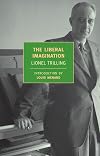
Trilling, Lionel. The Liberal Imagination. 1950. Introduction by Louis Menand. New York Review of Books, 2009.
Lionel Trilling’s classic collection of essays from such journals as the Partisan Review in the 1940s provides a refreshing antidote to the tweets and blog posts that often serve for critical thought these days. Trilling was, according to Louis Menand, a “liberal anticommunist” with a grudge against the American Marxism typified by the literary historian V. L. Parrington. show more Parrington, he said, had a narrowly materialist view of reality. Trilling’s critique of Marxism made old-school radicals like Irving Howe say he lacked social conscience. Trilling has a sharp eye for the overly simple. He admires Freud but is critical of Sherwood Anderson and others who oversimplified Freudian insights. Even Freud, he says, does that at times. He praises Henry James and Mark Twain, both of whom he said had a well-nuanced realism. In talking about Twain, he quotes Pascal’s comment that a river is a road that moves. Huckleberry Finn, he says, has moral passion and a good blend of romantic imagination and social realism. Trilling also admires the blend of realism and romanticism in the early Wordsworth. Wordsworth’s Immortality Ode, he says, is not a poem about growing old but a poem about growing up. He appreciates Tacitus for having a more nuanced view of history than he is usually credited with. He deplores Kipling for oversimplifying nationalism and Kinsey for dehumanizing sex. He likes the moral realism of European comedy of manners, a form he says is rare in American literature. F. Scott Fitzgerald he sees as a moralist who depicts an unresolved struggle between free will and circumstance. Trilling does not think the novel is a dead form, but he does not like writers he thinks ideological or self-indulgent, like Dos Passos, O’Neill and Wolfe. He prefers writers like Faulkner and Hemingway who express all the contradictions in American culture. In sum, Trilling’s attack on Parrington may be beating an already dead horse, and I am not sure many would agree that The Princess Casamassima is the best novel by Henry James. But his discussions of Twain and Wordsworth are thoughtful and his warnings against ideological excesses are more apt than ever. 4 stars. show less
Lionel Trilling’s classic collection of essays from such journals as the Partisan Review in the 1940s provides a refreshing antidote to the tweets and blog posts that often serve for critical thought these days. Trilling was, according to Louis Menand, a “liberal anticommunist” with a grudge against the American Marxism typified by the literary historian V. L. Parrington. show more Parrington, he said, had a narrowly materialist view of reality. Trilling’s critique of Marxism made old-school radicals like Irving Howe say he lacked social conscience. Trilling has a sharp eye for the overly simple. He admires Freud but is critical of Sherwood Anderson and others who oversimplified Freudian insights. Even Freud, he says, does that at times. He praises Henry James and Mark Twain, both of whom he said had a well-nuanced realism. In talking about Twain, he quotes Pascal’s comment that a river is a road that moves. Huckleberry Finn, he says, has moral passion and a good blend of romantic imagination and social realism. Trilling also admires the blend of realism and romanticism in the early Wordsworth. Wordsworth’s Immortality Ode, he says, is not a poem about growing old but a poem about growing up. He appreciates Tacitus for having a more nuanced view of history than he is usually credited with. He deplores Kipling for oversimplifying nationalism and Kinsey for dehumanizing sex. He likes the moral realism of European comedy of manners, a form he says is rare in American literature. F. Scott Fitzgerald he sees as a moralist who depicts an unresolved struggle between free will and circumstance. Trilling does not think the novel is a dead form, but he does not like writers he thinks ideological or self-indulgent, like Dos Passos, O’Neill and Wolfe. He prefers writers like Faulkner and Hemingway who express all the contradictions in American culture. In sum, Trilling’s attack on Parrington may be beating an already dead horse, and I am not sure many would agree that The Princess Casamassima is the best novel by Henry James. But his discussions of Twain and Wordsworth are thoughtful and his warnings against ideological excesses are more apt than ever. 4 stars. show less
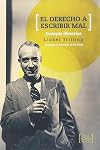
A veces la crítica literaria se convierte en literatura misma y con esa visión hay que leer estos artículos, escritos hasta los años 70 del siglo pasado. Trilling nos vale así para un roto y un descosido. Por eso creo que debemos tener en cuenta el momento en que los escribió para comprender algunos de sus comentarios pero en otros momentos, el análisis de la situación puede ser completamente extrapolable a la actualidad más recalcitrante.
Un ejemplo del primer caso es su análisis show more de la Lolita de Nabokov que caracteriza como una novela de amor a pesar de no negar la brutalidad de HH contra las mujeres. En realidad su plan es defender la novela de los ataques a los que fue sometida por ser considerada pornografía, cosa que Trilling niega explicando sus razones. La novela es erótica, dice, y escandalosa, pero no por las razones por las que normalmente un libro es considerado como tal. De hecho, cree Trilling, es bastante probable que Nabokov haya querido perturbarnos “creando las condiciones para que no nos perturbe una relación sexual que debería indignarnos y, luego, echándonos en cara la facilidad con la que le dimos nuestro beneplácito.”
Por lo demás, hace un estudio, diferente a los conocidos, de obras y autores imprescindibles como:
• Tolstoi (No hay tramas en la obra de Tolstói, sino tan solo el incuestionable e inalterable fluir de la vida),
• Twain (la grandeza de su Huckleberry Finn reside en su poder para decir la verdad)
• Kipling (para muchos de nosotros repudiarlo fue la primera decisión política-literaria de nuestras vidas)
Y otros como Stuart Mills, Hemingway, Scott Fitgerald y, sobre todo Isaak Bábel, del que toma la frase que titula este volumen: sobre el derecho a escribir mal depende el absoluto derecho a escribir.
Flaubert también es tratado en su obra Bouvard y Pécuchet? (quieren aprender demasiado rápido. Ignoran el verdadero modo de pensamiento; no tienen paciencia.) y el Ethan Frome de Edith Wharton con el que trata el tema de la moralidad de la inercia, del aburrido, irreflexivo conjunto de deberes puede llevar, y usualmente así ocurre, a la inmoralidad de la inercia. El ejemplo más a la mano es el de esa gente tan buena y sencilla, tan devota de sus responsabilidades familiares que no pensó dos veces en los campos de concentración bajo cuyas sobras vivían.”
Comentando dos ensayos, uno sobre arte y otro sobre literatura, Trilling hace una serie de consideraciones sobre la deriva que ambos seguían en las que creo que se equivoca poco, especialmente en el caso del primero, opinión que resume en una frase del autor que está comentando: Ahora el artista es demasiado grande para el arte.
El penúltimo artículo trata sobre la importancia de las pequeñas revistas culturales, poniendo el acento en The Partisan Review, y el último sobre la enseñanza de la Literatura moderna en las Universidades.
Su queja sobre la falta de relación entre política e imaginación en las clases educadas de la Norteamérica de la segunda mitad del siglo XX podría ser un anuncio de mucha de esa pasión por la neutralidad que ahora mismo nos ahoga. Termina haciendo una invocación a lo necesario de una conformación de una alianza entre nuestras ideas políticas y nuestra imaginación, frente al peligro que supone el no hacerlo. Ya que si esta acción no deja de ser delicada, el no hacerla supondría llegar a una situación ya descrita por Tocqueville a la que denominó “la hipocresía de lo suntuoso”, que tiene que ver con obtener la satisfacción con lo que parece auténtico pero no lo es. No creo que Trilling se haya equivocado mucho. show less
Un ejemplo del primer caso es su análisis show more de la Lolita de Nabokov que caracteriza como una novela de amor a pesar de no negar la brutalidad de HH contra las mujeres. En realidad su plan es defender la novela de los ataques a los que fue sometida por ser considerada pornografía, cosa que Trilling niega explicando sus razones. La novela es erótica, dice, y escandalosa, pero no por las razones por las que normalmente un libro es considerado como tal. De hecho, cree Trilling, es bastante probable que Nabokov haya querido perturbarnos “creando las condiciones para que no nos perturbe una relación sexual que debería indignarnos y, luego, echándonos en cara la facilidad con la que le dimos nuestro beneplácito.”
Por lo demás, hace un estudio, diferente a los conocidos, de obras y autores imprescindibles como:
• Tolstoi (No hay tramas en la obra de Tolstói, sino tan solo el incuestionable e inalterable fluir de la vida),
• Twain (la grandeza de su Huckleberry Finn reside en su poder para decir la verdad)
• Kipling (para muchos de nosotros repudiarlo fue la primera decisión política-literaria de nuestras vidas)
Y otros como Stuart Mills, Hemingway, Scott Fitgerald y, sobre todo Isaak Bábel, del que toma la frase que titula este volumen: sobre el derecho a escribir mal depende el absoluto derecho a escribir.
Flaubert también es tratado en su obra Bouvard y Pécuchet? (quieren aprender demasiado rápido. Ignoran el verdadero modo de pensamiento; no tienen paciencia.) y el Ethan Frome de Edith Wharton con el que trata el tema de la moralidad de la inercia, del aburrido, irreflexivo conjunto de deberes puede llevar, y usualmente así ocurre, a la inmoralidad de la inercia. El ejemplo más a la mano es el de esa gente tan buena y sencilla, tan devota de sus responsabilidades familiares que no pensó dos veces en los campos de concentración bajo cuyas sobras vivían.”
Comentando dos ensayos, uno sobre arte y otro sobre literatura, Trilling hace una serie de consideraciones sobre la deriva que ambos seguían en las que creo que se equivoca poco, especialmente en el caso del primero, opinión que resume en una frase del autor que está comentando: Ahora el artista es demasiado grande para el arte.
El penúltimo artículo trata sobre la importancia de las pequeñas revistas culturales, poniendo el acento en The Partisan Review, y el último sobre la enseñanza de la Literatura moderna en las Universidades.
Su queja sobre la falta de relación entre política e imaginación en las clases educadas de la Norteamérica de la segunda mitad del siglo XX podría ser un anuncio de mucha de esa pasión por la neutralidad que ahora mismo nos ahoga. Termina haciendo una invocación a lo necesario de una conformación de una alianza entre nuestras ideas políticas y nuestra imaginación, frente al peligro que supone el no hacerlo. Ya que si esta acción no deja de ser delicada, el no hacerla supondría llegar a una situación ya descrita por Tocqueville a la que denominó “la hipocresía de lo suntuoso”, que tiene que ver con obtener la satisfacción con lo que parece auténtico pero no lo es. No creo que Trilling se haya equivocado mucho. show less

Well-written at the sentence level, of course. Trilling’s characterisation shows you rather than tells you. Some interesting use of flashback at the beginning before it settles into a plodding narrative of a summer holiday of a few weeks’ duration. I read this out of interest in American Communism and particularly Whittaker Chambers, who is the model for a major character in the novel. But I found it a terrible book: endless navel-gazing by a group of East Coast academics and show more intellectuals whose life of privilege leaves them with way too much free time on their hands. An obvious, if unacknowledged, Freudian substructure. Plot, such as it is, completely contrived. No ending. Fortunately the novel was a one-off on Trilling's part. show less

Lionel Trilling’s The Liberal Imagination comprises fifteen essays that range in time from 1946 to 1948. The book was first published in 1950. The collection provides a potpourri of intellectual refinements on the state of American literature in the late 1940s. He starts with a focus on the relation between literature and society, and how that relationship has changed over time.
As a side note: Trilling wrote these essays just a few years before people started watching TV, when reading show more habits rapidly declined—so the book provides a time capsule when there was still a dynamic relationship between the novels, poetry, and essays of the day, and society’s values, ideas, and norms. The average person today might be surprised at how influential literature once was to society and prevailing ideologies.
Back to Trilling’s time: Society and literature were inextricably linked in the 1940s and earlier, and this book provides analysis and criticism of that interplay. As examples of this evolution, Trilling references dozens of authors, from Plato to Faulkner, with varied representatives from the many eras in between.
Some authors suffer significantly under Trilling’s scrutiny: Dreiser, Dos Passos, O’Neill, Sherwood Anderson, Thucydides, Kipling, among others, he considers lesser figures. To paraphrase, these authors are viewed as naïve and self-absorbed, with limited intellectual faculties, and less in touch with the complicated subtleties of the social and psychological realities around them. They give us only a meager façade of literary art instead of the real thing.
Conversely, authors faring better include Henry James, Faulkner, Hemmingway, Tacitus, Aristotle, Fitzgerald, T. S. Eliot, Stendhal, Dickens, Flaubert, Balzac, and several others. These authors are viewed as giving us deeper and more powerful insights into the complexities of life, offering more profound and rewarding experiences for the reader. These greater authors also played a more significant rôle in the development of human societies, according to Trilling.
Of course, rattling off names of lesser and greater authors sounds dégagé and presumptuous out of context. I should emphasize that Trilling provides persuasive arguments and à propos examples to support his appraisals. The lesser authors have in common a tendency to over-confident declarations about a contrived self-serving version of reality. They emphasize brute emotional force that indicates a limited range of intellect and experience. Readers are manœuvred to feel good short-term, but there is little long-term learning or reward after the reading. Conversely, the greater authors have in common a more astute analysis of real-life experience that helps us better understand our social and psychological realities. According to Trilling, these preëminent authors reflect wider experience and deeper intellect in their works.
The general public, however, is not so coöperative—popular preferences do not seem to align with Trilling’s appraisals. Trilling points out that his so-called lesser authors are in fact more popular than the greater authors. The apparent difference lies in an affinity for emotional impact (lesser authors), regardless of expositional incoherence; versus a public mistrust of intellectuals (greater authors), regardless of deeper insights and æsthetic quality.
Another tension that Trilling highlights is the historical scholarship of a literary work’s context, versus the New Critics who say that a “work of art” stands alone outside of history. New Critics were Trilling’s coævals in the 1940s, and they dominated literary criticism at the time. New Critics discount any information about the author’s era, culture, social milieu, personality, etc., in their study of a literary work. New Critics treat the work as a bubble-wrapped ænigma isolated from the roots and atmosphere of its creation. Trilling disagrees with this view of a novel, for example, being a self-contained, self-referential æsthetic object. Trilling takes the position that “a literary work is ineluctably a fact of history, and, what is more important, that its historicity is a fact in our æsthetic experience” (184).
Culture changes over time, and a literary work is the product of its particular moment in a changing culture. Trilling notes the life-art interplay: culture influences art, and art influences culture, in the ongoing cycle of cause and effect. Trying to extract a work from its culture and time (New Criticism) strips away much of the meaning and significance of a literary work. Trilling argues that scholarship into the period, and into the author, give us a more thorough comprehension of the complex layers of literary art, and a more accurate critical appraisal. For Trilling, the roots and the atmosphere are vital to understanding our art as part of our existence.
The book touches on other topics such as the Romantic poets and epistemology, Mark Twain’s Huckleberry Finn, the rôle of Little Magazines, a look at Freud’s influence on criticism, and other topics.
As a bonus above and beyond this potpourri of intellectual refinements on the state of American literature, we discover that Trilling himself is a great writer. Academic books like The Liberal Imagination can be intimidating, stereotypically dreaded like reading an encyclopædia. Not so for this book. This book is lively and well written, every page drawing the reader forward. Every essay stimulates interesting thought vis-à-vis life, society, culture, and literature. Trilling’s insights and perspective reward the reader and make the time commitment to read this book very much worthwhile. show less
As a side note: Trilling wrote these essays just a few years before people started watching TV, when reading show more habits rapidly declined—so the book provides a time capsule when there was still a dynamic relationship between the novels, poetry, and essays of the day, and society’s values, ideas, and norms. The average person today might be surprised at how influential literature once was to society and prevailing ideologies.
Back to Trilling’s time: Society and literature were inextricably linked in the 1940s and earlier, and this book provides analysis and criticism of that interplay. As examples of this evolution, Trilling references dozens of authors, from Plato to Faulkner, with varied representatives from the many eras in between.
Some authors suffer significantly under Trilling’s scrutiny: Dreiser, Dos Passos, O’Neill, Sherwood Anderson, Thucydides, Kipling, among others, he considers lesser figures. To paraphrase, these authors are viewed as naïve and self-absorbed, with limited intellectual faculties, and less in touch with the complicated subtleties of the social and psychological realities around them. They give us only a meager façade of literary art instead of the real thing.
Conversely, authors faring better include Henry James, Faulkner, Hemmingway, Tacitus, Aristotle, Fitzgerald, T. S. Eliot, Stendhal, Dickens, Flaubert, Balzac, and several others. These authors are viewed as giving us deeper and more powerful insights into the complexities of life, offering more profound and rewarding experiences for the reader. These greater authors also played a more significant rôle in the development of human societies, according to Trilling.
Of course, rattling off names of lesser and greater authors sounds dégagé and presumptuous out of context. I should emphasize that Trilling provides persuasive arguments and à propos examples to support his appraisals. The lesser authors have in common a tendency to over-confident declarations about a contrived self-serving version of reality. They emphasize brute emotional force that indicates a limited range of intellect and experience. Readers are manœuvred to feel good short-term, but there is little long-term learning or reward after the reading. Conversely, the greater authors have in common a more astute analysis of real-life experience that helps us better understand our social and psychological realities. According to Trilling, these preëminent authors reflect wider experience and deeper intellect in their works.
The general public, however, is not so coöperative—popular preferences do not seem to align with Trilling’s appraisals. Trilling points out that his so-called lesser authors are in fact more popular than the greater authors. The apparent difference lies in an affinity for emotional impact (lesser authors), regardless of expositional incoherence; versus a public mistrust of intellectuals (greater authors), regardless of deeper insights and æsthetic quality.
Another tension that Trilling highlights is the historical scholarship of a literary work’s context, versus the New Critics who say that a “work of art” stands alone outside of history. New Critics were Trilling’s coævals in the 1940s, and they dominated literary criticism at the time. New Critics discount any information about the author’s era, culture, social milieu, personality, etc., in their study of a literary work. New Critics treat the work as a bubble-wrapped ænigma isolated from the roots and atmosphere of its creation. Trilling disagrees with this view of a novel, for example, being a self-contained, self-referential æsthetic object. Trilling takes the position that “a literary work is ineluctably a fact of history, and, what is more important, that its historicity is a fact in our æsthetic experience” (184).
Culture changes over time, and a literary work is the product of its particular moment in a changing culture. Trilling notes the life-art interplay: culture influences art, and art influences culture, in the ongoing cycle of cause and effect. Trying to extract a work from its culture and time (New Criticism) strips away much of the meaning and significance of a literary work. Trilling argues that scholarship into the period, and into the author, give us a more thorough comprehension of the complex layers of literary art, and a more accurate critical appraisal. For Trilling, the roots and the atmosphere are vital to understanding our art as part of our existence.
The book touches on other topics such as the Romantic poets and epistemology, Mark Twain’s Huckleberry Finn, the rôle of Little Magazines, a look at Freud’s influence on criticism, and other topics.
As a bonus above and beyond this potpourri of intellectual refinements on the state of American literature, we discover that Trilling himself is a great writer. Academic books like The Liberal Imagination can be intimidating, stereotypically dreaded like reading an encyclopædia. Not so for this book. This book is lively and well written, every page drawing the reader forward. Every essay stimulates interesting thought vis-à-vis life, society, culture, and literature. Trilling’s insights and perspective reward the reader and make the time commitment to read this book very much worthwhile. show less
Lists
Awards


You May Also Like


Associated Authors
Statistics
- Works
- 44
- Also by
- 48
- Members
- 3,289
- Popularity
- #7,780
- Rating
- 4.0
- Reviews
- 15
- ISBNs
- 109
- Languages
- 8
- Favorited
- 6