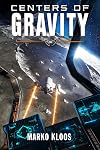
Major Grayson and his troops are stranded around a rogue planet in this mostly satisfying conclusion to the main strand of the Frontlines series. I agree with Jo Walton’s assessment: “If you don’t like military science fiction you won’t like it, because this is very much MilSF, but if you’ve ever wondered what MilSF is about beyond Bujold, it’s definitely worth picking these up.” I also agree with her that Kloos deserves a tip of the hat for refusing his Hugo nomination when it was promoted by the “sick puppies” conservatives.
I especially enjoyed the time-dilation homage to Joe Haldeman’s Forever War.
I especially enjoyed the time-dilation homage to Joe Haldeman’s Forever War.
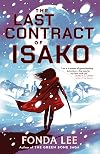
World-building stands out in this standalone novel set on an isolated planet engaged in a centuries-long terraforming project. Corporation execs govern like high-tech shoguns. One blurb calls the novel’s genre “cinematic cyberpunk samurai.” The samurai, called contractors, serve as bodyguards, corporate spies, investigators, and assassins. An honorable retirement means a final televised walk into the “vastness” beyond the habitable zone.
Isako is an aging contractor whose knees have become unreliable, and she knows she has lost a step. Before her planned retirement, she takes one last contract that involves her in ruthless corporate espionage.
Isako is an aging contractor whose knees have become unreliable, and she knows she has lost a step. Before her planned retirement, she takes one last contract that involves her in ruthless corporate espionage.
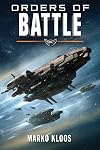
Grayson, who still likes to think of himself as an enlisted grunt, is now a major, commanding troops he hasn’t met, on a planned counterattack in the Capellan system. Alert: it has a cliffhanger ending that is not resolved until Centers of Gravity, Frontlines 8, the concluding volume of the main series.
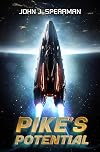
Pike is a future version of Horatio Hornblower, and we can almost hear the sails creaking on an 18th-century sloop in the descriptions of his interstellar navy. If Spearman were to tell us that Pike’s dress uniform includes a tricorne, I would not be surprised. It is a readable story, albeit derivative.
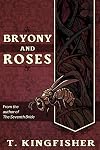
Bryony is caught in an early snowstorm on her way home on her clumsy horse, Fumblefoot. She had gone to borrow some seeds and laments that she is going to die for rutabagas, which she considers an insipid sort of turnip. (Clearly, she has never had them in pasties from the Upper Peninsula of Michigan.) She is saved when she stumbles into an enchanted manor house surrounded by roses that are blooming out of season. The house feeds Fumblefoot and cleans up its droppings. In the morning, she is awakened by the master of the house, a beast, who asks her to marry him every morning at breakfast. Yes, it is a reboot of Beauty and the Beast—well, sort of.
Kingfisher never puts a stylistic foot wrong. No Fumblefoot she!
Kingfisher never puts a stylistic foot wrong. No Fumblefoot she!
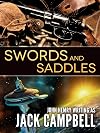
My only complaint with this collection of three novellas is that the title does not adequately describe its contents. There is a sci-fi adventure in the manner of H. Beam Piper, a courtroom drama connected to Campbell’s JAG in space series, and the title story about a Cavalry troop thrown into an alternate version of the Earth. If you have liked any of Campbell’s longer works, you will no doubt like these as well.
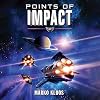
The Frontlines series continues to impress me with its realism. The characters continue to mature, and Kloos keeps finding new ways to rev up the action. In this one, humanity has some improved starships and may be ready at last to counterattack against the Lankies.
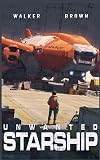
The Unwanted Starship in question is another one of those self-aware spacecraft that ancient alien races seem to have left around for us. The aliens this time are called the Elders (no bonus for originality). The spacecraft, eventually named Vesper, lands in an industrial area of Pennsylvania looking for someone with whom it can bond. Ethan Cross, a hydraulic press operator, stumbles into it, and presto, it’s off we go to explore the galaxy. The story is standard pulp, but Cross is a believable working stiff who wishes he could find a breakfast burrito in space.
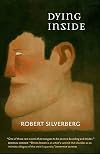
David Selig comes of age in the 1960s. He is a telepathic receiver who, even as a child, was smart enough to know that he should keep his ability a secret. He knows too much about people to respect them. His moral compass wavers a bit, and he is often depressed. He exploits his lovers and business colleagues. For a while, he makes his living writing term papers for desperate college students. Along the way, he meets only one other telepath, and he doesn’t like him.
Silverberg gives us the sex and drugs of the ‘60s without the rock ‘n’ roll. Dying Inside is probably his best book, and is so New Wave that one reviewer says it isn’t sci-fi. Selig is not a likable protagonist, nor is he meant to be, as you might expect for someone who identifies himself with Franz Kafka.
It is a good thing that David was not born in our era, because AI would undercut his prices in the fake-term-paper trade.
Silverberg gives us the sex and drugs of the ‘60s without the rock ‘n’ roll. Dying Inside is probably his best book, and is so New Wave that one reviewer says it isn’t sci-fi. Selig is not a likable protagonist, nor is he meant to be, as you might expect for someone who identifies himself with Franz Kafka.
It is a good thing that David was not born in our era, because AI would undercut his prices in the fake-term-paper trade.
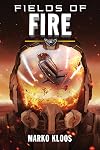
The large but agile Lankies are dug into the ice in Greenland and the sands of Mars. Grayson has been unwillingly promoted to Lieutenant and must lead troops to dig them out. He is uncomfortable giving orders that send troops into dangers he does not share. Excellent, high-adrenalin military sci-fi.
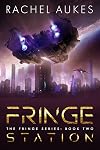
Not as much fun as the first volume. We are never given enough reason to care about the drama on the station. The characters and plot get lost in the world-building.

The introductions are arguably more fun than the stories.
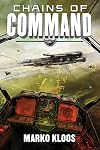
Grayson, now a platoon sergeant, and his wife are still fighting other humans. Saurian enemy aliens will kill you, but your officer corps may put you in harm’s way for reasons of their own. The action is gritty, and the characters age and develop at a believable pace. The series has me hooked.
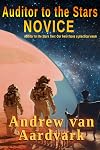
Rob, who thought he was training to be a forest ranger, is on his first away mission as a forensic auditor. It turns out that his survivalist skills come in handy on a planet with disputed mining claims.
The story is competently plotted, but the prose is not impressive. Here, for example, is a bit of description charitably described as filler:
That side was closed off with a tough transparent material. Apparently not the glass or transparent metal that it would have been most places in the Empire, but what Astrid had told him was the traditionally used quartz.
“Healthier that way, too,” she said. Lets in the UV you need to make Vitamin D. Not much sunlight down in the mines.”
The story is competently plotted, but the prose is not impressive. Here, for example, is a bit of description charitably described as filler:
That side was closed off with a tough transparent material. Apparently not the glass or transparent metal that it would have been most places in the Empire, but what Astrid had told him was the traditionally used quartz.
“Healthier that way, too,” she said. Lets in the UV you need to make Vitamin D. Not much sunlight down in the mines.”
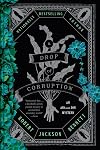
The Shadow of the Leviathan series, which seems to have been retitled more prosaically as Ana and Din Mysteries, features complex plots with investigators reminiscent of Nero Wolfe and Archie Goodwin. The stories are set in an Empire whose aristocracy and minor functionaries have been given biotech modifications that produce drug-triggered paranormal abilities. Ana wears a blindfold, takes drugs, and performs rituals that give her Holmesian insight. Her partner, Din, does the legwork and reports to her with detailed memories associated with specific aromas.
In A Drop of Corruption, Ana and Din travel to Yarrowdale, a canton on the border of the empire. Its economy is based on producing valuable psychoactive drugs from the “shroud” of dead leviathans. If you are thinking ambergris from the head of Moby Dick, you are not far from the mark. A treasury official has been murdered. But, of course, that is just the start.
Din is thinking about leaving police work to join the regular army, but Ana predicts he will change his mind. I won’t do plot spoilers, but in the end, Ana is like Terry Pratchett’s Commander Vimes in that she sees her job as keeping her blindfolded eyes on those who think kings are a good idea.
Bennett has already won a big handful of awards, and this one will likely win some more.
In A Drop of Corruption, Ana and Din travel to Yarrowdale, a canton on the border of the empire. Its economy is based on producing valuable psychoactive drugs from the “shroud” of dead leviathans. If you are thinking ambergris from the head of Moby Dick, you are not far from the mark. A treasury official has been murdered. But, of course, that is just the start.
Din is thinking about leaving police work to join the regular army, but Ana predicts he will change his mind. I won’t do plot spoilers, but in the end, Ana is like Terry Pratchett’s Commander Vimes in that she sees her job as keeping her blindfolded eyes on those who think kings are a good idea.
Bennett has already won a big handful of awards, and this one will likely win some more.
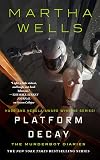
The Murderbot Diaries is a series that continues to entertain. In Platform Decay, Murderbot is on a mission to rescue some of Dr. Mensah’s relatives from a shambolic toroidal habitat, whose governing structure and travel options change or disappear every few kilometers. Along the way, he picks up some other humans, including children. Is Murderbot getting soft? Well, maybe. He now has an app that has him frequently check his emotional state. When he thinks about killing people, he often refrains because he doesn’t want to offend his clients, which leads to much internal snark.
I liked this one more than I did System Collapse. The plot is more straightforward, and the clients are entertaining.
I liked this one more than I did System Collapse. The plot is more straightforward, and the clients are entertaining.

Twelve-year-old Jericho spent his time in an orphanage studying the economics of interstellar trade. When he gets a job as a cabin boy on a family-run trading ship, he amazes everyone with his ability to turn a profit. It shows the influence of Nathan Lowell’s Solar Clipper novels. Lowell is a much better writer.
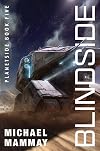
Col. Butler has a hard time staying retired. He can’t turn down a friend who asks him to investigate the apparent kidnapping of his teenage daughter. It is not long before he finds himself running an off-planet military op with his friends Mac and Ganos. Well-drawn characters and a clever plot that mashes up noir mystery and military action make Blindside a page-turner, but I did find the corporate villain hard to buy. I especially liked the realistic detail of Butler worrying about how long his retirement nest egg will last if he has to finance a large-scale covert op.
A generation starship in mid-flight suffers a power failure that requires its first-generation crew to be brought out of hibernation. Who done it, and why?
This one gets a mixed review. On the plus side, we have a complex, multicultural crew with some original, well-rounded characters. The population of the ship is as diverse as a Cairo phonebook, if there still is such a thing, and there are no doubt allusions to recent Egyptian history that I am missing. An author’s note explains that the protests in Tahrir Square inspired one scene. However, the ship also has a complex backstory that is never adequately explained. Right now, the book is a standalone debut novel, but I would not be surprised to hear that a prequel or sequel is on the way.
This one gets a mixed review. On the plus side, we have a complex, multicultural crew with some original, well-rounded characters. The population of the ship is as diverse as a Cairo phonebook, if there still is such a thing, and there are no doubt allusions to recent Egyptian history that I am missing. An author’s note explains that the protests in Tahrir Square inspired one scene. However, the ship also has a complex backstory that is never adequately explained. Right now, the book is a standalone debut novel, but I would not be surprised to hear that a prequel or sequel is on the way.
Jack Campbell is best known for his military science fiction novels, but Ad Astra shows that he can write non-military Analog stories when the occasion demands. Some of the stories in this collection spin current news events into a space opera setting. Others make fun of NASA PR-speak and its well-known penchant for nannying astronauts. In one of the best of the collection, he gives a spacecraft’s AI something akin to an autoimmune disease.
Marko Kloos, a German who now lives in New Hampshire, writes entertaining straight-ahead military science fiction. In this sequel to Scorpio, Alex, a girl who survived for years on a colony planet infested with huge intelligent saurians with bad attitudes, is now an infantry private sent into battle again. Kloos, as always, provides believable weaponry, intriguing tactics, and characters who are easy to root for. I miss the dog from Scorpio. I think he Kloos is planning to bring it back in Cygnus, which is now on my to-read list. 3.5 (no dog)
After the war between California and the United States, machines with emerging intelligence are given civil rights. A group of them reopens an abandoned noodle shop in San Francisco. There is Stay Behind, a repurposed military bot; Hands, who makes the noodles; Cayenne, who has a sense of taste; and Sweetie, a humanoid bot who lets her metal shine through. Can they overcome anti-robot reviews and avoid being recycled?
There is some sharp satire aimed at red-state America, but the tone is ever-so-cozy.
There is some sharp satire aimed at red-state America, but the tone is ever-so-cozy.

Set in an early era of the Skolian Empire, Undercity is a hardboiled detective story. Major Bhaajan was a tough kid who grew up in an impoverished community beneath the city. After her time in the military, she works as a PI investigating the kidnapping of an aristocrat. Her lover is a gambler whose moral compass does not always point the same way hers does, but she is more at home with the “dust rats” of the aqueducts than with the cultured folks who hire her. In the end, she discovers that the dust rats have unexpected qualities the upper city needs.
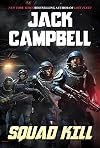
Oz is a Navy ensign assigned to command a squad of Marines on a first-contact mission. He was an enlisted man who rose through the ranks. He has leadership skills, but he needs a crash course in Marine tactics. Eventually, his squad and the snooty scientists they must protect are glad to have him. It is a tense Hornblower-in-space adventure that kept me up late.
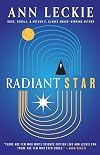
Radiant Star is Ann Leckie’s new standalone set on a planet that has escaped its star system. The population lives underground and worships the star that isn’t there. They have a shrine, called the Temporal Location, that features sainted mummies said to be revivable if and when a star shows up. I think Leckie gives a tip of the hat to Dan Simmons’ Hyperion series.
The new imperial governor and the tired old warship, Justice of Albis, find themselves out of contact with Imperial leadership and face daunting problems introducing Radch culture. They learn, for example, what a bad idea it is to fool with a carefully balanced ecosystem. There is a hilarious chapter (“Hymn”) that describes the fragile relationship between sea rot, the city water supply, and the onion crop.
The new imperial governor and the tired old warship, Justice of Albis, find themselves out of contact with Imperial leadership and face daunting problems introducing Radch culture. They learn, for example, what a bad idea it is to fool with a carefully balanced ecosystem. There is a hilarious chapter (“Hymn”) that describes the fragile relationship between sea rot, the city water supply, and the onion crop.

A book witch is charged with corralling characters who have escaped from their texts. You don’t want pages to go missing from Pride and Prejudice just because Lizzie wants to take a gander at the Pacific. And, a book witch should not fall for a fictional character, so of course, that happens here. Meg Shaffer has fun playing with the tropes of several literary genres, which does not prevent The Book Witch from being a readable cozy mystery romance.
Caveat: Jasper Fforde’s Thursday Next series does something similar with more complexity and wit.
Caveat: Jasper Fforde’s Thursday Next series does something similar with more complexity and wit.
Polostan: Volume One of Bomb Light―A Riveting Historical Epic of International Espionage, Intrigue, and the Dawn of the Atomic Age, by the #1 New York Times Bestselling Author by Neal Stephenson
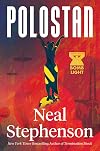
Neal Stephenson is best known as a science fiction writer associated with cyberpunk. But Polostan is not science fiction; it is a historical novel that reads like science fiction. Niels Bohr makes an appearance. Characters discuss nuclear physics, including cosmic rays and the health effects of ionizing radiation. Our heroine even dates a lad named Proton, who is a pilot in a high-altitude balloon experiment.
Our heroine, named Dawn (or something else if the occasion requires), bounces back and forth between Montana and Soviet Russia with a stop at the 1933-1934 Chicago World’s Fair’s City of the Future. Along the way, she has an unfortunate pregnancy, gets tortured by the NKVD, learns to assemble and aim a Tommy gun, and plays polo with the cavalry in both countries.
A studio should buy it up, because every tall actress in Hollywood would be panting to play Dawn.
Our heroine, named Dawn (or something else if the occasion requires), bounces back and forth between Montana and Soviet Russia with a stop at the 1933-1934 Chicago World’s Fair’s City of the Future. Along the way, she has an unfortunate pregnancy, gets tortured by the NKVD, learns to assemble and aim a Tommy gun, and plays polo with the cavalry in both countries.
A studio should buy it up, because every tall actress in Hollywood would be panting to play Dawn.
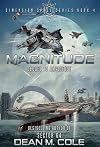
A special ops team fights multidimensional robots. Angela Brown is back. Bob, the battle operations bot, is back. But it doesn’t help. It is just one combat scene after another with not much story in between. That is a shame. Solitude, the first book in the Dimension Space series, was quite original and readable.
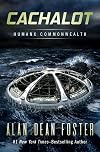
Cachalot is a water world inhabited by evolved cetaceans with telepathic abilities. Suddenly, they begin destroying human habitats. Human visitors have with them a new multisensory musical instrument that plays a role in the plot. This 1980 Del Rey novel got a boost from cover art by Darrell Sweet, picturing a whale surfacing near a small futuristic ship.
The story is entertaining enough, but it does not rise to the level established by Zelazny’s “The Doors of His Face, The Lamps of His Mouth” (1965).
David Brin’s Startide Rising would outdo it again in 1983, and Asher’s 2002 Skinner also does a better job with a similar premise.
The story is entertaining enough, but it does not rise to the level established by Zelazny’s “The Doors of His Face, The Lamps of His Mouth” (1965).
David Brin’s Startide Rising would outdo it again in 1983, and Asher’s 2002 Skinner also does a better job with a similar premise.
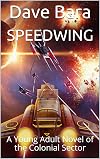
Earth is fighting an interstellar war, and 16-year-olds are being recruited as starfighter pilots. The fighters still use hydrazine as fuel. Mmm. The plot intersperses combat scenes with PG-13 sex. After a while, the plot becomes a mashup of Maverick and Enemy Mine.
It is all routine, but not terrible, so why only one-star reviews? The book was originally published by Whiskey Creek Press in 2012. Whiskey Creek was purchased by Start Publishing in 2014. Bara seems to have decided to publish a Kindle Unlimited edition in 2023, but for reasons unknown, the last half of the book has not been posted, leaving only “insert text here” placeholders. So no one could read the new edition.
I read the Whiskey Creek e-book, so at least a few stars from me.
It is all routine, but not terrible, so why only one-star reviews? The book was originally published by Whiskey Creek Press in 2012. Whiskey Creek was purchased by Start Publishing in 2014. Bara seems to have decided to publish a Kindle Unlimited edition in 2023, but for reasons unknown, the last half of the book has not been posted, leaving only “insert text here” placeholders. So no one could read the new edition.
I read the Whiskey Creek e-book, so at least a few stars from me.