
E. M. Forster (1879–1970)
Author of A Passage to India
About the Author
Edward Morgan Forster was born on January 1, 1879, in London, England. He never knew his father, who died when Forster was an infant. Forster graduated from King's College, Cambridge, with B.A. degrees in classics (1900) and history (1901), as well as an M.A. (1910). In the mid-1940s he returned to show more Cambridge as a professor, living quietly there until his death in 1970. Forster was named to the Order of Companions of Honor to the Queen in 1953. Forster's writing was extensively influenced by the traveling he did in the earlier part of his life. After graduating from Cambridge, he lived in both Greece and Italy, and used the latter as the setting for the novels Where Angels Fear to Tread (1905) and A Room with a View (1908). The Longest Journey was published in 1907. Howard's End was modeled on the house he lived in with his mother during his childhood. During World War I, he worked as a Red Cross Volunteer in Alexandria, aiding in the search for missing soldiers; he later wrote about these experiences in the nonfiction works Alexandria: A History and Guide and Pharos and Pharillon. His two journeys to India, in 1912 and 1922, resulted in A Passage to India (1924), which many consider to be Forster's best work; this title earned the James Tait Black Memorial Prize. Forster wrote only six novels, all prior to 1925 (although Maurice was not published until 1971, a year after Forster's death, probably because of its homosexual theme). For much of the rest of his life, he wrote literary criticism (Aspects of the Novel) and nonfiction, including biographies (Goldsworthy Lowes Dickinson), histories, political pieces, and radio broadcasts. Howard's End, A Room with a View, and A Passage to India have all been made into successful films. (Bowker Author Biography) show less
Image credit: E.M. Forster, June 1938
Works by E. M. Forster
Howards End / The Longest Journey / A Room with a View / Where Angels Fear to Tread (2007) 102 copies, 1 review
Howards End / The Longest Journey / Maurice / A Passage to India / A Room With a View / Where Angels Fear to Tread (1995) 75 copies
Where Angels Fear to Tread / The Longest Journey / A Room With a View / Howards End / A Passage to India (1978) 39 copies
Reading & Training : E.M. Forster : A passage to India [book + sound recording] (2003) — Writer — 10 copies
Aspects of E. M. Forster; essays and recollections written for his ninetieth birthday January 1, 1969 (1969) 9 copies
Howards End / The Longest Journey / The Machine Stops / A Room With A View / Where Angels Fear to Tread (2009) 6 copies
E. M. Forster: a tribute — Contributor — 6 copies
The Curate's Friend 3 copies
E. M. FORSTER Five Complete Novels: A Room with A View, Howards End, Where Angels Fear to Tread, The Longest Journey, A Passage to India (2023) 2 copies
E. M. Forster: A BBC Radio Collection: Twelve Dramatisations and Readings Including a Passage to India, A Room with A View and Howards End (2019) 2 copies
Short Fiction 2 copies
Short Fiction 2 copies
THE MAN AND HIS WORKS. 2 copies
Mr. Andrews 2 copies
Dr. Woolacott {short story} 2 copies
Penguin modern classics 2 copies
The machine failed. 1 copy
My Own Centenary 1 copy
Domostwo Pani Wilcox 1 copy
Pharos and Pharillion 1 copy
The Consolations of History 1 copy
غرفة ذات إطلالة 1 copy
VISTA AL RIO 1 copy
Reading & Training : E.M. Forster : A room with a view [book + sound recording] (2008) — Writer — 1 copy
Short Fiction 1 copy
HİNDİSTANDA BİR GEÇİT 1 copy
A Garland for E. M. Forster 1 copy
[Selections] 1 copy
Modern Library 1 copy
MOS E LUFTO PRANVERËN 1 copy
رحلة إلى الهند 1 copy
Um quarto com vista 1 copy
The Life to Come 1 copy
Howard's End [Annotated] 1 copy
The Government of Egypt 1 copy
The E. M. Forster Collection 1 copy
Credo 1 copy
The New Disorder 1 copy
The classical annex 1 copy
Selected Works 1 copy
Pharos & Pharillon ( Egypt ) with Poetry of C. P. Cavafy ( Pharos, the Vast & Heroic Lighthouse ) (1962) 1 copy
Teine kuningriik: novellid 1 copy
“The Other Boat” 1 copy
When A.I. Goes Bad 1 copy
The Machine Stops (and) The Point of It — Author — 1 copy
Arthur Snatchfold 1 copy
Associated Works
The Science Fiction Hall of Fame, Volume Two B: The Greatest Science Fiction Novellas of All Time (1973) — Contributor — 924 copies, 11 reviews
A Truth Universally Acknowledged: 33 Great Writers on Why We Read Jane Austen (2009) — Contributor — 414 copies, 18 reviews
Choice Cuts: A Savory Selection of Food Writing from Around the World and Throughout History (2002) — Contributor — 368 copies, 2 reviews
75 Short Masterpieces: Stories from the World's Literature (1961) — Contributor — 320 copies, 2 reviews
The Norton Anthology of English Literature, 4th Edition, Volume 2 (1979) — Contributor — 272 copies, 1 review
First Fiction: An Anthology of the First Published Stories by Famous Writers (1994) — Contributor — 196 copies, 1 review
In Another Part of the Forest: An Anthology of Gay Short Fiction (1994) — Contributor — 193 copies, 2 reviews
Pages Passed from Hand to Hand: The Hidden Tradition of Homosexual Literature in English from 1748 to 1914 (1997) — Contributor — 185 copies, 1 review
The Graphic Canon, Vol. 3: From Heart of Darkness to Hemingway to Infinite Jest (2013) — Contributor — 162 copies, 1 review
An American Album: One Hundred and Fifty Years of Harper's Magazine (2000) — Contributor — 145 copies, 1 review
Gentlemen, Scholars and Scoundrels: A Treasury of the Best of Harper's Magazine from 1850 to the Present (1972) — Contributor — 62 copies
The End of the World: Classic Tales of Apocalyptic Science Fiction (2010) — Contributor — 61 copies, 2 reviews
Fifty Years: Being a Retrospective Collection of Novels, Novellas, Tales, Drama, Poetry, and Reportage and Essays: All Drawn from Volumes Issued during the Last Half-Century by… (1965) — Contributor — 56 copies
Menace of the Machine: The Rise of AI in Classic Science Fiction (2019) — Contributor — 46 copies, 1 review
The Steampunk Megapack: 26 Modern and Classic Steampunk Stories (2013) — Contributor — 43 copies, 1 review
Out of the Best Books: An Anthology of Literature, Vol. 1: The Individual and Human Values (1964) — Contributor — 40 copies
Britten : Peter Grimes {wrongly combined editions} (1945) — Contributor, some editions — 27 copies, 1 review
The Origins of Science Fiction (Oxford World's Classics Hardback Collection) (2022) — Contributor — 26 copies, 1 review
Tom Barber Trilogy: Uncle Stephen, The Retreat, and Young Tom (2011) — Introduction, some editions — 20 copies
Die englische Literatur 09 in Text und Darstellung. 20. Jahrhundert. (2001) — Contributor — 3 copies
Sadler's Wells Opera Books : Britten : Peter Grimes (1945) — Contributor [George Crabbe: The Poet and the Man] — 3 copies
Ode to Boy: Vol. 2: An Anthology of Same-Sex Attraction in Literature from the 19th Century Through the First World War (2014) — Contributor — 2 copies
Then and Now. A Selection of Articles, Stories & Poems, Taken from the First Fifty Numbers of ‘Now & Then’, 1921–35. Together with Some Illustrations, etc. (1935) — Contributor — 2 copies
Modern Short Stories — Contributor — 2 copies
Tagged
Common Knowledge
- Legal name
- Forster, Edward Morgan
- Birthdate
- 1879-01-01
- Date of death
- 1970-06-07
- Gender
- male
- Education
- University of Cambridge (King's College | BA | Classics, 1900 | History, 1901 | MA|1910)
Tonbridge School, Kent, England, UK - Occupations
- novelist
essayist
librettist - Organizations
- American Academy of Arts and Letters (Foreign Honorary ∙ Literature ∙ 1949)
Bloomsbury Group
Cambridge Apostles
International Red Cross - Awards and honors
- Benson Medal (1937)
Honorary Fellowship, King's College, Cambridge
Order of Merit (1969)
Royal Society of Literature (Companion of Literature) - Relationships
- von Arnim, Elizabeth (employer)
Buckingham, Bob (friend)
Ackerley, Joe (friend)
Reid, Forrest (friend)
Daley, Harry (lover) - Cause of death
- stroke
- Nationality
- UK
- Birthplace
- Marylebone, London, Middlesex, England, UK
- Places of residence
- London, Middlesex, England, UK
Cambridge, Cambridgeshire, England, UK
Alexandria, Egypt
Dewas, Madhya Pradesh, India
Weybridge, Surrey, England, UK
Harrogate, North Yorkshire, England, UK - Place of death
- Coventry, Warwickshire, England, UK
- Burial location
- Canley Garden Cemetery and Crematorium, Canley, Warwickshire, England, UK
- Map Location
- England, UK
Members
Discussions
JAN 2026 "Maurice" discussion: Final thoughts in GoodThings I've Read (January 28)
JAN 2026 "Maurice" discussion: FORSTER'S TERMINAL NOTE in GoodThings I've Read (January 23)
JAN 2026 "Maurice" discussion: PART FOUR (end) in GoodThings I've Read (January 23)
📚JAN 2026 "Maurice" discussion: INTRODUCTION in GoodThings I've Read (January 18)
JAN 2026 "Maurice" discussion: PART TWO in GoodThings I've Read (January 15)
JAN 2026 "Maurice" discussion: PART THREE in GoodThings I've Read (January 15)
JAN 2026 "Maurice" discussion: PART ONE in GoodThings I've Read (January 13)
JAN 2026 "Maurice" by E. M. Forster in GoodThings I've Read (December 2025)
June 2025: E. M. Forster in Monthly Author Reads (July 2025)
British Author Challenge December 2023: Malorie Blackman & E. M. Forster in 75 Books Challenge for 2023 (December 2023)
THE DEEP ONES: "The Story of a Panic" by E. M. Forster in The Weird Tradition (December 2021)
E. M. Forster in Legacy Libraries (June 2016)
A Room with a View in Made into a Movie (January 2016)
Rebel Read: Aspects of the Novel in Le Salon Littéraire du Peuple pour le Peuple (February 2014)
Reviews

Slighter than Forster's later work, this still-engaging story covers similar ground. It investigates how the social mores of turn-of-century England ran contrary to the exchange of human emotions and equality among classes. Lucy is a young lady being chaperoned on a trip through Italy. She chafes against the oversight when romance blooms between herself and a young man from her country. Back home, she's confronted with falling back on her own resources to figure out the morality of her show more feelings. The plot thickens when she becomes engaged to another man.
The finest accomplishment here is Forster's accurate capturing of the feeling of being engaged to the wrong person. Lucy reads her unease as a personal failing, something she needs to correct in herself. Any longing she feels for an escape, an alternative, she also rationalizes away. Pressure to marry the right person in the eyes of others clashes with personal desire, and her struggle exhibits all the inner turmoil of a real person in this situation. The only portion I doubted was her final decisiveness, but in this George acts as her catalyst, arranging her thoughts for her. Which is a bit ironic when you think about what she says to Cecil, but then I suppose they really were her thoughts, they were just in a muddle.
Mr. Emerson's chapter towards the end ought to be framed in a gallery of Greatest Discourses on Love of All Time. show less
The finest accomplishment here is Forster's accurate capturing of the feeling of being engaged to the wrong person. Lucy reads her unease as a personal failing, something she needs to correct in herself. Any longing she feels for an escape, an alternative, she also rationalizes away. Pressure to marry the right person in the eyes of others clashes with personal desire, and her struggle exhibits all the inner turmoil of a real person in this situation. The only portion I doubted was her final decisiveness, but in this George acts as her catalyst, arranging her thoughts for her. Which is a bit ironic when you think about what she says to Cecil, but then I suppose they really were her thoughts, they were just in a muddle.
Mr. Emerson's chapter towards the end ought to be framed in a gallery of Greatest Discourses on Love of All Time. show less
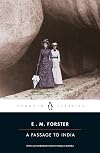
Somehow I'd gotten the impression that A Passage to India was a departure from Forster's earlier novels. In subject matter, sure, but in all else this is a very Forsterian novel: sharply observed social commentary, lyrical prose, meditations on the human condition, and an almost mythic quality that is nevertheless grounded in the banal. Forster's novels are romantic, but they don't romanticize.
I'm glad I found myself reading this book in 2020. It's fundamentally a novel about nationalism, a show more topic I have formed Strong Opinions about. Actually maybe just one opinion, which Forster evidently shares. Please imagine, in place of this book, a tract titled "NATIONALISM" in 72-pt font, followed by one sentence: "FUCK THAT SHIT." (Forster phrases it more delicately.)
As a portrait of India and Indian people goes, I am not equipped to judge this novel. I think I can say it is a humane and openhearted effort. Certainly Forster's disdain for British culture does not lead him into the trap I expected, that of romanticizing the East. Instead, he attempts to be both empathetic and objective.
As far as objectivity goes, well. The text is littered with generalizations about Indians; some of these are the narrative's attempts at pointing out cultural differences, while others rise from the collective point-of-view of the colonizers. All that said, I expected this to be a novel written for the white gaze, and it's not quite that. Forster seems to be reaching toward an inclusive audience, whether or not he ever quite gets there.
I won't give away the plot, but I will say that this novel is set in British India at the turn of the 20th century and shows a British elite closing ranks in response to their tribal identity being threatened. The threat isn't some vast cultural divide between British and Indian people—the mutiny of 1857 is passing out of memory; the Indian elite is increasingly Westernized. To borrow an observation from Hannah Arendt, it's not necessarily difference that triggers xenophobia, but assimilation and the threat of social categories dissolving.
Meanwhile we have Dr. Aziz and his circle, acculturated Muslim Indians who are trying to invent a tribe of their own. Their definition of India keeps widening—Muslim identity becomes Indian pan-nationalism, which almost widens to human solidarity—but they, and we, can't quite reach across the gap.
And here's where this book gets really interesting, using the vocabulary of religion to imagine the (im)possibilities of a truly universal love. You could, in fact, write a very trite five-paragraph essay about how the second half of this book follows the structure of the Nativity story. I have no idea if Forster had this in mind; certainly he's not crass enough to explicitly compare the experiences Adele and Mrs. Morse have in the caves to an Annunciation. Nevertheless, this scene does take on a numinous quality. Encountering divinity is not a comfortable experience, threatening our belief that we are separate individuals in a structured universe. When the gods try to seize us, we flail.
This book won't enchant you with its memorable character studies or gripping plot, but something about the shape of Forster's novels is really compelling to me. I'm glad I read this one. show less
I'm glad I found myself reading this book in 2020. It's fundamentally a novel about nationalism, a show more topic I have formed Strong Opinions about. Actually maybe just one opinion, which Forster evidently shares. Please imagine, in place of this book, a tract titled "NATIONALISM" in 72-pt font, followed by one sentence: "FUCK THAT SHIT." (Forster phrases it more delicately.)
As a portrait of India and Indian people goes, I am not equipped to judge this novel. I think I can say it is a humane and openhearted effort. Certainly Forster's disdain for British culture does not lead him into the trap I expected, that of romanticizing the East. Instead, he attempts to be both empathetic and objective.
As far as objectivity goes, well. The text is littered with generalizations about Indians; some of these are the narrative's attempts at pointing out cultural differences, while others rise from the collective point-of-view of the colonizers. All that said, I expected this to be a novel written for the white gaze, and it's not quite that. Forster seems to be reaching toward an inclusive audience, whether or not he ever quite gets there.
I won't give away the plot, but I will say that this novel is set in British India at the turn of the 20th century and shows a British elite closing ranks in response to their tribal identity being threatened. The threat isn't some vast cultural divide between British and Indian people—the mutiny of 1857 is passing out of memory; the Indian elite is increasingly Westernized. To borrow an observation from Hannah Arendt, it's not necessarily difference that triggers xenophobia, but assimilation and the threat of social categories dissolving.
Meanwhile we have Dr. Aziz and his circle, acculturated Muslim Indians who are trying to invent a tribe of their own. Their definition of India keeps widening—Muslim identity becomes Indian pan-nationalism, which almost widens to human solidarity—but they, and we, can't quite reach across the gap.
And here's where this book gets really interesting, using the vocabulary of religion to imagine the (im)possibilities of a truly universal love. You could, in fact, write a very trite five-paragraph essay about how the second half of this book follows the structure of the Nativity story. I have no idea if Forster had this in mind; certainly he's not crass enough to explicitly compare the experiences Adele and Mrs. Morse have in the caves to an Annunciation. Nevertheless, this scene does take on a numinous quality. Encountering divinity is not a comfortable experience, threatening our belief that we are separate individuals in a structured universe. When the gods try to seize us, we flail.
This book won't enchant you with its memorable character studies or gripping plot, but something about the shape of Forster's novels is really compelling to me. I'm glad I read this one. show less
‘The past! the infinite greatness of the past!’ thrilled Walt Whitman in ‘A Passage to India’. A quarter of a century later, Forster borrowed Whitman's title, but with a very different mood in mind. In place of the American's wild-eyed certainties, Forster gives us echoes and confusion; instead of epic quests of the soul, there is only an eternal impasse of personal and cultural misunderstanding.
Animals and birds are half-seen, unidentified; the landscape is a featureless blur; show more motives are illogical and rest on miscommunication. All human language, in the final analysis, amounts to nothing more than the dull ou-boum thrown back from the Malabar caves during the fateful expedition at the heart of the novel. ‘If one had spoken vileness in that place, or quoted lofty poetry, the comment would have been the same – “ou-boum”.’
Will Self once recommend as an exercise reducing a novel to a single word (he suggested in the case of The Naked Lunch, for instance, that it would be ‘insect’). For A Passage to India, that keyword would be ‘muddle’ – a term that recurs, gradually shedding its cosiness and accreting a sense of existential indistinctness, a kind of cosmic flou that renders good intentions, indeed all human endeavour, futile. ‘I like mysteries,’ says Mrs Moore, the novel's moral core, ‘but I rather dislike muddles.’ Elsewhere, Forster talks with something like dread of a ‘spiritual muddledom’ for which ‘no high-sounding words can be found’.
The plot of this book is, at times, heart-poundingly dramatic, but Forster is careful to make sure that even this is founded on doubt and indecision. In fact, what one thinks of as ‘the plot’ of A Passage to India is a storyline that arises, reaches its climax, and is resolved entirely within the second of the book's three acts. What then, you might ask, is the point of parts one and three? Well, among other things they prevent the plot from seeming too tidy – there is always something before the beginning, something after the end, to frustrate neat conclusions. ‘Adventures do occur,’ he says, ‘but not punctually.’ Life isn't tidy – it's a muddle.
British India is a perfect setting for this kind of exploration: not only does it play host to numerous individual confusions, it is itself, as it were, the political embodiment of such a confusion. One of the wonderful things about this book is that the obvious hypocrisy and conflict between the English and the Indians is not left to stand alone, as a heavy-handed message, but is echoed by similar divisions between Muslim and Hindu, man and woman, young and old, devotee and atheist. Still, it is the gulf of understanding between the British rulers and their Indian subjects that provides the most interesting material for Forster's bitter social comedy. Most of the Brits are deliciously dislikable, couching their racism in patriotic slogans, droning through the national anthem every evening at the Club, and – like one of the wives – learning only enough of the language to speak to the servants (‘so she knew none of the politer forms, and of the verbs only the imperative mood’).
The heroes of this book are those that try to reach across this divide, or to challenge the assumptions of their own side.
‘Your sentiments are those of a god,’ she said quietly, but it was his manner rather than his sentiments that annoyed her.
Trying to recover his temper, he said, ‘India likes gods.’
‘And Englishmen like posing as gods.’
These attempts don't work, and the reason they don't work is that cultural or racial divides are – the book suggests – only a special case of that ‘spiritual muddledom’ that is a universal constant. Still, the worldview isn't as bleak as it might seem. That famous ‘not yet’ in the book's closing lines is a lot more hopeful than a ‘no’, and if we're prevented from coming together by our tangled and violent past, that also raises the possibility that a better future can be laid down by the present we choose to enact now, every day, with each other. ‘For what is the present, after all,’ as Walt Whitman asked, ‘but a growth out of the past?’ show less
Animals and birds are half-seen, unidentified; the landscape is a featureless blur; show more motives are illogical and rest on miscommunication. All human language, in the final analysis, amounts to nothing more than the dull ou-boum thrown back from the Malabar caves during the fateful expedition at the heart of the novel. ‘If one had spoken vileness in that place, or quoted lofty poetry, the comment would have been the same – “ou-boum”.’
Will Self once recommend as an exercise reducing a novel to a single word (he suggested in the case of The Naked Lunch, for instance, that it would be ‘insect’). For A Passage to India, that keyword would be ‘muddle’ – a term that recurs, gradually shedding its cosiness and accreting a sense of existential indistinctness, a kind of cosmic flou that renders good intentions, indeed all human endeavour, futile. ‘I like mysteries,’ says Mrs Moore, the novel's moral core, ‘but I rather dislike muddles.’ Elsewhere, Forster talks with something like dread of a ‘spiritual muddledom’ for which ‘no high-sounding words can be found’.
The plot of this book is, at times, heart-poundingly dramatic, but Forster is careful to make sure that even this is founded on doubt and indecision. In fact, what one thinks of as ‘the plot’ of A Passage to India is a storyline that arises, reaches its climax, and is resolved entirely within the second of the book's three acts. What then, you might ask, is the point of parts one and three? Well, among other things they prevent the plot from seeming too tidy – there is always something before the beginning, something after the end, to frustrate neat conclusions. ‘Adventures do occur,’ he says, ‘but not punctually.’ Life isn't tidy – it's a muddle.
British India is a perfect setting for this kind of exploration: not only does it play host to numerous individual confusions, it is itself, as it were, the political embodiment of such a confusion. One of the wonderful things about this book is that the obvious hypocrisy and conflict between the English and the Indians is not left to stand alone, as a heavy-handed message, but is echoed by similar divisions between Muslim and Hindu, man and woman, young and old, devotee and atheist. Still, it is the gulf of understanding between the British rulers and their Indian subjects that provides the most interesting material for Forster's bitter social comedy. Most of the Brits are deliciously dislikable, couching their racism in patriotic slogans, droning through the national anthem every evening at the Club, and – like one of the wives – learning only enough of the language to speak to the servants (‘so she knew none of the politer forms, and of the verbs only the imperative mood’).
The heroes of this book are those that try to reach across this divide, or to challenge the assumptions of their own side.
‘Your sentiments are those of a god,’ she said quietly, but it was his manner rather than his sentiments that annoyed her.
Trying to recover his temper, he said, ‘India likes gods.’
‘And Englishmen like posing as gods.’
These attempts don't work, and the reason they don't work is that cultural or racial divides are – the book suggests – only a special case of that ‘spiritual muddledom’ that is a universal constant. Still, the worldview isn't as bleak as it might seem. That famous ‘not yet’ in the book's closing lines is a lot more hopeful than a ‘no’, and if we're prevented from coming together by our tangled and violent past, that also raises the possibility that a better future can be laid down by the present we choose to enact now, every day, with each other. ‘For what is the present, after all,’ as Walt Whitman asked, ‘but a growth out of the past?’ show less
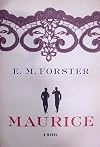
Reading this book I was struck over and over again by EM Forster’s sensitivity, sparsity, and genius. I can’t express how glad I am that this book was published, even after 50 years.
How did Forster create Maurice-- off-handedly arrogant, non-intellectual, misogynistic and insensitive-- and breathe such feeling and particular life into him? Over the course of the book, Maurice becomes variously enflamed and tempered, confuses himself, understands himself, learns and regresses… do I show more dislike him? Do I love him? I feel with him.
Clive swings to the forefront now and again, frustratingly opaque with repression. Alec creeps up from the background— is enough time given to him? Maybe not. In Forster’s “Terminal Note” he writes about expanding Alec’s role in his rewrites, and reading the letter in Chapter 42 I got a breathtaking sense of the unexplored depth of Alec's perspective, and I wonder how the book would read if he had been expanded even more. But I’m satisfied. Besides, the end of the book feels much more like a beginning of Maurice and Alec’s story than a culmination.
In general, of course, I’m in awe of Forster’s writing. I wish I knew how to express what he does so well, the wonder of his under-writing. Maybe if I figure it out I can try to do it too.
P.S. Pronounced "Morris", apparently. show less
How did Forster create Maurice-- off-handedly arrogant, non-intellectual, misogynistic and insensitive-- and breathe such feeling and particular life into him? Over the course of the book, Maurice becomes variously enflamed and tempered, confuses himself, understands himself, learns and regresses… do I show more dislike him? Do I love him? I feel with him.
Clive swings to the forefront now and again, frustratingly opaque with repression. Alec creeps up from the background— is enough time given to him? Maybe not. In Forster’s “Terminal Note” he writes about expanding Alec’s role in his rewrites, and reading the letter in Chapter 42 I got a breathtaking sense of the unexplored depth of Alec's perspective, and I wonder how the book would read if he had been expanded even more. But I’m satisfied.
In general, of course, I’m in awe of Forster’s writing. I wish I knew how to express what he does so well, the wonder of his under-writing. Maybe if I figure it out I can try to do it too.
P.S. Pronounced "Morris", apparently. show less
Lists
Legal Stories (1)
Sense of place (1)
bound (1)
My Library (1)
Ambleside Books (1)
Europe (1)
Asia (1)
el (1)
Women's Stories (1)
Which house? (1)
Summer Books (1)
Best Satire (1)
Persephone (1)
Franklit (1)
Schwob Nederland (1)
1970s (1)
Best Dystopias (1)
Classics (1)
Take Four Books (1)
Overdue Podcast (1)
All Things India (1)
1920s (1)
Read in 2019 (1)
My TBR (3)
Out of Copyright (2)
Five star books (2)
. (2)
Favourite Books (4)
A Novel Cure (4)
Modernism (4)
Unread books (3)
. (3)
Folio Society (3)
Sonlight Books (1)
Read These Too (2)
1910s (2)
AP Lit (2)
Awards


You May Also Like


Associated Authors
Statistics
- Works
- 189
- Also by
- 108
- Members
- 57,054
- Popularity
- #258
- Rating
- 3.8
- Reviews
- 919
- ISBNs
- 1,668
- Languages
- 29
- Favorited
- 272


