

Ford Madox Ford (1873–1939)
Author of The Good Soldier
About the Author
Born Ford Hermann Madox Hueffer in England in 1873, Ford Madox Ford came from a family of artists and writers that included his grandfather, the pre-Raphaelite painter Ford Madox Brown, and his uncles Gabriel Dante Rossetti and William Michael Rossetti. Ford's early works were published under the show more name Ford Madox Hueffer, but in 1919 he legally changed his name to Ford Madox Ford due to legal complications that arose when he left his wife, Elsie Martindale, and their two daughters. He also used the pen names Daniel Chaucer and Fenil Haig. Ford's early works include The Brown Owl, a fairy tale, children's stories, romances, and The Fifth Queen, a historical trilogy about Katherine Howard, the fifth wife of Henry VIII. He also collaborated with Joseph Conrad, whom he first met in 1898, on three novels: The Nature of Crime, The Inheritors, and Romance. Ford is best known for his novels The Good Soldier, which he considered both his first serious effort at a novel and his best work, and Parade's End, a tetralogy set during World War I. Both of these books explore a theme that appears often in Ford's writing, that of a good man whose old-fashioned, gentlemanly code is in conflict with modern industrial society. Ford also published several volumes of autobiography and reminiscences, including Return to Yesterday and It Was the Nightengale, as well as numerous works of biography, history, poetry, essays, travel writing, and criticism of literature and art. Although Ford and Martindale never divorced, Ford had significant, long-term relationships with three other women, all of whom took his name; he had another daughter by one of them. He died in Deauville, France, in 1939. (Bowker Author Biography) show less
Image credit: Ford Madox Ford
Series
Works by Ford Madox Ford
Memories and Impressions: A Study in Atmospheres (Neglected Books of the Twentieth Century) (1971) 77 copies
Your mirror to my times;: The selected autobiographies and impressions of Ford Madox Ford (1971) 15 copies
Collected poems 6 copies
British Mystery Megapack Volume 1 - The Good Soldier, Haunted Hotel and The Red House Mystery (Illustrated) (2014) 6 copies
Thus to revisit: some reminiscences 5 copies
The Works of Ford Madox Ford: The Good Soldier and Other Writings (Halcyon Classics) (2009) 4 copies
Mightier than the Sword 3 copies
A Little Less than Gods 2 copies
Joseph Conrad: The Complete Novels 2 copies
Piąta królowa 1 copy
Il Senso critico 1 copy
Saga o dżentelmenie 1 copy
Il buon soldato 1 copy
On Heaven and Other Poems 1 copy
On Heaven 1 copy
The Panel: A Sheer Comedy 1 copy
En Acıklı Öykü 1 copy
The Shifting of the Fire 1 copy
O iluminativnom pretvaranju 1 copy
The Transatlantic Review 1 copy
New York essays 1 copy
The soul of London, The Heart of the Country, and The Spirit of the People; (Collected Works of Ford Madox Ford) (2013) 1 copy
Works of Ford Madox Ford. The Good Soldier, The Fifth Queen, The Inheritors, Privy Seal and more 1 copy
Vive le roy,: A novel 1 copy
Transatlantic stories / selected from The Transatlantic review ; with an introd. by Ford Madox Ford 1 copy
Songs from London 1 copy
Associated Works
Imagist Anthology 1930 — Contributor; Foreword — 4 copies
Contact collection of contemporary writers — Contributor — 1 copy
Tagged
Common Knowledge
- Legal name
- Hueffer, Ford Hermann Madox (born)
Ford, Ford Madox - Other names
- Hueffer, Ford Madox
Haig, Fenil
Chaucer, Daniel - Birthdate
- 1873-12-17
- Date of death
- 1939-06-26
- Gender
- male
- Education
- University College School, London, England, UK
- Occupations
- novelist
publisher
editor
literary critic
poet
teacher (show all 12)
essayist
travel writer
translator
historian
children's book author
soldier - Organizations
- Olivet College (Michigan)
English Review (founder and editor)
Transatlantic Review (founder and editor)
The Imagists
British Army, Welch Regiment (officer) - Awards and honors
- Doctor of Literature, Olivet College (1938)
- Relationships
- Brown, Ford Madox (grandfather)
Hueffer, Francis (father)
Hueffer, Oliver Madox (brother)
Bowen, Stella (friend)
Conrad, Joseph (friend)
Crane, Stephen (friend) (show all 18)
Gordon, Caroline (friend)
Hemingway, Ernest (friend)
Hulme, T. E. (friend)
Hunt, Violet (friend)
Joyce, James (friend)
Pound, Ezra (friend)
Rhys, Jean (friend)
Stein, Gertrude (friend)
James, Henry (friend)
Garnett, Olive (friend)
Garnett, Edward (friend)
Biala, Janice (friend) - Short biography
- Ford Madox Ford (1873-1939), English novelist, poet, critic and editor; born as Ford Hermann Hueffer becoming Ford Madox Hueffer before settling on the name Ford Madox Ford
- Nationality
- UK
- Birthplace
- Merton, Surrey, England, UK
- Places of residence
- Merton, Surrey, England, UK
London, Middlesex, England, UK
Paris, Île-de-France, France
Olivet, Michigan, USA
Provence, France
Deauville, France - Place of death
- Deauville, France
- Burial location
- Deauville, France
- Map Location
- England, UK
Members
Reviews

This is one of those books that everyone seems to describe as an under-appreciated classic. Obviously it isn't -- you can hardly open a book on 20th century literature without seeing its praises sung -- but for whatever reason, I hadn't read it before.
It's not quite what I was expecting. It comes as a Penguin Modern Classic with cover art by John Singer Sargent, it's set mostly in a German spa-town in the years before World War I, the characters are upper middle-class British and New show more Englanders -- everything is telling you to expect Henry James. And of course there are Jamesian elements: there is a hint of the old "naïve America meets sophisticated Europe" idea, and there is a huge amount of analysis and very little action.
However, this is very definitely not James. The language is light and the syntax flows readily at room temperature; ideas are communicated explicitly and directly; there is even the occasional joke.
Fundamentally, this seems to be a book about the process of narrative itself. There are only four main characters: the narrator, his wife Florence, Edward Ashburnham (the "Good Soldier"), and Edward's wife Leonora. The sequence of events described is quite short and straightforward, and the narrator goes through them over and over again, each time getting a different, further insight into what happened and how the events relate to the characters and motivations of the people involved.
It is made clear to us that it is the process of telling the story that allows him to do this. In other words, the events are defined and redefined by the process of reporting them. Interestingly, this was ten years before Schrödinger and Heisenberg established that the act of measuring a physical system inevitably changes the system. Probably too fanciful to describe this as quantum-literature!
Another thing we are made to realise as the successive layers of meaning are pealed away is that there is no externally-verifiable "right answer". We only have the unreliable evidence of the narrator, and he himself has no way to go back and establish that one or other version of events is somehow privileged. The narrator's conclusion that Edward was a good and lovable man and Leonora a selfish and manipulative woman is plausible, but he presents it as his own subjective view.
This is clearly a book that has had a big influence on western literature. For instance, I was reminded very strongly of the narrative technique used by Günter Grass in his memoir Beim Häuten der Zwiebel, which I read a few months ago. Grass uses exactly this idea, of the influence that fictional narrative has on the events it describes, and of the impossibility of getting back to a single, true, version of events. show less
It's not quite what I was expecting. It comes as a Penguin Modern Classic with cover art by John Singer Sargent, it's set mostly in a German spa-town in the years before World War I, the characters are upper middle-class British and New show more Englanders -- everything is telling you to expect Henry James. And of course there are Jamesian elements: there is a hint of the old "naïve America meets sophisticated Europe" idea, and there is a huge amount of analysis and very little action.
However, this is very definitely not James. The language is light and the syntax flows readily at room temperature; ideas are communicated explicitly and directly; there is even the occasional joke.
Fundamentally, this seems to be a book about the process of narrative itself. There are only four main characters: the narrator, his wife Florence, Edward Ashburnham (the "Good Soldier"), and Edward's wife Leonora. The sequence of events described is quite short and straightforward, and the narrator goes through them over and over again, each time getting a different, further insight into what happened and how the events relate to the characters and motivations of the people involved.
It is made clear to us that it is the process of telling the story that allows him to do this. In other words, the events are defined and redefined by the process of reporting them. Interestingly, this was ten years before Schrödinger and Heisenberg established that the act of measuring a physical system inevitably changes the system. Probably too fanciful to describe this as quantum-literature!
Another thing we are made to realise as the successive layers of meaning are pealed away is that there is no externally-verifiable "right answer". We only have the unreliable evidence of the narrator, and he himself has no way to go back and establish that one or other version of events is somehow privileged. The narrator's conclusion that Edward was a good and lovable man and Leonora a selfish and manipulative woman is plausible, but he presents it as his own subjective view.
This is clearly a book that has had a big influence on western literature. For instance, I was reminded very strongly of the narrative technique used by Günter Grass in his memoir Beim Häuten der Zwiebel, which I read a few months ago. Grass uses exactly this idea, of the influence that fictional narrative has on the events it describes, and of the impossibility of getting back to a single, true, version of events. show less
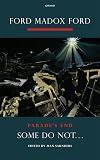
I have split the four volumes of Parade's End for review purposes. This was my favorite of the four, and also the most difficult for me to get through. It is hard to adapt oneself to Ford's narrative style--he begins most chapters or sections in medias res and then pieces together all the events that have led up to a decisive moment. Half the time while reading this volume I didn't really understand what was going on, but by the end you have such a full, rich understanding of the inner lives show more of a complex set of characters that it is worth the struggle it has taken to read and absorb the book.
Basically this book sets up the major conflicts of the Parade's End tetralogy, the story of Christopher Tietjens, a younger son of the landed gentry whose upright morals seem to doom him to failure in a corrupt world. Tietjens bucks against society in the name of "the eighteenth century," which to him seems to evoke an uncomplicated time before modernity. The book explores themes of lost innocence, public and private morality, and national decline in the years leading up to the First World War. It is startling as a document of these changes, completed just a few years after the end of the war. Thus it feels immediate and vivid. But I think it has also stood the test of time as a modernist experiment and a piece of art.
It's hard to like Tietjens at first, but he rather grew on me over the course of the novels. In the beginning, he seems hopelessly priggish, rude, uncompromising, and rather foolish despite his enormous intellect. By the end, you come to see him as a sensitive person who hides or stifles his emotions so that he may better serve others. I think this is intentional. The way Christopher's consciousness slowly opens before the reader mirrors the way that Valentine Wannop, his object of chaste desire, comes to see past his surface. The way I described feeling towards Tietjens at the beginning of the novel is also the way his manipulative wife, Sylvia, sees him for most of the tetralogy. Therefore, I conclude that our gradual growth of affection for the main character is intentional on the part of Ford, a master of the slow reveal. show less
Basically this book sets up the major conflicts of the Parade's End tetralogy, the story of Christopher Tietjens, a younger son of the landed gentry whose upright morals seem to doom him to failure in a corrupt world. Tietjens bucks against society in the name of "the eighteenth century," which to him seems to evoke an uncomplicated time before modernity. The book explores themes of lost innocence, public and private morality, and national decline in the years leading up to the First World War. It is startling as a document of these changes, completed just a few years after the end of the war. Thus it feels immediate and vivid. But I think it has also stood the test of time as a modernist experiment and a piece of art.
It's hard to like Tietjens at first, but he rather grew on me over the course of the novels. In the beginning, he seems hopelessly priggish, rude, uncompromising, and rather foolish despite his enormous intellect. By the end, you come to see him as a sensitive person who hides or stifles his emotions so that he may better serve others. I think this is intentional. The way Christopher's consciousness slowly opens before the reader mirrors the way that Valentine Wannop, his object of chaste desire, comes to see past his surface. The way I described feeling towards Tietjens at the beginning of the novel is also the way his manipulative wife, Sylvia, sees him for most of the tetralogy. Therefore, I conclude that our gradual growth of affection for the main character is intentional on the part of Ford, a master of the slow reveal. show less

Victorian literature might often hint at extramarital affairs and hijinx, but always under the guise of pursuing or seeking true love. Ford Madox Ford bravely struck a new chord in this 1915 novel with his statement that sometimes - if not often - it's just a fling, based on loneliness or the sexual desire. This stripping away of the curtains around the issue didn't land him in censorship waters like James Joyce a few years later, but his novel was branded as "unpleasant" and "dangerous". show more This for addressing an everyday occurrence in plainer language so that it might be explored on the page.
This novel is also an early example of literary impressionism, a style that we take for granted today. Ford takes a roundabout path to telling his story, providing us with an after-the-fact narrator John Dowell who tends to ramble and gets things out of order. Immediately we know who dies, so that's the hook to exploring why. John contradicts himself on occasion, or says something offhand that startles but then he doesn't address it immediately, and some of his adjectives take on a fresh meeting later. Rather than frustrating, however, it creates a layer of mystery and need-to-know that keeps the pages turning.
John is a significant example of an unreliable narrator, his judgements and feelings about what transpired shifting in several directions. Only the concluding pages provide confirmation where his true sympathy lies, when his actions speak louder than his words. Ford is suggesting through John that sometimes our passions are too much for the artificial constructs of society to contain - our religious moralities, our marriage contracts, our collective sense of decency. That someone who is destroyed when they run counter to these may be too well understood to be considered a villain, given the base desires most of us share; except that this characterization too must to be done, so the rest of us can go on with our orderliness and stability to win whatever happiness remains. show less
This novel is also an early example of literary impressionism, a style that we take for granted today. Ford takes a roundabout path to telling his story, providing us with an after-the-fact narrator John Dowell who tends to ramble and gets things out of order. Immediately we know who dies, so that's the hook to exploring why. John contradicts himself on occasion, or says something offhand that startles but then he doesn't address it immediately, and some of his adjectives take on a fresh meeting later. Rather than frustrating, however, it creates a layer of mystery and need-to-know that keeps the pages turning.
John is a significant example of an unreliable narrator, his judgements and feelings about what transpired shifting in several directions. Only the concluding pages provide confirmation where his true sympathy lies, when his actions speak louder than his words. Ford is suggesting through John that sometimes our passions are too much for the artificial constructs of society to contain - our religious moralities, our marriage contracts, our collective sense of decency. That someone who is destroyed when they run counter to these may be too well understood to be considered a villain, given the base desires most of us share; except that this characterization too must to be done, so the rest of us can go on with our orderliness and stability to win whatever happiness remains. show less
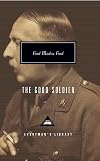
Was there ever such an oblivious man in literature as the narrator of this book? I realize it is set in a far different time from ours i.e. the early 20th century but I was incredulous that a man would not be in the least suspicious of a wife who kept him out of her bedroom while not one, but at times two, other men were in the same abode. Even when other people hinted that his wife was cuckolding him he apparently didn't suspect a thing.
Ford Maddox Ford wrote this book before World War I show more but it didn't come out until 1915. He wanted to call it The Saddest Story but his publisher told him that title would turn people off the book so he tossed off the suggestion of The Good Soldier. The Saddest Story makes more sense but that's water under the bridge now.
The narrator of the story is an American called Dowell. He is well-to-do and therefore sees no need for employment. When he meets Florence Hurlbird, a younger beautiful woman living with two maiden aunts in New England, he decides he must marry her. She accepts his proposal when she ascertains that he will take her to Europe for the honeymoon and the wedding is completed just before they set sail. On board the ship Florence has an attack of some kind and is thereafter an invalid taken care of by her husband. Although it is not explicitly stated it doesn't appear that the marriage was ever consummated. At the spa town of Nauheim where Florence is "taking the waters" they meet the British couple Edward and Leonora Ashburnham. Edward is on sick leave from the British army in India although we will learn later that this was a pretext to follow a young married woman who really was ill. Soon Edward has turned his roving eye to Florence and she reciprocated. Leonora knows all about her husband's proclivities and has already paid off a number of people who threatened to publicize previous affairs. The affair went on for years as the Dowells and the Ashburnhams met up at numerous places in Europe. Throughout all this time Dowell himself was unaware of the affair. It was only after Florence's death (suicide) that he learned the truth. It was Edward Ashburnham who told him in order to clear his conscience. He then killed himself. Dowell thought that he could then marry the Ashburnham's young ward, Nancy, but that plan fell through although he did end up looking after Nancy much as he looked after Florence. So, yes, it's a very sad story but one that I felt Dowell caused by his own naivety and inattention.
The introduction to this book tells me that it was autobiographical in many ways with Edward Ashburnham standing in for Ford. If so, then I'm quite glad he was safely in his grave before I ever graced this earth. Far from being "good" Ashburnham is portrayed as entirely without conscience where women are concerned. show less
Ford Maddox Ford wrote this book before World War I show more but it didn't come out until 1915. He wanted to call it The Saddest Story but his publisher told him that title would turn people off the book so he tossed off the suggestion of The Good Soldier. The Saddest Story makes more sense but that's water under the bridge now.
The narrator of the story is an American called Dowell. He is well-to-do and therefore sees no need for employment. When he meets Florence Hurlbird, a younger beautiful woman living with two maiden aunts in New England, he decides he must marry her. She accepts his proposal when she ascertains that he will take her to Europe for the honeymoon and the wedding is completed just before they set sail. On board the ship Florence has an attack of some kind and is thereafter an invalid taken care of by her husband. Although it is not explicitly stated it doesn't appear that the marriage was ever consummated. At the spa town of Nauheim where Florence is "taking the waters" they meet the British couple Edward and Leonora Ashburnham. Edward is on sick leave from the British army in India although we will learn later that this was a pretext to follow a young married woman who really was ill. Soon Edward has turned his roving eye to Florence and she reciprocated. Leonora knows all about her husband's proclivities and has already paid off a number of people who threatened to publicize previous affairs. The affair went on for years as the Dowells and the Ashburnhams met up at numerous places in Europe. Throughout all this time Dowell himself was unaware of the affair. It was only after Florence's death (suicide) that he learned the truth. It was Edward Ashburnham who told him in order to clear his conscience. He then killed himself. Dowell thought that he could then marry the Ashburnham's young ward, Nancy, but that plan fell through although he did end up looking after Nancy much as he looked after Florence. So, yes, it's a very sad story but one that I felt Dowell caused by his own naivety and inattention.
The introduction to this book tells me that it was autobiographical in many ways with Edward Ashburnham standing in for Ford. If so, then I'm quite glad he was safely in his grave before I ever graced this earth. Far from being "good" Ashburnham is portrayed as entirely without conscience where women are concerned. show less
Lists
. (1)
Hidden Classics (1)
Five star books (1)
Best First Lines (1)
Short and Sweet (1)
Unread books (1)
Franklit (1)
War Literature (1)
1910s (1)
Out of Copyright (2)
Modernism (2)
THE WAR ROOM (2)
My TBR (2)
. (2)
A Novel Cure (2)
Folio Society (1)
Reading LIst (1)
Fiction For Men (1)
1920s (1)
AP Lit (1)
Awards


You May Also Like


Associated Authors
Statistics
- Works
- 119
- Also by
- 16
- Members
- 10,372
- Popularity
- #2,291
- Rating
- 3.7
- Reviews
- 204
- ISBNs
- 816
- Languages
- 17
- Favorited
- 30
