
Rebecca West (1) (1892–1983)
Author of Black Lamb and Grey Falcon: A Journey through Yugoslavia
For other authors named Rebecca West, see the disambiguation page.
About the Author
Taking her name from one of Henrik Ibsen's strong-minded women, Rebecca West was a politically and socially active feminist all her long life. She had an intense 10-year affair with H.G. Wells, with whom she had a son. A brilliant and versatile novelist, critic, essayist, and political commentator, show more West's greatest literary achievement is perhaps her travel diary, Black Lamb and Grey Falcon: A Journey through Yugoslavia (1942). Five years in the writing, it is the story of an Easter trip that she and her husband, British banker Henry Maxwell Andrews (whom she had married in 1930), made through Yugoslavia in 1937. A historical narrative with excellent reporting, it is essentially an analysis of Western culture. During World War II, she superintended British broadcast talks to Yugoslavia. Her remarkable reports of the treason trials of Lord Haw and John Amery appeared first in the New Yorker and are included with other stories about traitors in The Meaning of Treason (1947), which was expanded to deal with traitors and defectors since World War II as The New Meaning of Treason (1964). The Birds Fall Down (1966), which was a bestseller, is the story of a young Englishwoman caught in the grip of Russian terrorists. From a true story told to her more than half a century ago by the sister of Ford Madox Ford (who had heard it from her Russian husband), West "created a rich and instructive spy thriller, which contains an immense amount of brilliantly distributed information about the ideologies of the time, the rituals of the Russian Orthodox Church, the conflicts of customs, belief, and temperament between Russians and Western Europeans, the techniques of espionage and counter-espionage, and the life of exiles in Paris" (New Yorker). Unlike that of her more famous contemporaries, her fiction is stylistically and structurally conventional, but it effectively details the evolution of daily life amid the backdrop of such historical disasters as the world wars. Her critical works include Arnold Bennett Himself, Henry James (1916), Strange Necessity: Essays and Reviews, and The Court and the Castle (1957), a study of political and religious ideas in imaginative literature. In 1949, she was made a Dame Commander of the Order of the British Empire. (Bowker Author Biography) show less
Image credit: Rebecca West, 1912
Series
Works by Rebecca West
The Saga of the Century Trilogy: The Fountain Overflows, This Real Night, and Cousin Rosamund (2010) 29 copies
War Nurse: The True Story of a Woman Who Lived, Loved and Suffered on the Western Front (1930) — Author — 6 copies, 1 review
A Letter to a Grandfather 5 copies
English Biographies 1 copy
A Conversation on the Train 1 copy
Opera in Greenville 1 copy
Associated Works
This I Believe: The Personal Philosophies of Remarkable Men and Women (2006) — Contributor — 1,153 copies, 36 reviews
Mistress to an Age: A Life of Madame de Stael (1958) — Introduction, some editions — 345 copies, 5 reviews
The Art of Fact: A Historical Anthology of Literary Journalism (1997) — Contributor — 226 copies, 1 review
On the Firing Line: The Public Life of Our Public Figures (1989) — Contributor — 129 copies, 1 review
The New Yorker Book of War Pieces: London, 1939 to Hiroshima, 1945 (1947) — Contributor — 114 copies, 2 reviews
Alger Hiss, Whittaker Chambers, and the Schism in the American Soul (2002) — Contributor — 25 copies, 1 review
Gender in Modernism: New Geographies, Complex Intersections (2007) — Contributor — 12 copies, 1 review
Agenda : Wyndham Lewis special issue — Contributor — 6 copies
Fourteen stories from one plot, based on "Mr. Fothergill's plot" (1932) — Contributor — 6 copies, 1 review
Tagged
Common Knowledge
- Canonical name
- West, Rebecca
- Legal name
- Fairfield, Cicely Isabel (birth)
- Other names
- Andrews, Cicely Isabel
- Birthdate
- 1892-12-21
- Date of death
- 1983-03-15
- Gender
- female
- Education
- George Watson's Ladies College
Academy of Dramatic Art - Occupations
- writer
author
novelist
Time and Tide (director) - Organizations
- American Academy of Arts and Letters (Foreign Honorary ∙ Literature ∙ 1972)
Time and Tide - Awards and honors
- Royal Society of Literature (Companion of Literature)
Order of the British Empire (Commander, 1949)
Order of the British Empire (Dame Commander, 1959)
Women's Press Club Award for Journalism (1948)
Légion d'Honneur
Benson Medal (1966) - Relationships
- West, Anthony (son)
Wells, H. G. (lover)
Fairfield, Letitia (sister)
West, Henry Maxwell (husband) - Short biography
- Rebecca West was the pen name of Cicily Isabel Andrews, née Fairfield, born in London, England (some sources say Kerry, Ireland), to an Anglo-Irish-Scottish family. She was educated in Edinburgh, Scotland but had to leave school at 16. She went to London to train as an actress, and took her pseudonym from her role in the Henrik Ibsen play Rosmersholm. She became a journalist around 1911, working first for the feminist publications Freewoman and the Clarion, in support of women's right to vote, and later contributing essays and reviews to The New Republic, The New York Herald Tribune, The Statesman, The Daily Telegraph, and many other national newspapers and magazines in the UK and USA. She was at times a foreign correspondent, and wrote social and cultural criticism, book reviews, travel writing, fiction, and nonfiction. In 1918, she published her first novel, The Return of the Soldier. Other works included The Judge (1922), Harriet Hume (1929), The Thinking Reed (1936), The Fountain Overflows (1957), and The Birds Fall Down (1966). After visiting Yugoslavia and the Balkans in 1937, she published the two-volume Black Lamb and Grey Falcon (1942). Her reports on the Nuremberg trials following World War II were collected in A Train of Powder (1955). West was created a Dame Commander of the Order of the British Empire in 1959. She had a 10-year liaison with H.G. Wells that began in 1913 and produced a son, Anthony West. At age 37, in 1930, she married Henry Maxwell Andrews, a banker.
- Nationality
- UK
- Birthplace
- London, Middlesex, England, UK
- Places of residence
- London, Middlesex, England, UK
Edinburgh, Midlothian, Scotland, UK
Ibston, Buckinghamshire, England, UK - Place of death
- London, Middlesex, England, UK
- Burial location
- Brookwood Cemetery, Brookwood, Woking, Surrey, England, UK
- Map Location
- England, UK
Members
Discussions
Group Read, April 2025: The Birds Fall Down in 1001 Books to read before you die (April 2025)
February Read: Rebecca West in Virago Modern Classics (March 2017)
Group Read, March 2016: Harriet Hume in 1001 Books to read before you die (March 2016)
Rebecca West recommendations in Virago Modern Classics (June 2013)
Reviews

Wow. Such a small novel to pack such a wallop, from beginning to end.
This is my first West book and was also the first she published. At 24! I'm dumbfounded by that.
Most reviewers have mentioned the lyricism of her writing, and it's true. However, the sentence structure -- often very long sentences -- I found an effort to follow; more commas would have helped this lazy reader. Is this the way West always writes, I wondered. Is it some sort of Edwardian thing? Now I see the structure (and the show more reward for my dogged efforts to re-read the same sentence multiple times) was integral to the tale she was telling: a kind of stream of consciousness with the deliberate building of the private observations by the narrator, Jenny, until the brutal insights and impressions were rolled in that astute lyricism making you jolt at the often cruel meaning. And, paradoxically, the cruelty was the precise thing to invoke reader's compassion too. Jenny's astute description of the other two woman not only told us accurately about their lives and roles, but also unintentionally a brutal insight about herself and the precariousness of her own life.
The three women are stuck in an awful time in history (during WW I), firmly stuck within their restrictive roles, lives firmly defined by their relationship to men. Not one is to be envied by present day readers, nor even hated, although Kitty does appear the least sympathetic. One could, actually, make the case that Kitty deserves our sympathy most. She is the most stuck in her pre-defined life without any escape except down. And her life was not unfolding at all as it should. Shallow Kitty was also lacking the depth of heart to begin to understand the changes happening to her life or how to adapt to those changes. She is stuck in her suffering.
I'm especially glad I read the novel itself before the included 1997 Introduction by Samuel Hynes, the order which I normally do anyway. A "cold read" absolutely allowed The Return of the Soldier to play out every bit of talent and power it has rights to claim.
Rebecca West, I need to read more of your works. You were amazing. At 24! show less
This is my first West book and was also the first she published. At 24! I'm dumbfounded by that.
Most reviewers have mentioned the lyricism of her writing, and it's true. However, the sentence structure -- often very long sentences -- I found an effort to follow; more commas would have helped this lazy reader. Is this the way West always writes, I wondered. Is it some sort of Edwardian thing? Now I see the structure (and the show more reward for my dogged efforts to re-read the same sentence multiple times) was integral to the tale she was telling: a kind of stream of consciousness with the deliberate building of the private observations by the narrator, Jenny, until the brutal insights and impressions were rolled in that astute lyricism making you jolt at the often cruel meaning. And, paradoxically, the cruelty was the precise thing to invoke reader's compassion too. Jenny's astute description of the other two woman not only told us accurately about their lives and roles, but also unintentionally a brutal insight about herself and the precariousness of her own life.
The three women are stuck in an awful time in history (during WW I), firmly stuck within their restrictive roles, lives firmly defined by their relationship to men. Not one is to be envied by present day readers, nor even hated, although Kitty does appear the least sympathetic. One could, actually, make the case that Kitty deserves our sympathy most. She is the most stuck in her pre-defined life without any escape except down. And her life was not unfolding at all as it should. Shallow Kitty was also lacking the depth of heart to begin to understand the changes happening to her life or how to adapt to those changes. She is stuck in her suffering.
I'm especially glad I read the novel itself before the included 1997 Introduction by Samuel Hynes, the order which I normally do anyway. A "cold read" absolutely allowed The Return of the Soldier to play out every bit of talent and power it has rights to claim.
Rebecca West, I need to read more of your works. You were amazing. At 24! show less

Imagine if a teenager from a provincial background in the remote north, having dropped out of high school to devote her energies to activism for the biggest grass-roots protest movement of the day, were to start telling the world's great thinkers and statesmen where they have been going wrong all these years...
It's very tempting to make clumsy comparisons between Rebecca West's first, dynamite-laden, ventures into political and literary journalism in the early 20th century and our problems show more of a century later, and to reflect on how little has changed in the self-interested thick-headedness of the older generation and their (our) refusal to listen to rational argument and see the need for urgent change in the world.
Obviously, in reality, much has changed in the world since then. No paper these days would dare to print anything as outspoken as a Rebecca West book review uncensored: if they weren't sued for defamation by the author they would at least be permanently blacklisted by the publisher and lose all their advertising. They would never employ an underage contributor without a single formal educational qualification to her name, and if by some chance she did manage to get her political articles published, the world would be much more interested in seeing photographs of her Smooching with Famous Author than in the substance of her arguments...
This collection is divided roughly fifty-fifty between book reviews and political essays, mostly from 1911-1913 when it looked as though the women's suffrage campaign was close to a breakthrough, but carrying on into the war years (when her journalism was slowed down a bit by being out of London and looking after her young son).
On the literary side, everyone from Hall Caine, Strindberg and Mrs Humphrey Ward to forgotten popular novelists of the time gets a thorough pasting. Arnold Bennett, D H Lawrence and Ford Maddox Ford (Hueffer) are the only writers who get anything like thoroughly positive reviews (and in Bennett's case it's obviously at least in part done to provoke, because everyone else looks down on him). Other writers she admires, like Hardy and H G Wells, still get taken to task for major flaws in their books, especially in their representations of women. It's typical of her that she's just as savage with Wells after they became lovers as she was before they met: it clearly would never have crossed her mind to allow the person to get mixed up with the book.
The political articles are mostly about feminist issues and the suffrage campaign — West clearly has a huge amount of respect for the individual campaigners and takes every opportunity to remind us of the way they are being mistreated under Asquith's hard-line approach, but she also makes it clear that she feels the WSPU under the Pankhursts has made a disastrous strategic error by focussing on direct action by a small group of hardcore middle-class activists rather than building up mass working-class support and forcing the unions and the Labour Party to listen to women workers. (The collection also includes a biographical essay about Mrs Pankhurst written twenty years later, in which West acknowledges the huge contribution she and her daughters made to getting the suffrage campaign going, but maintains her reservations about the way the movement developed.)
Reading her account of the political manoeuvring around the suffrage issue, in particular the repeated betrayals of trust by Lloyd George, Ramsay McDonald and others and the way it all got tangled up with Ireland, it's again hard not to make comparisons with more recent events in the UK...
One constant theme in the essays is that the most urgent issue for women is not the vote, or access to higher education and professions, but equal pay. The fiction that women are only working to support themselves, and therefore don't need to earn as much as male "breadwinners", is what pushes so many women workers into hunger and poverty. Especially relevant in West's day, since this was before statutory old age pensions came in for most people, so many "single" women were actually supporting elderly parents by their work, whilst married women and widows were likely to be supporting children and often also unemployed or disabled husbands.
We also get some engaging diatribes about the arrogance of charitable trusts that see domestic service as the only career the girls in their care should be trained for, and about the urgent need for decent accommodation for young working women that treats them as responsible adults, away from the patronising evangelical monopoly of the YWCA. West has fun repeatedly puncturing the bubble of "the white slave trade", a form of crime that the press, Parliament and pressure groups spent endless amounts of time devising remedies for, even though there was no good reason to believe that it had ever existed.
It's fun to go back into these issues, some still active and relevant, others long-settled, but the real interest of course is West's devastatingly clear ability to set out her arguments on paper. She can be calm, passionate, funny, sophisticated or faux-naive as the occasion demands, but she always gets her message across to the reader and leaves you wondering how anyone could possibly disagree. As with all politically engaged writing, you have to remind yourself that the people who disagree probably never bothered to read it. Asquith might perhaps have had someone in his office look through the Freewoman, but he certainly never had it propped up against his coffee-pot in the mornings... show less
It's very tempting to make clumsy comparisons between Rebecca West's first, dynamite-laden, ventures into political and literary journalism in the early 20th century and our problems show more of a century later, and to reflect on how little has changed in the self-interested thick-headedness of the older generation and their (our) refusal to listen to rational argument and see the need for urgent change in the world.
Obviously, in reality, much has changed in the world since then. No paper these days would dare to print anything as outspoken as a Rebecca West book review uncensored: if they weren't sued for defamation by the author they would at least be permanently blacklisted by the publisher and lose all their advertising. They would never employ an underage contributor without a single formal educational qualification to her name, and if by some chance she did manage to get her political articles published, the world would be much more interested in seeing photographs of her Smooching with Famous Author than in the substance of her arguments...
This collection is divided roughly fifty-fifty between book reviews and political essays, mostly from 1911-1913 when it looked as though the women's suffrage campaign was close to a breakthrough, but carrying on into the war years (when her journalism was slowed down a bit by being out of London and looking after her young son).
On the literary side, everyone from Hall Caine, Strindberg and Mrs Humphrey Ward to forgotten popular novelists of the time gets a thorough pasting. Arnold Bennett, D H Lawrence and Ford Maddox Ford (Hueffer) are the only writers who get anything like thoroughly positive reviews (and in Bennett's case it's obviously at least in part done to provoke, because everyone else looks down on him). Other writers she admires, like Hardy and H G Wells, still get taken to task for major flaws in their books, especially in their representations of women. It's typical of her that she's just as savage with Wells after they became lovers as she was before they met: it clearly would never have crossed her mind to allow the person to get mixed up with the book.
The political articles are mostly about feminist issues and the suffrage campaign — West clearly has a huge amount of respect for the individual campaigners and takes every opportunity to remind us of the way they are being mistreated under Asquith's hard-line approach, but she also makes it clear that she feels the WSPU under the Pankhursts has made a disastrous strategic error by focussing on direct action by a small group of hardcore middle-class activists rather than building up mass working-class support and forcing the unions and the Labour Party to listen to women workers. (The collection also includes a biographical essay about Mrs Pankhurst written twenty years later, in which West acknowledges the huge contribution she and her daughters made to getting the suffrage campaign going, but maintains her reservations about the way the movement developed.)
Reading her account of the political manoeuvring around the suffrage issue, in particular the repeated betrayals of trust by Lloyd George, Ramsay McDonald and others and the way it all got tangled up with Ireland, it's again hard not to make comparisons with more recent events in the UK...
One constant theme in the essays is that the most urgent issue for women is not the vote, or access to higher education and professions, but equal pay. The fiction that women are only working to support themselves, and therefore don't need to earn as much as male "breadwinners", is what pushes so many women workers into hunger and poverty. Especially relevant in West's day, since this was before statutory old age pensions came in for most people, so many "single" women were actually supporting elderly parents by their work, whilst married women and widows were likely to be supporting children and often also unemployed or disabled husbands.
We also get some engaging diatribes about the arrogance of charitable trusts that see domestic service as the only career the girls in their care should be trained for, and about the urgent need for decent accommodation for young working women that treats them as responsible adults, away from the patronising evangelical monopoly of the YWCA. West has fun repeatedly puncturing the bubble of "the white slave trade", a form of crime that the press, Parliament and pressure groups spent endless amounts of time devising remedies for, even though there was no good reason to believe that it had ever existed.
It's fun to go back into these issues, some still active and relevant, others long-settled, but the real interest of course is West's devastatingly clear ability to set out her arguments on paper. She can be calm, passionate, funny, sophisticated or faux-naive as the occasion demands, but she always gets her message across to the reader and leaves you wondering how anyone could possibly disagree. As with all politically engaged writing, you have to remind yourself that the people who disagree probably never bothered to read it. Asquith might perhaps have had someone in his office look through the Freewoman, but he certainly never had it propped up against his coffee-pot in the mornings... show less

This 1928 essay collection is dominated by a 200-page exploration of aesthetics, inspired by West’s reflections on an autumn day in Paris when she bought a copy of James Joyce’s Pomes penyeach from Sylvia Beach, visited a dress shop (decorated by Diaghilev’s scene-painter, Pedro Pruna) and a milliner‘s, and had tea in a house on the end of the Ile de la Cité. She decides that she will spend the next day communing with a favourite Ingres painting in the Louvre instead of going to show more Versailles, and — being who she is — she wonders exactly why she responded to each of these aesthetic experiences in the way she did. Why does art matter to her, and to other people? This leads her into a precise examination of the strengths and weaknesses of Joyce’s Ulysses, as illuminated by the lack of taste she detected in his poems (of course, the whole essay, with its ‘24 hours in the city’ structure, is a jokey semi-parody of Joyce’s book), into a similar examination of Proust, who is clearly a step higher in her personal pantheon than Joyce, and then into a discussion of how the physiology of aesthetic response might work, inspired by her reading of Pavlov.
We probably don’t need to take the science too literally: she doesn’t seem to be arguing that art is a simple case of a conditioned reflex, or that she is a dog salivating at the thought of a nice juicy morsel of Ingres. It’s rather that Pavlov’s scientific approach could give us an extra tool for looking more analytically at the way we respond to works of art and at the qualities we look for in them. It’s an entertaining ride, and you will need to keep your wits about you and your seat-belt securely fastened if you don’t want to find yourself having to go back a couple of pages to pick up the thread of the argument after one of her dangerous curves.
The other essays in the collection are mostly book reviews written for the New York Herald Tribune and dealing with writers of the time. Some, like her analyses of Death comes for the archbishop and Elmer Gantry, are still very pertinent, whilst others — e.g. the diatribe against the latest Ethel M Dell bestseller — are interesting only in a more general sense.
She ruffled feathers by reprinting her review of Arnold Bennett’s Lord Raingo, in which she riffs off Woolf’s criticism in ‘Modern fiction’ by portraying Wells, Bennett, Shaw and Galsworthy as the charming, loquacious, and generous ‘visiting Uncles’ of British literature. Shaw — predictably — was the only one of the four who saw the joke. Bennett was seriously miffed (not least because Lord Raingo turned out to be one of his many flops), and continued to rumble about it for years afterwards.
The last essay in the collection, ‘Minor artists,’ is a charming description of the villa in the south of France where she had spent the summer, analysing how its otherwise insignificant architect and the family of the obscure playwright who rented it to her had made it such a pleasant place to be.
If you enjoyed The common reader, you need to read this as well. And vice-versa. show less
We probably don’t need to take the science too literally: she doesn’t seem to be arguing that art is a simple case of a conditioned reflex, or that she is a dog salivating at the thought of a nice juicy morsel of Ingres. It’s rather that Pavlov’s scientific approach could give us an extra tool for looking more analytically at the way we respond to works of art and at the qualities we look for in them. It’s an entertaining ride, and you will need to keep your wits about you and your seat-belt securely fastened if you don’t want to find yourself having to go back a couple of pages to pick up the thread of the argument after one of her dangerous curves.
The other essays in the collection are mostly book reviews written for the New York Herald Tribune and dealing with writers of the time. Some, like her analyses of Death comes for the archbishop and Elmer Gantry, are still very pertinent, whilst others — e.g. the diatribe against the latest Ethel M Dell bestseller — are interesting only in a more general sense.
She ruffled feathers by reprinting her review of Arnold Bennett’s Lord Raingo, in which she riffs off Woolf’s criticism in ‘Modern fiction’ by portraying Wells, Bennett, Shaw and Galsworthy as the charming, loquacious, and generous ‘visiting Uncles’ of British literature. Shaw — predictably — was the only one of the four who saw the joke. Bennett was seriously miffed (not least because Lord Raingo turned out to be one of his many flops), and continued to rumble about it for years afterwards.
The last essay in the collection, ‘Minor artists,’ is a charming description of the villa in the south of France where she had spent the summer, analysing how its otherwise insignificant architect and the family of the obscure playwright who rented it to her had made it such a pleasant place to be.
If you enjoyed The common reader, you need to read this as well. And vice-versa. show less
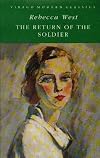
A rare First World War novella told entirely from the home front, through the eyes of three women – a wife, a cousin and a first love – each losing Chris in a different way. I found the dense modernist prose slow going at times but ultimately rewarding. West closes on a single image that quietly reframes the preceding events, leaving me haunted by the cure.
Lists
Schwob Nederland (1)
War Literature (1)
THE WAR ROOM (1)
Short and Sweet (1)
Sense of place (1)
Backlisted (1)
Awards


You May Also Like


Associated Authors
Statistics
- Works
- 48
- Also by
- 29
- Members
- 8,676
- Popularity
- #2,766
- Rating
- 3.8
- Reviews
- 211
- ISBNs
- 348
- Languages
- 8
- Favorited
- 32

