
Winifred Holtby (1898–1935)
Author of South Riding
About the Author
Works by Winifred Holtby
Testament of a Generation: The Journalism of Vera Brittain and Winifred Holtby (1985) 57 copies, 2 reviews
Associated Works
Gender in Modernism: New Geographies, Complex Intersections (2007) — Contributor — 12 copies, 1 review
Tagged
Common Knowledge
- Birthdate
- 1898-06-23
- Date of death
- 1935-09-29
- Gender
- female
- Education
- governess
Queen Margaret's School, Scarborough
University of Oxford (Somerville College) - Occupations
- novelist
journalist
lecturer (League of Nations Union)
director (Time and Tide) - Organizations
- Independent Labour Party
Six Point Group
Time and Tide - Relationships
- Brittain, Vera (companion|1919|Holtby's death|1935)
- Short biography
- Winifred Holtby, a prolific writer and committed pacifist, met Vera Brittain in 1919. The two writers developed a close friendship and they shared a home and care of Brittain's children for many years until Holtby's death. See Brittain's "Testament of Friendship" (1940).
- Cause of death
- kidney failure (Bright's disease)
- Nationality
- England
UK - Birthplace
- Rudston, Yorkshire, England, UK
- Places of residence
- Rudston, Yorkshire, England, UK
London, England, UK - Place of death
- London, England, UK
- Burial location
- All Saints Churchyard, Rudston, Yorkshire, England, UK
- Map Location
- England, UK
Members
Discussions
158. South Riding by Winifred Holtby in Backlisted Book Club (March 2022)
BRITISH AUTHOR CHALLENGE - Between the Wars - HOLTBY & GRAVES in 75 Books Challenge for 2017 (October 2017)
South Riding in Virago Modern Classics (August 2011)
February: Reading Winifred Holtby in Monthly Author Reads (February 2011)
Reviews

Back in the London of the 1920s, Caroline Denton-Smyth had an idea. Cinema was in its infancy, its direction was unsure, but the possibility of it being used in questionable ways was certainly there. Caroline decided she would form the Christian Cinema Company. Its object was to "...combine profit with pioneering and produce only absolutely one hundred per cent guaranteed pure films - talkies and all - made in Britain. You know. The sort the curate could take his mother to."
Caroline knew show more nothing about the pioneering science of films and very little more about profit, but she was of the sort for whom such limitations were to be dismissed as mere quibbles. Her task was to find a board of directors.
[[Winifred Holtby]] starts her novel with an Opening Chorus, in which Caroline's second cousins have just returned from her funeral, a great excuse for a shopping and theatre expedition to London. Their description of Caroline as a woman who "...would cadge, borrow or steal from anyone in the world that she could get hold of" is brutal, and immediately gives the reader a decidedly less than favourable impression.
Holtby then devotes a chapter to each board member in turn. Each was in it for their own ulterior motives. None, with the possible exception of the young assistant Anglican priest, actually believed in the cause. While some of the characters' descriptions seem somewhat of a cliché, Holtby writes of them so well that this can be forgiven, for her sly wit rounds them out.
As each member's story is told, we see not only their motives, but also their thoughts on Caroline and her company. While each person offers a different perspective, they are all in agreement with one sentiment, for each chapter ends with the refrain "Poor Caroline!"
Was she a pitiable deluded old spinster in her lonely bedsit, a conniving swindler, a motivated crusader? Did her board members get what they wanted or wind up getting their just deserts? There are hints in the last chapter, the Final Chorus, recounting the day of the funeral, but wisely Holtby lets the reader decide.
An entertaining read, but very much of its time and place. show less
Caroline knew show more nothing about the pioneering science of films and very little more about profit, but she was of the sort for whom such limitations were to be dismissed as mere quibbles. Her task was to find a board of directors.
[[Winifred Holtby]] starts her novel with an Opening Chorus, in which Caroline's second cousins have just returned from her funeral, a great excuse for a shopping and theatre expedition to London. Their description of Caroline as a woman who "...would cadge, borrow or steal from anyone in the world that she could get hold of" is brutal, and immediately gives the reader a decidedly less than favourable impression.
Holtby then devotes a chapter to each board member in turn. Each was in it for their own ulterior motives. None, with the possible exception of the young assistant Anglican priest, actually believed in the cause. While some of the characters' descriptions seem somewhat of a cliché, Holtby writes of them so well that this can be forgiven, for her sly wit rounds them out.
Hugh Angus MacAfee, so far as he was made at all, was a self-made man. The great disadvantage in making oneself lies in the difficulty of getting both sides to match. Hugh's development was distressingly one-sided. ...
To do him justice, he was not dissatisfied with his own production. Disapproval was his favourite hobby, but he rarely applied it to himself.
As each member's story is told, we see not only their motives, but also their thoughts on Caroline and her company. While each person offers a different perspective, they are all in agreement with one sentiment, for each chapter ends with the refrain "Poor Caroline!"
Was she a pitiable deluded old spinster in her lonely bedsit, a conniving swindler, a motivated crusader? Did her board members get what they wanted or wind up getting their just deserts? There are hints in the last chapter, the Final Chorus, recounting the day of the funeral, but wisely Holtby lets the reader decide.
An entertaining read, but very much of its time and place. show less
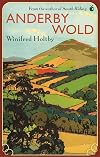
Winifred Holtby was born seven miles from where I was born and I have always felt a connection with her, forged primarily by reading ‘South Riding’ as a teenager and reinforced by re-reading and two television series. And she also did what I wanted to do; she left the Yorkshire Wolds and became a writer. But until now, I am ashamed to say, I had not read her earlier novels. ‘Anderby Wold’ is her first; published in 1923 it is a portrayal of a Yorkshire Wolds village in the first show more years of the twentieth century. I was struck by the similarity to Jane Austen: both focus on the personalities, tensions, the pettiness, resentments and emotions of small communities, and both combine acute social observations with sharp humour.
The novel opens with a family party at the farm, Anderby Wold, as Mary Robson and John, her husband of ten years and also her cousin, are celebrating a decade of hard work and penny pinching to clear the mortgage on the farm they had inherited. We are introduced to Mary and the family from the viewpoint of John’s sister, the spiteful Sarah. If ever there was a negative first chapter that makes you think the story is going to be full of unlikeable characters, this is it. It is, perhaps, a sign of its times; I am not sure a novel would be published today with such an ill-feeling introduction. But do persist, this novel is worth reading. We are slowly introduced to each key character with their own viewpoint and take on their agricultural world, where hard toil, tough weather and difficult land unites – and separates – the community. Mary thinks of herself as a considerate benevolent mistress, she sits with sick people, visits the old, supports the school, and distributes gifts at Christmas. But she is unaware that some of the farm labourers resent what they see as her Mrs Bountiful role, a vision of her behaviour to which she is blind. She feels dissatisfaction with the minutiae of her life, dissatisfaction she pragmatically ignores. At a gathering of the village ladies, she listens to the gossip, ‘Mary shivered. They were as lifeless as the uprooted trees, carried from the wold side and laid in the back garden of the farm, awaiting destruction for firewood. Their talk was as meaningless as the rustle of dry leaves on brittle twigs.’
Into this fragile world where people speak bluntly and behaviour can be brusque, comes a writer from Manchester. He is researching the lot of the agricultural labourer with an eye on social change. When he comes into conflict with Mary, the beliefs and assumptions of both are challenged in an Austen-esque manner. As an outsider, David Rossitur is treated first with silence, then with suspicion. The innkeeper’s wife worries about his motivations, ‘Mrs Todd, being a personal of small imagination, had divided mankind into two classes, those who had designs on Victoria [her daughter], those who had designs on her Beer. Last night she had come to the regrettable conclusion that David had no true appreciation of Beer.’ A trade union for agricultural workers is formed, followed inevitably for a strike. At harvest time. Anderby Wold will be changed forever.
Read more of my book reviews at http://www.sandradanby.com/book-reviews-a-z/ show less
The novel opens with a family party at the farm, Anderby Wold, as Mary Robson and John, her husband of ten years and also her cousin, are celebrating a decade of hard work and penny pinching to clear the mortgage on the farm they had inherited. We are introduced to Mary and the family from the viewpoint of John’s sister, the spiteful Sarah. If ever there was a negative first chapter that makes you think the story is going to be full of unlikeable characters, this is it. It is, perhaps, a sign of its times; I am not sure a novel would be published today with such an ill-feeling introduction. But do persist, this novel is worth reading. We are slowly introduced to each key character with their own viewpoint and take on their agricultural world, where hard toil, tough weather and difficult land unites – and separates – the community. Mary thinks of herself as a considerate benevolent mistress, she sits with sick people, visits the old, supports the school, and distributes gifts at Christmas. But she is unaware that some of the farm labourers resent what they see as her Mrs Bountiful role, a vision of her behaviour to which she is blind. She feels dissatisfaction with the minutiae of her life, dissatisfaction she pragmatically ignores. At a gathering of the village ladies, she listens to the gossip, ‘Mary shivered. They were as lifeless as the uprooted trees, carried from the wold side and laid in the back garden of the farm, awaiting destruction for firewood. Their talk was as meaningless as the rustle of dry leaves on brittle twigs.’
Into this fragile world where people speak bluntly and behaviour can be brusque, comes a writer from Manchester. He is researching the lot of the agricultural labourer with an eye on social change. When he comes into conflict with Mary, the beliefs and assumptions of both are challenged in an Austen-esque manner. As an outsider, David Rossitur is treated first with silence, then with suspicion. The innkeeper’s wife worries about his motivations, ‘Mrs Todd, being a personal of small imagination, had divided mankind into two classes, those who had designs on Victoria [her daughter], those who had designs on her Beer. Last night she had come to the regrettable conclusion that David had no true appreciation of Beer.’ A trade union for agricultural workers is formed, followed inevitably for a strike. At harvest time. Anderby Wold will be changed forever.
Read more of my book reviews at http://www.sandradanby.com/book-reviews-a-z/ show less

Full disclosure: I began [South Riding] in mid-August this year of covid, 2020, and I have only finished it now at the end of November. Why did I put it down? Because of the times we are in and my own state of mind, yes. In earlier days (what we call "Before Times" around here) I would not have put it down, although, as I will get to, I would note the shift in tone about 2/3rds through the book and I would add that the shift disappointed me. It's a curious feature of novel-writing that you show more write along mining a vein for awhile, but then you come along to, exactly as in real life, a crucial moment when a choice must be made and what you then, as the writer, decide your characters will do or how they will react to an event (even if you choose to say, "the character made me do it") the book will definitively move into a final direction. Sometimes the shift is highly original and intriguing, or breathtaking, expanding outward into the unknown, at other times, there is a failure of nerve or imagination and the protagonist doesn't take the leap, choose to fold back on his or herself, there are thousands of ways these choices can play out so that sometimes the choice to fold inward, becomes (somehow) an expanding outward. This, is, I think what Holtby intended and that is pretty much exactly where I put the book down, overwhelmed. Embedded within this story of a town in Yorkshire, the new headmistress of the girl's school, the town council and the growing pains in the early 1930's of the area. is a love story. Well, several love stories, but only one is central. Robert Carne, the local squire, wants to maintain things as they are, but his life is a mess, his wife mad and requiring housing in an institution. She is a true aristocrat (whereas Carne is of the olde landed gentry ilk and this marriage was a disaster for all concerned.) He runs his farms well, but the expenses of his wife's care have ruined him. Schemes abound but Carne, caught up in his belief in his way of life, cannot see that he must change, compromise orlose. Two women adore Carne, an older woman, Mrs. Beddows, also a Councilwoman and the new headmistress who reluctantly falls in love with him. The best story here, the most original and moving, is the love Mrs. Beddows holds for Robert Carne, twenty years her junior. I went back to the novel at last for her sake. There is a moment where she admits to the younger woman, the headmistress, that her love for Carne has been confusing, that you look in the mirror and see three score and ten, but inside you're just a girl. I'm old enough now to know that and know how poignant an emotion that is. Well worth reading, this novel. Worth also knowing that Holtby was dying as she finished this, her last, and I do think the choice she made, to turn inward, was part of her own reconciliation with her approaching death. ****1/2 show less

A very well-crafted satire set in a fictional African country. Given the subject, I expected an Evelyn Waugh-type novel, all caustic wit and razor-sharp edges; instead I was treated to a thoughtful look at the clash of two cultures engaged in a game of mutual exploitation. Holtby's characters are exaggerated for comic effect, but they are also complex people who are never wholly devoid of humanity.
The copy I checked out from the library was published in 1933 and there were several pages in show more the last section which were still uncut. Sad to think this wonderful book sat on a shelf for eighty-four years without being read! show less
The copy I checked out from the library was published in 1933 and there were several pages in show more the last section which were still uncut. Sad to think this wonderful book sat on a shelf for eighty-four years without being read! show less
Lists
Awards


You May Also Like


Associated Authors
Statistics
- Works
- 24
- Also by
- 11
- Members
- 2,395
- Popularity
- #10,718
- Rating
- 3.9
- Reviews
- 92
- ISBNs
- 82
- Languages
- 3
- Favorited
- 15
