
Barbara Pym (1913–1980)
Author of Excellent Women
About the Author
Novelist Barbara Pym was born in Shropshire and educated at Oxford University. An editor of Africa, an anthropological review, for many years, she published her first novel, Some Tame Gazelle, in 1950. Since then, a number of popular works have been published. Often compared with the works of Jane show more Austen in both manner and subject, Pym's novels are apparently guileless evocations of the foibles of aging and isolated characters. She has a sure, if understated, sense of her characters' psychology and of their unintentionally comic revelations about themselves and their futile lives. After the publication of No Fond Return of Love (1961), all her books were out of print until she was cited, coincidentally by both David Cecil and Philip Larkin, as among the most underestimated novelists of the 20th century. She subsequently completed two successful novels, The Sweet Dove Died (1978) and Quartet in Autumn (1978), the latter a comic-pathetic study of two men and two women in their sixties who work in the same office but lead separate, lonely lives outside. Many of her earlier books have since been reprinted, including Excellent Women (1952) and A Glass of Blessings (1958), both perceptive psychological studies of aging women taken advantage of by others. A posthumous novel, A Few Green Leaves (1980), is a superb comedy of provincial village life. (Bowker Author Biography) show less
Works by Barbara Pym
The Barbara Pym Collection Volume One: A Glass of Blessings, Some Tame Gazelle, and Jane and Prudence (2018) 19 copies
Barbara Pym 3 Volume Set (Less Than Angels, a Glass of Blessings, a Few Green Leaves) NEW in Plastic (1982) 3 copies, 1 review
Gervase and Flora 1 copy
No title 1 copy
Associated Works
The Assassin's Cloak: An Anthology of the World's Greatest Diarists (2000) — Contributor, some editions — 623 copies, 9 reviews
Sylvia Plath's Tomato Soup Cake: A Compendium of Classic Authors' Favourite Recipes (2024) — Contributor — 6 copies
Tagged
Common Knowledge
- Legal name
- Pym, Barbara Mary Crampton
- Birthdate
- 1913-06-02
- Date of death
- 1980-01-11
- Gender
- female
- Education
- Huyton College, Liverpool, UK
St. Hilda's College, Oxford - Occupations
- novelist
writer
author
editorial secretary (International African Institute, London) - Organizations
- Women's Royal Naval Service (WWII)
- Agent
- Laura Morris (Laura Morris Literary Agency) - estate
- Relationships
- Amery, Julian (lover)
Pym, Hilary (sister) - Short biography
- Barbara Mary Crampton Pym was born to Frederic and Irena Pym on June 2, 1913, in the town of Oswestry, Shropshire. S In 1931, Barbara entered St. Hilda's College at Oxford. In 1940, Barbara joined the Wrens (Women's Royal Naval Service), and in 1944, she was posted to Naples until the end of the war. After the war, Barbara took a job at the International African Institute in London, and soon became the assistant editor for the journal Africa. In 1971 she was diagnosed with breast cancer and underwent a mastectomy; in 1974 she suffered a minor stroke. She then retired from the Institute and went to live with her sister Hilary. She died at the Michael Sobell House, a hospice in Oxford, on January 11, 1980. She is buried in the churchyard at Finstock.
- Cause of death
- breast cancer
- Nationality
- UK
- Birthplace
- Oswestry, Shropshire, England, UK
- Places of residence
- Oswestry, Shropshire, England, UK
Finstock, Oxfordshire, England, UK - Place of death
- Finstock, Oxfordshire, England, UK
- Burial location
- Finstock churchyard, Finstock, Oxfordshire, England
- Map Location
- England, UK
Members
Discussions
British Author Challenge April 2024: Barbara Pym & Anthony Trollope in 75 Books Challenge for 2024 (April 2024)
Barbara Pym Centenary - General discussion. in Virago Modern Classics (December 2013)
Barbara Pym centenary: Civil to Strangers in Virago Modern Classics (December 2013)
Barbara Pym centenary - An Academic Question in Virago Modern Classics (November 2013)
Barbara Pym centenary - An Unsuitable Attachment in Virago Modern Classics (November 2013)
Barbara Pym Centenary: Some Tame Gazelle in Virago Modern Classics (October 2013)
Barbara Pym centenary: Crampton Hodnet in Virago Modern Classics (October 2013)
Barbara Pym Centenary: A Few Green Leaves in Virago Modern Classics (August 2013)
Barbara Pym centenary: The Sweet Dove Died in Virago Modern Classics (August 2013)
Barbara Pym centenary: No Fond Return of Love and Quartet in Autumn in Virago Modern Classics (July 2013)
Barbara Pym centenary: A Glass of Blessings in Virago Modern Classics (July 2013)
Barbara Pym Centenary: Less than Angels in Virago Modern Classics (May 2013)
Barbara Pym centenary: Jane and Prudence in Virago Modern Classics (March 2013)
Barbara Pym Centenary: Excellent Women in Virago Modern Classics (March 2013)
July: Reading Barbara Pym in Monthly Author Reads (July 2010)
Jane and Prudence (with spoliers) in Barbara Pym (October 2009)
Reviews
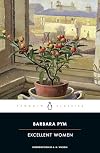
This was a reread for me and I loved it just as much the second time. Pym does such a great job of capturing the drama of ordinary life. She also has a subtle sense of humor that I love.
In this novel, Mildred, a 30 something woman living on her own, is drawn in to the marital drama of her neighbors. At the same time, the local clergyman is ensnared in an engagement with a woman who turns out to be unsuitable for his lifestyle. All assume that Mildred is the woman who would be suitable for show more him.
The plot sounds silly, and maybe it is a bit silly, but I love all the things that Pym makes me think about, even in a quiet novel. 1950s England sounds like such a harsh time, with little joy and much austerity. The food situation itself is funny and horrifying at the same time, with the rationing and sparse availability. And then there's all the single women with so few options after the war killed so many young men. Maybe they enjoy their independence more than they would have enjoyed a marriage? Is a life of quiet contentment and caring for ones neighbors enough? What constitutes a well-lived life?
Glad I took the time to reread this. show less
In this novel, Mildred, a 30 something woman living on her own, is drawn in to the marital drama of her neighbors. At the same time, the local clergyman is ensnared in an engagement with a woman who turns out to be unsuitable for his lifestyle. All assume that Mildred is the woman who would be suitable for show more him.
The plot sounds silly, and maybe it is a bit silly, but I love all the things that Pym makes me think about, even in a quiet novel. 1950s England sounds like such a harsh time, with little joy and much austerity. The food situation itself is funny and horrifying at the same time, with the rationing and sparse availability. And then there's all the single women with so few options after the war killed so many young men. Maybe they enjoy their independence more than they would have enjoyed a marriage? Is a life of quiet contentment and caring for ones neighbors enough? What constitutes a well-lived life?
Glad I took the time to reread this. show less

Through Mildred Lathbury, Pym gives an incisive, compassionately humorous voice to the routinely overlooked "Excellent Women" of post-war England
A tale of gentlefolk in early 1950s London
In "Excellent Women" Barbara Pym lets us see London, immediately after World War Two, through the eyes of Mildred Lathbury, a clergyman's daughter of modest independent means, who works mornings in a charity for aiding impoverished gentlewomen, is active in her local High Anglican church and is, at a little show more over thirty, on the cusp of becoming a spinster.
Mildred is a bright, public school educated woman who spends large portions of her life doing things for other people. She has a well-developed sense of the absurd and a, mostly compassionate, insight into the peculiarities of expectation, habit, manners and introspections that shape her own behaviours and the behaviours of the people around her.
The plot is largely a series of opportunities to explore the lives and choices of the, often ignored or patronised, "Excellent Women", who make lives for themselves that aren't centred around marriage and children.
No man steps into the same book twice: two re-read surprises
I re-read "Excellent Women", after a gap of forty years, as part of a buddy read on BookLikes. Since my last read, the post-war years, with their rationing, their high levels of divorce and accelerating social change, have receded from being the years that my parents married in and have become History and in the process become a foreign country where taken for granted things, like living in bedsits with a shared bathroom, need to be explained. Over the same period, my age has nearly tripled and my experience has broadened. Consequently, my reactions to the text this time were very different from the last time. It confirmed to me that no man can step into the same book twice.
The first surprise I had was that Mildred Lathbury, was stronger and wittier than I remembered her. I suspect my twenty-something self mistook some of Mildred's politeness for acquiescence. Now I see that much of it was controlled anger.
The second surprise was how clearly I heard echoes of a slightly more acerbic and world-weary Jane Austen in Pym's writing. The novel opens with Mr Mallet ( a name to conjure with) rivalling Mr Collins in his ability to be simultaneously pompous and patronising. It prompts a self-assessment by the Mildred that is an inverse echo of "It is a fact universally acknowledged etc" in the opening of "Pride and Prejudice" but with Mildred declining to let go of her pride (self-respect) and bridling at Mallet's prejudice:
The relatable Miss Lathbury
One of the comments that was made most frequently during the buddy read of "Excellent Women" was how relatable Mildred Lathbury was. We see the world through Mildred's eyes and find that the view from there is honest and kind but also filled with rueful humour and questions about her own place in the world.
The first impression that Mildred makes is often of being a very conventional woman. As we get to know her better her wit, often expressed only inside her head, comes to the fore and we realise that acknowledging convention isn't the same as being conventional.
For example, in her first meeting with her new neighbour, the married but very independent, I'm-an-anthropologist-Darling-so-I-don't-have-time-to-cook Helena, Mildred sounds conventional when she asks herself:
and then shows her dry wit when she adds some thoughts about Rockingham, Helena's husband:
I think part of what makes Mildred relatable is that she's not always sure of how she sees herself or how others see her. Even with access to Mildred's inner voice, I was sometimes unsure of whether Mildred was a prisoner of her manners or simply has a deep acceptance of who she is.
For example, is she accepting or rejecting the label given to her when Helena says:
As I got to know Mildred better, it seemed to me that she was someone who sees too accurately to comfort herself with anything but the truth and who is instinctively kind but still sometimes feels the weight of duty and carries it anyway. When she considers her future, she most often sees herself living out her life as a spinster who is seen by others as an eccentric but excellent woman.
Here are a couple of quotes that illustrate the quiet economy with which Pym gets these ideas across
Perhaps Mildred is relatable because, although she likes herself, she recognises that she lives on the margins of a society that expects things of her that she isn't able to provide?
At one point, Mildred tells the story of her younger self attending a dance where she feels out of place and finds herself waiting in the toilets in the hope that the dance for which she didn't have a partner would be finished before she returned, but knowing that it wouldn't be.
That brought me back to the heart of all those times when I've found myself in when surrounded by people who expect certain social skills or talismans of competence from me that I can't provide
I think it's a mark of her strength of character that she describes the experience as "deep" rather than mortifying. It's not unexpected or unbearable merely bleakly familiar. She seems to use it to reflect on how own connection or lack of it to society.
Another thing that makes Mildred relatable is how clearly she sees life and yet how much compassion for those of us living it she sustains. I love this quote, giving Mildred's reaction to her best friend, Dora's battles at the school she teaches at:
She's perfectly right. Life is like that. But it's rare to find fiction that is honest enough to say so and still engaging enough not to be a chore.
Rehabilitating Spinterhood
It seems to me that one of the main themes of "Excellent Women" is spinsterhood. Not whether it's good or bad or whether it is a state that should be ended as swiftly as possible, but about what it means to live a full and valued life as a single woman.
Spinster has become pejorative and unfashionable. It is so unlike bachelor that we've had to invent bachelorette to capture the equivalent expectations of women.
But what if spinsters were not just referred to as "excellent women" by way of disguising the extent to which their services were taken for granted but in true acknowledgement of a way of life, either chosen or accepted, and lived well?
As an introvert living in a very extrovert world, I have found myself constantly having to explain, defend, or disguise my need for solitude, the volume and variety of noise in my head when I am alone and my lack of pleasure in so many of the things that are meant to signify having a good time.
It seems to me that creating a space to live a full life as an introvert in a society of extroverts has a lot of parallels to creating a space to live a full life as a spinster in a society built on the expectation of marriage/coupledom.
During the buddy read, we discussed a couple of articles that explore Pym's rehabilitation of spinsterhood. If it interest you, take a look at: "Barbara Pym and the New Spinster." and "Marvelous Spinster: Barbara Pym at 100"
Boy Men and whether or not to marry them
The women in this book may be excellent but I found all of the men to be irritating. None of them seem to have grown up. They manage an offensive combination of neediness, entitlement and disregard for others that I find staggering.
I'd write it off as Pym having a go except very similar, if somewhat more worldly, men appear in Lessing's writing of the same period.
It would be nice if there was at least one man who knew what he wanted and didn't need a woman to look after his poor helpless self.
Pym places a fine selection of men in Mildred's life. The charming, charismatic but facile Rocky (what a name) provides an example of complacent, lazy, selfish sex appeal. Everard Bone (another wicked name) with his often mentioned meat that he is willing to share but unable to cook, provides an example of a more reliable but equally self-absorbed and emotionally distant man. Then there is the tedious, pidgeon-feeding civil servant, Dora's brother, who Mildred meets out of habit once a year for a lunch where he is always more engaged with the wine waiter than with her. Finally, there is the nice but weak Vicar that everyone except Mildred assumes Mildred would like to marry one day.
With this set of men before her, Mildred reflects on what would be added to her life and what would be lost if she were to marry.
I think her most unguarded reaction, which speaks to her heart rather than her sense of duty, is the White Rabbit reaction that she'd already mentioned to Bone and raising again when discussing the love of a "good woman" with the Napiers. Rocky with the ungracious thoughtlessness that only the truly charming are forgiven for, compares the love of a good woman to an army blanket, dull but useful. Mildred, her tongue loosened by wine, offers:
I think that the possibility, however imaginary, of a relationship with Rocky, charmer of awkward WREN officers, was like a White Rabbit to Mildred.
Later, as we near the ambiguous close of the novel, Mildred considers the ways, dull and dutiful, in which a woman might be of use to a man and asks herself:
I can't decide if this is Mildred sense of duty or sense of humour talking. I suspect the latter. I believe her sense of self is so strong that neither being wife nor spinster would change her identity. Perhaps the power of the book and the charm of Mildred lie in the fact that I'm unsure of the answer but I care what choice she makes. show less
A tale of gentlefolk in early 1950s London
In "Excellent Women" Barbara Pym lets us see London, immediately after World War Two, through the eyes of Mildred Lathbury, a clergyman's daughter of modest independent means, who works mornings in a charity for aiding impoverished gentlewomen, is active in her local High Anglican church and is, at a little show more over thirty, on the cusp of becoming a spinster.
Mildred is a bright, public school educated woman who spends large portions of her life doing things for other people. She has a well-developed sense of the absurd and a, mostly compassionate, insight into the peculiarities of expectation, habit, manners and introspections that shape her own behaviours and the behaviours of the people around her.
The plot is largely a series of opportunities to explore the lives and choices of the, often ignored or patronised, "Excellent Women", who make lives for themselves that aren't centred around marriage and children.
No man steps into the same book twice: two re-read surprises
I re-read "Excellent Women", after a gap of forty years, as part of a buddy read on BookLikes. Since my last read, the post-war years, with their rationing, their high levels of divorce and accelerating social change, have receded from being the years that my parents married in and have become History and in the process become a foreign country where taken for granted things, like living in bedsits with a shared bathroom, need to be explained. Over the same period, my age has nearly tripled and my experience has broadened. Consequently, my reactions to the text this time were very different from the last time. It confirmed to me that no man can step into the same book twice.
The first surprise I had was that Mildred Lathbury, was stronger and wittier than I remembered her. I suspect my twenty-something self mistook some of Mildred's politeness for acquiescence. Now I see that much of it was controlled anger.
The second surprise was how clearly I heard echoes of a slightly more acerbic and world-weary Jane Austen in Pym's writing. The novel opens with Mr Mallet ( a name to conjure with) rivalling Mr Collins in his ability to be simultaneously pompous and patronising. It prompts a self-assessment by the Mildred that is an inverse echo of "It is a fact universally acknowledged etc" in the opening of "Pride and Prejudice" but with Mildred declining to let go of her pride (self-respect) and bridling at Mallet's prejudice:
"I suppose an unmarried woman just over thirty, who lives alone and has no apparent ties, must expect to find herself involved or interested in other people's business and if she is also a clergyman's daughter, then one might really say there is no hope for her."
The relatable Miss Lathbury
One of the comments that was made most frequently during the buddy read of "Excellent Women" was how relatable Mildred Lathbury was. We see the world through Mildred's eyes and find that the view from there is honest and kind but also filled with rueful humour and questions about her own place in the world.
The first impression that Mildred makes is often of being a very conventional woman. As we get to know her better her wit, often expressed only inside her head, comes to the fore and we realise that acknowledging convention isn't the same as being conventional.
For example, in her first meeting with her new neighbour, the married but very independent, I'm-an-anthropologist-Darling-so-I-don't-have-time-to-cook Helena, Mildred sounds conventional when she asks herself:
"Surely wives shouldn’t be too busy to cook for their husbands? I thought in astonishment, taking a thick piece of bread and jam from the plate offered to me."
and then shows her dry wit when she adds some thoughts about Rockingham, Helena's husband:
"But perhaps Rockingham with his love of Victoriana also enjoyed cooking, for I had observed that men did not usually do things unless they liked doing them."
I think part of what makes Mildred relatable is that she's not always sure of how she sees herself or how others see her. Even with access to Mildred's inner voice, I was sometimes unsure of whether Mildred was a prisoner of her manners or simply has a deep acceptance of who she is.
For example, is she accepting or rejecting the label given to her when Helena says:
" 'Of course you’ve never been married,’ she said, putting me in my place among the rows of excellent women."
As I got to know Mildred better, it seemed to me that she was someone who sees too accurately to comfort herself with anything but the truth and who is instinctively kind but still sometimes feels the weight of duty and carries it anyway. When she considers her future, she most often sees herself living out her life as a spinster who is seen by others as an eccentric but excellent woman.
Here are a couple of quotes that illustrate the quiet economy with which Pym gets these ideas across
“I forebore to remark that women like me really expectedvery little –nothing, almost.”
“Virtue is an excellent thing and we should all strive after it, but it can sometimes be a little depressing.”
Perhaps Mildred is relatable because, although she likes herself, she recognises that she lives on the margins of a society that expects things of her that she isn't able to provide?
At one point, Mildred tells the story of her younger self attending a dance where she feels out of place and finds herself waiting in the toilets in the hope that the dance for which she didn't have a partner would be finished before she returned, but knowing that it wouldn't be.
That brought me back to the heart of all those times when I've found myself in when surrounded by people who expect certain social skills or talismans of competence from me that I can't provide
I think it's a mark of her strength of character that she describes the experience as "deep" rather than mortifying. It's not unexpected or unbearable merely bleakly familiar. She seems to use it to reflect on how own connection or lack of it to society.
Another thing that makes Mildred relatable is how clearly she sees life and yet how much compassion for those of us living it she sustains. I love this quote, giving Mildred's reaction to her best friend, Dora's battles at the school she teaches at:
"I wondered that she should waste so much energy fighting over a little matter like wearing hats in chapel, but then I told myself that, after all, life was like that for most of us –the small unpleasantnesses rather than the great tragedies; the little useless longings rather than the great renunciations and dramatic love affairs of history or fiction."
She's perfectly right. Life is like that. But it's rare to find fiction that is honest enough to say so and still engaging enough not to be a chore.
Rehabilitating Spinterhood
It seems to me that one of the main themes of "Excellent Women" is spinsterhood. Not whether it's good or bad or whether it is a state that should be ended as swiftly as possible, but about what it means to live a full and valued life as a single woman.
Spinster has become pejorative and unfashionable. It is so unlike bachelor that we've had to invent bachelorette to capture the equivalent expectations of women.
But what if spinsters were not just referred to as "excellent women" by way of disguising the extent to which their services were taken for granted but in true acknowledgement of a way of life, either chosen or accepted, and lived well?
As an introvert living in a very extrovert world, I have found myself constantly having to explain, defend, or disguise my need for solitude, the volume and variety of noise in my head when I am alone and my lack of pleasure in so many of the things that are meant to signify having a good time.
It seems to me that creating a space to live a full life as an introvert in a society of extroverts has a lot of parallels to creating a space to live a full life as a spinster in a society built on the expectation of marriage/coupledom.
During the buddy read, we discussed a couple of articles that explore Pym's rehabilitation of spinsterhood. If it interest you, take a look at: "Barbara Pym and the New Spinster." and "Marvelous Spinster: Barbara Pym at 100"
Boy Men and whether or not to marry them
The women in this book may be excellent but I found all of the men to be irritating. None of them seem to have grown up. They manage an offensive combination of neediness, entitlement and disregard for others that I find staggering.
I'd write it off as Pym having a go except very similar, if somewhat more worldly, men appear in Lessing's writing of the same period.
It would be nice if there was at least one man who knew what he wanted and didn't need a woman to look after his poor helpless self.
Pym places a fine selection of men in Mildred's life. The charming, charismatic but facile Rocky (what a name) provides an example of complacent, lazy, selfish sex appeal. Everard Bone (another wicked name) with his often mentioned meat that he is willing to share but unable to cook, provides an example of a more reliable but equally self-absorbed and emotionally distant man. Then there is the tedious, pidgeon-feeding civil servant, Dora's brother, who Mildred meets out of habit once a year for a lunch where he is always more engaged with the wine waiter than with her. Finally, there is the nice but weak Vicar that everyone except Mildred assumes Mildred would like to marry one day.
With this set of men before her, Mildred reflects on what would be added to her life and what would be lost if she were to marry.
I think her most unguarded reaction, which speaks to her heart rather than her sense of duty, is the White Rabbit reaction that she'd already mentioned to Bone and raising again when discussing the love of a "good woman" with the Napiers. Rocky with the ungracious thoughtlessness that only the truly charming are forgiven for, compares the love of a good woman to an army blanket, dull but useful. Mildred, her tongue loosened by wine, offers:
"‘Or like a white rabbit thrust suddenly into your arms,’ I suggested, feeling the glow of wine in me. ‘ Oh, but a white rabbit might be rather charming.’ ‘Yes, at first. But after a while you wouldn’t know what to do with it.'"
I think that the possibility, however imaginary, of a relationship with Rocky, charmer of awkward WREN officers, was like a White Rabbit to Mildred.
Later, as we near the ambiguous close of the novel, Mildred considers the ways, dull and dutiful, in which a woman might be of use to a man and asks herself:
"Was any man worth this burden? Probably not, but one shouldered it bravely and cheerfully and in the end it might turn out to be not so heavy after all."
I can't decide if this is Mildred sense of duty or sense of humour talking. I suspect the latter. I believe her sense of self is so strong that neither being wife nor spinster would change her identity. Perhaps the power of the book and the charm of Mildred lie in the fact that I'm unsure of the answer but I care what choice she makes. show less
This is a quiet sort of book, with a very quiet sort of humor threaded through, and I enjoyed it. It's easy to put down--no particular momentum, certainly no tension--but also pleasant to pick up. Its engagement with gender norms and the pressures put on single women (to marry, to want what everyone assumes they want, to do absurd amounts of labor for everybody else because it's assumed that they have nothing better to do) are thoughtful and quiet, too, embedded in 1950s England but also show more quite relevant to the place and time I inhabit. show less

There is something succulent in the late novels of Barbara Pym, like deliberately over-ripened fruit, or a haunch of game hung for an extended period. One feels that Pym knows her characters almost too well, and that she may not particularly like them. Yet she spends time with them, and invites us to do the same: slightly distasteful women, ambiguous and calculating men, vapid gentlewomen, and the ever-charming clergyman (here occurring only as a brief fellow train traveller sharing a table show more for tea). So how does Pym take a character one doesn’t particularly like, such as Leonora Eyre, and in the space of a single short chapter render her entirely sympathetic, even pitiable? Only exquisite mastery of her craft could explain Pym’s remarkable affect upon her reader.
The elegant Leonora is ageing more or less gracefully. She enjoys the attentions of men, both older and younger, whilst knowing how to keep restrictive commitment at bay. She may always know the right word or gesture, but like Henry James’ prose, which is alluded to, she can come across as cold. Of course that suits some English men perfectly, especially those who would be somewhat overwhelmed by a real passionate relation with a woman. Sexual relations, which are subtext in the early Pym novels, are rendered explicit here. However, they remain curiously unreal, no doubt because they were never Pym’s object. And that raises the question, what really is Pym’s object in this novel? The answer lies in the reading, and I suspect will change as you read it again and again. As I will. Always recommended. show less
The elegant Leonora is ageing more or less gracefully. She enjoys the attentions of men, both older and younger, whilst knowing how to keep restrictive commitment at bay. She may always know the right word or gesture, but like Henry James’ prose, which is alluded to, she can come across as cold. Of course that suits some English men perfectly, especially those who would be somewhat overwhelmed by a real passionate relation with a woman. Sexual relations, which are subtext in the early Pym novels, are rendered explicit here. However, they remain curiously unreal, no doubt because they were never Pym’s object. And that raises the question, what really is Pym’s object in this novel? The answer lies in the reading, and I suspect will change as you read it again and again. As I will. Always recommended. show less
Lists
Backlisted (1)
Unmarried women (1)
1970s (1)
A Novel Cure (1)
1950s (2)
Women's Stories (2)
Nifty Fifties (1)
Folio Society (1)
Female Author (1)
Booker Prize (1)
Schwob Nederland (1)
Awards


You May Also Like


Associated Authors
Statistics
- Works
- 29
- Also by
- 5
- Members
- 14,666
- Popularity
- #1,571
- Rating
- 3.9
- Reviews
- 594
- ISBNs
- 444
- Languages
- 12
- Favorited
- 153
