
Angela Thirkell (1890–1961)
Author of High Rising
About the Author
Image credit: Courtesy of the Angela Thirkell Society
Series
Works by Angela Thirkell
An Angela Thirkell omnibus; 8 copies
Everything 1 copy
Associated Works
Tagged
Common Knowledge
- Canonical name
- Thirkell, Angela
- Legal name
- Thirkell, Angela Margaret
- Other names
- Parker, Leslie
- Birthdate
- 1890-01-30
- Date of death
- 1961-01-29
- Gender
- female
- Education
- St Paul's School, London, England, UK
- Occupations
- writer
novelist - Relationships
- Mackail, Denis (brother)
Mackail, J. W. (father)
Burne-Jones, Edward Coley (grandfather)
MacInnes, Colin (son)
Kipling, Rudyard (first cousin)
Baldwin, Earl Stanley Baldwin (first cousin) (show all 10)
Barrie, J. M. (godfather)
Baldwin, Monica (cousin)
Thirkell, Lance (son)
McInnes, Graham (son) - Short biography
- Angela Margaret Mackail was born on January 30, 1890 at 27 Young Street, Kensington Square, London. Her grandfather was Sir Edward Burne-Jones, the pre-Raphaelite painter. Her grandmother was Georgiana Macdonald. Angela's brother, Denis Mackail, was also a prolific and successful novelist. Angela's mother, Margaret Burne-Jones, married John Mackail - an administrator at the Ministry of Education and Professor of Poetry at Oxford University. Angela married James Campbell McInnes in 1911. James was a professional Baritone and performed at concert halls throughout the UK. In 1912 their first son Graham was born and in 1914 a second son, Colin. A daughter was born in 1917 at the time when her marriage was breaking up. In November 1917 a divorce was granted and Angela and the children went to live with her parents in Pembroke Gardens in London. The child, Mary, died the next year. Angela then met and married George Lancelot Thirkell in 1918 and in 1920 they travelled on a troop ship to George's hometown in Australia. In 1921, in Melbourne Australia, her youngest son, Lancelot George, was born. Angela left Australia in 1929 with 8-year- old Lance and never returned. Although living with her parents in London she badly needed to earn a living so she set forth on the difficult road of the professional writer. Her first book, Three Houses, a memoir of her happy childhood was published in 1931 and was an immediate success. The first of her novels set in Trollope's mythical county of Barsetshire was Demon in the House, followed by 28 others, one each year. Angela died on the 29th of January 1961. She is buried in Rottingdean alongside her daughter Mary and her Burne-Jones grandparents.
- Nationality
- UK
- Birthplace
- Kensington, London, Middlesex, England, UK
- Places of residence
- Kensington, London, Middlesex, England, UK
Melbourne, Victoria, Australia
Chelsea, London, Middlesex, England, UK - Place of death
- Bramley, Surrey, England, UK
- Burial location
- Rottingdean, Sussex, England, UK
- Map Location
- England, UK
Members
Reviews
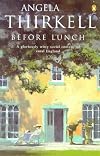
It took me a very long time to read this and that is quite inexcusable because it was a delightful romp that should have taken an afternoon but reading life can be an adventure. I really enjoyed this, Thirkell makes characters fun and quirky and very real with just a few strokes and the dialouge and writing is witty and acerbic and then often so thoughtful. I picked this one up from a Little Free Library and will release it back again so someone else can enjoy it.

Re-read was enjoyable. Original review follows...
This was delightful.
*Possible spoilers? I don't know, I'll try not to give endings away, at least.*
It took me about two chapters to get into it. Evidently one of Angela Thirkell's trademarks is to throw A WHOLE BUNCH of characters at you and then hope that you get them all sorted out pretty quick. This may even be one of her easier ones, but it still took me a little while to settle everyone's role in my mind. The more you read, the easier it show more gets though, because everyone is quite well defined as a character.
So, this novel focuses on the Leslies, a well-to-do family with lots of characters. The mother cheerfully and lovingly rearranges any and all plans for those around her, however small, until they become an ineffective mess. Fortunately the servants and the family know to just "carry on" while letting her have her say. She's a lovable character. She and her husband had three sons and a daughter. Their oldest son was killed in war, so they are basically raising their teenage grandson. Their second son, John, is a remarkably kind and intelligent man in his mid-30's, whose wife died after just one year of marriage. Their youngest son, David, is a flirt and a man-about-town, with dozens of ideas for a brilliant career, none of which seem to ever pan out.
Agnes, their daughter, married with several small children of her own, somehow manages to be a bit simple-minded in conversation, yet fairly observant and able to occasionally rise to the situation and save the day.
The catalyst for change is when Agnes' niece by marriage, Mary Preston, comes to stay for the summer. She falls in love with David, the flirtatious son, but also strikes a sympathetic chord in the heart of John, who happens to be in the right time and place to provide a shoulder to lean on when she is going through a little crisis.
Most of the characters have their own story arc going on as the narrative drives forward to the climax, the 17th birthday party of the Leslie grandson.
I laughed quite a lot while reading. This book is extremely cleverly written, and there were times when I just had to pause in delighted surprise at some funny and unexpected moment. I also love how Thirkell gives her readers different shades of some of the characters. Mrs. Leslie could have been nothing but a caricature, with all her ridiculous plans and interference. But the author occasionally dwells on the way that she thinks about her son who was killed in war. Things like that make it hard to pigeonhole these characters with just one word. You have to end up saying, "They're this, but they're also that."
Thoroughly enjoyed it. show less
This was delightful.
*Possible spoilers? I don't know, I'll try not to give endings away, at least.*
It took me about two chapters to get into it. Evidently one of Angela Thirkell's trademarks is to throw A WHOLE BUNCH of characters at you and then hope that you get them all sorted out pretty quick. This may even be one of her easier ones, but it still took me a little while to settle everyone's role in my mind. The more you read, the easier it show more gets though, because everyone is quite well defined as a character.
So, this novel focuses on the Leslies, a well-to-do family with lots of characters. The mother cheerfully and lovingly rearranges any and all plans for those around her, however small, until they become an ineffective mess. Fortunately the servants and the family know to just "carry on" while letting her have her say. She's a lovable character. She and her husband had three sons and a daughter. Their oldest son was killed in war, so they are basically raising their teenage grandson. Their second son, John, is a remarkably kind and intelligent man in his mid-30's, whose wife died after just one year of marriage. Their youngest son, David, is a flirt and a man-about-town, with dozens of ideas for a brilliant career, none of which seem to ever pan out.
Agnes, their daughter, married with several small children of her own, somehow manages to be a bit simple-minded in conversation, yet fairly observant and able to occasionally rise to the situation and save the day.
The catalyst for change is when Agnes' niece by marriage, Mary Preston, comes to stay for the summer. She falls in love with David, the flirtatious son, but also strikes a sympathetic chord in the heart of John, who happens to be in the right time and place to provide a shoulder to lean on when she is going through a little crisis.
Most of the characters have their own story arc going on as the narrative drives forward to the climax, the 17th birthday party of the Leslie grandson.
I laughed quite a lot while reading. This book is extremely cleverly written, and there were times when I just had to pause in delighted surprise at some funny and unexpected moment. I also love how Thirkell gives her readers different shades of some of the characters. Mrs. Leslie could have been nothing but a caricature, with all her ridiculous plans and interference. But the author occasionally dwells on the way that she thinks about her son who was killed in war. Things like that make it hard to pigeonhole these characters with just one word. You have to end up saying, "They're this, but they're also that."
Thoroughly enjoyed it. show less

Jane Austen famously said that in writing Emma, she'd set out to create "a heroine whom no one but myself will much like." Reading High Rising was like reading a photo negative version of Emma: Angela Thirkell clearly thought she was writing a lovable, heart-of-gold scatterbrain main character in Laura Morland, but I found her absolutely insufferable. No matter how much the other characters insisted that Mrs Morland was lovely and just so kind, her thoughts and actions showed her to be a show more petty, mean-spirited, and insular snob—and the mouthpiece for some pretty appalling bigotry.
And before someone jumps at me for saying "But it was the 1930s! Standards for what was acceptable were different then!": that is true to an extent, but I can also honestly say that I've read lots of other fiction first published in the Twenties and Thirties that didn't have main characters regularly spout antisemitic, anti-Irish, and anti-Black sentiments with every sign of narrative approval. One of the comic relief/male romantic partners also at one point just randomly comes out with "The marriage customs [...] of the Arunta tribe, a revolting set of Australian aboriginals, are alone enough to justify their extirpation by rum, missionaries, or any other destroying element." Wow! Holy shit! Love a bit of cheerleading for genocide in what's supposed to be a light romantic comedy!
Not that the romance is much to write home about: dull and unconvincing and rote. Thirkell is not an author I care to read any further. show less
And before someone jumps at me for saying "But it was the 1930s! Standards for what was acceptable were different then!": that is true to an extent, but I can also honestly say that I've read lots of other fiction first published in the Twenties and Thirties that didn't have main characters regularly spout antisemitic, anti-Irish, and anti-Black sentiments with every sign of narrative approval. One of the comic relief/male romantic partners also at one point just randomly comes out with "The marriage customs [...] of the Arunta tribe, a revolting set of Australian aboriginals, are alone enough to justify their extirpation by rum, missionaries, or any other destroying element." Wow! Holy shit! Love a bit of cheerleading for genocide in what's supposed to be a light romantic comedy!
Not that the romance is much to write home about: dull and unconvincing and rote. Thirkell is not an author I care to read any further. show less

Angela Thirkell’s fourth Barestshire book, August Folly, is about a summer of dinners, donkey rides, rehearsals, train journeys, cricket, secret worries, siblings and romance.
When Richard Tebbin comes down from Oxford, he’s moody and awkward and rather self-absorbed - gloomy about his exam results and his future prospects, embarrassed by his parents, frustrated by his mother’s economies and impractical domestic arrangements, and annoyed about being roped into Mrs Palmer’s play. And show more then he meets the Deans, who are staying with the Palmers, and is promptly besotted with Mrs Dean, whose eldest children are older than him.
This is not a situation I’d consider delightful or charming. And yet I was captivated. Thirkell astutely portrays family dynamics, with their various tensions, and many of the characters have complexities or contradictions. There are several scenes where characters show unexpected depth, strength or growth.
Not all the surprises were pleasant. There are some odd, unnecessary but fortunately very brief, references to prejudiced attitudes, and also teenagers who think pricking a donkey with a pin is an acceptable way of making him go. Ugh. And sometimes Thirkell doesn’t seem to have a very positive view of women going to university… But I appreciated the family dynamics so much, so I’m very glad I didn’t skip this one.
August Folly takes place in the same part of the country as last Thirkell I read, Before Lunch, but is set some years earlier. Some characters from Before Lunch make brief appearances here (and vice versa). It was also interesting to read the two books in comparative quick succession because they both look at with cross-generational romances from very different perspectives and with different outcomes.
“Let’s pace up and down the terrace like people in books,” said Helen, slipping her arm through Mr Fanshawe’s.
“How is everything?” asked Mr Fanshawe.
“Rotten.”
“Inside or out?”
“In.”
“Then what about turning yourself inside out and getting some expert advice?”
“May I, Charles? I’m simply loathing myself.”
“Well?”
(The rest of this scene - the reason for Helen’s unhappiness, and the way Mr Fanshawe listens - is one of the ones that surprised me.) show less
When Richard Tebbin comes down from Oxford, he’s moody and awkward and rather self-absorbed - gloomy about his exam results and his future prospects, embarrassed by his parents, frustrated by his mother’s economies and impractical domestic arrangements, and annoyed about being roped into Mrs Palmer’s play. And show more then he meets the Deans, who are staying with the Palmers, and is promptly besotted with Mrs Dean, whose eldest children are older than him.
This is not a situation I’d consider delightful or charming. And yet I was captivated. Thirkell astutely portrays family dynamics, with their various tensions, and many of the characters have complexities or contradictions. There are several scenes where characters show unexpected depth, strength or growth.
Not all the surprises were pleasant. There are some odd, unnecessary but fortunately very brief, references to prejudiced attitudes, and also teenagers who think pricking a donkey with a pin is an acceptable way of making him go. Ugh. And sometimes Thirkell doesn’t seem to have a very positive view of women going to university… But I appreciated the family dynamics so much, so I’m very glad I didn’t skip this one.
August Folly takes place in the same part of the country as last Thirkell I read, Before Lunch, but is set some years earlier. Some characters from Before Lunch make brief appearances here (and vice versa). It was also interesting to read the two books in comparative quick succession because they both look at with cross-generational romances from very different perspectives and with different outcomes.
“Let’s pace up and down the terrace like people in books,” said Helen, slipping her arm through Mr Fanshawe’s.
“How is everything?” asked Mr Fanshawe.
“Rotten.”
“Inside or out?”
“In.”
“Then what about turning yourself inside out and getting some expert advice?”
“May I, Charles? I’m simply loathing myself.”
“Well?”
(The rest of this scene - the reason for Helen’s unhappiness, and the way Mr Fanshawe listens - is one of the ones that surprised me.) show less
Lists
Books About Boys (1)
Women in War (1)
Awards


You May Also Like


Associated Authors
Statistics
- Works
- 47
- Also by
- 3
- Members
- 8,508
- Popularity
- #2,829
- Rating
- 4.1
- Reviews
- 302
- ISBNs
- 271
- Languages
- 5
- Favorited
- 56
