
Sigmund Freud (1856–1939)
Author of Civilization and Its Discontents
About the Author
Sigmund Freud was the founder of psychoanalysis, simultaneously a theory of personality, a therapy, and an intellectual movement. He was born into a middle-class Jewish family in Freiburg, Moravia, now part of Czechoslovakia, but then a city in the Austro-Hungarian Empire. At the age of 4, he moved show more to Vienna, where he spent nearly his entire life. In 1873 he entered the medical school at the University of Vienna and spent the following eight years pursuing a wide range of studies, including philosophy, in addition to the medical curriculum. After graduating, he worked in several clinics and went to Paris to study under Jean-Martin Charcot, a neurologist who used hypnosis to treat the symptoms of hysteria. When Freud returned to Vienna and set up practice as a clinical neurologist, he found orthodox therapies for nervous disorders ineffective for most of his patients, so he began to use a modified version of the hypnosis he had learned under Charcot. Gradually, however, he discovered that it was not necessary to put patients into a deep trance; rather, he would merely encourage them to talk freely, saying whatever came to mind without self-censorship, in order to bring unconscious material to the surface, where it could be analyzed. He found that this method of free association very often evoked memories of traumatic events in childhood, usually having to do with sex. This discovery led him, at first, to assume that most of his patients had actually been seduced as children by adult relatives and that this was the cause of their neuroses; later, however, he changed his mind and concluded that his patients' memories of childhood seduction were fantasies born of their childhood sexual desires for adults. (This reversal is a matter of some controversy today.) Out of this clinical material he constructed a theory of psychosexual development through oral, anal, phallic and genital stages. Freud considered his patients' dreams and his own to be "the royal road to the unconscious." In The Interpretation of Dreams (1900), perhaps his most brilliant book, he theorized that dreams are heavily disguised expressions of deep-seated wishes and fears and can give great insight into personality. These investigations led him to his theory of a three-part structure of personality: the id (unconscious biological drives, especially for sex), the superego (the conscience, guided by moral principles), and the ego (the mediator between the id and superego, guided by reality). Freud's last years were plagued by severe illness and the rise of Nazism, which regarded psychoanalysis as a "Jewish pollution." Through the intervention of the British and U.S. governments, he was allowed to emigrate in 1938 to England, where he died 15 months later, widely honored for his original thinking. His theories have had a profound impact on psychology, anthropology, art, and literature, as well as on the thinking of millions of ordinary people about their own lives. Freud's daughter Anna Freud was the founder of the Hampstead Child Therapy Clinic in London, where her specialty was applying psychoanalysis to children. Her major work was The Ego and the Mechanisms of Defense (1936). (Bowker Author Biography) show less
Image credit: Sigmund Freud lors de son exil à Londres, en 1939, Royaume-Uni
Series
Works by Sigmund Freud
Totem and Taboo (The Standard Edition) (Complete Psychological Works of Sigmund Freud) (2001) 287 copies
On Sexuality: Three Essays on the Theory of Sexuality and Other Works (Penguin Freud library) (1977) 175 copies, 1 review
Five Lectures on Psycho-Analysis/On The History Of The Psycho-Analytic Movement (1968) 168 copies, 3 reviews
On creativity and the unconscious; the psychology of art, literature, love, religion (1983) 150 copies, 1 review
The origins of psycho-analysis; letters to Wilhelm Fliess, drafts and notes, 1887-1902 (1950) 135 copies
Thomas Woodrow Wilson, twenty-eighth President of the United States; a psychological study (1966) 134 copies
Delusion and Dream: An Interpretation in the Light of Psychoanalysis of Gradiva (1973) 118 copies, 2 reviews
The standard edition of the complete psychological works of Sigmund Freud (1976) 102 copies, 1 review
The Complete Psychological Works of Sigmund Freud, Vol. 21: The Future of an Illusion, Civilization and its Discontents and Other Works (1927–1931) (2001) 90 copies
The Complete Psychological Works of Sigmund Freud: Two Case Histories ("Little Hans" and "The Rat Man") v. 10 (1988) 87 copies
Origins of Religion: " Totem and Taboo " and " Moses and Monotheism " (The Penguin Freud Library) (1985) 86 copies, 1 review
The Complete Psychological Works of Sigmund Freud, Vol. 18: Beyond the Pleasure Principal, Group Psychology and Other Works (1920–1922) (2001) 80 copies
The Complete Psychological Works of Sigmund Freud, Vol 4: The Interpretation of Dreams Pt.1 (2001) 72 copies
The Complete Psychological Works of Sigmund Freud: " A Case of Hysteria " , " Three Essays on Sexual (1975) 72 copies
Abstracts of the Standard Edition of the Complete Psychological Works of Sigmund Freud (1973) 68 copies
The Complete Psychological Works of Sigmund Freud, Vol. 3: Early Psycho-Analytic Publications (1893–1899) (2000) 62 copies
The Complete Psychological Works of Sigmund Freud Vol.5: The Interpretation of Dreams (second Part) & On Dreams (Pt.2) (1998) 58 copies
The Complete Psychological Works of Sigmund Freud, Vol. 14: On the History of the Psycho-Analytic Movement, Papers on Metapsychology and Other Works (2001) 58 copies
The Complete Psychological Works of Sigmund Freud - Volume 16: " Introductory Lectures on Psycho-analysis, Part 3 " (2001) 57 copies
The Complete Psychological Works of Sigmund Freud: " An Infantile Neurosis " and Other Works Vol 17 (2001) 56 copies
The Complete Psychological Works of Sigmund Freud, Vol. 12: The Case of Schreber, Papers on Technique, and other works (2001) 54 copies
The Complete Psychological Works Of Sigmund Freud, Vol 9: Jensen's "Gradiva" and Other Works (2001) 54 copies
The Complete Psychological Works of Sigmund Freud: " The Ego and the Id " and Other Works v. 19 (2001) 53 copies
Complete Psychological Works of Sigmund Freud [Paperback] [Sep 15, 2001] Sigmund Freud (The Complete Psychological Works of Sigmund Freud) (Vol 1) (2001) 53 copies
The Complete Psychological Works of Sigmund Freud, Vol. 23: Moses and Monotheism and Other Works (1937–1939) (2001) 51 copies
Psicologia das Massas e Análise do Eu e Outros Textos. 1920-1923 (Em Portuguese do Brasil) (2011) 49 copies
Estudos Sobre a Histeria. 1893-1895 - Volume 2. Coleção Obras Completas (Em Portuguese do Brasil) (2006) 47 copies
The Complete Psychological Works of Sigmund Freud: " New Introductory Lectures on Psycho-analysis " and Other Works Vol 22 (2001) 44 copies
Sigmund Freud - Obras Completas Vol. 8. O Delírio e os Sonhos na Gradiva, Análise da Fobia de um Garoto de Cinco Anos e Outros Textos (1989) 42 copies
The Complete Psychological Works of Sigmund Freud: " Introductory Letters on Psycho-analysis " (Parts 1 and II) Vol 15 (2001) 41 copies
The Complete Psychological Works of Sigmund Freud: Indexes and Bibliographies v. 24 (2001) 41 copies
Historical and Expository Works on Psychoanalysis (Penguin Freud Library) (1986) 38 copies, 1 review
Ensaios de Metapsicologia e Outros Textos. 1914-1916 (Em Portuguese do Brasil) (2010) 38 copies, 1 review
Opmerkingen over een geval van dwangneurose ['De Rattenman'] ; Oorspronkelijke notities betreffende de 'Rattenman' (1909) 32 copies
Freud. Os Três Ensaios Sobre a Teoria da Sexualidade. O Caso Dora - Volume 6 (2016) 31 copies, 1 review
Opere di Sigmund Freud, vol. 1: Studi sull'isteria e altri scritti (1886‒1895) (1989) 28 copies, 1 review
Freud. 1916-1917. Conferências Introdutórias À Psicanálise (Em Portuguese do Brasil) (2014) 28 copies
Freud. 1926-1929. Inibição, Sintoma E Angustia, O Futuro De Uma Ilusão E Outros Textos (Em Portuguese do Brasil) (2014) 27 copies, 1 review
Opere di Sigmund Freud, vol. 8: Introduzione alla psicoanalisi e altri scritti (1915-1917) (1976) 25 copies
Freud. O Chiste e Sua Relação com o Inconsciente - Volume 7 (Em Portuguese do Brasil) (2017) 25 copies
Freud Obras Completas Volume 19 Moises e o Monoteismo Compendio de Psicanalise e Outros Textos (Em Portugues do Brasil) (2018) 24 copies
Obras psicológicas completas de Sigmund Freud, v.XI: Cinco lições de psicanálise, Leonardo da Vinci e outros trabalhos (1910) (1999) 23 copies
Der Witz und seine Beziehung zum Unbewußten / Der Humor: (Werke im Taschenbuch). (Psychologie) (1992) 23 copies
Opere di Sigmund Freud, vol. 11: L'uomo Mosè e la religione monoteistica e altri scritti (1930-1938) (1979) 21 copies
Opere di Sigmund Freud, vol. 10: Inibizione, sintomo e angoscia e altri scritti (1924-1929) (1985) 20 copies
Sigmund Freud Obras Completas: 1927-31: El Porvenir de una Ilusion, el Malestar en la Cultura y Otras Obras (Spanish Edition) (2007) 18 copies
Der Moses des Michelangelo: Schriften über Kunst und Künstler (Sigmund Freud, Werke im Taschenbuch) (1977) 16 copies
Obras Completas - Tomo XIV Contribucion a la Historia del Movimiento (Spanish Edition) (2007) 16 copies
Werkausgabe in zwei Bänden. Elemente der Psychoanalyse (Band 1); Anwendungen der Psychoanalyse (Band 2) (1978) 15 copies
Obras Completas - Tomo XVII de La Historia de Una Neurosis Infantil (Spanish Edition) (2007) 15 copies
A psycho-analytic dialogue: the letters of Sigmund Freud and Karl Abraham, 1907-1926 (1969) 13 copies
O Infamiliar Das Unheimliche – Edicao comemorativa bilingue 1919-2019 - Seguido de O homem da areia de E. T. A. Hoffmann (Em Portugues do Brasil) (2019) 13 copies
Cultura, Sociedade, Religião O Mal-Estar na cultura e outros escritos (Portuguese Edition) (2020) 13 copies
Freud - 1901 - Obras completas volume 5 - Psicopatologia da vida cotidiana e Sobre os sonhos (Em Portugues do Brasil) (2019) 13 copies, 1 review
Obras Completas. Volumen 19: El yo y el ello, y otras obras (1923-1925) (Obras Completas de Sigmund Freud) (Spanish Edition) (2000) 13 copies
The International Psycho-Analytical Library No. 37, edited by Ernest Jones, M.D.: Sigmund Freud Collected Papers Volume 5: Edited by James Strachey. (1950) 12 copies
De schrijver en het fantaseren ; Een jeugdherinnering van Leonardo da Vinci ; Het motief van de drie kistjes : Een jeugd (1908) 12 copies
Obras Completas - Tomo VII Fragmentos de Analisis de Un Caso de Histeria (Spanish Edition) (2007) 12 copies
Obras Completas: Conferencias de Introduccion al Psicoanalisis 1915-1916 (Partes I y II) (Spanish Edition) (2007) 11 copies
Oeuvres complètes Psychanalyse : Volume 13, 1914-1915, Une névrose infantile, Sur la Guerre et la Mort, Métapsychologie, Autres textes (1989) 10 copies
Opere di Sigmund Freud, vol. 4: Tre saggi sulla teoria sessuale e altri scritti (1900‒1905) (2013) 9 copies
Werke in 2 Bänden: Die Traumdeutung und andere Schriften & Das Unbehagen in der Kultur (2010) 9 copies
Instincts and Their Vicissitudes 9 copies
El pensamiento vivo de Freud 8 copies
Over de etiologie van de hysterie drie verhandelingen over de theorie van de seksualiteit (1985) 8 copies
Edição Standard Brasileira das Obras Psicológicas Completas de Sigmund Freud (Portuguese Edition) (2009) 8 copies
The Revised Standard Edition of the Complete Psychological Works of Sigmund Freud (2024) — Author — 7 copies
Tre saggi sulla teoria sessuale. Al di là del principio del piacere. Ediz. integrale (2012) 7 copies
Oeuvres complètes Psychanalyse : Volume 14, 1915-1917, Leçons d'introduction de la psychanalyse (2000) 7 copies
The Complete Introductory Lectures on Psychoanalysis — Author — 7 copies
Oeuvres complètes Psychanalyse : Volume 15, 1916-1920, Au-delà du principe de plaisir, L'inquiétant, Un enfant est battu, Un cas… (1996) 7 copies
LA INTERPRETACION DE LOS SUEÑOS 6 copies
Freud - Alem do principio de prazer - Jenseits des Lustprinzips – Edicao critica Bilingue (Em Portugues do Brasil) (2019) 6 copies
Psychoanalyse: ausgewählte Schriften zur Neurosenlehre, zur Persönlichkeitspsychologie, zur Kulturtheorie (1984) 6 copies
Oeuvres complètes - Psychanalyse: volume 17, 1923-1925 : Autoprésentation, Inhibition, symptôme et angoisse, Autres textess (1992) 6 copies
Oeuvres complètes Psychanalyse : Volume 18, 1926-1930, L'analyse profane, L'avenir d'une illusion, Le malaise dans la culture, Autres textes (2002) 6 copies
Oeuvres complètes Psychanalyse : Volume 16 : 1921-1923, Psychologie des masses, Le moi et la ça, Autres textes (2003) 6 copies
Sexualiteten / [Sigmund Freud] ; volymansvarig: Ludvig Igra ; [översättning: Ingrid Wikén Bonde, Christian Nilsson] (1998) 6 copies
Zelfportret ; De weerstanden tegen de psychoanalyse ; Het vraagstuk van de lekenanalyse (1991) 6 copies
Gesammelte Werke, 17 Bde., 1 Reg.-Bd. u. 1 Nachtragsbd., Bd.1, Werke aus den Jahren 1892-1899 (1991) 5 copies
Gesammelte Werke, 17 Bde., 1 Reg.-Bd. u. 1 Nachtragsbd., Bd.5, Werke aus den Jahren 1904/05 (1991) 5 copies
Oeuvres complètes - psychanalyse : volume 10, 1909-1910, Leonard de Vinci, Un cas de Paranoïa, Cinq Leçons, Autres textes (2009) 5 copies
Oeuvres complètes Psychanalyse : Volume 6, 1901-1905, Trois essais sur la vie sexuelle, Fragment d'une analyse d'hystérie, Autres textes (1989) 5 copies
Oeuvres complètes - psychanalyse : volume 20 : 1937-1939, L'homme Moïse, Abrégé de Psychanalyse, Autres textes (1989) 5 copies
Sigmund Freud: Volume 13, (1913-1914) - Totem and Taboo and Other Works (Standard Edition) (2024) 5 copies
Psicoanalisi del genio 5 copies
Freud-Fundamente: Die Traumdeutung. Drei Abhandlungen zur Sexualtheorie. Vorlesungen zur Einführung in die Psychoanalyse. (2001) 5 copies
Penguin Great Ideas : Civilisation and Its Discontents by Freud, Sigmund (2004) Paperback (1616) 5 copies
Gesammelte Werke, 17 Bde., 1 Reg.-Bd. u. 1 Nachtragsbd., Bd.12, Werke aus den Jahren 1917-1920 (1986) 5 copies
Opere 4 copies
Complete Works 4 copies
Three Essays on the Theory of Sexuality, Beyond the Pleasure Principle, The Ego and the Id (2017) 4 copies
Introduccion al narcisismo y otros ensayos / Introduction to Narcissism and Other Essays (Spanish Edition) (2012) 4 copies
Seksualteorien 4 copies
Anwendungen der Psychoanalyse 4 copies
Valda skrifter. Bortom lustprincipen ; samt Masspsykologi och jaganalys ; Jaget och detet ; Hämning, symtom och ångest (1995) 4 copies
storia e sviluppo della psicoanalisi 4 copies
Oeuvres complètes Psychanalyse : Volume 19 : 1931-1936, Nouvelle suite des leçons, Autres textes (2004) 4 copies
Elemente der Psychoanalyse 4 copies
OBRAS COMPLETAS. VOL. 4. Ensayos XVIII a XX) LOS SUEÑOS. UNA PREMONICIÓN ONÍRICA CUMPLIDA. PSICOPATOLOGÍA DE LA VIDA COTIDIANA (1988) 4 copies
Sigmund Freud: Volume 3, (1893-1899) - Early Psychoanalytic Publications (Standard Edition) (1962) 4 copies
Sigmund Freud werken 1 1885-1899 4 copies
Noi e la morte 4 copies
Gesammelte Werke, 17 Bde., 1 Reg.-Bd. u. 1 Nachtragsbd., Bd.7, Werke aus den Jahren 1906-1909 (1993) 4 copies
Gesammelte Werke, 17 Bde., 1 Reg.-Bd. u. 1 Nachtragsbd., Bd.10, Werke aus den Jahren 1913-1917 (1946) 4 copies
Oeuvres complètes - psychanalyse: volume 2 : 1893-1895, Etudes sur l'hystérie et textes anciens (1989) 4 copies
A Child is Being Beaten: A Contribution to the Study of the Origin of Sexual Perversions (1998) 4 copies
Oeuvres complètes Psychanalyse : Volume 3, 1894-1899, Textes psychanalytiques divers (2005) 4 copies
Una teoría sexual y otros ensayos 3 copies
フロイト 3 copies
Histórias clínicas: Cinco casos paradigmáticos da clínica psicanalítica (Portuguese Edition) (2019) 3 copies
Selected Papers on Hysteria 3 copies
Saggi sull'arte, la letteratura e il linguaggio. Volume 2 Gradiva col racconto di Wilhelm Jensen (1982) 3 copies
The Correspondence of Sigmund Freud and Sandor Ferenczi: 1914-19 Vol 2 (Freud, Sigmund//Correspondence of Sigmund Freud (1996) 3 copies
El análisis profano 3 copies
L' io e l'es, 1922 3 copies
Sigmund Freud werken 11 Registers 3 copies
Perche la guerra? (1932): Considerazioni attuali sulla guerra e la morte (1915): Caducita (1915) 3 copies
Obras Completas Sigmund Freud Tomo I 3 copies
Vybrané spisy. [Díl] 1, Přednášky k úvodu do psychoanalýzy. Nová řada přednášek k úvodu do… (1991) 3 copies
Sigmund Freud werken 5 1909-1912 3 copies
Sigmund Freud werken 4 1905-1909 3 copies
Sigmund Freud werken 7 1915-1917 3 copies
Sigmund Freud werken 3 1901-1905 3 copies
Sigmund Freud werken 2 1900 3 copies
Sigmund Freud werken 8 1917-1923 3 copies
Sigmund Freud werken 9 1924-1929 3 copies
Sigmund Freud werken 10 1930-1938 3 copies
Más allá del principio del placer Psicología de las masas y análisis del yo ; El yo y el ello (2002) 3 copies
Correspondencia, 1909 - 1939 3 copies
Sigmund Freud werken 6 1912-1915 3 copies
Sigmund Freud Briefe 1873-1939 2 copies
القلق 2 copies
Freud y el psicoanálisis 2 copies
QUATRO CASOS CLÍNICOS 2 copies
Sanat ve Edebiyat : Jensen'in "Gradiva" si, Leonardo Da Vinci ve Diger Calismalar (Payel Freud Kitapligi, No. 15) (1999) 2 copies
Dreams and psychoanalysis — Author — 2 copies
Психоаналитические этюды [Перевод] 2 copies
Compendio da Psicanálise. 2 copies
Избранное: Книга 1 2 copies
Neurosenlehre 2 copies
Werken deel 12. CD-ROM 2 copies
Aan gene zijde van het lustprincipe het lustprincipe lijkt welhaast in dienst te staan van de doodsdriften (2022) 2 copies
Manchmal ist eine Zigarre nur eine Zigarre: Eine Anthologie (Klassiker der Weltliteratur) (2016) 2 copies
Psychologie des foules et analyse du moi - Suivi de "psychologie des foules" de Gustave Le Bon (2012) 2 copies
Sigmund Freud 2 copies
TOTEM VE TABU 1 2 copies
TOTEM VE TABU 2 2 copies
Psychopathology of Everyday Life (Authorized English Translation) & The Origin and Development of Psychoanalysis (Two Books With Active Table of Contents) 2 copies, 2 reviews
Sigmund Freud. Textos inéditos y documentos recobrados (Estudios PSI) (Spanish Edition) (2018) 2 copies
Zwei Fallberichte: »Schreber« (Paranoia), »Haitzmann« (Teufelsneurose) (Sigmund Freud, Werke im Taschenbuch) (1997) 2 copies
OBRAS COMPLETAS - VOLUMEN 17 2 copies
Three Contributions to the Theory of Sex by Sigmund Freud: The Complete Work Plus an Overview, Chapter by Chapter Summary and Author Biography! (2017) 2 copies
Hz. Musa ve Tektanrıcılık 2 copies
Storia della psicoanalisi 2 copies
O Caso Schreber Notas psicanalíticas sobre um relato autobiográfico de um caso de paranóia (Dementia Paranoides) (1998) 2 copies
Očrt psihoanalize : (1938) 2 copies
Sogni, Ipnosi e Suggestione 2 copies
Sigmund Freud on Sexuality 2 copies
Iz kulture i umjetnosti 2 copies
O Futuro de uma Ilusão, O mal-estar na civilização e outros trabalhos (1927-1931) (Obras Completas) (Portuguese Edition) (2010) 2 copies
Freud: Conflict and Culture 2 copies
Opere di Sigmund Freud Voll. 1 - 12 2 copies
Psychoanalytische theorie 2 2 copies
Textos essenciais da Psicanálise . Volume I - O inconsciente, os sonhos e a vida pulsional (1997) 2 copies
Sigmund Freud, Oeuvres complètes, tome 3 : 1894-1899, textes psychanalitiques divers (1998) 2 copies
Fetishism 2 copies
A patkanyember 2 copies
Hvorfor krig? 2 copies
Sigmund Freud the Interpretation of Dreams, Translated by Joyce Crick, Intro by Ritchie Robertson (1999) 1 copy
Die Frage der Laienanalyse. Unterredungen mit einem Unparteiischen. (The question of lay analysis. Interviews with an impartial.) 1 copy, 1 review
Vorlesungen zur Einführung in die Psychoanalyse. 2 Teile. (Introductory lectures on psychoanalysis. Three parts.) 1 copy, 1 review
Opere vol. 10 1917-1923: Inibizione, sintomo e angoscia e altri scritti (Italian Edition) (2013) 1 copy
The Ego and the Id ; Inhibitions, Symptoms, and Anxiety ; Thoughts for the Times on War and Death 1 copy
Psycho-Analytic Notes on an Autobiographical Account of a Case of Paranoia (Dementia Paranoides) (2014) 1 copy
The Problem of Lay Analyses 1 copy
Freud. Obras completas 1 copy
Tre saggi sulla sessualità 1 copy
Freud Opere 1905-1921 1 copy
Μελέτες γιά την Ψυχανάλυση 1 copy
Sigmund Freud, M.D., LL.D. / Collected Papers - Volume IV / Papers on Metapsychology - Papers on Applied Psycho-Analysis (1957) 1 copy
Schreber : psykoanalytiske bemærkninger om et selvbiografisk beskrevet tilfælde af paranoia (dementia paranoides) (1992) 1 copy
Δοκίμια μεταψυχολογίας 1 copy
O pensamento vivo de Freud 1 copy
Sigmund Freud: El malestar en la cultura, Psicoanálisis, La división de la personalidad psiquica 1 copy
Antologia di scritti 1 copy
Psikanalize Giriş: Rüya 1 copy
Sozler 1 copy
Los casos de Sigmund Freud 1 copy
Spisi o seksualnosti 1 copy
Les lapsus (French Edition) 1 copy
Tótem y tabú: Algunas concordancias entre la vida anímica de los salvajes y la de los neuróticos (2018) 1 copy
Ziektegeschiedenissen 2 1 copy
Além do Princípio do Prazer 1 copy
Ziektegeschiedenissen 3 1 copy
L'interpretazione dei sogni-Psicopatologia della vita quotidiana-Tre saggi sulla sessualità (1992) 1 copy
Cultuur en religie 5 1 copy
Psicopatologia della vita quotidianaIl motto di spiritoTre saggi sulla teoria sessuale (2002) 1 copy
Freud-Ferenczi: Chronique d'une correspondance : identités et filiations, aléas du transfert, transmission et transfer (1993) 1 copy
Die Medizin der Gegenwart in Selbstdarstellungen (Contemporary medicine in self-portrayals) 1 copy, 1 review
Interpretarea viselor 1 copy
Opere 8.Comicul si umorul 1 copy
Opere II 1 copy
Sobre la coca 1 copy
freud e la psicanalisi 1 copy
La science des rêves 1 copy
Ma vie et la psychanalyse suivi de psychanalyse et medecine. collection : idees n° 169 (1981) 1 copy
Obras Completas Vol. II 1 copy
Opere. Totem si tabu. Moise si monoteismul. Angoasa si civilizatie. Viitorul unei iluzii 1 copy, 1 review
EL MALESTAR EN LA CULTURA 1 copy
Phân Tâm Học 1 copy
Pequena Coleção das Obras de Freud - Conferências Introdutórias sobre a Psicanálise - Parapraxias 1 copy
MBI LETËRSINË DHE ARTET 1 copy
PËRTEJ PARIMIT TË KËNAQËSISË 1 copy
Endişe 1 copy
OBSESIONE, FOBI DHE PARANOJA 1 copy
FRIKA 1 copy
PSIKOANALIZA FEMINORE 1 copy
QËNDRESA DHE SHTYPJA 1 copy
ËNDRRAT 1 copy
PSIKOLOGJIA 1 copy
PSIKANALIZA 3 1 copy
L'Io e l'Es 1 copy
Избранное. Книга 2 1 copy
תרבות, דת ויהדות 1 copy
טוטם וטאבו : ומסות אחרות 1 copy
מבוא לפסיכואנליזה 1 copy
PSIKANALIZA 2 1 copy
התרבות והדת 1 copy
METAPSIKOLOGJIA 1 copy
PSIKOLOGJIA E TURMAVE 1 copy
PSIKANALIZA 1 1 copy
Yas ve Melankoli 1 copy
Essays. 1, Auswahl 1890-1914 1 copy
Essays. 2, Auswahl 1915-1919 1 copy
Almanach für das Jahr 1926 1 copy
Cinsiyet zerine 1 copy
Freud (1930-1936) - Obras completas volume 18: O mal-estar na civilização e outros textos (Obras Completas de Freud) (Portuguese Edition) 1 copy, 1 review
Major Works Vol. 54 1 copy
Totem a tabu, vtip 1 copy
L'interpretazione dei sogni-Tre saggi sulla sessualità-Introduzione alla psicoanalisi. Ediz. integrale (2016) 1 copy
Briefe: 1907-1926 1 copy
Collected papers vol 1 1 copy
LA CURACION POR EL ESPIRITU 1 copy
Dialettica della famiglia. Genesi, struttura e dinamica di un'istituzione repressiva (1974) — Contributor — 1 copy, 1 review
Psychoanalytische duiding 4 1 copy
Jenseuts des Lustprinzips 1 copy
Schriften zum Fetischismus 1 copy
BIBLIOTECA SIGMUND FREUD. OBRAS COMPLETAS T. VII Fragmento de análisis de un caso de histeria 1 copy
Alomfejtes 1 copy
Opere - I Parte 1 copy
Álomfejtés 1 copy
Az ősvalami és az én 1 copy
Opere 1886-1905 e 1905-1921 1 copy
Collected papers vol 2 1 copy
Collected Papers, Volume IV The International Psycho-Analytical library No. 10 , ed. by Ernst Jones 1 copy
Four Centenary Addresses 1 copy
Будущее одной иллюзии 1 copy
Musa Ve Tektanricilik 1 copy
Freud Vol. 1-3 1 copy
Delirio e sogno nella Gradiva di Jensen: istruzione sessuale dei fanciulli e scritti 1905-1908 1 copy
Le lapsus 1 copy
Obras completas : Volumen 25 1 copy
Obras completas : Volumen 8 1 copy
Obras completas : Volumen 9 1 copy
Obras completas : Volumen 16 1 copy
Risposta a un questionario sulla lettura e sui buoni libri [sta in: opere. 5. il motto di spirito... 1 copy
Zeitgemäßes über Krieg und Tod - Warum Krieg?: Neue Ausgabe mit Einführung (Klassiker der ofd edition) (2016) 1 copy
Freud vol. 2 1 copy
Opere esentiale 1 1 copy
Os casos clínicos 1 copy
Dicionário de termos de psicanálise de Freud / Tradução e organização de Jurema Alcides Cunha (1975) 1 copy
Hysterie und Angst 1 copy
Freud [Opere di] 1 copy
Kasdieninio gyvenimo psichopatologija: (apie užmiršimą, kalbos klaidas, supainiojimus, prietarus ir apsirikimus) (1992) 1 copy
Sommario di psicoanalisi 1 copy
Obras Completas I 1 copy
Obras Completas III 1 copy
Psychology and religion 1 copy
Paranoja i homoseksualnost 1 copy
Drömtydning. 1 1 copy
Totem Tabu y otros ensayos. Obras completas Tomo V. Sigmund Freud (Obras Completas - Sigmund Freud) (Spanish Edition) (2011) 1 copy
Drömtydning. 2 1 copy
Spisi o umetnosti 1 copy
Moisés e o monoteísmo, Esboço de psicanálise e outros trabalhos (Obras Completas), vol. XXIII (2010) 1 copy
Opere I parte (volume I) 1 copy
Dinin Kökenleri 1 copy
Opere. vol da I a XII 1 copy
Lembranças encobridoras 1 copy
Čovek pacov 1 copy
Screen Memories 1 copy
Charcot 1 copy
Psihoanalitičke misli 1 copy
Il Mosè di Michelangelo 1913 1 copy
026 - Voci di enciclopedia (1922) ; Breve compendio di psicoanalisi (1923) ; Psicoanalisi (1925) 1 copy
De la psychanalyse 1 copy
On Transience 1 copy
Totem e tabù: L'avvenire di un'illusione: L'uomo Mosè· e altri scritti sulla religione (2012) 1 copy
Wenn Moses ein Ägypter war 1 copy
Obstacles to Psychoanalytic Progress - Specific Neural Pathways for Some Situations - Lectures on Psychoanalysis (2020) 1 copy
Psicoanalisi e società 1 copy
Obras completas: Tomo 4 1 copy
Gesammelte Schriften 1 copy
Mia vita ed opera 1 copy
Obras Completas Volumen I Traduccion Directa Del Aleman Por Luis Lopez-Ballesteros Y De Torres (Obras Completas, 1) (1948) 1 copy
Carta a Romain Rolland 1 copy
Die Verdrängung 1 copy
Notiz ûber den Wunderblock 1 copy
Ansia e Nevrastenia 1 copy
Moses 1 copy
Psychoanalytische duidingen - deel 1, 2/3 (Droomduiding) en 5 - uitg. Boom - deel 4 ontbreekt 1 copy
Mpsychologie 1 copy
Sobre un caso de paranoia 1 copy
la psicoanalaisi 1 copy
Zur Gewinnung des Feuers 1 copy
Goethe Preis 1 copy
Freud: Selected Works 1 copy
Die Ichspaltung 1 copy
Die Verneinung 1 copy
I classici del pensiero libero [Corriere della sera]: Sigmund Freud. Tre saggi sulla teoria sessuale 1 copy
Freud e os abismos da psique 1 copy
Um caso de histeria. Três ensaios sobre a teoria da sexualidade e outros trabalhos (Obras Completas), vol VII (2010) 1 copy
Psicoanalisi e società 1 copy
A história do movimento psicanalítico, artigos sobre metapsicologia e outros trabalhos, vol. XIV (2010) 1 copy
Sigmund Freud Collected Papers (The International Psycho-Analytical Library, Volume 4, Number 10) (1959) 1 copy
Os primeiros psicanalistas: Atas da Sociedade Psicanalítica de Viena 1906-1908 (Em Portuguese do Brasil) (2017) 1 copy
Sigmund Freud papers 1 copy
Samið við Satan 1 copy
Obras completas volume 12 1 copy
Associated Works
Literature: An Introduction to Fiction, Poetry, and Drama (1995) — Contributor, some editions — 1,017 copies, 7 reviews
Chloe Plus Olivia: An Anthology of Lesbian Literature from the 17th Century to the Present (1994) — Contributor — 482 copies, 1 review
The Graphic Canon, Vol. 3: From Heart of Darkness to Hemingway to Infinite Jest (2013) — Contributor — 162 copies, 1 review
The Smiles of Rome: A Literary Companion for Readers and Travelers (2005) — Contributor — 66 copies, 2 reviews
Gentlemen, Scholars and Scoundrels: A Treasury of the Best of Harper's Magazine from 1850 to the Present (1972) — Contributor — 62 copies
Great companions : critical memoirs of some famous friends (2007) — Contributor — 25 copies, 1 review
Topsy: The Story of a Golden-Haired Chow (History of Ideas Series) (1937) — Translator, some editions — 6 copies
The intellectual tradition of modern Germany : A collection of writings from the eighteenth to the twentieth century (1973) — Contributor — 3 copies
The intellectual tradition of modern Germany : A collection of writings from the eighteenth to the twentieth century : Volume 2 : History and Society (1973) — Contributor — 3 copies
Crowd Psychology: Understanding the Phenomenon and Its Causes [Kindle] (2017) — Contributor — 2 copies
Tagged
Common Knowledge
- Legal name
- Freud, Sigismund Schlomo
- Other names
- FREUD, Sigismund Schlomo
FREUD, Sigmund - Birthdate
- 1856-05-06
- Date of death
- 1939-09-23
- Gender
- male
- Education
- University of Vienna
Salpêtrière Hospital - Occupations
- psychoanalyst
writer
physician - Organizations
- Familie Freud
- Awards and honors
- Goethe Prize
- Relationships
- Freud, Anna (daughter)
Freud, Clement (grandson)
Freud, Lucian (grandson)
Freud, Emma (great-granddaughter)
Freud, Esther (great-granddaughter)
Boyt, Susie (great-granddaughter) (show all 13)
Freud-Bernays, Anna (sister)
Bernays, Edward (nephew)
Bernays, Anne (greatniece)
Brentano, Franz (teacher)
H.D. (patient)
Brunswick, Ruth Mack (colleague)
Reik, Theodor (student) - Cause of death
- cancer
- Nationality
- Austria-Hungary
- Birthplace
- Freiburg, Moravia, Austria-Hungary
- Places of residence
- Vienna, Austria
London, Middlesex, England, UK
Freiberg, Moravia, Austrian Empire - Place of death
- London, Middlesex, England, UK
- Burial location
- Golders Green Crematorium, London, Middlesex, England, UK
- Map Location
- Austria
Members
Discussions
Freud: The Interpretation of Dreams in Dreamers (January 2017)
Sigmund Freud in Legacy Libraries (July 2012)
Reviews

Freud é um grande escritor, um ensaista que arquiteta muito bem seus textos, alternando entre registros de pesquisa empírica, teorização especulativa e relato de experiências, tingindo tudo com uma fina ironia. No mal-estar, em que pese a falta de consideração para com os instintos diretamente altruístas (eliminados em favor da tese do "humano lobo do humano"), há a luta entre eros e morte, instinto de vida e instinto de destruição. Embate situado na busca da felicidade e show more confronto com a realidade, que se desdobra do psiquismo individual para aquele social, de âmbito cultural e enfim ético.
Se há um sentimento oceânico, que remete a um estágio em que o Eu ainda não conseguia diferenciar-se do mundo, ainda não tendo sofrido desgostos o suficiente para gerar a noção de realidade e exterior, a religião não estaria aí diretamente ligada. Freud lembra em muitos momentos teses Nietzscheanas. A ligação se daria a um anseio por proteção, de uma providência maior, normalmente associada à ideia de um pai. A religião seria uma forma mais acentuada de tentar assegurar a felicidade e proteção, usando da forma radical do delírio coletivo ligado a um infantilismo para poupar a neurose individual, rebaixando o valor da vida e deformando a imagem do mundo.
Buscamos a felicidade, mas somos confrontados com a potência da natureza, a fragilidade de nosso corpo e a insuficiência das normas que regulam os vínculos humanos na família, estado e sociedade. Destes, somente o terceiro elemento aparenta-nos passível de melhoria. Apenas diminuir as expectativas não é suficiente. Procuramos deslocar os investimentos perigosos para formar redes de segurança, mas também de equilíbrio libidinal - a cultura, o valor do trabalho. Mesmo simples amor que conduz à felicidade é instável e perigoso e deve ser reconduzido, na figura da família, o casamento. O amor genital é reconduzido à amizade. A cultura subtrai da sexualidade energia, sempre construindo maneiras de oprimi-la, por temer uma revolta libidinal.
A liberdade individual sofria de sua fragilidade de defesa contra as intempéries e impulsos que levavam à destruição. A comunidade faz seus membros se protegerem da força bruta do indivíduo, ao mesmo tempo que começa a regulação no indivíduo de sua utilização de força bruta, o que leva à noção de justiça, mas assim leva a um complemento de frustração em cada indivíduo, frustração que os neuróticos não conseguem suportar de modo funcional.
Há paliativos para amaciar a vida: poderosas diversões, gratificações substitutivas, substâncias inebriantes. A arte diverte menos, mas gratifica pelo alcance cultural que atinge. Mesmo a causa comunista que, diminuindo a desigualdade social, melhoria em muito a condição humana, não resolveria as profundas angústias e insatisfação do homem, que vêm da inserção na cultura, do desconforto com privilégios sexuais, libidinais, desejos etc, da agressividade e resultam na zombaria contra o diferente, mobilizando um deslocamento libidinal da insatisfação para o outro (seja o diabo, os próprios comunistas, etc).
Assim, há um processo em que a agressividade é iontrojetada, internalizada, dirigida contra o próprio Eu, acolhida por uma parte deste, Super-Eu, que dá consistência à consciência, produzindo má-consciência, policiamento e culpa. O infortúnio e a frustração exterior conduz a um fortalecimento da consciência no Super-Eu, e o aprofundamento da culpa protege a ilusão de um destino ou Deus protetor, interiorizando pela cultura o errado, ao invés de condená-lo no mundo exterior. O medo ante à autoridade passa a ser aquele diante do Super-Eu. A consciência resulta da renúncia instintual.
A culminação se dá em uma ética onde, os mandamentos de um Super-eu análogo da sociedade, uma terapia para atingir o que falta na cultura, a capacidade de afastar os humanos do pendor para a agressão mútua. Mas assim como o Super-eu do indivíduo, aí não há observância de fatos básicos da garantia do equilíbrio psíquico, sendo uma força que se impõe sem averiguar se a tarefa é exequível. Dessas culturas que desenvolveram para si uma ética, abudariam neuroses do social. O preço do progresso cultura da sociedade cristã é a perda da felicidade, pelo acréscimo do sentimento de culpa. Na repressão, elementos libidinais transformam-se em sintomas, componentes agressivos em culpa. Daí o mal-estar na civilização. show less
Se há um sentimento oceânico, que remete a um estágio em que o Eu ainda não conseguia diferenciar-se do mundo, ainda não tendo sofrido desgostos o suficiente para gerar a noção de realidade e exterior, a religião não estaria aí diretamente ligada. Freud lembra em muitos momentos teses Nietzscheanas. A ligação se daria a um anseio por proteção, de uma providência maior, normalmente associada à ideia de um pai. A religião seria uma forma mais acentuada de tentar assegurar a felicidade e proteção, usando da forma radical do delírio coletivo ligado a um infantilismo para poupar a neurose individual, rebaixando o valor da vida e deformando a imagem do mundo.
Buscamos a felicidade, mas somos confrontados com a potência da natureza, a fragilidade de nosso corpo e a insuficiência das normas que regulam os vínculos humanos na família, estado e sociedade. Destes, somente o terceiro elemento aparenta-nos passível de melhoria. Apenas diminuir as expectativas não é suficiente. Procuramos deslocar os investimentos perigosos para formar redes de segurança, mas também de equilíbrio libidinal - a cultura, o valor do trabalho. Mesmo simples amor que conduz à felicidade é instável e perigoso e deve ser reconduzido, na figura da família, o casamento. O amor genital é reconduzido à amizade. A cultura subtrai da sexualidade energia, sempre construindo maneiras de oprimi-la, por temer uma revolta libidinal.
A liberdade individual sofria de sua fragilidade de defesa contra as intempéries e impulsos que levavam à destruição. A comunidade faz seus membros se protegerem da força bruta do indivíduo, ao mesmo tempo que começa a regulação no indivíduo de sua utilização de força bruta, o que leva à noção de justiça, mas assim leva a um complemento de frustração em cada indivíduo, frustração que os neuróticos não conseguem suportar de modo funcional.
Há paliativos para amaciar a vida: poderosas diversões, gratificações substitutivas, substâncias inebriantes. A arte diverte menos, mas gratifica pelo alcance cultural que atinge. Mesmo a causa comunista que, diminuindo a desigualdade social, melhoria em muito a condição humana, não resolveria as profundas angústias e insatisfação do homem, que vêm da inserção na cultura, do desconforto com privilégios sexuais, libidinais, desejos etc, da agressividade e resultam na zombaria contra o diferente, mobilizando um deslocamento libidinal da insatisfação para o outro (seja o diabo, os próprios comunistas, etc).
Assim, há um processo em que a agressividade é iontrojetada, internalizada, dirigida contra o próprio Eu, acolhida por uma parte deste, Super-Eu, que dá consistência à consciência, produzindo má-consciência, policiamento e culpa. O infortúnio e a frustração exterior conduz a um fortalecimento da consciência no Super-Eu, e o aprofundamento da culpa protege a ilusão de um destino ou Deus protetor, interiorizando pela cultura o errado, ao invés de condená-lo no mundo exterior. O medo ante à autoridade passa a ser aquele diante do Super-Eu. A consciência resulta da renúncia instintual.
A culminação se dá em uma ética onde, os mandamentos de um Super-eu análogo da sociedade, uma terapia para atingir o que falta na cultura, a capacidade de afastar os humanos do pendor para a agressão mútua. Mas assim como o Super-eu do indivíduo, aí não há observância de fatos básicos da garantia do equilíbrio psíquico, sendo uma força que se impõe sem averiguar se a tarefa é exequível. Dessas culturas que desenvolveram para si uma ética, abudariam neuroses do social. O preço do progresso cultura da sociedade cristã é a perda da felicidade, pelo acréscimo do sentimento de culpa. Na repressão, elementos libidinais transformam-se em sintomas, componentes agressivos em culpa. Daí o mal-estar na civilização. show less
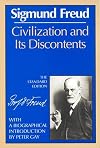
The impact of Sigmund Freud on contemporary Western thought can hardly be underestimated. Many of the key "psychological" terms we employ can be traced back to his writing. Although fascinating and often insightful, much of his influence has been destructive, providing comfort and a scientific imprimatur for a large portion of the anti-Western diatribes of the last generation.
Let us first dispose of several misconceptions that have clouded the popular image of this brilliant thinker. To show more begin with, Freud is no touchy-feely, tree-hugging, crystal-gazing therapist from Vermont. He is a hardened observer of human nature, quite Hobbesian, convinced that aggression and unbounded self-interest are primary factors in the motivation of human behavior. He mocks those who preach unlimited love, as well as those who would coddle criminals. His views on women would shock many an unsuspecting feminist.
Likewise, Freud is clear in his opposition to utopian political schemes, such as communism. He writes that the Marxist view of private property is based on a fallacy:
"The psychological premises on which the [communist] system is based are an untenable illusion. In abolishing private property we deprive the human love of aggression of one of its instruments, certainly a strong one, though certainly not the strongest; but we have in no way altered the differences in power and influence which are misused by aggressiveness, nor have we altered anything in its nature. Aggressiveness was not created by property."
It is quite possible that Freud's psychoanalytic treatment of mentally ill individuals, or even of merely miserable ones, has proven to be highly effective. This is arguable, but it belongs to another discussion. Let us give him the benefit of the doubt, and say that his contribution in this field was worthy of his reputation.
The problem begins where psychoanalysis ends and the development of a comprehensive theory of human society begins. Percolating throughout his writing is a misapplication of concepts from the psychology of the individual to the level of civilization--which, incidentally, is one of Freud's favorite words. For example, take the notion of guilt, which he claims is the "most important problem in the development of civilization." Guilt certainly has a role to play in our lives, and the shedding of unnecessary guilt goes a long way to ameliorating one's peace of mind, but the most important problem?
Freud's highly influential work, "Civilization and Its Discontents," abounds with such sweeping, grandiose statements, the applicability of which seldom extends further than the Viennese café in which he was seated when the epiphany struck him. Here's another one:
"Civilization is a process in the service of Eros, whose purpose is to combine single human individuals, and after that families, then races, peoples and nations, into one great unity, the unity of mankind. Why this has to happen, we do not know; the work of Eros is precisely this. These collections of men are to be libidinally bound to one another."
One might think that the study of aesthetics could somehow rise above the fray of the battling instinct gods, but this also is traced back to the shadowy domain of individual impulses:
"All that seems certain is [beauty's] derivation from the field of sexual feeling. The love of beauty seems a perfect example of an impulse inhibited in its aim. `Beauty' and `attraction' are originally attributes of the sexual object. It is worth remarking that the genitals themselves, the sight of which is always exciting, are nevertheless hardly ever judged to be beautiful..."
One could easily imagine this being said by a character in a film by Fellini, in a scene satirizing the mumbo-jumbo of ivory tower academics.
Freud's remarks on religion, which he holds in the highest contempt, are indicative of an abysmal ignorance. He claims that religion derives from the "infant's helplessness and the longing for the father aroused by it." Other factors are later admitted, but (as in the case of aesthetics) everything is traced back to the individual and his instincts. There is no consideration of the actual content of religion, its insight and its wisdom. Even Nietzsche, certainly no friend of Judeo-Christian teachings, once remarked that the Old Testament was the greatest work of literature ever produced by man.
Freud's macro-level analysis fails because he has seized upon a certain realm, individual psychology, and inflated it to supernatural dimensions. Certainly, it has an impact, but it is only one slice of the societal pie, or more accurately, one ingredient therein. It can never explain all of human existence. Human society is a complex organism, with multiple and criss-crossing influences.
Freud's error is only too typical of the modern mind, estranged as it is from the profound ocean of history. What escapes Freud completely is the fact that culture has an existence that is independent of any given individual or group of individuals. Culture is produced layer upon layer. It is much greater than the sum of its human parts, and does not result from the intent or design of any single person, group, or generation.
Thus an analysis (were it possible) that could aggregate the thoughts and impulses of every human mind that has ever existed would still be insufficient for understanding the essence of culture.
In Freud's world view, man is wrested from his culture; he is fragmented, alienated, and made a slave of his animal self. Freud inherited and expanded the legacy of Darwin, who attempted to prove that man is nothing more than an animal. Freud went one step further, in attempting to demonstrate that all of man's creations--so utterly at variance with the animal world--can nevertheless be traced back to instincts and bodily functions that we have in common with apes and aardvarks. To say that this has provided fuel for deconstructionists of every variety would be to state the obvious.
Freud's most impressive feat may have been to complete the work of Hegel and Darwin in constructing the new secular religion for Western man. Hegel, through his "world-historical spirit" and immutable "laws" of society's development, strips man of his free will, and paves the way for the unbounded totalitarianism that has so marked modern society. Darwin teaches that man is an animal, a shock treatment that has led people to despair of the perennial search for a higher nature--a quest that had run like a thread through the annals of Western civilization. Freud adds the third idol of the trinity, that of the instincts, particularly the sexual.
Put the three together, and there is nothing left of God, reason, art, the intellect, purpose, wisdom, or contemplation. show less
Let us first dispose of several misconceptions that have clouded the popular image of this brilliant thinker. To show more begin with, Freud is no touchy-feely, tree-hugging, crystal-gazing therapist from Vermont. He is a hardened observer of human nature, quite Hobbesian, convinced that aggression and unbounded self-interest are primary factors in the motivation of human behavior. He mocks those who preach unlimited love, as well as those who would coddle criminals. His views on women would shock many an unsuspecting feminist.
Likewise, Freud is clear in his opposition to utopian political schemes, such as communism. He writes that the Marxist view of private property is based on a fallacy:
"The psychological premises on which the [communist] system is based are an untenable illusion. In abolishing private property we deprive the human love of aggression of one of its instruments, certainly a strong one, though certainly not the strongest; but we have in no way altered the differences in power and influence which are misused by aggressiveness, nor have we altered anything in its nature. Aggressiveness was not created by property."
It is quite possible that Freud's psychoanalytic treatment of mentally ill individuals, or even of merely miserable ones, has proven to be highly effective. This is arguable, but it belongs to another discussion. Let us give him the benefit of the doubt, and say that his contribution in this field was worthy of his reputation.
The problem begins where psychoanalysis ends and the development of a comprehensive theory of human society begins. Percolating throughout his writing is a misapplication of concepts from the psychology of the individual to the level of civilization--which, incidentally, is one of Freud's favorite words. For example, take the notion of guilt, which he claims is the "most important problem in the development of civilization." Guilt certainly has a role to play in our lives, and the shedding of unnecessary guilt goes a long way to ameliorating one's peace of mind, but the most important problem?
Freud's highly influential work, "Civilization and Its Discontents," abounds with such sweeping, grandiose statements, the applicability of which seldom extends further than the Viennese café in which he was seated when the epiphany struck him. Here's another one:
"Civilization is a process in the service of Eros, whose purpose is to combine single human individuals, and after that families, then races, peoples and nations, into one great unity, the unity of mankind. Why this has to happen, we do not know; the work of Eros is precisely this. These collections of men are to be libidinally bound to one another."
One might think that the study of aesthetics could somehow rise above the fray of the battling instinct gods, but this also is traced back to the shadowy domain of individual impulses:
"All that seems certain is [beauty's] derivation from the field of sexual feeling. The love of beauty seems a perfect example of an impulse inhibited in its aim. `Beauty' and `attraction' are originally attributes of the sexual object. It is worth remarking that the genitals themselves, the sight of which is always exciting, are nevertheless hardly ever judged to be beautiful..."
One could easily imagine this being said by a character in a film by Fellini, in a scene satirizing the mumbo-jumbo of ivory tower academics.
Freud's remarks on religion, which he holds in the highest contempt, are indicative of an abysmal ignorance. He claims that religion derives from the "infant's helplessness and the longing for the father aroused by it." Other factors are later admitted, but (as in the case of aesthetics) everything is traced back to the individual and his instincts. There is no consideration of the actual content of religion, its insight and its wisdom. Even Nietzsche, certainly no friend of Judeo-Christian teachings, once remarked that the Old Testament was the greatest work of literature ever produced by man.
Freud's macro-level analysis fails because he has seized upon a certain realm, individual psychology, and inflated it to supernatural dimensions. Certainly, it has an impact, but it is only one slice of the societal pie, or more accurately, one ingredient therein. It can never explain all of human existence. Human society is a complex organism, with multiple and criss-crossing influences.
Freud's error is only too typical of the modern mind, estranged as it is from the profound ocean of history. What escapes Freud completely is the fact that culture has an existence that is independent of any given individual or group of individuals. Culture is produced layer upon layer. It is much greater than the sum of its human parts, and does not result from the intent or design of any single person, group, or generation.
Thus an analysis (were it possible) that could aggregate the thoughts and impulses of every human mind that has ever existed would still be insufficient for understanding the essence of culture.
In Freud's world view, man is wrested from his culture; he is fragmented, alienated, and made a slave of his animal self. Freud inherited and expanded the legacy of Darwin, who attempted to prove that man is nothing more than an animal. Freud went one step further, in attempting to demonstrate that all of man's creations--so utterly at variance with the animal world--can nevertheless be traced back to instincts and bodily functions that we have in common with apes and aardvarks. To say that this has provided fuel for deconstructionists of every variety would be to state the obvious.
Freud's most impressive feat may have been to complete the work of Hegel and Darwin in constructing the new secular religion for Western man. Hegel, through his "world-historical spirit" and immutable "laws" of society's development, strips man of his free will, and paves the way for the unbounded totalitarianism that has so marked modern society. Darwin teaches that man is an animal, a shock treatment that has led people to despair of the perennial search for a higher nature--a quest that had run like a thread through the annals of Western civilization. Freud adds the third idol of the trinity, that of the instincts, particularly the sexual.
Put the three together, and there is nothing left of God, reason, art, the intellect, purpose, wisdom, or contemplation. show less
Civilization and Its Discontents (The Standard Edition) (Complete Psychological Works of Sigmund Freud) by Sigmund Freud
Mad props for discovering the unconscious and the tropes of the dreamweaver, but in other ways this innovative thinker is a hidebound reactionary, sexist, homophobic. He also treats his arbitrary assumptions as facts: we can be quite sure that fathers in the pre-civilization epoch were monsters, etc. Can we, though? Which anthropological studies of hunter gatherer families are you (not) citing? Maybe fathers who weren't under the cruel yoke of capitalism suffered no bullying to pass on to show more the nearest available victim. Freud also seems quite sure that civilization is restraining our aggressive urges; I think, rather, civilization is responsible for war. Civilization, the state, is institutional violence. In 1930 this should have been apparent to the good doctor. By September 1939, when he died, the writing in blood was certainly on the wall. Apparently Gandhi's "What do you think about Western civilization?" "It would be a good idea" is apocryphal. A shame; Freud might have learned something. Jung wanted the id and the ego to unite against the superego; Freud wanted the superego and the ego to unite against the id. Jung remains correct. show less

In The Future of an Illusion, Freud suggests as a germinal postulate of religion, “Life in this world … signifies a perfecting of man’s nature. It is probably the spiritual part of man, the soul …” (23). The Greek for soul is psyche. Psychoanalysis, which set itself the task of diagnosing and treating the psyche (and not merely the conscious mind, nor the organic brain as such), seems to be a phenomenon in some measure tailor-made to supplement, supplant, or substitute for show more religion. Freud presented a clear claim that religion is a mass neurosis, not only in The Future of an Illusion, but also in his later work Moses and Monotheism. To the extent that one sees the collective problem of religious ‘delusion’ as analogous to obsessional neurosis in the individual, one might take psychoanalysis, the custodian of techniques to address the latter, as a point of departure to cope with the former. And while he does not make light of the difficulty in coming to do without traditional religions, Freud insists on the desirability and even “fatal inevitability” of such “growth” in the human condition (55).
The “care of souls” is the pastoral function in Christian religion, and equally a mission of psychoanalysis as a therapeutic institution, with its priestly class of analysts. Freud does not hold himself back from the pleasures of religiously-based rhetoric. For example, he writes that “the questions which religious doctrine finds it so easy to answer” ... “might be called too sacred” to be addressed in a traditional, unquestioning manner (40). Taking a cue from the Dutch anti-colonialist Multatuli, Freud makes reference to “our God, Logos” slowly fulfilling the desires of mankind (69). And he sometimes shows a rather “religious” tendency (as he would perhaps describe it) to pick and choose among scientific theories for the sake of doctrinal coherence in psychoanalysis.
In one of his devil’s advocate passages in The Future of an Illusion, Freud remarks, “If you want to expel religion from our European civilization, you can only do it by means of another system of doctrines,” which would itself engender a functional religion, with all of the concomitant drawbacks (65-6). In replying to his own objection, Freud emphasizes the desired differences in his post-religious system: it is to be non-delusive and more capable of being corrected. It will be science, not religion. But Freudian psychoanalysis, for all of its scientific trappings, is already at some remove from the positivist territory of the physical sciences. It is no closer to, say, biology, than the monotheism of Moses was to the polytheistic religion of eastern Mediterranean antiquity. In effect, Freud’s proposal is that the superstitious religion of traditions focused on God should be replaced in the future with a scientific religion trained on the soul. show less
The “care of souls” is the pastoral function in Christian religion, and equally a mission of psychoanalysis as a therapeutic institution, with its priestly class of analysts. Freud does not hold himself back from the pleasures of religiously-based rhetoric. For example, he writes that “the questions which religious doctrine finds it so easy to answer” ... “might be called too sacred” to be addressed in a traditional, unquestioning manner (40). Taking a cue from the Dutch anti-colonialist Multatuli, Freud makes reference to “our God, Logos” slowly fulfilling the desires of mankind (69). And he sometimes shows a rather “religious” tendency (as he would perhaps describe it) to pick and choose among scientific theories for the sake of doctrinal coherence in psychoanalysis.
In one of his devil’s advocate passages in The Future of an Illusion, Freud remarks, “If you want to expel religion from our European civilization, you can only do it by means of another system of doctrines,” which would itself engender a functional religion, with all of the concomitant drawbacks (65-6). In replying to his own objection, Freud emphasizes the desired differences in his post-religious system: it is to be non-delusive and more capable of being corrected. It will be science, not religion. But Freudian psychoanalysis, for all of its scientific trappings, is already at some remove from the positivist territory of the physical sciences. It is no closer to, say, biology, than the monotheism of Moses was to the polytheistic religion of eastern Mediterranean antiquity. In effect, Freud’s proposal is that the superstitious religion of traditions focused on God should be replaced in the future with a scientific religion trained on the soul. show less
Lists
. (1)
. (1)
Read in 2007 (1)
Awards


You May Also Like


Associated Authors
Statistics
- Works
- 1,416
- Also by
- 33
- Members
- 51,593
- Popularity
- #296
- Rating
- 3.6
- Reviews
- 418
- ISBNs
- 3,321
- Languages
- 39
- Favorited
- 71


