

Jacques Lacan (1901–1981)
Author of The Seminar of Jacques Lacan, Book XI: The Four Fundamental Concepts of Psychoanalysis
About the Author
Jacques Lacan was born into an upper-middle-class Parisian family. He received psychiatric and psychoanalytic training, and his clinical training began in 1927. His doctoral thesis, "On Paranoia and Its Relation to Personality," already indicated an original thinker; in it he tried to show that no show more physiological phenomenon could be adequately understood without taking into account the entire personality, including its engagement with a social milieu. Practicing in France, Lacan led a "back to Freud" movement in the most literal sense, at a time when others were trying to interpret Sigmund Freud (see also Vol. 3) broadly. He emphasized the role of the image and the role of milieu in personality organization. Seeking to reinterpret Freud's theories in terms of structural linguistics, Lacan believed that Freud's greatest insight was his understanding of the "talking cure" as revelatory of the unconscious. By taking Freud literally, Lacan led a psychoanalytic movement that evolved into a very specific school of interpretation. Often embroiled in controversy, in the 1950s he opposed the standardization of training techniques, the classification of psychoanalysis as a medical treatment, and the then emerging school of ego psychology. Although general readers may find Lacan difficult to read, his works are provocative and rewarding. (Bowker Author Biography) show less
Image credit: Owen Barfield World Wide Website
Series
Works by Jacques Lacan
The Seminar of Jacques Lacan, Book XI: The Four Fundamental Concepts of Psychoanalysis (1973) 821 copies, 2 reviews
The Seminar of Jacques Lacan, Book VII: The Ethics of Psychoanalysis 1959-1960 (1978) 341 copies, 1 review
The Seminar of Jacques Lacan, Book XX, Encore: On Feminine Sexuality, the Limits of Love and Knowledge, 1972-73 (1975) 334 copies, 3 reviews
The Seminar of Jacques Lacan, Book I: Freud's Papers on Technique, 1953-1954 (1975) 260 copies, 1 review
The Seminar of Jacques Lacan, Book II: The Ego in Freud's Theory and in the Technique of Psychoanalysis, 1954-1955 (1978) 220 copies
The Object Relation: The Seminar of Jacques Lacan, Book IV (Seminar of Jacques Lacan, 4) (2014) 20 copies
O Mito Individual Do Neurótico. Coleção Campo Freudiano no Brasil - Série Paradoxos de Lacan (Em Portuguese do Brasil) (1986) 19 copies
Os Complexos Familiares. Coleção Campo Freudiano no Brasil (Em Portuguese do Brasil) (1987) 15 copies, 1 review
Talking to Brick Walls: A Series of Presentations in the Chapel at Sainte-Anne Hospital (2011) 14 copies, 1 review
Lacan Ecrits 8 copies
On a Discourse that Might not Be a Semblance: The Seminar of Jacques Lacan, Book XVIII (2025) 8 copies
Fallus'un anlami.= [La Signification du phallus, Die Bedeutung des Phallus]. Translated by Saffet Murat Tura. (1994) 6 copies
Shakespeare, Duras, Wedekind, Joyce 3 copies
Escritos 1. Primera parte 3 copies
Os Complexos Familiares 2 copies
The Lacanian Review 6: ¡Urgent! (The Lacanian Review - International Journal of Lacanian Psychoanalysis) (2018) 2 copies
Speech and language in psychoanalysis. Translated with notes and commentary by Anthony Wilden. 2 copies
Lembi di reale 2 copies
The Lacanian Review 12: American Lacan (The Lacanian Review - International Journal of Lacanian Psychoanalysis) (2022) 2 copies
Scritti I 2 copies
Seminario Libro VII, Libro X 1 copy
La psicoanalisi: 45 Aa. Vv. 1 copy
Della psicosi paranoica nei suoi rapporti con la personalità Seguito da Primi Scritti sulla paranoia 1 copy
La Psicoanalisi n. 5: Amleto 1 copy
crits... / 1 1 copy
ΑΠΑΝΤΗΣΕΙΣ 1 copy
Η διδασκαλία μου 1 copy
Écrits I 1 copy
Mi-dire... 1 copy
Scilicet n. 2/3 1 copy
Scilicet n. 5 1 copy
エクリ. 2: ECRITS 1 copy
L'amour 1 copy
Ecrits: A Selection 1st (first) Edition by Lacan, Jacques published by W. W. Norton & Company (2004) (2007) 1 copy
MËSIMET E MIA 1 copy
Scritti I II 1 copy
Lingua 1 copy
ディスクール 1 copy
L'amour. 1 copy
Schriften 1 copy
Lacan [opere di] 1 copy
Escritos II 1 copy
Das Ich in der Theorie Freuds und in der Technik der Psychoanalyse: Das Seminar, Buch II (2016) 1 copy
scritti, volume secondo 1 copy
scritti, volume primo 1 copy
What is a Picture? 1 copy
Απαντήσεις 1 copy
Pas tout 1926-1931 1 copy
Lacan 1 copy
Le Désir (Hamlet) 1 copy
Τό σεμινάριο 1 copy
The Lacanian Review 7: Get Real (The Lacanian Review - International Journal of Lacanian Psychoanalysis) (2019) 1 copy
L'angoisse 1 copy
L'identification 1 copy
Associated Works
The Structuralist Controversy: The Languages of Criticism and the Sciences of Man (1970) — Contributor — 106 copies
Tagged
Common Knowledge
- Canonical name
- Lacan, Jacques
- Legal name
- Lacan, Jacques Marie Émile
- Birthdate
- 1901-04-13
- Date of death
- 1981-09-09
- Gender
- male
- Education
- Collège Stanislas, Paris
Saint-Anne Hospital
University of Paris (MD)
École spéciale des langues orientales - Occupations
- psychoanalyst
psychiatrist - Organizations
- École Pratique des Hautes Études
- Relationships
- Makles, Sylvia (wife)
Miller, Judith (daughter)
Miller, Jacques-Alain (son-in-law)
Lacan, Sibylle (daughter) - Cause of death
- colon cancer
- Nationality
- France
- Birthplace
- Paris, France
- Places of residence
- Paris, France
- Place of death
- Paris, France
- Associated Place (for map)
- Paris, France
Members
Reviews
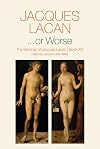
Jacques Lacan's 19th Seminar is titled "...or Worse," a name that he seems to think is very witty and funny, but that makes no sense to me. It doesn't seem to connect in any meaningful way to the themes he explores here. It is also worth noting that in this year, Lacan ran his usual seminar at the Sorbonne in conjunction with a series of talks on the topic "The Psychoanalyst's Knowledge" at the Sainte-Anne Hospital, the original location of his seminar. Jacques-Alain Miller includes those show more pertinent to "...or Worse" in this book, while the three other Sainte-Anne talks are collected in Talking to Brick Walls.
In his earlier years Lacan spent a lot of time talking about the interaction between subject and Other. One of the most crucial revisions he undertook of this idea occurred in Seminar XI, where he develops the concept of the "subject who is supposed to know." This concept allows him to show how the subject's desire is directed at an illusion. The analyst, for instance, is constructed as an imaginary master, a subject who is supposed to know, but this mastery is merely a product of the analysand's fantasy.
The ideas we get in Seminar XIX are essentially a very complicated reworking of this idea through two channels.
The first channel is that of Plato's Parmenides. Here, Plato considers the nature of the One and formulates some important caveats. Foremost among these is that the requirement that the Form/Idea be seen as something formal and absent. Think of it in the terms of Borges's story "On Exactitude in Science," which describes an empire where exact map-making is taken to such an extreme that they make a one-to-one scale map. The impracticality of such a move is what Plato seeks to avoid: if the One were in the world, it would fill it up completely, a redundant replica, like Borges's map. For that reason, the One can only be imagined - and thus, from Lacan's perspective, the One is a zero (it only exists formally) that is perceived as a one (because it is mistaken for something, despite its inexistence).
The second channel is the mathematical one, which is primarily drawn from Frege and set theory. Lacan harps on about how it is Frege who discovers the importance of the number zero to the sequence of integers. The number zero, and the empty set, both again show something that exists formally but that, at the same time, has no existence. The "one" is thus, in a sense, zero, so that there is "no relationship" between two terms as such: zero (formal one) plus one (actual one) always equals one.
If we put all this back into analytic relationship, then we see that it consists of a subject who mistakes the "formal one" of the analyst for reality - the analyst is actually a zero, a nothingness, that seems only to exist in a formal sense. This is becomes true in Lacanian theory for all subjective interactions, whereby the subject tries to connect with an Other that *appears* to be "one" but is actually zero. In fact, every "one" is in this situation: all ones are actually empty sets, entities that appear to exist only because they are formal markers of inexistence. That is why his formula "Y a de l'un" ("There is only one") has a double meaning: insofar as there is only the (formal) one, there are only zeroes.
While all of this theorizing and interplay between different fields is very clever in a formal sense, I don't really see the point of any of it. Lacan is not really doing anything amazingly new: the genuine revolution happened in Seminar XI, so that what he presents us with here is a highly formalized (and not very useful) restatement of those concepts. Still, it could have been worse... show less
In his earlier years Lacan spent a lot of time talking about the interaction between subject and Other. One of the most crucial revisions he undertook of this idea occurred in Seminar XI, where he develops the concept of the "subject who is supposed to know." This concept allows him to show how the subject's desire is directed at an illusion. The analyst, for instance, is constructed as an imaginary master, a subject who is supposed to know, but this mastery is merely a product of the analysand's fantasy.
The ideas we get in Seminar XIX are essentially a very complicated reworking of this idea through two channels.
The first channel is that of Plato's Parmenides. Here, Plato considers the nature of the One and formulates some important caveats. Foremost among these is that the requirement that the Form/Idea be seen as something formal and absent. Think of it in the terms of Borges's story "On Exactitude in Science," which describes an empire where exact map-making is taken to such an extreme that they make a one-to-one scale map. The impracticality of such a move is what Plato seeks to avoid: if the One were in the world, it would fill it up completely, a redundant replica, like Borges's map. For that reason, the One can only be imagined - and thus, from Lacan's perspective, the One is a zero (it only exists formally) that is perceived as a one (because it is mistaken for something, despite its inexistence).
The second channel is the mathematical one, which is primarily drawn from Frege and set theory. Lacan harps on about how it is Frege who discovers the importance of the number zero to the sequence of integers. The number zero, and the empty set, both again show something that exists formally but that, at the same time, has no existence. The "one" is thus, in a sense, zero, so that there is "no relationship" between two terms as such: zero (formal one) plus one (actual one) always equals one.
If we put all this back into analytic relationship, then we see that it consists of a subject who mistakes the "formal one" of the analyst for reality - the analyst is actually a zero, a nothingness, that seems only to exist in a formal sense. This is becomes true in Lacanian theory for all subjective interactions, whereby the subject tries to connect with an Other that *appears* to be "one" but is actually zero. In fact, every "one" is in this situation: all ones are actually empty sets, entities that appear to exist only because they are formal markers of inexistence. That is why his formula "Y a de l'un" ("There is only one") has a double meaning: insofar as there is only the (formal) one, there are only zeroes.
While all of this theorizing and interplay between different fields is very clever in a formal sense, I don't really see the point of any of it. Lacan is not really doing anything amazingly new: the genuine revolution happened in Seminar XI, so that what he presents us with here is a highly formalized (and not very useful) restatement of those concepts. Still, it could have been worse... show less
The Seminar of Jacques Lacan: The Ethics of Psychoanalysis (Vol. Book VII) (Seminar of Jacques Lacan (Paperback)) by Jacques Lacan
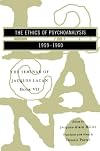
I have to admit I'm at a bit of a loss as to what to write about this one. For those new to Lacan and wanting to get a sense of his thinking from his own words, this isn't a bad place to start. Not saying this is easy reading but it's definitely more approachable than what I have read in Ecrites.
I feel like I truly started to understand some of Lacan's basics concepts (even if there is still much that I couldn't ever truly grasp as solid for long). Maybe one of the most frustrating parts of show more reading this seminar is that I spent much of it wondering what exactly it had to do with ethics as I understood the term. And it's not as if Lacan starts the seminar by outlining what he intends by the title of the seminar or what the general area he plans to cover is exactly. Does he intend to talk about the desired ethics of the analyst in practice? The ethics possible for the analysand? The ethics possible for any human or society? (In the end the answer was all three because of course they are all intricately related.) In terms of being readily understandable Lacan can be his own worst enemy! However, by the time I finished the seminar and worked through his concepts of das Ding, Desire, Kant/Sade, courtly love, etc. I really felt I had a somewhat firm grasp of how parts of this theoretical system fit together. The way I became convinced of this is when I tried to offer my friend a short description of this work and instead found myself rattling off all of these concepts and ideas and how they all fit together. I've never been able to do that with Lacan before.
And then when you get to the end and everything he has been lecturing on starts to sort of snap into place, there was almost this feeling of electricity running through me. In fact, there was a passage on one of the last pages that struck me as so human, so sympathetically aware of our human condition (similar to my impression of the first 50 or so pages of Freud's Civilization and Its Discontents) that it just stopped me in my tracks. I will quote it here but my guess is that because there seems nothing very complicated or cryptic in the wording and nothing overtly deep in what's said, that its effect was strongly caused by everything that Lacan said right up to this point...
"What I call "giving ground relative to one's desire" is always accompanied in the destiny of the subject by some betrayal – you will observe it in every case and should note its importance. Either the subject betrays his own way, betrays himself, and the result is significant for him, or, more simply, he tolerates the fact that someone with whom he has more or less vowed to do something betrays his hope and doesn't do for him what their pact entailed – whatever that pact may be, fated or ill-fated, risky, shortsighted, or indeed a matter of rebellion or flight, it doesn't matter.
Something is played out in betrayal if one tolerates it, if driven by the idea of the good – and by that I mean the good of the one who has just committed the act of betrayal – one gives ground to the point of giving up one's own claims and says to oneself, "Well, if that's how things are, we should abandon our position; neither of us is worth that much, and especially me, so we should just return to the common path." You can be sure that what you find there is the structure of giving ground relative to one's desire.
Once one has crossed that boundary where I combined in a single term contempt for the other and for oneself, there is no way back. It might be possible to do some repair work, but not to undo it. Isn't that a fact of experience that demonstrates how psychoanalysis is capable of supplying a useful compass in the field of ethical guidance?
I have, therefore, articulated three propositions.
First, the only thing one can be guilty of is giving ground relative to one's desire.
Second, the definition of a hero: someone who may be betrayed with impunity.
Third, this is something that not everyone can achieve; it constitutes the difference between an ordinary man and a hero, and it is, therefore, more mysterious than one might think. For the ordinary man the betrayal that almost always occurs sends him back to the service of goods, but with the proviso that he will never again find that factor which restores a sense of direction to that service."
That, right there, was the moment when Lacan's "highfalutin abstract philosophy" hit me right in the gut and spoke to me of my own life experience in words that cut like a velvet knife. show less
I feel like I truly started to understand some of Lacan's basics concepts (even if there is still much that I couldn't ever truly grasp as solid for long). Maybe one of the most frustrating parts of show more reading this seminar is that I spent much of it wondering what exactly it had to do with ethics as I understood the term. And it's not as if Lacan starts the seminar by outlining what he intends by the title of the seminar or what the general area he plans to cover is exactly. Does he intend to talk about the desired ethics of the analyst in practice? The ethics possible for the analysand? The ethics possible for any human or society? (In the end the answer was all three because of course they are all intricately related.) In terms of being readily understandable Lacan can be his own worst enemy! However, by the time I finished the seminar and worked through his concepts of das Ding, Desire, Kant/Sade, courtly love, etc. I really felt I had a somewhat firm grasp of how parts of this theoretical system fit together. The way I became convinced of this is when I tried to offer my friend a short description of this work and instead found myself rattling off all of these concepts and ideas and how they all fit together. I've never been able to do that with Lacan before.
And then when you get to the end and everything he has been lecturing on starts to sort of snap into place, there was almost this feeling of electricity running through me. In fact, there was a passage on one of the last pages that struck me as so human, so sympathetically aware of our human condition (similar to my impression of the first 50 or so pages of Freud's Civilization and Its Discontents) that it just stopped me in my tracks. I will quote it here but my guess is that because there seems nothing very complicated or cryptic in the wording and nothing overtly deep in what's said, that its effect was strongly caused by everything that Lacan said right up to this point...
"What I call "giving ground relative to one's desire" is always accompanied in the destiny of the subject by some betrayal – you will observe it in every case and should note its importance. Either the subject betrays his own way, betrays himself, and the result is significant for him, or, more simply, he tolerates the fact that someone with whom he has more or less vowed to do something betrays his hope and doesn't do for him what their pact entailed – whatever that pact may be, fated or ill-fated, risky, shortsighted, or indeed a matter of rebellion or flight, it doesn't matter.
Something is played out in betrayal if one tolerates it, if driven by the idea of the good – and by that I mean the good of the one who has just committed the act of betrayal – one gives ground to the point of giving up one's own claims and says to oneself, "Well, if that's how things are, we should abandon our position; neither of us is worth that much, and especially me, so we should just return to the common path." You can be sure that what you find there is the structure of giving ground relative to one's desire.
Once one has crossed that boundary where I combined in a single term contempt for the other and for oneself, there is no way back. It might be possible to do some repair work, but not to undo it. Isn't that a fact of experience that demonstrates how psychoanalysis is capable of supplying a useful compass in the field of ethical guidance?
I have, therefore, articulated three propositions.
First, the only thing one can be guilty of is giving ground relative to one's desire.
Second, the definition of a hero: someone who may be betrayed with impunity.
Third, this is something that not everyone can achieve; it constitutes the difference between an ordinary man and a hero, and it is, therefore, more mysterious than one might think. For the ordinary man the betrayal that almost always occurs sends him back to the service of goods, but with the proviso that he will never again find that factor which restores a sense of direction to that service."
That, right there, was the moment when Lacan's "highfalutin abstract philosophy" hit me right in the gut and spoke to me of my own life experience in words that cut like a velvet knife. show less
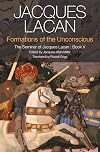
Jacques Lacan's seminars have always been published in a sporadic, out-of-sequence manner. The first seminar to be published in both French and English was Seminar XI, for instance. The English translation of Seminar XIX only came out in August 2018, on the heels of Seminar V in 2017. Establishing a sense of the development of Lacan's ideas can be hard, given both this random choice of publication dates and the gaps in the record. How nice it will be when everything is available to read in show more its proper sequence.
I should start by saying that this work beautifully translated and produced. While many readers like Bruce Fink's translations of Lacan into English, I tend to regard Russell Grigg as the best. Both are excellent when it comes to clear and readable prose, but I feel that Grigg's theoretical grasp of Lacan's work as a whole is superior, and that this is reflected, in turn, in how he presents Lacan in translation.
One thing that is immediately noticeable about Seminar V is just how incredibly long it is. Lacan's other seminars usually clock in at somewhere between 150 and 300 pages, whereas this one is a massive 500 pages long. The reason is that so much of the seminar is taken up not only with commentary on Freud's work, but also a myriad of other contemporary psychoanalysts - Klein, Jones, Bouvet, etc. - that are now mainly of interest only to clinicians and historians.
At the heart of Seminar V is Lacan's exploration of the subject and Other, particularly how these connect through the symbolic order. Part 1, for instance, shows how intertwined this pair really is through a consideration of jokes and comedy: for a joke to work, Lacan points out, it ultimately has to be acknowledged by the Other. Part 2 explores how this idea relates to the Oedipus complex, with Lacan increasingly transforming this Freudian idea into something symbolic and formal. Part 3 looks at the difference between a demand (what is expressed through signifiers) and desire (what the subject actually wants), and how human desire is always mediated through language. Part 4 focuses more attention on the Other, especially in light of neurotic obsession.
Seminar V contains some important ideas that belong to what turns out to be the end of the "early" Lacan period, of the Lacan who is heavily influenced by Claude Lévi-Strauss's linguistic structuralism. There are rumblings in Seminar VI that something is about to change, resulting in the dramatic rupture that is Seminar VII on the topic of ethics and psychoanalysis, probably Lacan's greatest and important work. That will lead, in turn, to Seminar XI, in which Lacan returns to the questions of subject and Other presented here in order to begin a profound questioning of the viability of psychoanalysis itself. For that reason alone, Seminar V is important.
Nonetheless, I can't give this book more than three stars, because while it hints at the aforementioned breakthroughs, they have not yet even close to breaking the surface of Lacan's thought. What is striking about Seminar V is just how much this Lacan remains an avid disciple of Freud (and Lévi-Strauss) rather than a true innovator, so that while there are numerous glimmers of something more, they are draped in a language of psychoanalytic convention that I found really tedious to slog through, especially in the latter parts of the book.
Overall, then, Seminar V is one of those books you read mainly for historical purposes, to see where the seeds of what will become great ideas originated from, before they truly germinated and came into their own. show less
I should start by saying that this work beautifully translated and produced. While many readers like Bruce Fink's translations of Lacan into English, I tend to regard Russell Grigg as the best. Both are excellent when it comes to clear and readable prose, but I feel that Grigg's theoretical grasp of Lacan's work as a whole is superior, and that this is reflected, in turn, in how he presents Lacan in translation.
One thing that is immediately noticeable about Seminar V is just how incredibly long it is. Lacan's other seminars usually clock in at somewhere between 150 and 300 pages, whereas this one is a massive 500 pages long. The reason is that so much of the seminar is taken up not only with commentary on Freud's work, but also a myriad of other contemporary psychoanalysts - Klein, Jones, Bouvet, etc. - that are now mainly of interest only to clinicians and historians.
At the heart of Seminar V is Lacan's exploration of the subject and Other, particularly how these connect through the symbolic order. Part 1, for instance, shows how intertwined this pair really is through a consideration of jokes and comedy: for a joke to work, Lacan points out, it ultimately has to be acknowledged by the Other. Part 2 explores how this idea relates to the Oedipus complex, with Lacan increasingly transforming this Freudian idea into something symbolic and formal. Part 3 looks at the difference between a demand (what is expressed through signifiers) and desire (what the subject actually wants), and how human desire is always mediated through language. Part 4 focuses more attention on the Other, especially in light of neurotic obsession.
Seminar V contains some important ideas that belong to what turns out to be the end of the "early" Lacan period, of the Lacan who is heavily influenced by Claude Lévi-Strauss's linguistic structuralism. There are rumblings in Seminar VI that something is about to change, resulting in the dramatic rupture that is Seminar VII on the topic of ethics and psychoanalysis, probably Lacan's greatest and important work. That will lead, in turn, to Seminar XI, in which Lacan returns to the questions of subject and Other presented here in order to begin a profound questioning of the viability of psychoanalysis itself. For that reason alone, Seminar V is important.
Nonetheless, I can't give this book more than three stars, because while it hints at the aforementioned breakthroughs, they have not yet even close to breaking the surface of Lacan's thought. What is striking about Seminar V is just how much this Lacan remains an avid disciple of Freud (and Lévi-Strauss) rather than a true innovator, so that while there are numerous glimmers of something more, they are draped in a language of psychoanalytic convention that I found really tedious to slog through, especially in the latter parts of the book.
Overall, then, Seminar V is one of those books you read mainly for historical purposes, to see where the seeds of what will become great ideas originated from, before they truly germinated and came into their own. show less
Enjoyable! Short and much more entertaining than any other Lacan I've read. Unlike the Ecrits and the seminars this is not meant for "professionals" so the tone is charming and casual. Moments of poetic beauty (the subject of psychoanalysis as that which dreams, fails, and laughs) alternate with scatological humor (the history of civilization as a history of pooping) in a way designed to keep the audience awake and engaged. Although Lacan is too clever to give an "introduction to Lacan," he show more does suggest a better way to approach him. He also conveys, as an introduction might do, his own motives and aspirations, and his sense of his place in the intellectual world, his relationship to structuralism, phenomenology, mathematical logic, etc. A charming little book that is, however, poorly copy-edited and full of glaring typos. show less
Lists
Awards


You May Also Like


Associated Authors
Statistics
- Works
- 204
- Also by
- 3
- Members
- 6,050
- Popularity
- #4,067
- Rating
- 3.7
- Reviews
- 31
- ISBNs
- 352
- Languages
- 15
- Favorited
- 16