
Michel Foucault (1926–1984)
Author of Discipline and Punish: The Birth of the Prison
About the Author
Michel Foucault was born on October 15, 1926, in Poitiers, France, and was educated at the Sorbonne, in Paris. He taught at colleges all across Europe, including the Universities of Lill, Uppsala, Hamburg, and Warsaw, before returning to France. There he taught at the University of Paris and the show more College of France, where he served as the chairman of History of Systems of Thought until his death. Regarded as one of the great French thinkers of the twentieth century, Foucault's interest was in the human sciences, areas such as psychiatry, language, literature, and intellectual history. He made significant contributions not just to the fields themselves, but to the way these areas are studied, and is particularly known for his work on the development of twentieth-century attitudes toward knowledge, sexuality, illness, and madness. Foucault's initial study of these subjects used an archaeological method, which involved sifting through seemingly unrelated scholarly minutia of a certain time period in order to reconstruct, analyze, and classify the age according to the types of knowledge that were possible during that time. This approach was used in Madness and Civilization: A History of Insanity in the Age of Reason, for which Foucault received a medal from France's Center of Scientific Research in 1961, The Birth of the Clinic, The Order of Things, and The Archaeology of Knowledge. Foucault also wrote Discipline and Punishment: The Birth of the Prison, a study of the ways that society's views of crime and punishment have developed, and The History of Sexuality, which was intended to be a six-volume series. Before he could begin the final two volumes, however, Foucault died of a neurological disorder in 1984. (Bowker Author Biography) An outstanding philosopher and intellectual figure on the contemporary scene, Foucault has been influential in both philosophy and the recent interpretation of literature. Trained in philosophy and psychology, he was named to a chair at the College de France in 1970. He also taught in various departments of French literature as a visiting professor in the United States. Until 1968 he was a major figure in the critical movement known as structuralism, a method of intellectual inquiry based on the idea that all human behavior and achievement arises from an innate ability to organize, or "structure," human experiences. In both The Order of Things (1966) and The Archaeology of Knowledge (1969) he was interested in the organization of human knowledge and in the transformations of intellectual categories. His influential history of the prison, Discipline and Punish (1975), contributed to the study of the relationship of power and various forms of knowledge, as did the several volumes of an unfinished History of Sexuality published just before his death. (Bowker Author Biography) show less
Image credit: Michel Foucault vers l’âge de 18 ans (1944)
Series
Works by Michel Foucault
Madness and Civilization: A History of Insanity in the Age of Reason (1961) 3,701 copies, 28 reviews
Power and Knowledge: Selected Interviews and Other Writings 1972-1977 (1980) 1,469 copies, 6 reviews
"Society Must Be Defended": Lectures at the College de France, 1975-1976 (1997) 882 copies, 3 reviews
The Hermeneutics of the Subject: Lectures at the College de France 1981--1982 (2001) 499 copies, 1 review
I, Pierre Riviere, having slaughtered my mother, my sister, and my brother: A Case of Parricide in the 19th Century (1973) — Editor — 393 copies, 4 reviews
Confessions of the Flesh: The History of Sexuality, Volume 4 (History of Sexuality, 4) (2018) — Author — 278 copies
Lectures on the Will to Know: Lectures at the College De France 1970-1971, and Oedipal Knowledge (2010) 163 copies, 10 reviews
On The Government of the Living: Lectures at the Collège de France, 1979-1980 (2012) 132 copies, 7 reviews
On the Punitive Society: Lectures at the Collège de France, 1972-1973 (Michel Foucault: Lectures at the Collège de France) (2013) 129 copies
Foucault / Blanchot: Maurice Blanchot: The Thought from Outside and Michel Foucault as I Imagine Him (1987) 118 copies, 1 review
Subjectivity and Truth: Lectures at the Collège de France, 1980-1981 (Michel Foucault, Lectures at the Collège de France) (2014) 82 copies
Historia de la locura en la época clásica, II (Breviarios) (Spanish Edition) (1994) 77 copies, 1 review
About the Beginning of the Hermeneutics of the Self: Lectures at Dartmouth College, 1980 (The Chicago Foucault Project) (2012) 53 copies
Penal Theories and Institutions: Lectures at the Collège de France, 1971-1972 (Michel Foucault, Lectures at the Collège de France) (2015) 52 copies
Speaking the Truth about Oneself: Lectures at Victoria University, Toronto, 1982 (The Chicago Foucault Project) (2017) 30 copies, 1 review
Oeuvres I,II Michel Foucault - les deux volumes sous coffret illustre [ Bibliotheque de la Pleiade ] Boxed set volumes 1 and 2 (French Edition) (2015) 17 copies
De lenguaje y literatura/ About Language and Literature (Pensamiento Contemporaneo/ Contemporary Thought) (Spanish Edition) (1996) 15 copies
Ditos e Escritos. Arqueologia das Ciências e História dos Sistemas de Pensamento - Volume II (Em Portuguese do Brasil) (2000) 12 copies
Ditos Escritos. A Problematização Do Sujeito. Psicologia, Psiquiatria E Psicanálise - Volume 1 (Em Portuguese do Brasil) (2002) 10 copies
Estetica, Etica Y Hermeneutica / Aesthetics, Ethic and Hermeneutic (Paidos Bascia / Basic) (Spanish Edition) (1999) 8 copies
Ditos E Escritos - V. Ix - Genealogia Da Etica, Subjetividade E Sexualidade (Em Portuguese do Brasil) (2012) 8 copies, 1 review
The History of Sexuality, Volume 1 6 copies
Intolerable: Writings from Michel Foucault and the Prisons Information Group (1970–1980) (2021) 6 copies
Historia política de la verdad : una genealogía de la moral : breviarios de los cursos del Collège de France (2016) 6 copies
Von seinen Lüsten träumen. Essenzen 6 copies
Arte, Epistemologia, Filosofia e História da Medicina - Volume VII. Série Ditos e Escritos (Em Portuguese do Brasil) (2011) 5 copies
Geometrie des Verfahrens: Schriften zur Methode (suhrkamp taschenbuch wissenschaft) (2009) 4 copies, 1 review
Der Faden ist gerissen. 4 copies
Histoire de la vérité: Cours à l'Université d'État de New York à Buffalo, mars et avril 1972 (2025) 3 copies
Archivio Foucault. Interventi, colloqui, interviste: 1978-1985. Estetica dell'Esistenza, etica, politica (1998) 3 copies
Deleuze 3 copies
La constitution d'un transcendantal historique dans la Phénoménologie de l'esprit de Hegel: Mémoire du diplôme d'études… (2024) 2 copies
O belo perigo 2 copies
Archivio Foucault. Interventi, colloqui, interviste: 1961-1970. Follia, scrittura, discorso (1996) 2 copies
A grande estrangeira 2 copies
Geschiedenistheorie 1 2 copies
“Las Meninas” 2 copies
Historia de la sexualidad: Obra Completa (3 vol set):La voluntad de saber, El uso de los placeres, La inquietud de si (2007) 2 copies
Dalle torture alle celle 2 copies
O drugim prostorima 2 copies
Geschichte der Gouvernementalität Bde.1/2: Sicherheit, Territorium, Bevölkerung. Die Geburt der Biopolitik: 2 Bände. (2006) 2 copies
Dossier 2 copies
Dějiny šílenství 1 copy
Préface à la transgression 1 copy
Le débat 1 copy
LOCURA, LENGUAJE, LITERATURA 1 copy
外の思考 : ブランショ・バタイユ・クロソウスキー 1 copy
تاریخ جنون 1 copy
A supraveghea si a pedepsi 1 copy
TheOrderofThings 1 copy
Gli ermafroditi 1 copy
MIRAR, ESCUCHAR, LEER 1 copy
Cinselliğin Tarihi Cilt-2 1 copy
Hapishanenin Doğuşu 1 copy
Microfísica do Poder 1 copy
D♯ł¿ar♯łn♯łn d©ơ¿©ơncesi 1 copy
La prosa del mondo 1 copy
Apprendre à philosopher - Foucault - Il n'existe d'autre vérité que celle produite par le pouvoir 1 copy
MAGRITTE 2004 René, Magritte 1 copy
Foucault [Opere di] 1 copy
Foucault 1 copy
Foucault 1 copy
福柯访谈录:权力的眼睛Fuke fangtan lu: quanli de yanjing (Interviews on Michel Foucault, Chinese edition) (1997) 1 copy
Life: Experience and Science 1 copy
“The Prose of the World” 1 copy
“Questions of Method” 1 copy
Théorie d'ensemble 1 copy
Freedom and knowledge 1 copy
Qu'est-ce qu'un auteur ? 1 copy
Généalogies de la sexualité 1 copy
Naissance de la clinique , une archéologie du regard médical, par Michel Foucault. [2e édition.] 1 copy
Archivio Foucault. Interventi, colloqui, interviste: 1971-1977. Poteri, saperi, strategie (1997) 1 copy
Proza e botës qënia e gjuhës 1 copy
Benin Yapımı 1 copy
ΤΡΙΑ ΚΕΙΜΕΝΑ ΓΙΑ ΤΟΝ ΝΙΤΣΕ 1 copy
VIOLENCIA E SEUS PARADOXOS 1 copy
Associated Works
Anti-Oedipus: Capitalism and Schizophrenia (1972) — Preface, some editions — 2,720 copies, 23 reviews
Herculine Barbin: Being the Recently Discovered Memoirs of a Nineteenth-century French Hermaphrodite (1978) — Introduction, some editions — 558 copies, 4 reviews
Anthropology from a Pragmatic Point of View (1974) — Translator, some editions — 231 copies, 1 review
What Is Gender Nihilism? A Reader — Contributor — 10 copies
季刊 審美 第七号 — Contributor — 1 copy
Tagged
Common Knowledge
- Canonical name
- Foucault, Michel
- Legal name
- Foucault, Paul-Michel (birth name)
- Other names
- Florence, Maurice
- Birthdate
- 1926-10-15
- Date of death
- 1984-06-25
- Gender
- male
- Education
- École Normale Supérieure (ENS|1948|DES|1949)
Collège de Sorbonne (lic.|1949|SpDip|1952|Ph.D|1961)
Lycee Henri-IV, Paris, France - Occupations
- professor
historian
philosopher
social theorist
literary critic
cultural diplomat - Organizations
- Université Lille Nord de France
University of Clermont-Ferrand
Tunis University
Collège de France
Groupe d'Information sur les Prisons - Relationships
- Defert, Daniel (partner)
- Short biography
- Paul-Michel Foucault was born in Poitiers, France, and attended the elite École Normale Supérieure. His first major book, Madness and Civilization, was published in 1961. He taught at the University of Clermont-Ferrand, and in 1969 became Professor of the History of Systems of Thought at the prestigious Collège de France, a position he held until his death. He also lectured at the University at Buffalo and the University of California, Berkeley. Foucault is best known for his critical studies of social institutions and his work on the history of human sexuality.
- Cause of death
- AIDS-related complications
- Nationality
- France (birth)
- Birthplace
- Poitiers, Vienne, Nouvelle-Aquitaine, France
- Places of residence
- Poitiers, France
Uppsala, Sweden
Tunis, Tunisia
Paris, Île-de-France, France - Place of death
- Paris, Île-de-France, France
- Burial location
- Vendeuvre-du-Poitou, Vienne, France
- Associated Place (for map)
- France
Members
Reviews

This Foucault monograph charts the emergence of what we might call "scientific medicine" across the eighteenth century, a way of seeing the body that is more rational and systematic than what came before. Of course, since this is Foucault, it's all about politics and power, and he both invents new words and redefines old ones and alternates between the deeply profound and the frustratingly obscure, and spends a lot of time telling you that things are the way he says they are without doing show more what a contemporary Anglophone critic might consider the necessary legwork to back it up. But it's all about cultivating a way of seeing that is ethically superior to the untrained eye, making it basically my jam. So: use with caution.
Some random points of interest and my thoughts:
* Foucault is here quoting the French doctor Charles-Louis Dumas's Discours sur les progrès futurs de la science de l'homme (1804). show less
Some random points of interest and my thoughts:
- Like a lot of scientific sight, the vision of what Foucault calls the "clinic" purports that to see things as they are, you need an understanding of theories first: "Clinical medicine is not, therefore, a medicine concerned only with the first degree of empiricism, seeking to reduce, by some kind of methodical scepticism, all its knowledge and teaching to observation of the visible alone. At this first stage, medicine is not defined as clinical unless it is also defined as encyclopedic knowledge of nature and knowledge of man in society" (72).
- Foucault draws a distinction between different forms of scientific sight in the realm of medicine: "The practice required of the officer of health was a controlled empiricism: a question of knowing what to do after seeing; experience was integrated at the level of perception, memory, and repetition, that is, at the level of the example." Theory doesn't help you treat simple illnesses, experience does. On the other hand, "In the clinic, it was a question of a much more subtle and complex structure in which the integration of experience occurred in a gaze that was at the same time knowledge, a gaze that exists, that was master of its truth, and free of all example, even if at times it had made use of them" (81-2).
- Sometimes Foucault makes my points so straightforwardly it makes me wonder if I have any point of my own to make at all: "'One must, as far as possible, make science ocular'. So many powers, from the slow illumination of obscurities, the ever-prudent reading of the essential, the calculation of times and risks, to the master of the heart and the majestic confiscation of paternal authority, are just so many forms in which the sovereignty of the gaze gradually establishes itself-- the eye that knows and decides, the eye that governs" (88-9).
- Also consistent with my own interests is the idea that seeing humans scientifically is quite difficult: "Medicine as an uncertain kind of knowledge is an old theme [...]. It was to be found, reinforced by recent history, in the traditional opposition between the art of medicine and the knowledge of inert things: 'The science of man is concerned with too complicated an object, it embraces a multitude of too varied facts, it operates on too subtle and too numerous elements always to give the immense combinations of which it is capable the uniformity, evidence, and certainty that characterize the physical sciences and mathematics'*" (96-7).
- Foucault discusses the different forms observation takes in the clinic; one way that it manifests is not in the sight of the eye per se but in asking questions to build observations. Foucault describes one four-stage method of observation: first you observe with the eye, question the patient about what they feel, and re-observe; second, you ask general questions about the patient's past; third, you observe over time, as the disease progresses; and last, you prescribe during convalescence. "In this regular alternation of speech and gaze, the disease gradually declares its truth [...]. [T]he questionnaire without the examination and the examination without the interrogation were doomed to an endless task: it belongs to neither to fill the gaps within the province of the other" (112). This actually reminds me a lot of the method of detection Arthur Conan Doyle would perfect in the Sherlock Holmes stories-- you must both ask questions and see carefully to find truth.
* Foucault is here quoting the French doctor Charles-Louis Dumas's Discours sur les progrès futurs de la science de l'homme (1804). show less
Lectures on the will to know : lectures at the Collège de France, 1970-1971 ; with Oedipal knowledge by Michel Foucault

A translated edition of Foucault's lectures, rewarding careful attention and re-reading. I suspect these would make as sound an introduction as any: not in being easy or summary in approach (they are neither), but by virtue of a focus on recurring concerns to Foucauldian analysis, and as exemplar of his habitual use of very specific historic examples when mounting theoretic arguments.
This edition is outfitted with an impressive editorial armature: Foucault's own Course Summary is show more supplemented with a Foreward (Ewald & Fontana); an essay on the Course Context (Defert); a translator's note and helpful amplifications in footnotes throughout, as well as commentary on the original French footnotes (Burchell); and ample endnotes and indices to both names and "notions". (The contributions of English Series editor Arnold I. Davidson are not made explicit.) Quantity of material aside, it's unobtrusive and helpful.
Concepts generally relevant to Foucauldian analysis of discursive practice:
● Shift from Archaeology to Geneology
Though not saying so quite so succinctly, Foucault expresses his intent to shift attention from the specific limitations of a discourse taken at a given moment, within a specific discursive context; to a concern for how discursive practice is made possible in general. So for example, a shift from the medical discourse of Birth of the Clinic, or from insanity in Madness and Civilization, and so on; to his conception of "regulated discursive practice". His is not a concern with language so much as the milieaux within which language unfolds. A pivotal moment, in that Foucault's early archaeological "excavations" come to be seen as instances of his broader critique of power and truth, cast in geneological terms with reference to Nietzschean epistemology.
● Distinction between Connaissance and Savoir
Each term is translated into English as "knowledge", but Foucault begins here to work out a careful distinction between the two. An example of the editors being exceedingly helpful, as the distinction is never a focal point of any lecture, but the editors are persuasive in stating the distinction was critical to Foucault as he builds his argument through the 1970-71 lectures. The French terms align, perhaps, with the German Erkenntnis and Wissen, though again this is suggested in Foucault's quotation of Nietzsche (262), and never stated outright. Despite the ambiguity, the distinction revolves around (as per translator Burchell's note) the "domain of practices and discourses" (savoir) which effectively constitute "a rule-governed relation between subject and object of knowledge" (connaissance). Neither are completely explicit nor intentional / deliberate in social life, but arise from social behaviour and convention. They also appear to align with Foucault's archaeology and geneology, in effect the respective subject matter of each (though again, this is left implicit in these lectures).
● Nietzschean Philosophy and a "Will to Know"
Foucault's concern is to posit a Nietzschean "Will to Know" which simultaneously (a) counters Aristotelian knowledge, and (b) "displaces" two prevalent interpretations of Nietzschean thought, namely that Nietzsche's was "dangerous knowledge, in opposition to life" (the traditional interpretation), or that Nietzsche was reducible to a Will to Power (the Heideggerian interpretation). Foucault's geneology aligns with neither of these traditions, finding instead in Nietzsche a Will to Knowledge, itself rooted in a moral division between true and false. The moral analysis is where Nietzsche's geneology comes in, in characterising Western metaphysics as neither necessary nor inevitable, but a more-or-less deliberate choice. Foucault's archaeological analysis in these lectures points to that historical moment when the Sophist approach to argument was branded illegitimate, that is: as "not true". The myth holds that Western metaphysics pursued knowledge dispassionately, and rejected Sophistic pedantry as objectively false; Foucault borrows Nietzschean geneology to see instead a social choice, driven by the discursive practice prevalent at the time, and not (necessarily) by the demands of objective truth. Foucault then outlines the Western tradition in terms of Aristotelian metaphysics (notably, not Socratic), and in doing so rescues Nietzsche from Heidegger's conception of a Will to Power. (There is discernible here a suggestive link between the Sophist project and a Will to Power as Heidegger conceived it, but Foucault seems careful to situate the decisive point as being the choice itself, and not the motivation for the choice to exclude the Sophists. But this careful distinction also is left unaddressed in these lectures.)
Foucault intriguingly recasts Western philosophy as Aristotelian versus Nietzschean, not discussing Socrates or Plato in any detail. Defert hints that for Foucault, Socrates / Plato do not propose so much as canonise the exclusion of the Sophists, with Aristotle expounding upon this choice, thereby rendering unnecessary any discussion of Socratic or Platonic philosophy. (Perhaps. I find Foucault's silence here exceedingly interesting, and speculate it will be useful to examine other of Foucault's works in light of it.) Defert summarises Foucault's lectures as situating the Greek choice in "a complex pre-history between [the time of] Hesiod and Plato" (265). The choice is later promoted by Plato, and develops in Western civilisation to the point of unconsciousness, no longer recognised as a choice but reified as "simply what is" = truth is an ineffable reality, and knowledge is our accurate understanding of it.
The lectures outline these 3 points, and explore historic details of each, especially via archaeological analysis of Classical Greek juridical practice (justice), purity & ritual (religion), and money & measure (economics). Overall, an impressive survey of both Western philosophy and interpretation of Classical Greek tradition, and an exemplar of Foucauldian analysis.
//
Meta: Foucault's "Course Summary", Defert's "Course Context", Foreward, Translator's Note, two indices
Discursive Practice: K1, K2, K13, "Oedipal Knowledge"
Sophists: K3, K4
Juridical Practice: K5, K6, K7, K8
Money, Measure: K9, K10 (nomoi)
Purity, Religion: K11
Sigma Sum: K12
//
Foucault Curriculum
Inaugural Lecture upon Foucault's appointment to Chair on "History of Systems of Thought", prev published as "The Order of Discourse" (1970 / 81)
These lectures (1970-71)
"Nietzsche, Geneology, History (1971 / 98)
"Foucault-Deleuze Symposium" (a la Defert)
In addition to the last two items above:
Foucault's two articles on Deleuze's Difference and Repetition (editors here suggest Deleuze in part responds to Heidegger's Being and Time)
Gilles Deleuze, Difference and Repetition (1968 / 84)
Other
Gilles Deleuze, Foucault (1986 / 88)
Bernard Knox, Oedipus at Thebes show less
This edition is outfitted with an impressive editorial armature: Foucault's own Course Summary is show more supplemented with a Foreward (Ewald & Fontana); an essay on the Course Context (Defert); a translator's note and helpful amplifications in footnotes throughout, as well as commentary on the original French footnotes (Burchell); and ample endnotes and indices to both names and "notions". (The contributions of English Series editor Arnold I. Davidson are not made explicit.) Quantity of material aside, it's unobtrusive and helpful.
Concepts generally relevant to Foucauldian analysis of discursive practice:
● Shift from Archaeology to Geneology
Though not saying so quite so succinctly, Foucault expresses his intent to shift attention from the specific limitations of a discourse taken at a given moment, within a specific discursive context; to a concern for how discursive practice is made possible in general. So for example, a shift from the medical discourse of Birth of the Clinic, or from insanity in Madness and Civilization, and so on; to his conception of "regulated discursive practice". His is not a concern with language so much as the milieaux within which language unfolds. A pivotal moment, in that Foucault's early archaeological "excavations" come to be seen as instances of his broader critique of power and truth, cast in geneological terms with reference to Nietzschean epistemology.
● Distinction between Connaissance and Savoir
Each term is translated into English as "knowledge", but Foucault begins here to work out a careful distinction between the two. An example of the editors being exceedingly helpful, as the distinction is never a focal point of any lecture, but the editors are persuasive in stating the distinction was critical to Foucault as he builds his argument through the 1970-71 lectures. The French terms align, perhaps, with the German Erkenntnis and Wissen, though again this is suggested in Foucault's quotation of Nietzsche (262), and never stated outright. Despite the ambiguity, the distinction revolves around (as per translator Burchell's note) the "domain of practices and discourses" (savoir) which effectively constitute "a rule-governed relation between subject and object of knowledge" (connaissance). Neither are completely explicit nor intentional / deliberate in social life, but arise from social behaviour and convention. They also appear to align with Foucault's archaeology and geneology, in effect the respective subject matter of each (though again, this is left implicit in these lectures).
● Nietzschean Philosophy and a "Will to Know"
Foucault's concern is to posit a Nietzschean "Will to Know" which simultaneously (a) counters Aristotelian knowledge, and (b) "displaces" two prevalent interpretations of Nietzschean thought, namely that Nietzsche's was "dangerous knowledge, in opposition to life" (the traditional interpretation), or that Nietzsche was reducible to a Will to Power (the Heideggerian interpretation). Foucault's geneology aligns with neither of these traditions, finding instead in Nietzsche a Will to Knowledge, itself rooted in a moral division between true and false. The moral analysis is where Nietzsche's geneology comes in, in characterising Western metaphysics as neither necessary nor inevitable, but a more-or-less deliberate choice. Foucault's archaeological analysis in these lectures points to that historical moment when the Sophist approach to argument was branded illegitimate, that is: as "not true". The myth holds that Western metaphysics pursued knowledge dispassionately, and rejected Sophistic pedantry as objectively false; Foucault borrows Nietzschean geneology to see instead a social choice, driven by the discursive practice prevalent at the time, and not (necessarily) by the demands of objective truth. Foucault then outlines the Western tradition in terms of Aristotelian metaphysics (notably, not Socratic), and in doing so rescues Nietzsche from Heidegger's conception of a Will to Power. (There is discernible here a suggestive link between the Sophist project and a Will to Power as Heidegger conceived it, but Foucault seems careful to situate the decisive point as being the choice itself, and not the motivation for the choice to exclude the Sophists. But this careful distinction also is left unaddressed in these lectures.)
Foucault intriguingly recasts Western philosophy as Aristotelian versus Nietzschean, not discussing Socrates or Plato in any detail. Defert hints that for Foucault, Socrates / Plato do not propose so much as canonise the exclusion of the Sophists, with Aristotle expounding upon this choice, thereby rendering unnecessary any discussion of Socratic or Platonic philosophy. (Perhaps. I find Foucault's silence here exceedingly interesting, and speculate it will be useful to examine other of Foucault's works in light of it.) Defert summarises Foucault's lectures as situating the Greek choice in "a complex pre-history between [the time of] Hesiod and Plato" (265). The choice is later promoted by Plato, and develops in Western civilisation to the point of unconsciousness, no longer recognised as a choice but reified as "simply what is" = truth is an ineffable reality, and knowledge is our accurate understanding of it.
The lectures outline these 3 points, and explore historic details of each, especially via archaeological analysis of Classical Greek juridical practice (justice), purity & ritual (religion), and money & measure (economics). Overall, an impressive survey of both Western philosophy and interpretation of Classical Greek tradition, and an exemplar of Foucauldian analysis.
//
Meta: Foucault's "Course Summary", Defert's "Course Context", Foreward, Translator's Note, two indices
Discursive Practice: K1, K2, K13, "Oedipal Knowledge"
Sophists: K3, K4
Juridical Practice: K5, K6, K7, K8
Money, Measure: K9, K10 (nomoi)
Purity, Religion: K11
Sigma Sum: K12
//
Foucault Curriculum
Inaugural Lecture upon Foucault's appointment to Chair on "History of Systems of Thought", prev published as "The Order of Discourse" (1970 / 81)
These lectures (1970-71)
"Nietzsche, Geneology, History (1971 / 98)
"Foucault-Deleuze Symposium" (a la Defert)
In addition to the last two items above:
Foucault's two articles on Deleuze's Difference and Repetition (editors here suggest Deleuze in part responds to Heidegger's Being and Time)
Gilles Deleuze, Difference and Repetition (1968 / 84)
Other
Gilles Deleuze, Foucault (1986 / 88)
Bernard Knox, Oedipus at Thebes show less
 This review was written for LibraryThing Early Reviewers.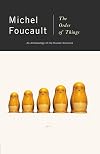
The Order of Things is Foucault at his most Foucauldian, a grand tour through the history of orderings, discourses, scientific methods, and ultimately Man Himself from the 16th century through the 19th century. He's at his best when he's making the incommensurable theological commentaries of the 16th century readable and relateable for modern eyes. His discussion of the rise of Classical era human sciences of difference, biology, economics, and philology, is deeply read and insightful. The show more conclusion is the radical claim that prior to the 19th century, Man did not exist as an element of analysis, and that modern (and post-modern) ways of knowing are in fact highly divergent from their predecessors.
My problem is one of style. Clarity is not Foucault's thing, and I get that, but The Order of Things felt noticeably less clear than Discipline and Punish , The Birth of the Clinic, Madness and Civilization, or The History of Sexuality Vol. 1. The theory is thick here, the strands of argument tangled, and often for no apparent reason. My most common experience reading this was seeing a long series of negative statements ("The science of economics is not this, or this, or this...") that would take pages to resolve into an affirmative of what the thing is. The sentences are amazing: I took to reading them out loud like a Shakespearean soliloquy, and just admiring the rollicking flow of clauses and phrases. But at the end of one of these titanic discursive flows I'd be left with very little, just a philosophical laugh of "Lol wut?"
Some ideas demand density in argumentation, and a lot of intelligent commentators have read very smart things into The Order of Things. But if every reader finds a different meaning, is there a text? Is there actually an order to things? show less
My problem is one of style. Clarity is not Foucault's thing, and I get that, but The Order of Things felt noticeably less clear than Discipline and Punish , The Birth of the Clinic, Madness and Civilization, or The History of Sexuality Vol. 1. The theory is thick here, the strands of argument tangled, and often for no apparent reason. My most common experience reading this was seeing a long series of negative statements ("The science of economics is not this, or this, or this...") that would take pages to resolve into an affirmative of what the thing is. The sentences are amazing: I took to reading them out loud like a Shakespearean soliloquy, and just admiring the rollicking flow of clauses and phrases. But at the end of one of these titanic discursive flows I'd be left with very little, just a philosophical laugh of "Lol wut?"
Some ideas demand density in argumentation, and a lot of intelligent commentators have read very smart things into The Order of Things. But if every reader finds a different meaning, is there a text? Is there actually an order to things? show less
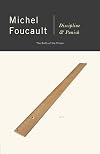
The more surveillance, the more minutiae we deal with in the digital age, the more this book is relevant. We are disciplined by everything around us more than ever. We don't need to be imprisoned to know this - we can live in prisons while shopping online. As google and eBay and any other algorithm driven platform sends us suggestions we might like, we become caught in our own reflection and permanently stay there, as though incarcerated in a version of ourselves we cannot even argue against show more or change.
We are trapped too in the endless improvements of the self, the endless idea that we must achieve the next level, not much different to the reaching of levels of behaviour to satisfy a disciplinary regime in a prison.
We adapt constantly to new regimes to avoid punishment, or loss of privilege - passwords, software changes, updated protocols and procedures, new forms to fill in, new ways to pay for things.
We fear being cast out if we don't. Of missing out or being labelled some delinquent class of citizen by not conforming. show less
We are trapped too in the endless improvements of the self, the endless idea that we must achieve the next level, not much different to the reaching of levels of behaviour to satisfy a disciplinary regime in a prison.
We adapt constantly to new regimes to avoid punishment, or loss of privilege - passwords, software changes, updated protocols and procedures, new forms to fill in, new ways to pay for things.
We fear being cast out if we don't. Of missing out or being labelled some delinquent class of citizen by not conforming. show less
Lists
Awards


You May Also Like


Associated Authors
Statistics
- Works
- 354
- Also by
- 19
- Members
- 49,917
- Popularity
- #303
- Rating
- 4.0
- Reviews
- 268
- ISBNs
- 1,398
- Languages
- 37
- Favorited
- 123


