
Georges Bataille (1897–1962)
Author of Story of the Eye
About the Author
Georges Bataille was a French poet, novelist, and philosopher. He was born in Billon, Puy-de-Dome, in central France on September 10, 1897. His father was already blind and paralyzed from syphilis when Bataille was born. In 1915, Bataille's father died, his mind destroyed by his illness. The death show more marked his son for life. While working at the Bibliotheque National in Paris during the 1920s, Bataille underwent psychoanalysis and became involved with some of the intellectuals in the Surrealist movement, from whom he learned the concept of incongruous imagery in art. In 1946 he founded the journal Critique, which published the early work of some of his contemporaries in French intellectual life, including Roland Barthes and Jacques Derrida. Bataille believed that in the darkest moments of human existence-in orgiastic sex and terrible death-lay ultimate reality. By observing them and even by experiencing them, actually in sex and vicariously in death, he felt that one could come as close as possible to fully experiencing life in all its dimensions. Bataille's works include The Naked Beast at Heaven's Gate (1956), A Tale of Satisfied Desire (1953), Death and Sensuality: A Study of Eroticism and the Taboo (1962), and The Birth of Art: Prehistoric Painting (1955). Bataille died in Paris on July 8, 1962. (Bowker Author Biography) show less
Series
Works by Georges Bataille
The Accursed Share, Vols. 2 and 3: The History of Eroticism and Sovereignty (1992) 281 copies, 1 review
The Sacred Conspiracy: The Internal Papers of the Secret Society of Acéphale and Lectures to the College of Sociology (1997) 116 copies, 2 reviews
La felicidad, el erotismo y la literatura/Happiness, Eroticism and Literature: Ensayos 1944 - 1961 (Filosofia E Historia) (Spanish Edition) (2001) 19 copies
La Mutilation sacrificielle et l'oreille coupée de Vincent Van Gogh : Suivi de Une automutilation révélatrice d'un état schizophrénique (2006) 10 copies
Lotte or the transformation of the object — Contributor — 4 copies
Coryphea 3 copies
Lo imposible 3 copies
Der große Zeh 3 copies
The Naked Beast at Heaven's Gate 3 copies
A en-tête de Critique : correspondance entre Georges Bataille et Éric Weil, 1946-1951 (2014) 3 copies, 1 review
Scritti sul fascismo 1933-34: Contro Heidegger, La struttura psicologica del fascismo (2019) 2 copies
BALANCE DE HEMINGWAY 2 copies
Meditaciones Nietzscheanas 2 copies
Poesie erotiche 2 copies
: 1 copy
Lascaux ou la Naissance de l’Art – La Peinture Préhistorique - Georges Bataille - Éditions Skira 1 copy
Échanges et correspondances 1 copy
Ο Μικρός 1 copy
Μαντάμ Ἐντουάρντα 1 copy
Ὁ νεκρός 1 copy
Τά δάκρυα τοῦ ἔρωτα 1 copy
Método de Meditação/ A Prática da Alegria Perante a Morte/ Instruções Para o Encontro na Floresta 1 copy
الأيروسية 1 copy
Saga augans 1 copy
Storia dell'occhio 1 copy
Sade et la Morale 1 copy
HISTORIA E SYRIT 1 copy
O Aleluia 1 copy
Mi madre 1 copy
Lord Auch. Histoire de l'oeil, nouvelle version. Avec six gravures originales à l'eau forte et au burin (1940) 1 copy
Van Gogh As Prometheus 1 copy
Nietzsche and the Fascists 1 copy
Den fördömda delen 1 copy
O Padre C. 1 copy
Letter to Rene Char, (1990) 1 copy
Simona (Histoire de l'oeil) 1 copy
Encyclopædia Acephalica 1 copy
El culpable 1 copy
Hegel smrt in žrtvovanje 1 copy
O morto 1 copy
Documentos 1 copy
Critica dell'occhio 1 copy
Documentos. Ensayos 1 copy
Théorie de la religion 1 copy
Critique n°44, janvier 1951 1 copy
バタイユ・ブランショ研究 — Author — 1 copy
Associated Works
季刊パイデイア 6号 1969年夏 特集=シュルレアリスムと革命 — Contributor — 2 copies
ダダ・シュルレアリスム新訳詩集 — Contributor — 1 copy
新版 バタイユの世界 — Author — 1 copy
Soso No.11: April 1970 — Contributor — 1 copy
実存と虚無 — Contributor — 1 copy
イリュミナシオン 創刊号 — Contributor — 1 copy
Tagged
Common Knowledge
- Canonical name
- Bataille, Georges
- Legal name
- Bataille, Georges Albert Maurice Victor
- Other names
- Angélique, Pierre
"Lord Auch" - Birthdate
- 1897-09-10
- Date of death
- 1962-07-08
- Gender
- male
- Education
- École Nationale des Chartes (Lic. 1922)
School of Advanced Spanish Studies, Madrid, Spain - Occupations
- philosopher
public intellectual
archivist
librarian
numismatist - Organizations
- College de Sociologie (1937-1939)
Acéphale
Bibliotheque National - Relationships
- Bataille, Laurence (daughter)
Einstein, Carl (co-editor)
Bataille, Sylvia (ex-spouse)
Bataille, Diane (2nd spouse) - Cause of death
- cerebral arteriosclerosis
- Nationality
- France
- Birthplace
- Billom, Puy-de-Dôme, Auvergne-Rhône-Alpes, France
- Places of residence
- Billom, France
Reims, France
Paris, France
Madrid, Spain - Place of death
- Paris, France
- Burial location
- Cimetière communal, Vézelay, Yonne, Bourgogne-Franche-Comté, France
- Map Location
- France
Members
Reviews
Sobre Nietzsche: vontade de chance: Seguido de Memorandum; A risada de Nietzsche; Discussão sobre o pecado; Zaratustra e o encantamento do jogo by Georges Bataille
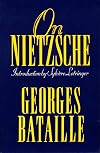
Bataille usa Nietzsche para continuar a delirar na sua busca do ser. Mas é uma busca tingida pela individualidade, do indivíduo contra o espírito gregário. Daquele que rejeita o ocultamento de ser, quando este dá origem a algo, a uma forma de encarar as coisas, a uma criação que se estabiliza em redes de significados e ganhos. Então o ser é uma espécie de nada, sem vantagem, sem recompensa. Bataille vê isso em Nietzsche, na afirmação da chance surgida da junção do eterno show more retorno e do super-humano. Não torna o super-humano um humano melhor porvir, mas o porvir eterno do humano, que afirma e se perde na chance.
Ademais, forma extremamente excêntrica. Mistura de análise, diálogo, com um memorando de citações de Nietzsche, artigos de 2 páginas e um debate. show less
Ademais, forma extremamente excêntrica. Mistura de análise, diálogo, com um memorando de citações de Nietzsche, artigos de 2 páginas e um debate. show less
This book is a testimony to the vast influence that Bataille had within French thought. There are many things about this particular volume that one could take fault with, but from my perspective this book has three levels of relevance:
First of all, it shows to what extent Bataille was able to captivate. You find within these pages significant men of letters of widely varying aesthetics from a late surrealist Bréton, an early existential Sartre, to even early Oulipo with Queneau. A simple show more charlatan does not draw the attention of such luminaries. Much like Artaud, Bataille is the unfinished man of French letters. Unlike Artaud, he does not receive much attention (though Artaud’s output and later documented breakdown are to a large extent the cause of this). This book also sheds light upon all of the movements at the time by having testimony that much of French avant-garde (of all flavors) was driven by the resurgence of: Hegel, Sade, and Heidegger.
The second level of this book would of course be the unfinished system that directed Bataille’s writings. This would be its greatest shortcoming as well as its most interesting aspect. Bataille, as a learned man who denounces much philosophy, toes the line of many areas of complex metaphysics, morality, and psychology. Within the first two pages his thought struck me hard of Heidegger and within the next three explicitly denounced him. He adheres, as Sartre points out, to a negative Hegelianism (which Bataille has no problem advocating though not necessarily with the qualitative adjective). This becomes a hard line to follow though given his enthusiasm for Nietzschean materialism. It is a delightfully shocking exploration of his to watch unfold, and many of the incongruities of his writing come from this peculiar juxtaposition of philosophy. One would almost expect, given his ultimate aim towards incorporating a materialist ecstasy derived from a double bind epistemology that he would have gone straight for Schopenhauer. Surprisingly though no reference is ever made. Given Bataille’s staunch rejection of many of both Hegel and Nietzsche’s thought, it is no wonder that he was not able to find a completion to his system. This is not a debunking though of his project. He does find within the boundaries of what he was working towards an as of yet unspoken void between thought and action, all while remaining in the domain of the material; a movement devoid of metaphysical/mystical transcendence, constrained by material limits – bound between finite experiences that break the epistemological dialectical gridlock that is the content of his work: accessing the impossible within the possible, acting (which for Bataille is always a process of thought) in the realm of the unknown through breaching (not surpassing) the limits of the knowable.
Last but not least, this unfinished system works as a codex for a very enigmatic writer. Be it his fictions, poetry, criticisms, or essays, it is easy to find oneself in a funhouse of mirrors reading any of Bataille’s books. This here is the answer, or at least a dim flashlight, to bring with you when exploring each of Bataille’s works. That in and of itself makes this an invaluable piece to any of his fans. Even when he writes of things seemingly of unrelated significance, this book allows one to approach it from an angle that illuminates the topic and allows for a new way to approach the work that changes everything about it. show less
First of all, it shows to what extent Bataille was able to captivate. You find within these pages significant men of letters of widely varying aesthetics from a late surrealist Bréton, an early existential Sartre, to even early Oulipo with Queneau. A simple show more charlatan does not draw the attention of such luminaries. Much like Artaud, Bataille is the unfinished man of French letters. Unlike Artaud, he does not receive much attention (though Artaud’s output and later documented breakdown are to a large extent the cause of this). This book also sheds light upon all of the movements at the time by having testimony that much of French avant-garde (of all flavors) was driven by the resurgence of: Hegel, Sade, and Heidegger.
The second level of this book would of course be the unfinished system that directed Bataille’s writings. This would be its greatest shortcoming as well as its most interesting aspect. Bataille, as a learned man who denounces much philosophy, toes the line of many areas of complex metaphysics, morality, and psychology. Within the first two pages his thought struck me hard of Heidegger and within the next three explicitly denounced him. He adheres, as Sartre points out, to a negative Hegelianism (which Bataille has no problem advocating though not necessarily with the qualitative adjective). This becomes a hard line to follow though given his enthusiasm for Nietzschean materialism. It is a delightfully shocking exploration of his to watch unfold, and many of the incongruities of his writing come from this peculiar juxtaposition of philosophy. One would almost expect, given his ultimate aim towards incorporating a materialist ecstasy derived from a double bind epistemology that he would have gone straight for Schopenhauer. Surprisingly though no reference is ever made. Given Bataille’s staunch rejection of many of both Hegel and Nietzsche’s thought, it is no wonder that he was not able to find a completion to his system. This is not a debunking though of his project. He does find within the boundaries of what he was working towards an as of yet unspoken void between thought and action, all while remaining in the domain of the material; a movement devoid of metaphysical/mystical transcendence, constrained by material limits – bound between finite experiences that break the epistemological dialectical gridlock that is the content of his work: accessing the impossible within the possible, acting (which for Bataille is always a process of thought) in the realm of the unknown through breaching (not surpassing) the limits of the knowable.
Last but not least, this unfinished system works as a codex for a very enigmatic writer. Be it his fictions, poetry, criticisms, or essays, it is easy to find oneself in a funhouse of mirrors reading any of Bataille’s books. This here is the answer, or at least a dim flashlight, to bring with you when exploring each of Bataille’s works. That in and of itself makes this an invaluable piece to any of his fans. Even when he writes of things seemingly of unrelated significance, this book allows one to approach it from an angle that illuminates the topic and allows for a new way to approach the work that changes everything about it. show less
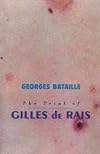
What grips us in Gilles de Rais' death is the compassion. It seems that this criminal moved his audience to compassion; in part by reason of his atrocity, in part by virtue of his nobility and the fact that he was crying.
This observation occurs near the end of Bataille's summation of crimes and trial of the infamous de Rais. Following this is 150 pages of transcripts from the ecclesiastical and secular trials. What Bataille achieves in his Foucauldean burrowing is a 15C world where the devil show more or at least a diabolical affinity had to be culpable. His own analysis is rather Marxist, looking at the milieu of the gentry with its privilege and the subsequent marginalization of the peasantry. All of this transpired during a time of day incessant warfare between England and France. All of this contributes to a berserker medium of sexual experimentation.
Beyond that, it was largely inexplicable that this man who once fought alongside Joan of Arc would later seek to and succeed in sodomizing and murdering 140 children.
I should note that my subconscious appeared to be maladjusted by this gruesome experience. Be forewarned. show less
This observation occurs near the end of Bataille's summation of crimes and trial of the infamous de Rais. Following this is 150 pages of transcripts from the ecclesiastical and secular trials. What Bataille achieves in his Foucauldean burrowing is a 15C world where the devil show more or at least a diabolical affinity had to be culpable. His own analysis is rather Marxist, looking at the milieu of the gentry with its privilege and the subsequent marginalization of the peasantry. All of this transpired during a time of day incessant warfare between England and France. All of this contributes to a berserker medium of sexual experimentation.
Beyond that, it was largely inexplicable that this man who once fought alongside Joan of Arc would later seek to and succeed in sodomizing and murdering 140 children.
I should note that my subconscious appeared to be maladjusted by this gruesome experience. Be forewarned. show less
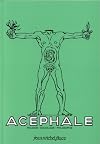
i think this journal is probably the best commentary and exposition of nietzsche ive ever read, and this makes me think bataille might b his most worthy successor--perhaps moreso than foucault or deleuze
but foucault and deleuze at least moved beyond some of nietzsche's aporia vis-a-vis sociality, while it seems like bataille & co recognize this aporia and the desperate need to resolve it, but r ultimately unable to do so--instead appealing to anarchists to plz help them. their steadfast show more refusal of marx might have even deepened this social helplessness
this self-defeating struggle to reconcile self and other (while somehow maintaining the poisonous duality) finds its most horrifying manifestation in the total acceptance and embrace of samsara, of eternal recurrence, of the successive murder of slaves-becoming-gods; to hell w the poor and oppressed of the world, who may never taste godhood, so long as the members of acephale get a taste of it
im always glad to see some recognition of the need for an anti-civilizational mysticism to buttress anarchist politics, but without the anarchist politics it becomes dangerously psychopathic, psychotic, and suicidal show less
but foucault and deleuze at least moved beyond some of nietzsche's aporia vis-a-vis sociality, while it seems like bataille & co recognize this aporia and the desperate need to resolve it, but r ultimately unable to do so--instead appealing to anarchists to plz help them. their steadfast show more refusal of marx might have even deepened this social helplessness
this self-defeating struggle to reconcile self and other (while somehow maintaining the poisonous duality) finds its most horrifying manifestation in the total acceptance and embrace of samsara, of eternal recurrence, of the successive murder of slaves-becoming-gods; to hell w the poor and oppressed of the world, who may never taste godhood, so long as the members of acephale get a taste of it
im always glad to see some recognition of the need for an anti-civilizational mysticism to buttress anarchist politics, but without the anarchist politics it becomes dangerously psychopathic, psychotic, and suicidal show less
Lists
Books (1)
True Crime (1)
Geotrauma (1)
Reading list (1)
Cooper (1)
My TBR (3)
Shaking a Leg (1)
Kink Classics (1)
Guilty Pleasures (1)
el (2)
Awards


You May Also Like


Associated Authors
Statistics
- Works
- 243
- Also by
- 16
- Members
- 12,440
- Popularity
- #1,884
- Rating
- 3.6
- Reviews
- 151
- ISBNs
- 574
- Languages
- 23
- Favorited
- 65


