
Joris-Karl Huysmans (1848–1907)
Author of Against Nature
About the Author
Image credit: Domaine public (http://fr.wikipedia.org/wiki/Fichier:Huysmans_par_Taponier_1904.jpg)
Series
Works by Joris-Karl Huysmans
The Road from Decadence: From Brothel to Cloister : Selected Letters of J.K. Huysmans (1989) 16 copies
Joris-Karl Huysmans : Oeuvres complètes et annexes - (47 titres, annotés et illustrés) (2016) 6 copies
A ritroso e Zaino in spalla 4 copies
Racconti 3 copies
Elden / Mot strömmen 3 copies
Pages choisies 3 copies
Du dilettantisme, suivi de "Noëls du Louvre, les Frères Le Nain, le Quentin Metsys d'Anvers, Bianchi" (1992) 2 copies
Les églises de Paris : Saint-Julien-le-Pauvre, Saint-Séverin, Notre-Dame de Paris, Saint-Merry, Saint-Germain-l'Auxerrois (2005) 2 copies
Tersine 2 copies
Don Bosco 2 copies
The cathedral / by J. K. Huysman ; translated from the French by Clara Bell, and edited with a prefatory note by C. Kegan Paul (1922) 1 copy
Parigi e altri testi 1 copy
Chartres 1 copy
Orada (La-Bas) 1 copy
Sainte Lydwine of Schiedam 1 copy
Critical Papers 1 copy
L'âme de Lourdes 1 copy
Saint-Séverin 1 copy
Sainte Lydwine de Schiedam 1 copy
Oblat 1 copy
Associated Works
Aesthetes and Decadents of the 1890s: An Anthology of British Poetry and Prose (1981) — Contributor — 192 copies, 2 reviews
The Decadent Reader: Fiction, Fantasy, and Perversion from Fin-de-Siècle France (1998) — Contributor — 146 copies, 2 reviews
The Second Dedalus Book of Decadence (The Black Forrest) (v. 2) (1992) — Contributor — 60 copies, 3 reviews
Opere grafiche 1 copy
Tagged
Common Knowledge
- Canonical name
- Huysmans, Joris-Karl
- Legal name
- Huysmans, Charles-Marie-Georges (born)
- Birthdate
- 1848-02-05
- Date of death
- 1907-05-12
- Gender
- male
- Occupations
- novelist
soldier
art critic - Organizations
- French Ministry of the Interior
- Awards and honors
- Légion d'Honneur (Chevalier, 1892)
Légion d'Honneur (Officier, 1905) - Relationships
- Emile Zola (ami)
- Short biography
- Born Charles-Marie-Georges Huysmans to Godfried Huysmans and Malvina Badin.
- Cause of death
- cancer
- Nationality
- France (birth ∙ death)
- Birthplace
- Paris, Île-de-France, France
- Places of residence
- Paris, Île-de-France, France
11,rue Suger (actuel 9) 6ème arrondissement de Paris (actuel 9) - Place of death
- Paris, Île-de-France, France
- Burial location
- Cimetière du Montparnasse, Paris, Île-de-France, France
- Map Location
- France
Members
Reviews
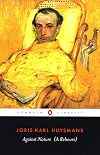
In English the title was translated as either 'Against Nature' or 'Against the Grain', which to me are two very different titles. It occurred to me that this tension within the meaning of the title itself is a good indication of the contents of the novel. We are introduced to a French aristocrat by the name of Des Esseintes who is of feeble stamina and who might be called a dandy in British terms. We follow the young man as he slowly retreats out of everyday life into a decadent seclusion of show more his own design. At times opulent in its descriptions of Des Esseintes' mansion, at times excruciatingly detailed and accurate in Des Esseintes' analysis of his tastes, desires and repulsions, the novel lures the reader into an artificial world of what seems to be luxury. Page after page Des Esseintes delves deeper into his own mind. He collects rare specimens of everything and if there does not exist a rarity he believes he should have, he has it created from his own detailed drawings and directions. As a side note, most of the objects and interiors the young man envisions were based on actual examples of dandyish extravaganza.
The reader is slowly included into the artificial world of Des Esseintes and slowly the alternative reality appears more and more sold. Instead the young man's health deteriorates and his mind attempts to grapple with his own choices. Inevitably he wavers between stepping back into Beau Monde or forever lock himself away into an imaginary world. He goes back and forth and makes several attempts to take either extreme leaps. In one famous scene Des Esseintes is well on his way to visit London when after thinking over the plan in his mind he decides that in his mind he has already read and imagined so much of Britain's capital that he can only be disappointed by traveling there. Instead he returns to his mansion. Ultimately his private physician offers him the choice: go back into the world and regain your physical health, or retreat into your own mind and suffer.
The author, Joris-Karl Huysmans, wrote the novel in a time when literature's standard was realism devoid of symbolism or misplaced fantasy. Huysmans received both high acclaim from writers such as Oscar Wilde, but also derision from esteemed authors like Zola, who was Huysmans' mentor and inspiration. Perhaps this book can be seen as the ultimate anti-novel in the sense that it does not feature any trappings of a book designed to entertain. If you want to convey a point or principle then you either write it with great entertainment value but your meaningful message might not be remembered, or you write the work in a serious tone, in which case it will be remembered but not widely read. Huysmans took the extreme side of those polar opposites and goes beyond somber writing and confronts the reader head on by presenting the world of Des Esseintes from a solipsistic standpoint in which as a reader you have no other safety net than your own experiences and opinions. Instead of taking the Disney approach of embedding a clear takeaway moral message, the novel's aim is to have the reader make decisions on how to travel through life and in that sense it is the paragon of letting the reader take away whatever usefulness can be derived, even if this means rejecting the novel. show less
The reader is slowly included into the artificial world of Des Esseintes and slowly the alternative reality appears more and more sold. Instead the young man's health deteriorates and his mind attempts to grapple with his own choices. Inevitably he wavers between stepping back into Beau Monde or forever lock himself away into an imaginary world. He goes back and forth and makes several attempts to take either extreme leaps. In one famous scene Des Esseintes is well on his way to visit London when after thinking over the plan in his mind he decides that in his mind he has already read and imagined so much of Britain's capital that he can only be disappointed by traveling there. Instead he returns to his mansion. Ultimately his private physician offers him the choice: go back into the world and regain your physical health, or retreat into your own mind and suffer.
The author, Joris-Karl Huysmans, wrote the novel in a time when literature's standard was realism devoid of symbolism or misplaced fantasy. Huysmans received both high acclaim from writers such as Oscar Wilde, but also derision from esteemed authors like Zola, who was Huysmans' mentor and inspiration. Perhaps this book can be seen as the ultimate anti-novel in the sense that it does not feature any trappings of a book designed to entertain. If you want to convey a point or principle then you either write it with great entertainment value but your meaningful message might not be remembered, or you write the work in a serious tone, in which case it will be remembered but not widely read. Huysmans took the extreme side of those polar opposites and goes beyond somber writing and confronts the reader head on by presenting the world of Des Esseintes from a solipsistic standpoint in which as a reader you have no other safety net than your own experiences and opinions. Instead of taking the Disney approach of embedding a clear takeaway moral message, the novel's aim is to have the reader make decisions on how to travel through life and in that sense it is the paragon of letting the reader take away whatever usefulness can be derived, even if this means rejecting the novel. show less
Hmmm, not at all what I expected. This is a writer who has no qualms about bringing you into the intricate particulars of his own (or the narrator's) world; no worries about whether you choose to stay or not. Much of it reads like essay or artistic/literary criticism, except that it is pushed along by the story of this man who desperately wishes (and fails) to retreat from society and everything it represents. Dream-like (or nightmarish) in places; cynically observant in others (even a show more little Celine-like?); it is an unapologetic, gritty meditation on the intersection of nature and spirit; of the urge toward peaceful isolation and the call to be in relationship. And I have a distinct feeling that the author would consider this mini-review a load of crap...ah, well. show less
While I’m told Huysmans’ À rebours (Against Nature) is considered a jewel of Decadent literature, it’s not clear if this novel is a work of Decadent fiction.
If I’m understanding its definition, Decadent literature, in its English and French varieties, portrays the present as decaying and advocates for enjoying the long fall of civilization with sex and drugs and outré experiences.
This novel votes yes on the decaying society part and no on the pursuit of strange aesthetic pleasures. show more Rather, it postulates that decay brings mysticism to the fore, and here that mysticism takes on two strains: Catholicism and Satanism.
"It is just at the moment when positivism is at its zenith that mysticism rises again and the follies of the occult begin."
After À rebours was published, that Huysmans was going to have to eventually chose between “the muzzle of a pistol and the foot of the Cross”. Huysmans would eventually choose the latter, ending up as a Benedictine monk. This considered one of the great novels of “literary Satanism”, but Catholics of a conservative bent (it was one who recommended this book to me) also admire the Durtal trilogy.
Durtal’s progression from Decadent to monk is paralleled by three Huysmann novels featuring the writer Durtal, generally considered to be Huysman’s alter ego. Là-Bas is the first of that trilogy.
Durtal’s newest project is a biography of the infamous Gilles de Rais, French noblemen, defender and champion of Joan of Arc, Marshal of France – and raper, torturer, and killer of hundreds of children. The puzzle Durtal seeks to answer is why Rais, “a brave captain and a good Christian, all of a sudden became a sacrilegious sadist and a coward”. The novel will present the story of Rais throughout and conclude with Durtal’s ideas on the Marshal’s motivations.
Durtal’s friend, Dr. Des Hermies, is a man of amazing learning and equally broad cynicism. He doesn’t have a lot of faith in modern medicine or “alienists”. It’s not his peers he likes to hang out with but “astrologers, cabbalists, demonologists, alchemists, theologians, or inventors”.
Durtal is similar.
“I learned long ago that there are no people interesting to know except saints, scoundrels, and cranks. They are the only persons whose conversation amounts to anything. Persons of good sense are necessarily dull, because they revolve over and over again the tedious topics of everyday life. They are the crowd, more or less intelligent, but they are the crowd, and they give me a pain.
”
As for their conversations, well, both men believe “Conversations which do not treat of religion or art are so base and vain”.
And there is a lot of talk about art and religion in this book including the art of bellringing and the symbols of church bells (material supplied by Hermies’ friend Carhaix, a devout Catholic and poor bellringer who also just happens to be an expert in heraldry), demon possessions, “alienist” explanations of said possessions, medicine, Paracelsus, a Third Kingdom of God proposed by a Catholic mystic, miraculous healing, and poisons. I have no idea how many things presented are real and how many are Huysmans’ inventions.
And there is a show less
If I’m understanding its definition, Decadent literature, in its English and French varieties, portrays the present as decaying and advocates for enjoying the long fall of civilization with sex and drugs and outré experiences.
This novel votes yes on the decaying society part and no on the pursuit of strange aesthetic pleasures. show more Rather, it postulates that decay brings mysticism to the fore, and here that mysticism takes on two strains: Catholicism and Satanism.
"It is just at the moment when positivism is at its zenith that mysticism rises again and the follies of the occult begin."
After À rebours was published, that Huysmans was going to have to eventually chose between “the muzzle of a pistol and the foot of the Cross”. Huysmans would eventually choose the latter, ending up as a Benedictine monk. This considered one of the great novels of “literary Satanism”, but Catholics of a conservative bent (it was one who recommended this book to me) also admire the Durtal trilogy.
Durtal’s progression from Decadent to monk is paralleled by three Huysmann novels featuring the writer Durtal, generally considered to be Huysman’s alter ego. Là-Bas is the first of that trilogy.
Durtal’s newest project is a biography of the infamous Gilles de Rais, French noblemen, defender and champion of Joan of Arc, Marshal of France – and raper, torturer, and killer of hundreds of children. The puzzle Durtal seeks to answer is why Rais, “a brave captain and a good Christian, all of a sudden became a sacrilegious sadist and a coward”. The novel will present the story of Rais throughout and conclude with Durtal’s ideas on the Marshal’s motivations.
Durtal’s friend, Dr. Des Hermies, is a man of amazing learning and equally broad cynicism. He doesn’t have a lot of faith in modern medicine or “alienists”. It’s not his peers he likes to hang out with but “astrologers, cabbalists, demonologists, alchemists, theologians, or inventors”.
Durtal is similar.
“I learned long ago that there are no people interesting to know except saints, scoundrels, and cranks. They are the only persons whose conversation amounts to anything. Persons of good sense are necessarily dull, because they revolve over and over again the tedious topics of everyday life. They are the crowd, more or less intelligent, but they are the crowd, and they give me a pain.
”
As for their conversations, well, both men believe “Conversations which do not treat of religion or art are so base and vain”.
And there is a lot of talk about art and religion in this book including the art of bellringing and the symbols of church bells (material supplied by Hermies’ friend Carhaix, a devout Catholic and poor bellringer who also just happens to be an expert in heraldry), demon possessions, “alienist” explanations of said possessions, medicine, Paracelsus, a Third Kingdom of God proposed by a Catholic mystic, miraculous healing, and poisons. I have no idea how many things presented are real and how many are Huysmans’ inventions.
And there is a show less
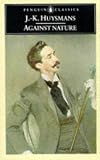
In chapter 10, Des Esseintes rubs a styrax pellet between his fingers, with the narrator describing the released odor as "at once repugnant and delightful." That pretty much describes my reaction to this book.
There were some lines that had me laughing out loud and some chapters, like chapter 10, that just delighted me. (Chapter 10 focuses on fragrance; each chapter is devoted to a different intellectual or sensual pursuit.) Other times, the character of Des Esseintes filled me with a sort of show more bored loathing that's hard to describe, but seems perfectly appropriate to the situations the author depicts.
After spending 15 years on my TBR list (thanks to Paglia's Sexual Personae) I am glad I finally got around to reading this. And who knows, maybe I'll read it again in another 15 years.
Favorite quote: "It all comes down to syphilis in the end." show less
There were some lines that had me laughing out loud and some chapters, like chapter 10, that just delighted me. (Chapter 10 focuses on fragrance; each chapter is devoted to a different intellectual or sensual pursuit.) Other times, the character of Des Esseintes filled me with a sort of show more bored loathing that's hard to describe, but seems perfectly appropriate to the situations the author depicts.
After spending 15 years on my TBR list (thanks to Paglia's Sexual Personae) I am glad I finally got around to reading this. And who knows, maybe I'll read it again in another 15 years.
Favorite quote: "It all comes down to syphilis in the end." show less
Lists
wishlist (1)
Victorian Period (1)
French Books (1)
19th Century (1)
Romans (1)
Out of Copyright (1)
Catalog (1)
Awards


You May Also Like


Associated Authors
Statistics
- Works
- 120
- Also by
- 18
- Members
- 7,498
- Popularity
- #3,264
- Rating
- 3.8
- Reviews
- 130
- ISBNs
- 550
- Languages
- 22
- Favorited
- 53
