
Jean Lorrain (1855–1906)
Author of Monsieur de Phocas
About the Author
Image credit: Jean Lorrain [credit: Wikimedia Commons]
Works by Jean Lorrain
Denkbeeldige genietingen 7 copies
Correspondance Jean Lorrain - Joris-Karl Huysmans Suivie de poèmes, dédicaces et articles (2004) 3 copies
Le Crime des Riches 3 copies
The Holes in the Mask 1 copy
Miscellanées 1 copy
Heures de Corse 1 copy
Ellen 1 copy
Pelléastres: le Poison de la Littérature; Crimes de Montmartre et ailleurs; Une Aventure (1910) 1 copy
Les Lepillier 1 copy
Associated Works
The Decadent Reader: Fiction, Fantasy, and Perversion from Fin-de-Siècle France (1998) — Contributor — 146 copies, 2 reviews
Fairy Tales for the Disillusioned: Enchanted Stories from the French Decadent Tradition (2016) — Contributor — 82 copies, 1 review
The Second Dedalus Book of Decadence (The Black Forrest) (v. 2) (1992) — Contributor — 60 copies, 3 reviews
Summoned to the Séance: Spirit Tales from Beyond the Veil: 56 (British Library Tales of the Weird) (2024) — Contributor — 27 copies
Weird Fiction in France: A Showcase Anthology of Its Origins and Development (2020) — Contributor — 3 copies
Tagged
Common Knowledge
- Canonical name
- Lorrain, Jean
- Birthdate
- 1855-08-29
- Date of death
- 1906-06-30
- Gender
- male
- Occupations
- poet
novelist - Nationality
- France
- Birthplace
- Fécamp, France
- Places of residence
- Fécamp, France
- Place of death
- Fécamp, France
- Burial location
- Cimetière de Fécamp, Fécamp, France
- Associated Place (for map)
- Fécamp, France
Members
Reviews
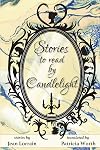
Jean Lorrain writes what might be called fairy tales, with the conceit that the he can only half remember these stories, which themselves contain half-memories of earlier times. These are stories full of pathos and regret. They're very nineteenth century, full of a romantic longing for an earlier, pre-industrial world. But that world is gone forever, and that means that the stories are mostly sad stories. Possibly the closest thing I have read to them is Wilde's Happy Prince stories, except show more Lorrain is less sentimental and less determined to find an uplifting ending in loss.
The stories are quite varied, including straight fantasy stories about knights and quests, realist stories and a few stories somewhere in the middle, where it isn't certain where reality ends. This dreamlike quality is suggested by the title. I found the best time to read them was as I was drifting off to sleep -- they don't read quite so well on a crowded bus!
Patricia Worth's translation is excellent. It is all in very readable contemporary English and yet it still feels very French, which is an impressive feat. Thanks to Patricia for my review copy -- I enjoyed it immensely. show less
The stories are quite varied, including straight fantasy stories about knights and quests, realist stories and a few stories somewhere in the middle, where it isn't certain where reality ends. This dreamlike quality is suggested by the title. I found the best time to read them was as I was drifting off to sleep -- they don't read quite so well on a crowded bus!
Patricia Worth's translation is excellent. It is all in very readable contemporary English and yet it still feels very French, which is an impressive feat. Thanks to Patricia for my review copy -- I enjoyed it immensely. show less
Stories to Read by Candlelight recaptures memories of a provincial childhood full of 'melancholy and dreams.' Apart from the tales, the book is also strewn with the French author's lyrical remembrances of those early years and the places he inhabited.
'...When I think of that attic, I immediately see a blue-green vision with seaweed moving through it, and shimmering reflections, and large collapsed things: they are yardarms, masts and ships like cathedrals, spectres of flotsam from bygone show more days, ghosts from very old shipwrecks...'
Like the vision of the attic, this slim volume swims with stories that rise from the forgotten depths of the past. It contains a variety of tales, some terrifying, some creepy, some hopeful, others not. An old-fashioned word in the text - crepuscular - refers to the twilight, and many of the tales take place in this zone, uncovering shadows and indistinct forms which confront the reader with harsh truths and prejudices. Justice isn't always served, children can be cruel, and society can carelessly judge and torment those who don't fit in.
Queen Maritorne was one of my favourite tales, as was the sorrowful song of Marjolaine. I also took a fancy to those passages where the author spoke of his writing process, how 'reality prepares the canvas and imagination embroiders it.' Ably translated by Patricia Worth and gorgeously illustrated by Erin-Claire Barrow, Stories to Read by Candlelight truly does evoke candlelit rooms of old. More for adults, but readers twelve and over with a penchant for the macabre and unexpected might also enjoy this offering. show less
'...When I think of that attic, I immediately see a blue-green vision with seaweed moving through it, and shimmering reflections, and large collapsed things: they are yardarms, masts and ships like cathedrals, spectres of flotsam from bygone show more days, ghosts from very old shipwrecks...'
Like the vision of the attic, this slim volume swims with stories that rise from the forgotten depths of the past. It contains a variety of tales, some terrifying, some creepy, some hopeful, others not. An old-fashioned word in the text - crepuscular - refers to the twilight, and many of the tales take place in this zone, uncovering shadows and indistinct forms which confront the reader with harsh truths and prejudices. Justice isn't always served, children can be cruel, and society can carelessly judge and torment those who don't fit in.
Queen Maritorne was one of my favourite tales, as was the sorrowful song of Marjolaine. I also took a fancy to those passages where the author spoke of his writing process, how 'reality prepares the canvas and imagination embroiders it.' Ably translated by Patricia Worth and gorgeously illustrated by Erin-Claire Barrow, Stories to Read by Candlelight truly does evoke candlelit rooms of old. More for adults, but readers twelve and over with a penchant for the macabre and unexpected might also enjoy this offering. show less

“The madness of the eyes is the lure of the abyss. Sirens lurk in the dark depths of the pupils as they lurk at the bottom of the sea, that I know for sure - but I have never encountered them, and I am searching still for the profound and plaintive gazes in whose depths I might be able, like Hamlet redeemed, to drown the Ophelia of my desire.”
― Jean Lorrain, Monsieur De Phocas
Is not Jean Lorrain’s aristocratic aesthete, Monsieur de Phocas, the decadent precursor of our ravishing show more glamor stars, dressed to the nines, diamonds sparkling, forever striking a pose in the celebrity spotlight? Perhaps so, but then again, as compared with Monsieur de Phocas, which diamond-studded celebrity could express themselves with such colorful, lush, eloquent language when describing their glamorous, oh-so-special lives?
By way of example, here is a diary entry where Phocas pens his reflections on a young exotic beauty: “And her eyes, what are her eyes like? Very beautiful – eyes which have looked long upon the sea. Eyes which have looked long upon the sea! Oh, the dear and distant eyes of sailors; the salt-water eyes of Bretons; the still-water eyes of mariners; the well-water eyes of Celts; the dreaming and infinitely transparent eyes of those who dwell beside rivers and lakes; the eyes which one sometimes rediscovers in the mountains, in the Tyrol and in the Pyrenes . . . eyes in which there are skies, vast expanses, dawns and twilights contemplated at length upon the open seas, the mountains or the plains . . . eyes into which have passed, and in which remain, so many horizons! Have I not encountered such eyes already, in my dreams?”
And Jean Lorrain’s novel can be seen as his own creative twist on Joris-Karl Huysmans’ À Rebours' (Against Nature). For example, similar to Huysmans’ main character, Des Esseintes, Monsieur de Phocas is nauseated by the modern, bourgeois, everyday cloth of humanity. Here are Phocas’ haughty, disdainful remarks whilst attending the theater: “The ugliness of that room, the ugliness of the whole audience! The costumes! The disgrace of that sheet-metal pomp which constitutes the ideal outfit of modern man: all those stove-pipes which enclose the legs, arms and torso of the clubman, who is strangled meanwhile by a collar of white porcelain. And the sadness: the greyness of all those faces, drained by the poor hygiene of city life and the abuse of alcohol; all the ravages of late nights and the anxieties of the rat race imprinted in nervous tics on all those fat and flabby faces . . . their pallor the colour of lard!”
For lovers of that cult favorite, that jewel of decadent literature, À Rebours, Jean Lorrain's novel is a treasure. I enjoyed reading every single luscious page since, unlike Huysmans’ classic, Monsier de Phocas is written in intimate first-person and the aesthetic abode of Phocas isn’t a personalized and aestheticized retreat house but the entire city of Paris.
And, of course, Phocas is the complete Decadent, suffering at various point from ennui (boredom), spleen (gloomy ire), impuissance (lack of energy) as well as intense highs and devastating lows fueled by opium and hashish, the exotic and the erotic, nightmares, masquerades, monsters and his association with a famous English painter of most peculiar temperament and murky disposition by the name of Claudius Ethal. We read: “That Claudius! When I am with that Englishman, I have the sensation of plunging into dirt and darkness: the tepid, flowing and suffocating more of my opium nightmare. When I listen to him the air becomes thick and his atrocious confidences stir up my basest instincts and dirtiest desires.”
Lastly, as a special bonus, not only does this book published by Dedalus included a 15-page introduction on the life and times of Jean Lorrain but there is also a 8-page essay on the novel itself, both authored by Francis Amery aka Brian Stapleford.
But, alas, I couldn’t conclude this review without one more quote from a novel bathed in the golden hues of Gustave Moreau, a novel written as if every sentence is meant to breath the poetry of Charles Baudelaire: “Black irises! It had to be black irises, and all that they implied, which greeted me on my return. Some unknown hand had caused these monstrous blooms to be distributed throughout the ground floor of my apartment in the Rue de Varenne. From the antechamber of the morning-room to the parlor every single room was beset by a disquieting flowering of darkness: a mute outburst of huge upstanding petals of greyish crêpe, like a host of bats set within the cups of flowers.” show less

UPDATE: This book has been recently rereleased by Snuggly Books: http://www.snugglybooks.co.uk/catalogue/
Nightmares of an Ether-Drinker is a collection of twenty-seven very readable, highly provocative and enjoyable short-stories by Jean Lorrain, member of the French Decadent movement of the late nineteenth century. And Jean Lorrain was a decadent with attitude: as a leading journalist of the day, many of his literary reviews were brutal. How brutal? Marcel Proust challenged him to a duel. show more Guy de Maupassant likewise requested pistols at ten paces. You can read all about Lorrain’s fascinating life and the stages of his literary output in translator Brian Stableford’s excellent thirty-page introduction.
And this introduction also includes how Lorrain’s ether drinking was part of the French literary scene’s experimentation with substances like opium and hashish, conducted by, most notably, Charles Baudelaire and Théophile Gautier. Sidebar: Brian Stableford notes how addiction to ether killed Jean Lorrain, since Lorrain found out too late that drinking ether is like imbibing rat poison. So, please don’t try this at home, gang.
Ether doesn’t play a part in all these stories but nightmares of one stripe or another most certainly do. For me, I couldn’t put the book down. I started reading in the evening and couldn’t stop; rather than sleeping, I spent the entire night riveted to every page, mesmerized by Lorrain’s breathtaking storytelling. Over the course of the next week I reread, slowly and carefully. This being said, I’d love to share my take on all these stories but since I am writing a book review and not a book, I’ll exercise restrain and comment on three of my very favorites:
The Possessed
The narrator’s friend Serge insists he’s perfectly healthy since he hasn’t taken ether in a year: he eats like a horse, sleeps like a log and can run up hills like a teenager. However, he must leave Paris before the cold weather sets in and the city becomes fantastically haunted and he starts hallucinating. Serge goes on, “You see, the strangeness of my case is that now I no longer fear the invisible, I’m terrified by reality.”
Well my goodness, a man terrified by reality. How did this happen? Serge explains how his mind-creations, those invisible ghosts and ghouls that haunted him during his ether-drinking days have disappeared but have been replaced by much more sinister phantoms: everyday people! We are given lurid detail of what happens nowadays when Serge encounters people in the street and when boarding the tram. For example: “ I was possessed . . . by the conviction that all the people facing and sitting to ether side of me were beings of some alien race, half-beast and half-man: the disgusting products of I don’t know what monstrous copulations, anthropoid creatures far closer to the animal than to the human, with every foul instinct and all the viciousness of wolves, snakes, and rats incarnate in their filthy flesh.”
Such visions of reality reveal the inglorious underbelly of hallucination-inducing drugs. And such horrific visions also speak to the decadent world-view. Recall how des Esseintes, the effete, hyper-sensitive aristocrat and main character in J-K Huysmans’s novel Against Nature (À rebours), cult favorite of the decadents, becomes nauseated when spotting a few potbellied, mutton-chopped bourgeois at a train station. This negative experience of everyday people is intensified one hundred-fold in Lorrain’s tale. And If this short-story is in any way autobiographical, it’s no wonder the author’s decadent lifestyle mirrored his decadent writing.
The Locked Room
Contrary to his usual decision to remain in Paris and partake of the opera and theater, the narrator accepts his friend’s offer to participate in a hunt out in the country. Since there are no rooms available in the chateau, he is given room in the guest house. Bad luck! Turns out, the host’s long deceased mother was adjudged mad and locked away in that very room.
The first night the narrator has an experience he will never forget. He is suddenly awakened from his sleep; he sits bolt upright in a sweat as he hears the playing of a harpsichord in the adjoining room. Then, even more mysterious and creepy, enveloped in the darkness of the night, he feels the pressure of breath on his face, then a thin, faint imploring voice: “Take me away. Take me away” followed by the noise of fleeing footsteps, a door closing and a key turning a lock. Horrified, he attempts to flee but escape is impossible, for the doors are locked. He pulls a chair over and sits up reading and keeping vigilant watch all night. The next morning he wakes up in bed. Were all the events of the previous night a nightmare? Or, did he really receive a visit from the mother’s ghost? The narrator receives a sign that keeps him wondering.
With this short-story we hear echoes from another J-K Huysmans novel, Becalmed (En Rade), where a similar Parisian ventures to a similar French chateau with a similar guest house. The fin de siècle decadents were miles away from romantic notions of nature and country; rather, for them, rustic, rural life was primitive, uncouth, ominous and noxious. Here is the way our Parisian narrator in The Locked Room puts it: “The guest-house of the Marquis de Hauthere stood beside that stagnant pool, in the midst of wild grasses, rotting in the rain. Its atmosphere was strange, unsettling and mysterious. The thick silence was undisturbed save for the weathervanes on the roof creaking in the October wind; all around was the conspiratorial silence of the voiceless and echoless woods, dormant beneath a blanket of fog.”
A Posthumous Protest
A visiting friend is aghast when he sees the decapitated head of Donatello’s Unknown Woman sitting on the narrator’s shelf. The narrator, in turn, confesses he performed the decapitation on a whim. The friend accuses him of a monstrous act against art and humanity, a Satanic impulse that will certainly have dire consequences.
Sitting in his armchair several evenings later, the narrator relates his shocking encounter: “I saw – oh horror! – that the cut-off head shone strangely in the gloom. The fixed eyes were illuminated by a halo of light which bathed her, surrounding her golden hair with a radiant aureole. From those staring eyes – her terrible eyes, whose dead pupils I had myself outlined in ultramarine – darted two rays of light, directed at the sealed door, now laid bare by the curtain which I had removed.” He then goes on to describe how a naked decapitated young woman appears at the doorway with blood trickling between her shoulders.
To see just how far the French decadent literary movement separated itself from 19th century romanticism, let’s compare this Lorrain tale with The Mummy’s Foot by Théophile Gautier. In Gautier’s romantic tale, the narrator purchases a mummy’s foot from a Parisian antique dealer and that night has a dream of enchantment where he travels back to ancient Egypt with a beautiful princess to have a series of thrilling, exotic, heart-throbbing adventures. Nothing of this sort for Lorrain’s narrator; rather, his meeting with a young, beautiful woman is horrific (after all, he decapitated her) -- he is pulled down into a ghastly, hair-raising nightmare. Ah, the decadents! show less
You May Also Like


Associated Authors
Statistics
- Works
- 68
- Also by
- 17
- Members
- 652
- Popularity
- #38,720
- Rating
- 4.2
- Reviews
- 14
- ISBNs
- 109
- Languages
- 8
- Favorited
- 10


