
Théophile Gautier (1811–1872)
Author of Mademoiselle de Maupin
About the Author
Theophile Gautier (1811-1872) was a French author whose works encompassed horror and the supernatural.
Image credit: Théophile Gautier vers 1855
Works by Théophile Gautier
Arria Marcella: Le pied de momie - La Vénus d'Ille - Petite discussion avec une momie (2011) — Contributor — 10 copies
Halloween Collection Treat: 600 Chilling Macabre Classics, Supernatural Mysteries, Gothic Novels & Horror Thrillers (2019) 7 copies
The Works of Theophile Gautier, Volume 5 - The Romance of a Mummy and Egypt (2009) — Author — 7 copies
Gli amori impossibili 5 copies
The Works of Theophile Gautier 5 copies
Avatar et autres contes fantastique 5 copies
La muerta enamorada y otros relatos 5 copies
Racconti 4 copies
The Works of Theophile Gautier in Twenty-Four Volumes; Vol. XXIII: Art and Criticism; The Magic Hat (2012) 4 copies
Pages choisies 3 copies
Portraits et souvenirs littéraires : Gérard de Nerval, Madame Émile de Girardin, Henri Heine, Charles Baudelaire, Achim d'Arnim (2015) 3 copies
Le capitaine Fracasse 2 copies
Poésies choisies 2 copies
Emaux Et Camées 2 copies
Corazón de torero 2 copies
Trois histoires fantastiques du XIXe siècle. Maupassant, Mérimée, Gautier (2012) — Author — 2 copies
Le Roman de la Momie "précédé de trois contes antiques "Une nuit de Cléopâtre - Le Roi Candaule - Arria Marcella — Author — 2 copies
Omphale 2 copies
Écrivains et artistes romantiques 2 copies
Cuentos fantásticos completos vol 1 2 copies
The Complete Works - VII - Travels in Russia; A Trip to Belgium & Holland; A Day in London (1910) 2 copies
The Works of Theophile Gautier in Twenty-Four Volumes; Vol. XXIV: Enamels & Cameos and Other Poems 2 copies
El capitán Fracasa. Tomo I 2 copies
La tauromachie 1 copy
Théophile Gautier, un afficionado romantique. Ecrits taurins méconnus de Théophile Gautier (1846-1864). (2010) 1 copy
Mademoiselle de Maupin : double love — Author — 1 copy
Novellen der Antike 1 copy
Капитан Фракасс 1 copy
Contes humoristiques 1 copy
Avatar: jettatura e o pé de múmia — Author — 1 copy
La cafetière 1 copy
Clairmonde 1 copy
Contos Fantásticos 1 copy
O Ignorado Amor 1 copy
Podróże do Hiszpanii 1 copy
Kaprysy i zygzaki 1 copy
The Complete Works - II 1 copy
Nouvelles Tome 1 1 copy
Nouvelles Tome 2 1 copy
Nouvelles Tome 3 1 copy
The Complete Works - III 1 copy
Il piede della mummia 1 copy
Il Capitan Fracassa vol. II 1 copy
The Complete Works - V 1 copy
The Works of Theophile Gautier in Twenty-Four Volumes; Vol. XIX: Captain Fracasse, part three 1 copy
Pages Choisies: avec une Notice biographique — Author — 1 copy
Gautier Theophile 1 copy
Страх 1 copy
Fortunio et autres nouvelles 1 copy
Fortunio: One of Cleopatra's Nights, King Candaules. The Works of Theophile Gautier Volume Eight [8] (1907) 1 copy
Le Chevalier double 1 copy
Wanderings in Spain 1 copy
El capitán estruendo 1 copy
Récits Fantastiques 1 copy
Mademoiselle De Maupin 1 copy
Le Voyage En Espagne 1 copy
Espana and Emaux et Camees 1 copy
Sacountala (1858) ballet-pantomime en deux actes / tiré du drame indien de Calidasâ (French Edition) (2011) 1 copy
Deux acteurs pour une rôle 1 copy
Romans mumji : powieść 1 copy
Lettre à la Présidente, voyage en Italie: suivi de Poésies libertines (GRANDS CLASSIQUES) (French Edition) (2018) 1 copy
A False Conversion 1 copy
The Complete Works - VIII 1 copy
Choix de poésies 1 copy
Les Beaux-Arts en Europe 1 copy
Oeuvres. Poesics 3. Emaux et Camees, Theatre en vers — Author — 1 copy
Loin de Paris 1 copy
La chaîne d'or — Author — 1 copy
The Louvre ; Constantinople 1 copy
Capitan Fracassa 1 copy
A paixao de militona 1 copy
ROMANTİZM'İN TARİHİ 1 copy
A winter in Russia 1 copy
L'"España" de Th. Gautier 1 copy
RELATOS DE AMOR Y MUERTE 1 copy
Reisen in Andalusien 1 copy
Romantizm'in Tarihi 1 copy
Associated Works
World Poetry: An Anthology of Verse from Antiquity to Our Time (1998) — Contributor — 499 copies, 2 reviews
Dracula's Guest: A Connoisseur's Collection of Victorian Vampire Stories (2010) — Contributor — 318 copies, 39 reviews
Poems Bewitched and Haunted (Everyman's Library Pocket Poets Series) (2005) — Contributor — 230 copies
The Sophisticated Cat: A Gathering of Stories, Poems, and Miscellaneous Writings About Cats (1992) — Contributor — 112 copies, 1 review
La dimension fantastique, Tome 1 : Treize nouvelles de Hoffmann à Claude Seignolle (1998) — Contributor — 80 copies, 2 reviews
Demons of the Night: Tales of the Fantastic, Madness, and the Supernatural from Nineteenth-Century France (1995) — Contributor — 52 copies
LES CENT ANS DE DRACULA. 8 histoires de vampires de Goethe à Lovecraft (1999) — Contributor — 43 copies, 2 reviews
The Roads from Bethlehem: Christmas Literature from Writers Ancient and Modern (1993) — Contributor — 34 copies, 1 review
The Ghost of Fear and Others: H. P. Lovecraft's Favorite Stories Vol.1 (2014) — Contributor — 27 copies
Neoclassicism and Romanticism 1750-1850, Volume 2: Restoration / Twilight of Humanism (1970) — Contributor — 22 copies
The Dark Dominion: Eight Terrifying Tales of Vampires and Werewolves (1970) — Contributor — 16 copies, 2 reviews
Tales of the Undead: Vampires and Visitants (1947) — Contributor, some editions — 10 copies, 1 review
Out of the Sand: Mummies, Pyramids, and Egyptology in Classic Science Fiction and Fantasy (2008) — Contributor — 5 copies
Historie osobliwe i fantastyczne : nowela francuska od Cazotte'a do Apollinaire'a — Contributor — 4 copies
Weird Fiction in France: A Showcase Anthology of Its Origins and Development (2020) — Contributor — 3 copies
Life of Henriette Sontag, Countess de Rossi. with Interesting Sketches by Scudo, Hector Berlioz, Louis Boerne, Adolphe Adam, Marie Aycard, Julie de Margueritte, ... Prince… (2012) — Contributor — 2 copies
American Aphrodite: A Quarterly for the Fancy-Free (Volume 3, Number 10) (1953) — Contributor — 2 copies
The dead Leman, and other tales from the French — Contributor — 2 copies
Narrativa romántica francesa — Contributor — 1 copy
BBC Proms 2021 : Prom 16 : Martyn Brabbins and the BBC Symphony Orchestra [programme] (2021) — Text — 1 copy
Opowiadania Pisarzy Francuskich Dziewiętnastego Wieku — Contributor — 1 copy
Ernani (Opera di Roma 29-XI-2013) — Contributor — 1 copy
Summer nights, Op.7 [piano vocal score] — Text — 1 copy
Tagged
Common Knowledge
- Canonical name
- Gautier, Théophile
- Legal name
- Gautier, Pierre Jules Théophile
- Other names
- Le Bon Théo (byname)
- Birthdate
- 1811-08-30
- Date of death
- 1872-10-23
- Gender
- male
- Education
- Collège Louis-le-Grand (withdrew due to illness)
Collège Charlemagne - Occupations
- poet
playwright
novelist
journalist
literary critic
painter - Organizations
- Le Petit Cénacle
- Awards and honors
- Officier de la Légion d'honneur (1858)
"Les fleurs du Mal" de Baudelaire lui sont dédié
De nombreux monuments, voies, infrastructures portent son nom - Relationships
- Nerval, Gerard de (friend)
Mendès, Judith (daughter)
Mendès, Catulle (son-in-law) - Cause of death
- Maladie du coeur
- Nationality
- France
- Birthplace
- Tarbes, France
- Places of residence
- Tarbes, France (birth)
Paris, Île-de-France, France
Neuilly-sur-Seine, France (death) - Place of death
- Neuilly-sur-Seine, Hauts-de-Seine, France
- Burial location
- Cimetière de Montmartre, Paris, Île-de-France, France
- Associated Place (for map)
- France
Members
Discussions
THE DEEP ONES: "Omphale" by Théophile Gautier in The Weird Tradition (October 2022)
Folio Archives 266: Mademoiselle de Maupin by Théophile Gautier 1948 in Folio Society Devotees (April 2022)
THE DEEP ONES: "La Morte Amoureuse" by Theophile Gautier in The Weird Tradition (April 2016)
Reviews
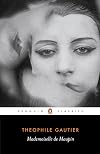
This novel is suffused with a refined naughtiness, which was accentuated by the fact I should have been writing a dry literature review this afternoon. Instead, I read the second, more salacious, half of 'Mademoiselle de Maupin'. This French capital-R Romantic novel is a wonderful comedy-drama of gender and sexuality, largely set in a country château in summer. It is mostly epistolary, making me wonder what the correspondents thought of the extravagant and shocking letters they received. I show more suppose their response is that of the reader?
After a preface that rails at moralising critics, Gautier begins the novel by giving the point of view to d'Albert. Like Kiyoaki in 'Spring Snow', here we have an idle aristocrat in love with the idea of beauty and love, utterly self-absorbed and distinctly directionless. (Is this the ideal of the Romantic Hero?) He writes lengthy letters to a friend named Silvio, describing the ideal mistress that he yearns for. He unselfconsciously expounds his misogynistic view of women as objects of beauty, lacking intellectual calibre and never equal to men. His letters are dense with classical allusions and hyperbole. After tiring of lazing about sighing, interspersed with the odd bit of hunting, d'Albert deigns to take a mistress named Rosette. She can't live up to his ideals of perfection, but nonetheless they have fun together. Including a hilarious-sounding amorous adventure during which he dresses up as a bear. D'Albert is convinced that Rosette loves him utterly.
This relatively stable arrangement is thrown into disarray when d'Albert and Rosette end up staying at a castle and encounter the dashing Théodore. At this point, the narrative shifts to Théodore's letters to a friend named Graciosa and we discover that he is actually a woman called Madeline. It emerges that the persona of Théodore was invented by Madeline so that she could learn what men were really like. She was horrified by what she found. This part of the book is the most serious and striking, as it rings so true even now. As Madeline discovers, there is a terrible double standard for male and female behaviour. When talking to each other, men are cruel and dismissive of women. Madeline remains Théodore, finding that she cannot bear to go back to the limitations of female existence. Gautier critiques the gender binary impressively thoroughly, considering he was writing in the early 19th century.
I found Théodore/Madeline to be a wonderfully sympathetic and appealing character. She gleefully overturns assumptions of gender and sexuality, throwing d'Albert into an agony of confusion that his letters made me think he richly deserved. Initially taking Théodore at face value, d'Albert comes to terms with the fact that his ideal of beauty is in fact male. Moreover, it emerges that Rosette has never been in love with him, but has only ever truly loved Théodore! After the château guests put on a performance of 'As You Like It', with all its cross-dressing and gender confusion, these passions finally come to a head. The ending is best described as satisfying.
The whole novel is very enjoyable, sensuous but ironic, deliberately subverting conventions. The eponymous hero/heroine was a real person, a bisexual singer who dressed as a man, fought duels, and apparently burned down a convent whilst in pursuit of a lover there. I'd love to read a biography of her, as Gautier gives us a glimpse of what are clearly only a few of her adventures. To the other characters, she remains an elusive, fascinating, and confusing object of adoration. I can very well see why. The reader cannot help but love her at least a little.
It's also worth noting that this edition includes an excellent introduction by Patricia Duncker, whose novels I've previously enjoyed. As is apparently always the case with classic novels, it absolutely vital not to read this introduction first, otherwise the plot will be spoiled. (I always avoid such introductions now, after having too many endings ruined.) It makes for an interesting read afterwards, though. show less
After a preface that rails at moralising critics, Gautier begins the novel by giving the point of view to d'Albert. Like Kiyoaki in 'Spring Snow', here we have an idle aristocrat in love with the idea of beauty and love, utterly self-absorbed and distinctly directionless. (Is this the ideal of the Romantic Hero?) He writes lengthy letters to a friend named Silvio, describing the ideal mistress that he yearns for. He unselfconsciously expounds his misogynistic view of women as objects of beauty, lacking intellectual calibre and never equal to men. His letters are dense with classical allusions and hyperbole. After tiring of lazing about sighing, interspersed with the odd bit of hunting, d'Albert deigns to take a mistress named Rosette. She can't live up to his ideals of perfection, but nonetheless they have fun together. Including a hilarious-sounding amorous adventure during which he dresses up as a bear. D'Albert is convinced that Rosette loves him utterly.
This relatively stable arrangement is thrown into disarray when d'Albert and Rosette end up staying at a castle and encounter the dashing Théodore. At this point, the narrative shifts to Théodore's letters to a friend named Graciosa and we discover that he is actually a woman called Madeline. It emerges that the persona of Théodore was invented by Madeline so that she could learn what men were really like. She was horrified by what she found. This part of the book is the most serious and striking, as it rings so true even now. As Madeline discovers, there is a terrible double standard for male and female behaviour. When talking to each other, men are cruel and dismissive of women. Madeline remains Théodore, finding that she cannot bear to go back to the limitations of female existence. Gautier critiques the gender binary impressively thoroughly, considering he was writing in the early 19th century.
I found Théodore/Madeline to be a wonderfully sympathetic and appealing character. She gleefully overturns assumptions of gender and sexuality, throwing d'Albert into an agony of confusion that his letters made me think he richly deserved. Initially taking Théodore at face value, d'Albert comes to terms with the fact that his ideal of beauty is in fact male. Moreover, it emerges that Rosette has never been in love with him, but has only ever truly loved Théodore! After the château guests put on a performance of 'As You Like It', with all its cross-dressing and gender confusion, these passions finally come to a head. The ending is best described as satisfying.
The whole novel is very enjoyable, sensuous but ironic, deliberately subverting conventions. The eponymous hero/heroine was a real person, a bisexual singer who dressed as a man, fought duels, and apparently burned down a convent whilst in pursuit of a lover there. I'd love to read a biography of her, as Gautier gives us a glimpse of what are clearly only a few of her adventures. To the other characters, she remains an elusive, fascinating, and confusing object of adoration. I can very well see why. The reader cannot help but love her at least a little.
It's also worth noting that this edition includes an excellent introduction by Patricia Duncker, whose novels I've previously enjoyed. As is apparently always the case with classic novels, it absolutely vital not to read this introduction first, otherwise the plot will be spoiled. (I always avoid such introductions now, after having too many endings ruined.) It makes for an interesting read afterwards, though. show less
My second Gautier book and a second triumph. Gautier has a very verbose style and never uses one metaphor when 8 will do, however his writing is so lyrical and poetic that it rarely seems too long.
They say people today have a warped view of the opposite sex due to film, porn, celebrity magazines etc. but evidently this is not so modern a problem, as our male 19th century hero is the same and all he had to work with was poetry and oil paintings, he despairs of ever finding a woman who meets show more his fantastic ideal. Our heroine on the other hand is determined to truly understand men before giving herself to one.
This is a romance i guess, although one of those very realistic ones something along the lines of '500 Days of Summer' . It has really interesting things to say about sexuality aswell, which again makes it seem quite modern.
Overall this is a beautifully written, funny, interesting and remarkably... human story (for want of a better description :) ).
Note: Some prior knowledge of Shakespeare's 'As You Like It' might be beneficial. show less
They say people today have a warped view of the opposite sex due to film, porn, celebrity magazines etc. but evidently this is not so modern a problem, as our male 19th century hero is the same and all he had to work with was poetry and oil paintings, he despairs of ever finding a woman who meets show more his fantastic ideal. Our heroine on the other hand is determined to truly understand men before giving herself to one.
This is a romance i guess, although one of those very realistic ones something along the lines of '500 Days of Summer' . It has really interesting things to say about sexuality aswell, which again makes it seem quite modern.
Overall this is a beautifully written, funny, interesting and remarkably... human story (for want of a better description :) ).
Note: Some prior knowledge of Shakespeare's 'As You Like It' might be beneficial. show less
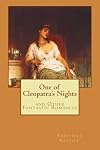
A little repetitive, Gautier has a bit of a one track mind although you might see that as the collection being nicely themed. The main issue is Gautier's languidly descriptive style which can be quite infuriating unless your in a very patient mood.
Still worth the price of admission for the very early vampire tale Clarimonde, aka La Morte Amoureuse (1836).
Still worth the price of admission for the very early vampire tale Clarimonde, aka La Morte Amoureuse (1836).

Super-self-consciously beautiful poems about beautiful things and horrors, with little in-between. Gautier drank deeply of German Romanticism and assumed its dark motifs, but he's much sexier.
Lists
Romans (1)
French Books (1)
Awards


You May Also Like


Associated Authors
Statistics
- Works
- 380
- Also by
- 78
- Members
- 3,963
- Popularity
- #6,368
- Rating
- 3.9
- Reviews
- 99
- ISBNs
- 722
- Languages
- 21
- Favorited
- 20


